
Termite season guide
When Is Termite Season? Swarm Timing by Region and Species
Short Answer
There is no single U.S. termite season. What most people call “termite season” is swarm season, when mature colonies release winged termites. For native subterranean termites, that usually means late winter through spring: January–February in South Texas, mid-February to mid-May in Mississippi, and February to June in Pennsylvania. Formosan termites swarm later, mostly late April through June at dusk. Drywood and dampwood termites in the West often fly in summer and fall, and desert subterranean termites follow Arizona’s July–September monsoon rains.
Colonies keep feeding year-round, so a quiet month is not a safe month. Swarmers inside the house are a reason to schedule a licensed inspection. Swarmers outdoors show termites are nearby, but they do not prove that your house is infested.
Looking for one state? Start with the termites by state guide. If termites have already swarmed indoors, go to termite swarmers inside your house.
What “Termite Season” Actually Means
A swarm is a mating flight. An established colony produces winged reproductives, called alates or swarmers, and releases them when temperature, moisture, and day length suit that species. They fly briefly, drop their wings, pair off, and try to start new colonies. Most fail. Our termite life cycle guide follows a colony from that first pair to its own swarm.
The swarm is simply the moment termites become easy to see. The workers that damage wood stay hidden in soil, walls, or timber throughout the year. University of Florida entomologists advise monitoring year-round because colonies stay active when no swarms are visible. Our guide to whether termites die in winter explains what cold weather does and does not change.
Swarm timing still matters. It tells you when you are most likely to notice a problem, which group of termites may be involved, and when to watch windows, lights, and sills more closely.
Termite Swarm Calendar by Species
The windows below come from university extension and research sources. They describe typical patterns, not guarantees. Weather, elevation, and indoor heat can move a swarm weeks earlier or later.
Scroll the table sideways to see every column.
| Termite | Where it matters most | Typical swarm window | Time of day and light |
|---|---|---|---|
| Native subterranean (Reticulitermes, including eastern subterranean) | Most of the East, South, and Midwest | Late winter to spring. Starts as early as January in South Texas and as late as April–May in the Texas Panhandle. Some species swarm in summer or fall. | Daytime, often after rain on a warm day. Texas A&M notes afternoons are common. |
| Formosan subterranean | Gulf Coast, Florida, Hawaii, parts of the Southeast | Late April to June. In Louisiana the peak is around Mother’s Day. Flights can run into July. | Dusk and night; strongly drawn to lights. |
| Asian subterranean | South Florida, Oʻahu | South Florida: from February–March into spring. Oʻahu: about a month after the Formosan peak. | Dusk. |
| Western subterranean | California and the Pacific Coast | Mainly fall, sometimes spring | Warm, sunny days after rain. |
| Arid-land subterranean | Arizona and the Southwest | January–March below 4,000 ft; June–July above 4,000 ft | Not consistently reported. |
| Desert subterranean | Arizona and Southern California deserts | July–September, after monsoon rains | Some fly to lights in desert areas. |
| Western drywood | California, the Southwest | Summer and fall; June–August in Arizona | Daytime, on bright, sunny days. |
| West Indian drywood | South Florida, Hawaii | April–July | Dusk to dawn; attracted to lights. |
| Southeastern drywood | Florida and the coastal Southeast | Usually May–November | Swarmers are often found near lights and windowsills. |
| Pacific dampwood | Pacific Coast | Typically July–October; late summer and fall in Oregon | Night; attracted to lights. |
Sources: Mississippi State, Texas A&M, NC State, Penn State, LSU AgCenter, UF/IFAS, UC IPM, Oregon State, University of Arizona, and University of Hawaiʻi research. Full links are listed at the end of this guide. Use the table to guide what you watch for. It cannot identify a species or confirm an infestation.
Termite Season by Region
Here is how those species patterns combine in practice. For state-specific species, licensing, and inspection rules, follow the state links.
Gulf Coast and the Deep South
Two waves are common. Native subterranean termites swarm by day from late winter into spring: January–March in Louisiana and mid-February to mid-May in Mississippi. Formosan termites follow at dusk from late April through June. Farther inland in Tennessee, the main swarm is the eastern subterranean termite’s daytime flight, usually March through May. See Alabama, Louisiana, Georgia, and Tennessee.
Florida
Florida has the longest calendar. Asian subterranean termites start in early spring in South Florida. Formosan termites start in late April or early May, West Indian drywood termites fly April–July, and southeastern drywood termites can continue into November. See Florida.
Texas
Native subterranean swarms move north with spring: January–February in South Texas, April–May in the Panhandle. Where Formosan termites are established, they swarm at night from early May through June. See Texas and neighboring Oklahoma, where most swarms come March through May.
Carolinas and the Mid-Atlantic
Spring is the main window. NC State reports that the combined swarm periods of North Carolina’s native species stretch from late winter into fall. Penn State puts most Pennsylvania swarms between February and June. See North Carolina, South Carolina, and Pennsylvania.
California and the Pacific Coast
The West often reverses the eastern pattern. Western subterranean termites swarm mainly after fall rains, drywood termites fly by day in summer and fall, and dampwood termites come to lights from about July to October. See California.
Desert Southwest
Rain and elevation control the calendar. Arid-land subterranean termites fly January–March at lower elevations. Desert subterranean termites fly July–September after monsoon storms, and drywood termites fly June–August on sunny days.
Hawaii
On Oʻahu, Formosan flights run from about April into summer and peak in May. Asian subterranean termites fly about a month later, and West Indian drywood termites fly roughly April–July. See Hawaii.
Northern states
Native subterranean termites are the main concern. Penn State notes that swarms may appear inside infested buildings in late winter or early spring, so watch windows and basements as the weather warms. In Ohio, OSU Extension puts most swarms in March, April, and May; see Ohio.
Day or Night: What Swarm Timing Can Tell You
When and how termites fly is one of the most useful clues for a homeowner. Native subterranean swarmers are dark and usually fly in daylight. Formosan swarmers are larger, yellowish-brown, and fly at dusk toward porch lights and windows. A daytime swarm in late summer in California often points toward drywood termites. Large insects at lights in a Pacific Coast fall evening may be dampwood termites.
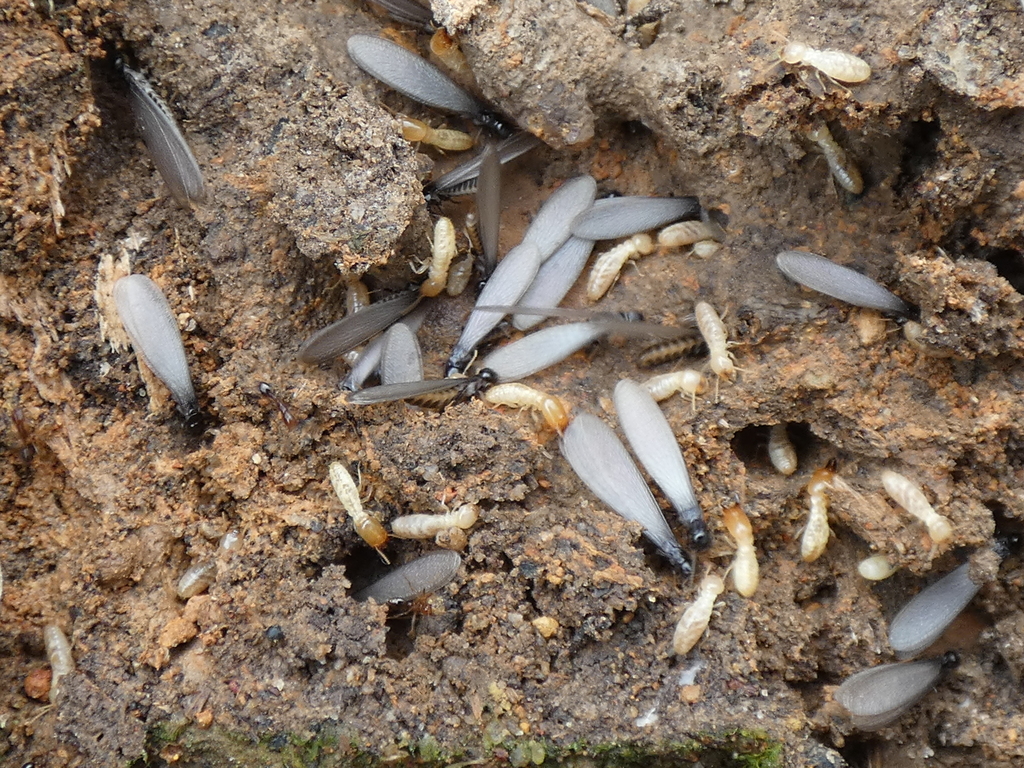
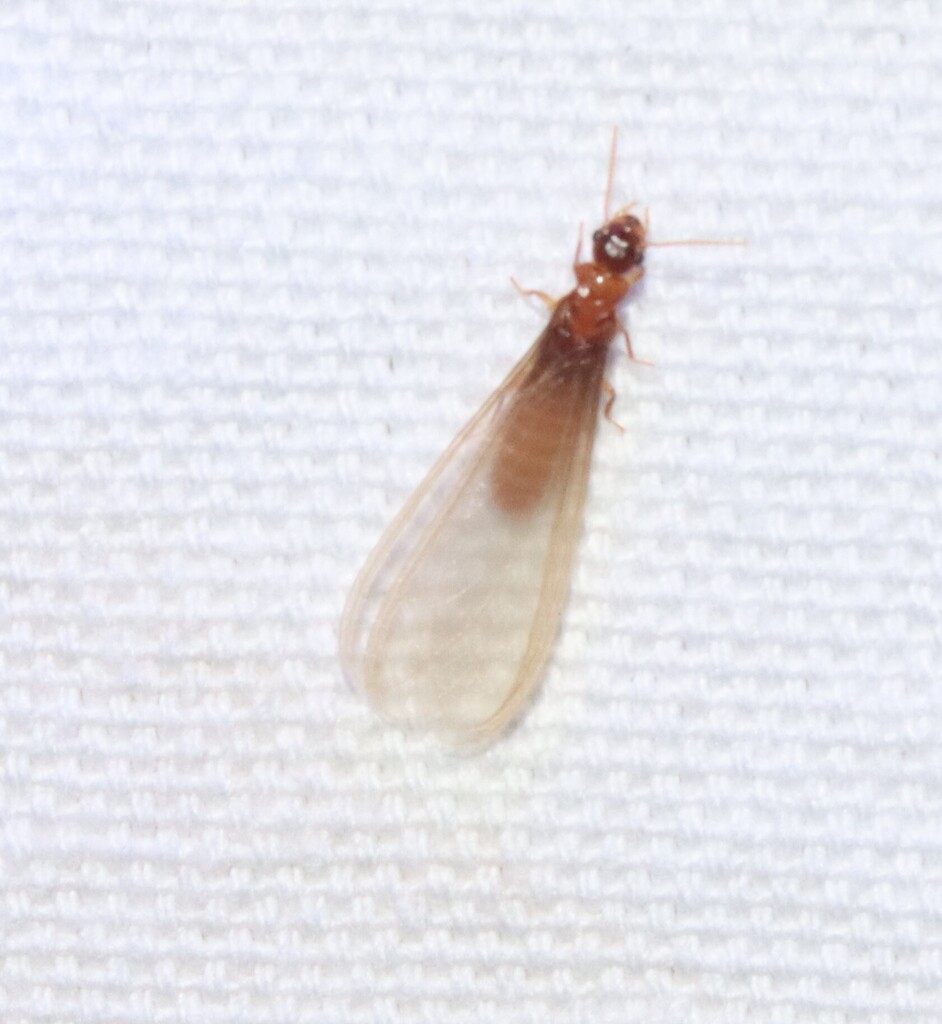
Treat these as clues, not proof. Species overlap, weather shifts flight times, and a single photo rarely settles identification. Flying ants also swarm in spring, so compare body shape, antennae, and wings with our flying ants vs. termites guide. For the broader groups, see subterranean vs. drywood vs. dampwood termites.
Indoor vs. Outdoor Swarms
Swarmers outdoors
Swarmers around a stump, woodpile, fence, or yard tell you a colony is nearby. NC State notes that outdoor swarmers near stumps or trees are not necessarily a sign that a structure is infested. Watch the foundation, note where they emerged, and consider an inspection if they came from against the house.
Swarmers or wings indoors
Swarmers inside are different. NC State calls an indoor swarm “most certainly a sign of active infestation,” and Texas A&M says indoor swarmers usually indicate a colony in the structure. Piles of shed wings on sills or floors mean the same. Schedule a licensed inspection.
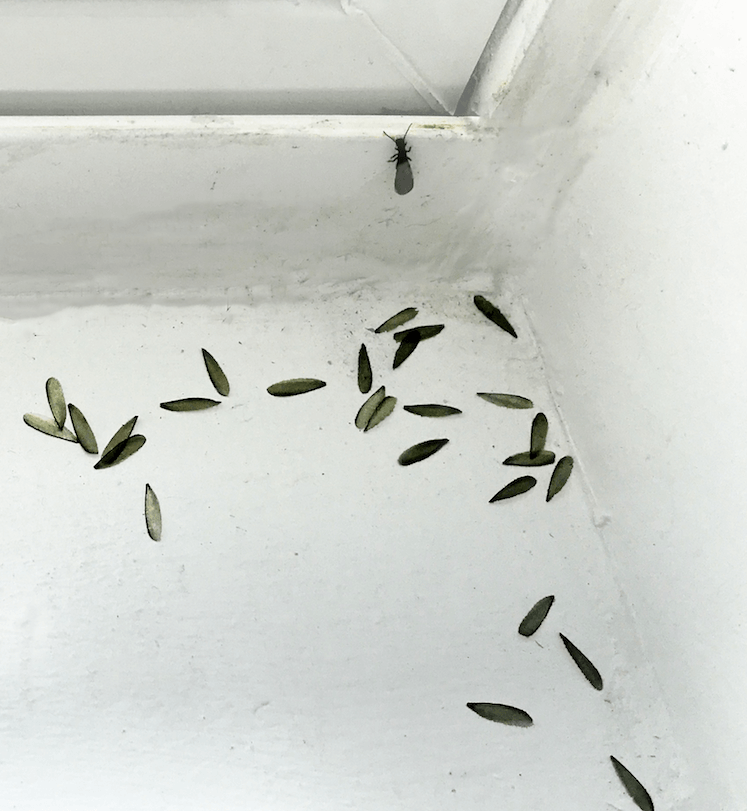
Penn State notes that the winged swarmers themselves do no damage. The concern is the colony that produced them. Our signs of termites guide covers the other evidence an inspector will look for.
Can termites swarm in fall or winter?
Yes. Several western and drywood species normally fly in late summer and fall, and NC State notes that swarmers could appear at nearly any time of year in North Carolina under the right conditions. An indoor swarm in winter may point to a colony in a heated part of the building, so it deserves the same attention as a spring swarm.
What to Do When Swarm Season Starts
- Save a few specimens. Collect several swarmers or wings in a sealed bag or a jar with rubbing alcohol. Photos help, but specimens make identification easier. UF/IFAS stresses identifying the species before choosing treatment.
- Write down when and where. Record the date, time of day, room or yard location, and whether swarmers came from a wall, floor, window, or the ground. That narrows the likely species and the source.
- Do not rely on spray alone. Killing visible swarmers removes the symptom, not the colony. See the termite treatment decision guide for the real options.
- Turn off outdoor lights during Formosan season. LSU AgCenter notes that switching off lights at dusk can keep Formosan swarmers away from the house.
- Check your coverage. If you already have a termite contract, confirm that it is current and what it covers. Our termite bond guide explains what to ask.
- Call a licensed professional for indoor activity. Swarmers inside, wings on sills, or swarmers coming from the foundation call for a professional termite inspection.
Safety note: Do not open walls, enter unsafe crawl spaces, or apply soil termiticides yourself on the basis of a swarm. Pesticide labels, state licensing rules, and structural conditions vary. A licensed inspector should confirm the species and the source first.
Should You Schedule an Inspection Before Swarm Season?
An inspection does not have to wait for swarmers. If you missed your regular check, late winter can be a practical time to book one, before swarms make you guess. Our guide to how often you should get a termite inspection covers routine schedules, and the termite identification hub helps you sort evidence before you call.
Common Questions
When is termite season in Texas?
Native subterranean swarms begin in January–February in South Texas and may not start until April–May in the Panhandle. Formosan termites swarm at night from early May through June where they are established. Details are in our Texas termite guide.
When is termite season in Florida?
Florida’s swarm season starts in early spring with Asian subterranean termites in South Florida and continues through Formosan swarms from late April, West Indian drywood flights April–July, and southeastern drywood flights into November. See the Florida termite guide.
When is termite season in California?
Western subterranean termites swarm mainly after fall rains and sometimes in spring. Drywood termites fly by day in summer and fall, and dampwood termites come to lights from about July to October. See the California termite guide.
Does rain trigger termite swarms?
Often, but not always. Many subterranean termites fly on warm days after rain, and desert subterranean termites follow monsoon storms. Arizona’s drywood termites, by contrast, fly on sunny days without regard to rain.
How long does a termite swarm last?
Individual flights are usually short, and swarmers soon shed their wings. Because different species in the same area fly at different times, the overall swarm season in a region can last for months.
Your Next Step
If you see swarmers, note the date, time, and place, save a few specimens, and check whether they came from inside the house. Indoor swarmers or shed wings on a sill call for a licensed inspection. Outdoor swarmers are a reason to watch the foundation. For local species and rules, open your state in the termites by state guide.
Sources and Further Reading
- Mississippi State University Extension — Protect buildings from swarming termites (2024, updated 2025)
- Texas A&M AgriLife Extension — Subterranean Termites (E-368)
- Texas A&M AgriLife Extension — Formosan Subterranean Termites (E-367)
- NC State Extension — Biology and Behavior of Eastern Subterranean Termites (2025)
- Penn State Extension — Eastern Subterranean Termites
- LSU AgCenter — Louisiana homeowners should prepare for upcoming termite swarms (2019)
- UF/IFAS — As Florida enters termite swarm season (2021)
- UF/IFAS EDIS — Drywood termites in Florida (IG098)
- UF/IFAS Monroe County Extension — Rainy season and termite swarms
- UC IPM — Pest Notes: Drywood Termites (7440)
- UC IPM — Pest Notes: Termites (7415)
- Oregon State University — Termites
- University of Arizona Cooperative Extension — Termite Management for Homeowners (AZ1356)
- Tong et al. — Termite Species Distribution and Flight Periods on Oahu, Hawaii (Insects, 2017)