
Termites in Ohio: Types, Swarm Season, Inspections, and Next Steps
Short Answer
Yes, Ohio has termites, and the one that damages homes is the native eastern subterranean termite. It lives in the soil and reaches wood through mud tubes. Ohio State University Extension says these termites usually swarm during the day in March, April, and May, often on a warm day after rain, and an OSU entomology update adds that swarms can continue into early summer.
If you see winged termites inside or mud tubes on the foundation, have the house inspected by a company licensed by the Ohio Department of Agriculture. When a licensed applicator inspects a home for a real estate transaction, Ohio rules require the findings to be recorded on the NPMA-33 wood-destroying insect report.
Are Termites Common in Ohio?
An OSU entomology article cites a national assessment that rates Ohio’s risk of subterranean termite infestation as moderate to heavy. OSU Extension identifies the eastern subterranean termite (Reticulitermes flavipes) as the most common termite in the state. Colonies nest in moist soil, travel through soil tunnels, and build mud tubes to cross concrete and masonry to reach wood. Our subterranean termite guide covers how they live and feed.
A statewide survey run by Ohio State researchers with 22 pest management companies collected about 400 termite samples from 39 Ohio counties. Reticulitermes subterranean termites were found throughout the state. The survey also recorded a single infestation of the western drywood termite (Incisitermes minor) in Hamilton County, a species that normally lives far to the west. Drywood termites are not a routine Ohio problem, but if you find hard, six-sided pellets below small holes in furniture or trim, ask the inspector to rule them out; see our drywood termite guide.
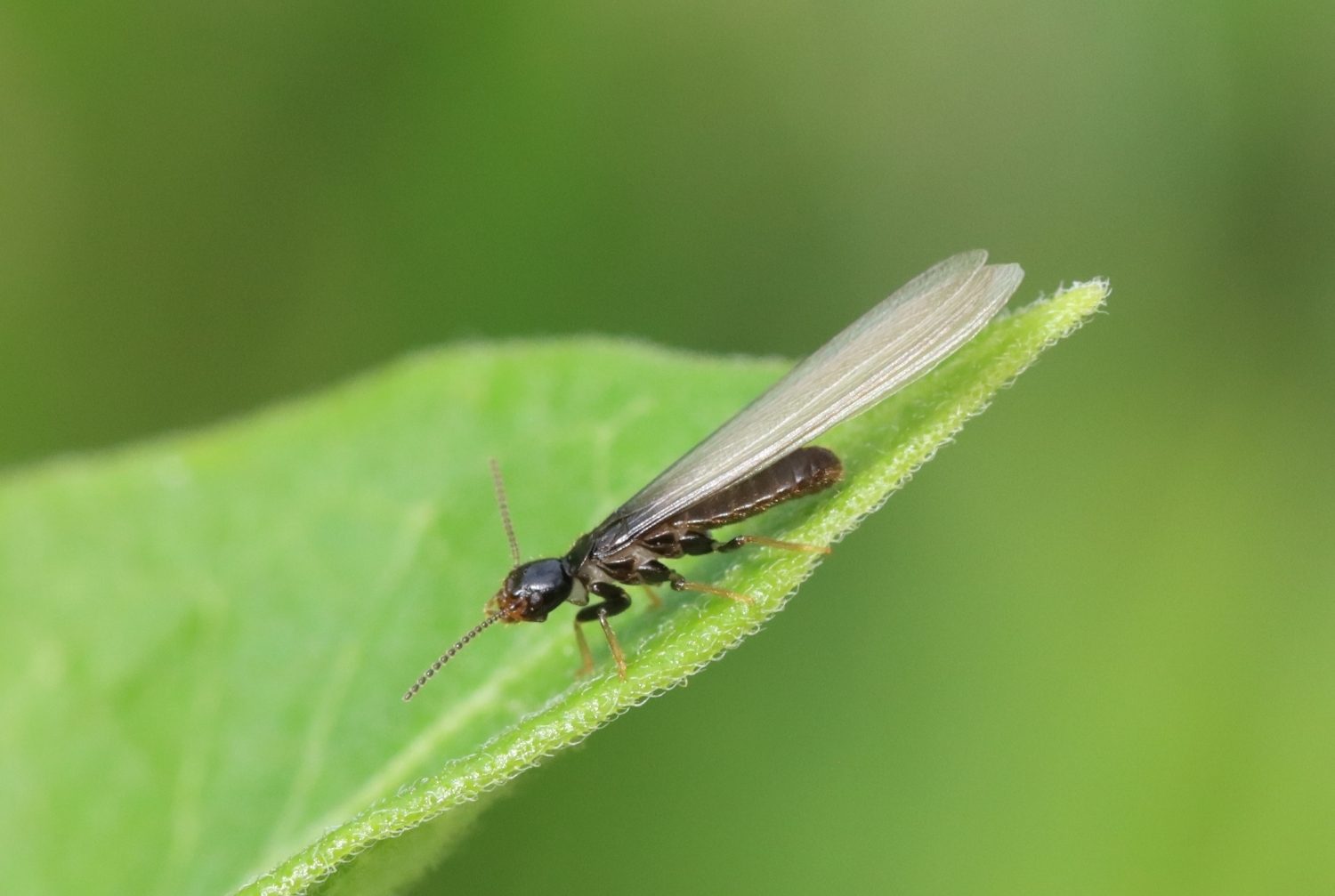
When Do Termites Swarm in Ohio?
Spring, in daylight
OSU Extension says swarming in Ohio typically happens during the day in March, April, and May. An OSU entomology update notes swarms over spring and early summer.
After warm rain
Swarms are usually triggered by warm, damp conditions, often on a warm day after a rain. Each swarm is brief, typically less than an hour.
Indoors, off season
Swarms indoors can happen in other months. OSU notes winter swarms are uncommon, but warm areas around a heated building can occasionally trigger one.
Near windows and lights
Swarmers are attracted to light, so indoors they gather at windows and light fixtures. Shed wings on sills are a common clue.
Termite swarmers are easy to confuse with winged ants, which also fly in spring. OSU’s checklist: termites have straight antennae, a broad waist, and two pairs of wings of similar size. See our flying ants vs. termites guide, and if they are inside, read termite swarmers inside the house before you spray anything.
Signs of Termites in Ohio Homes
Scroll the table sideways to see every column.
| What you found | What it may mean | Next step |
|---|---|---|
| Swarmers or shed wings near windows in spring | A colony in or under the structure is likely | Save a few in a sealed bag and schedule an inspection |
| Mud tubes about 1/4 to 1 inch wide on foundation walls, piers, or basement walls | Subterranean termites traveling from soil to wood | Photograph them and leave them in place for the inspector |
| Mud in cracks between boards or around beams | Termites working inside the wood | Do not break into walls; call a licensed company |
| Wood that sounds hollow, with soil-lined galleries along the grain | Feeding damage behind an intact surface | Stop probing and get a professional opinion |
| Bubbled or blistered paint on wood trim | Possible termite activity underneath | Point it out during the inspection |
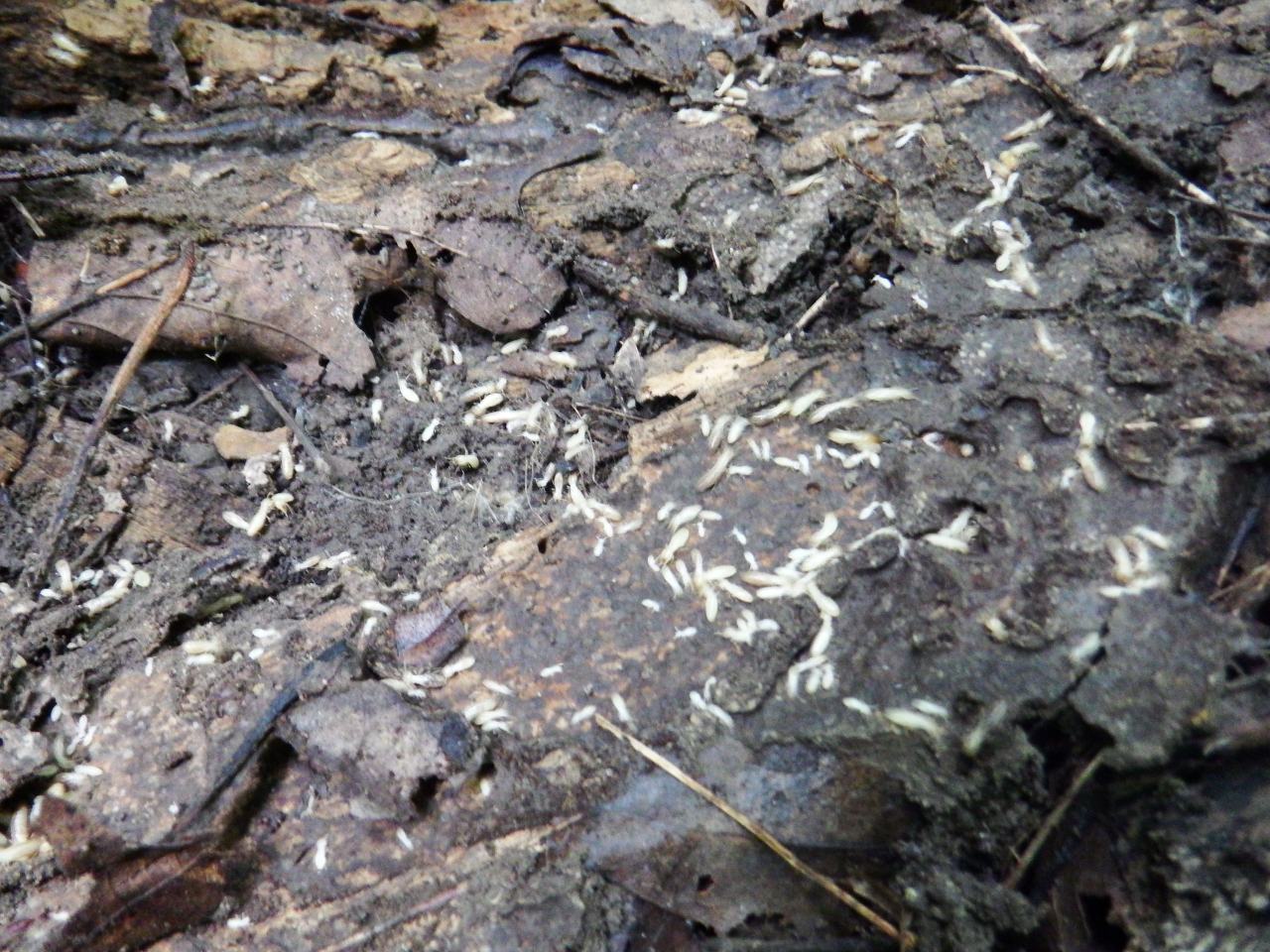
| Termites in a stump, firewood, or a rotting log in the yard | Termites are active nearby, not proof the house is infested | Remove wood debris and check the foundation |
Signs summarized from OSU Extension. OSU recommends inspecting houses for mud tubes every year. Our mud tubes vs. old damage guide helps tell active tubes from old ones.
Prevention Around Ohio Homes
OSU Extension and Ohio State entomologists stress moisture control and removing wood from contact with the soil. Many Ohio houses have basements or crawl spaces, where foundation cracks and damp soil give termites a quiet route in.
- Keep at least 6 inches between the soil and wooden parts of the house, and do not let wood touch the ground.
- Direct water away from the foundation with working gutters, downspouts, and soil sloped away from the house.
- Do not store firewood or lumber against the foundation or in the crawl space. An OSU Extension educator notes some experts suggest stacking firewood 20 to 30 feet from the house; see termites in firewood.
- Remove old stumps and roots near the house, and keep wood mulch shallow and pulled back from the foundation; see termites in mulch.
- Seal cracks where possible and check basement walls for tubes; see termites in the basement.
Safety note: OSU says control of an active infestation requires certified professionals and licensed products. Cultural steps reduce risk but cannot eliminate a colony. Do not apply soil termiticides yourself or open walls looking for termites.
Treatment Options in Ohio
OSU describes two main professional approaches for subterranean termites: a soil termiticide applied around the building perimeter, and bait stations installed around the perimeter, roughly every 10 feet, which take longer because termites must find and feed on the bait. Our guides to bait stations vs. liquid treatment, termite treatment types compared, and termite treatment cost help you compare proposals.
OSU Extension also advises getting at least three estimates and checking a company’s complaint history with the state licensing agency before you sign. Our questions to ask a termite company keep the comparison like for like.
Buying a Home: Ohio WDI Inspections and the NPMA-33
A lender, buyer, or purchase contract may call for a wood-destroying insect (WDI) inspection. In Ohio, inspectors who do this work need an Ohio commercial pesticide applicator license with Category 12 (Wood-Destroying Insect Inspections), which requires mandatory training and exams, according to OSU’s Pesticide Safety Education Program.
Ohio Administrative Code rule 901:5-11-13 requires a commercial applicator who conducts a WDI diagnostic inspection for a real estate transaction to record the findings on form NPMA-33 and to complete and sign it within five business days of the inspection.
Scroll the table sideways to see both columns.
| NPMA-33 section | What to check |
|---|---|
| 1. General information | Company name and license number, the inspector’s name, license number, and signature, the inspection date, the address, and which structures were inspected |
| 2. Inspection findings | Whether visible evidence of wood-destroying insects was found, and where |
| 3. Recommendations | Whether treatment is recommended, and for what |
| 4. Obstructions and inaccessible areas | What the inspector could not see, such as finished basement walls, crawl spaces, or covered floors |
| 5. Additional comments | Notes such as evidence of previous treatment |
Section contents summarized from Ohio Administrative Code 901:5-11-13. Our guides to a termite inspection before buying a house and how to read a termite inspection report explain common findings.
Found signs in your own home
Photograph tubes and swarmers, fix drainage and moisture problems, move wood away from the foundation, and get written proposals from at least three licensed companies.
Buying or selling
Ask for the NPMA-33, check the license numbers and the inaccessible areas, ask about any previous treatment and active service agreement, and keep the report with your closing papers.
For suspected violations of Ohio pesticide law, the Ohio Department of Agriculture’s Pesticide Regulation Section accepts complaints online. The department investigates regulatory violations but does not recover damages for property owners. This guide summarizes state rules and is not legal advice.
Your Next Step
Walk the foundation, basement walls, and crawl space this week and look for mud tubes, then watch window sills for wings during warm spring days after rain. If you find signs, save specimens, take photos, and call a company licensed by the Ohio Department of Agriculture. For other states, see the full termites by state guide, or check the termite season guide.
Common Questions
When is termite season in Ohio?
Mainly March through May, when OSU Extension says most swarms happen, sometimes continuing into early summer. Colonies keep feeding underground through the year.
What kind of termites are in Ohio?
The eastern subterranean termite is the most common termite in Ohio, according to OSU Extension. A statewide survey found subterranean termites throughout Ohio and only a single drywood termite infestation, in Hamilton County.
Do termites die in Ohio winters?
No. Subterranean colonies live in the soil below the frost line and keep feeding. See do termites die in winter.
Who can do a termite inspection for a home sale in Ohio?
OSU’s pesticide education program says WDI inspectors need an Ohio commercial pesticide applicator license with Category 12. For a real estate transaction, the findings go on form NPMA-33.
Does finding termites in a rotting log mean my house has them?
Not by itself. Termites in yard wood show colonies are nearby. Mud tubes on the house, swarmers indoors, or damaged structural wood are stronger signs.
Sources and Further Reading
- Ohio State University Extension — Termite Control, Fact Sheet HYG-2092 (Susan C. Jones; archived copy)
- Ohio State University BYGL — Eastern Subterranean Termite, Reticulitermes flavipes (Basnagala, Lee, and Perry, 2024)
- Jones and Nuss — Ohio Termite (Isoptera) Survey, International Conference on Urban Pests, 2002
- Ohio Administrative Code 901:5-11-13 — Recordkeeping for WDI inspections for real estate transactions
- Ohio State University Pesticide Safety Education Program — Wood-Destroying Insect Inspection (Category 12)
- OSU Extension Fairfield County — Watch Out for Termites When Cutting Firewood (2020)
- Ohio Department of Agriculture — Pesticide Complaint Handout