Diagnostic guide
Termite Droppings vs. Frass: What Those Pellets Actually Mean
You have found a small pile of gritty, sand-like pellets near a window sill, a baseboard, or in the attic — and now you want to know whether it is termites, some other insect, or nothing to worry about. This page helps you tell the difference before you spend a cent.
The short version: those tiny wood-colored pellets are usually the calling card of drywood termites, and the technical name for them is frass. But sawdust from wood-boring beetles and debris from carpenter ants can look similar at a glance, so the goal here is to identify what you are actually looking at. For the broader side-by-side comparison, see termites vs. carpenter ants vs. wood-boring beetles. For an overview of every warning sign, see the signs of termites.
One thing up front: subterranean termites — the most common type in much of the US — rarely leave visible droppings. They reuse their waste to build mud tubes, so if you are seeing pellet piles, you are most likely dealing with drywood termites, not subterranean ones. If you want to confirm the type, see subterranean vs. drywood vs. dampwood.
This guide is part of our termite identification guides. If you are comparing pellets, mud tubes, wings, damage, or lookalikes, start there before choosing a treatment.
What Frass Actually Is
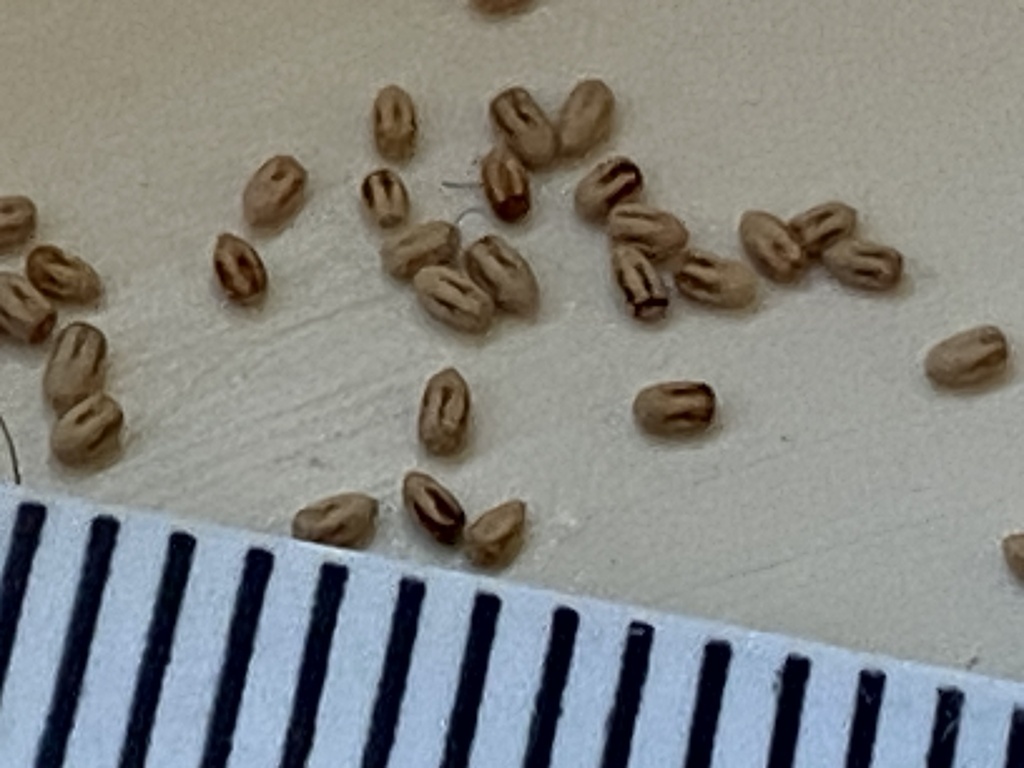
Frass is drywood termite excrement. Because these termites live entirely inside dry wood and conserve water carefully, their bodies compress waste into hard, dry, six-sided pellets before pushing them out. To keep their galleries clean, the termites chew tiny “kick-out” holes in the wood surface and shove the pellets out, where they collect in small piles below.
That is why frass is such a useful clue: the pellets themselves are hidden until they are ejected, so a pile of them means there is an active gallery in the wood above. Finding frass is often the only outward sign of a drywood termite infestation.
How to Tell Frass From Look-Alikes
Several things produce small piles of debris around wood. Here is how termite frass differs from the usual suspects.
→ Scroll the table sideways to see all columns.
| Source | What it looks like | Key tell |
|---|---|---|
| Drywood termite frass | Tiny, hard, uniform six-sided pellets; wood-colored (tan to dark brown); feels like coarse sand | Regular pellet shape, all a similar size, in small neat piles below a hole |
| Carpenter ant debris | Loose, uneven wood shavings and sawdust, often mixed with insect body parts | Irregular sizes and shapes; frass is never mixed with body parts |
| Powderpost beetle frass | Very fine, flour-like powder; much finer than termite pellets | Powdery, not distinct pellets; often stays packed in tunnels |
| Ordinary sawdust | Irregular fibers and flakes from cutting or drilling | Random, fibrous; no regular pellet shape |
The single most reliable tell for drywood termite frass is uniformity: the pellets are all a similar size and share a regular, six-sided shape. Carpenter ant and sawdust debris is irregular, and powderpost beetle frass is a fine powder rather than distinct pellets.
The strongest single clue is shape and uniformity: real termite frass is made of hard, regular, six-sided pellets of similar size — not a fine powder and not a jumble of uneven flakes.
Where You’ll Find It
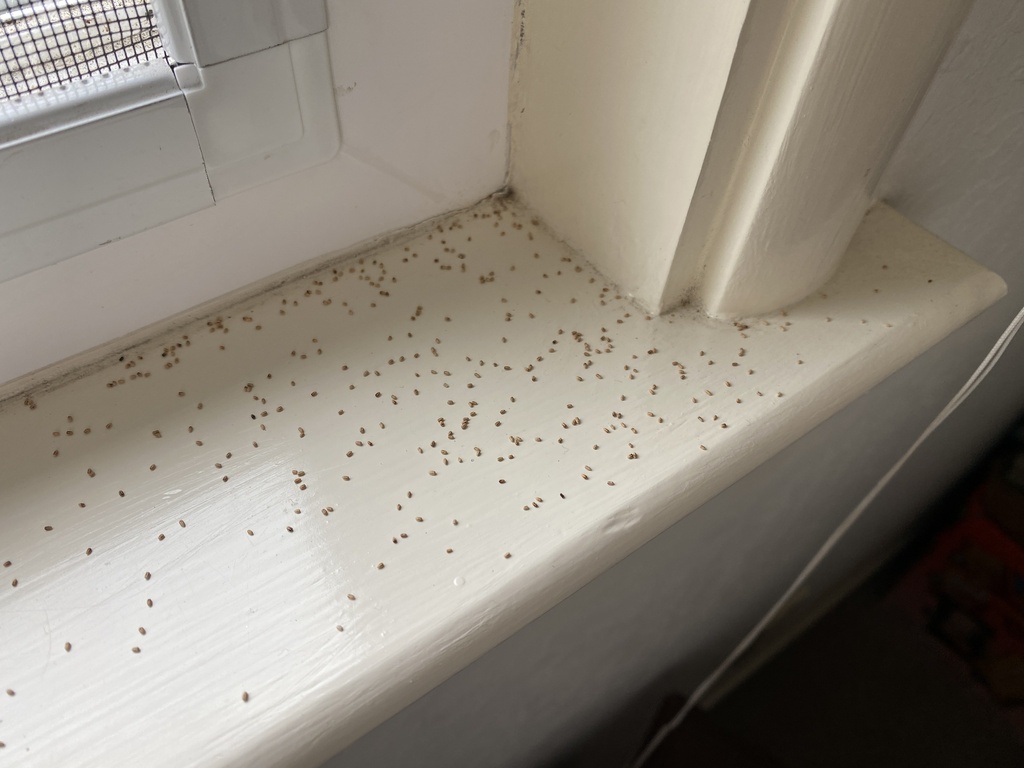
Frass collects wherever it falls out of a kick-out hole, so look in the places drywood termites tend to infest:
- window sills and door frames;
- along baseboards and skirting;
- attics, and around roof timbers;
- on floors, carpets, or porches directly beneath infested wood;
- inside or beneath wooden furniture.
A small mound reappearing after you sweep it away is a strong sign the gallery above is active — the termites are still clearing house.
Active vs. Old: Is the Frass Fresh?
A pile of frass tells you there was an infestation. Whether it is still active is a separate question, and the signs are similar in spirit to reading mud tubes.
Leans ACTIVE
- Fresh piles that return within days of being cleared away.
- Pellets that look clean and evenly colored.
- Live activity, faint clicking, or swarmers nearby.
- Kick-out holes that look freshly opened.
Leans OLD / INACTIVE
- A single dusty pile that does not come back after cleaning.
- Pellets that are faded, dirty, or cobwebbed over.
- No live insects, swarmers, or fresh holes.
- Known past infestation that was already treated.
A simple check: clear the pile away completely, note the spot, and look again in a few days. If fresh pellets reappear, that gallery is active. As with any single test, this tells you about that one spot, not the whole house.
What Your Result Means for the Next Step
If it looks like active termite frass: do not start buying random products. What to do next depends on where it is and how serious it looks. The fastest way to sort that out is our decision guide, which routes you by your situation, and our treatment types compared guide explains the options. Drywood infestations inside structural wood are frequently a professional case.
If it looks old or you’re not sure it’s termites at all: confirming is worth it before spending money. Use the look-alike table above, and if you still cannot tell, an inspection is the honest answer.
If it might be another insect: the debris table above helps, but carpenter ants and beetles can also damage wood — so “not termites” does not always mean “no problem.” When in doubt, get it identified.
Safety Notes
Frass is not hazardous to handle in small amounts, but it can irritate skin, eyes, or airways for sensitive people. If you sweep up a pile, avoid inhaling the dust, and wash your hands afterward. Never assume a product that treats one wood pest works on another — read the label for the specific pest.
When to Call a Professional
Get a licensed termite inspection rather than guessing if:
- frass keeps reappearing, suggesting an active gallery;
- the wood involved is structural, or the infestation may be widespread;
- you also see swarmers, discarded wings, or live insects indoors;
- the wood is hidden, sealed, or hard to access;
- there is a home sale, inspection, or refinance deadline.
Drywood termites nest deep inside wood where you cannot see them, so what looks like a small pile can sit below a much larger gallery. An inspection here is not an expense so much as insurance. If you want to be ready for that call, our questions to ask a termite company help you avoid overpaying.
The Bottom Line
Small, uniform, six-sided pellets that feel like coarse sand are almost always drywood termite frass — and a sign there is an active gallery in the wood above. Irregular shavings point to carpenter ants; fine powder points to beetles. Confirm active versus old with the reappearance test, then let our decision guide route you to the right next step. And if you cannot tell, an inspection is the money-saving answer.