
Furniture decision guide
Termites in Furniture: Signs, Lookalikes, and Next Steps
A pile beneath a dresser or holes in a used table deserve a closer look. The clue may point to drywood termites, a wood-boring beetle, or old damage—and the next step depends on which it is.
Short Answer
Yes, drywood termites can live inside wooden furniture. Look for hard, fairly uniform pellets below the piece or inside drawers, small openings above a pile, or winged insects or shed wings. Fine flour-like powder below round holes can instead point to wood-boring beetles. Neither a hole nor a pile, by itself, tells you whether insects are active today or whether the building is involved.
Photograph the evidence, keep any intact insect or sample, and avoid taking a suspect used piece into another building until it is identified. If signs return after cleanup, or you find similar evidence in nearby trim or framing, arrange an inspection by a qualified local professional.
If the material itself is your main question, use the pellet and frass guide. For the biology and treatment scope of confirmed drywood termites, see the drywood termite guide.
Start With the Piece, Not a Product
Furniture is a movable object. That changes the first decision: where did the evidence appear, and can you keep the piece in place while it is identified? Note whether it is a recently purchased antique, a stored item brought indoors, or furniture that has been in the same room for years. Check accessible undersides, drawer bottoms, joints, shelves, and the floor immediately below. Texas A&M AgriLife specifically recommends checking antique and used furniture for holes and drywood termite pellets before purchase.
Still at a seller or in storage
Inspect accessible surfaces and ask about prior pest findings. If you find suspicious pellets, powder, or insects, pause the move or purchase until the evidence is identified. A clean-looking exterior cannot clear concealed wood.
Already inside your home
Record the room and exact spot. Photograph the item and the debris with a ruler or coin for scale. Look at adjacent accessible trim and other wooden items. Avoid moving a suspect piece to another home while the cause remains unknown.
What to Look For on Wooden Furniture
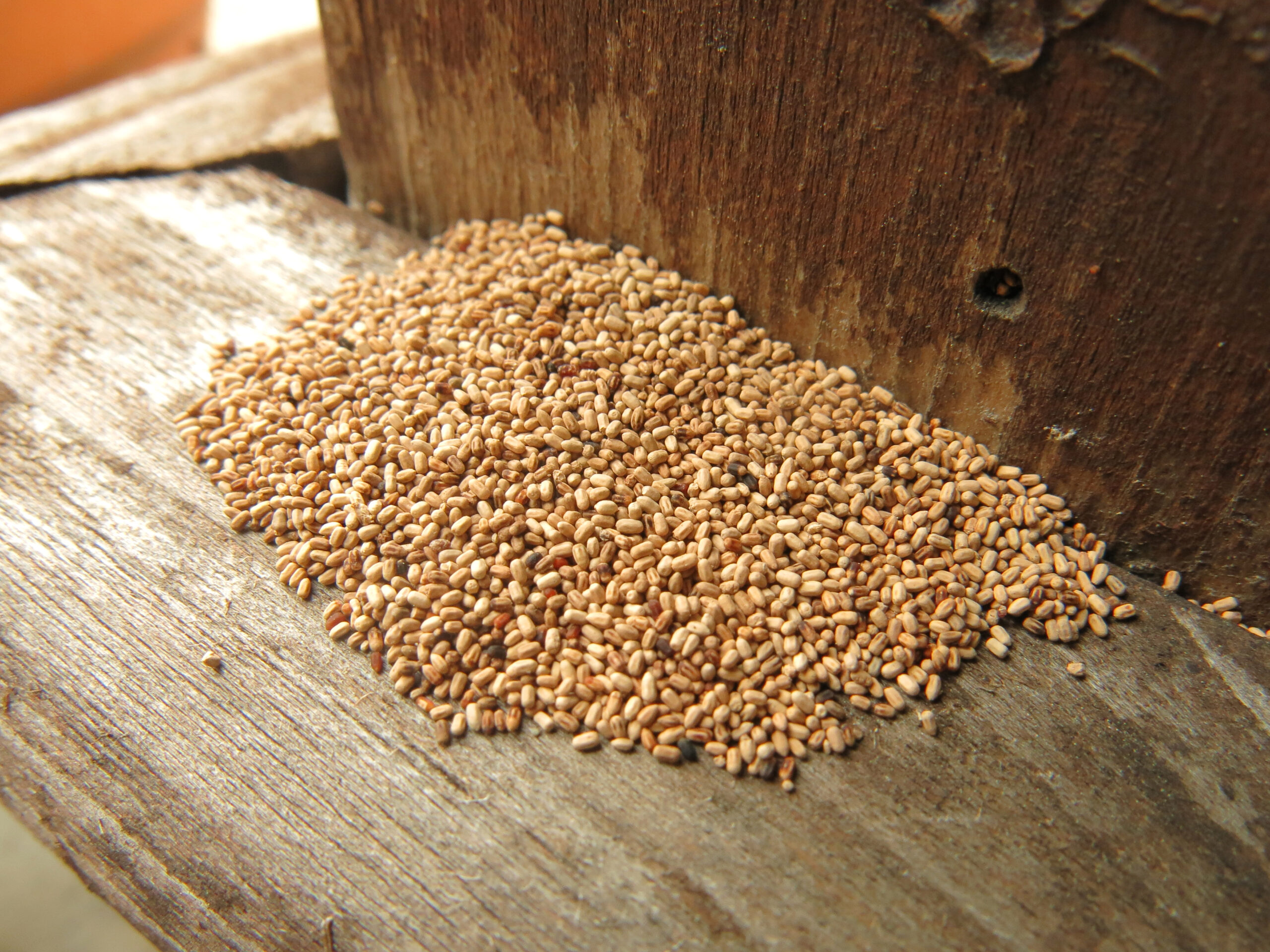
Hard pellets: Drywood termites expel small fecal pellets through openings in wood. They can collect under a leg, in a drawer, or on an interior horizontal surface. Under magnification, drywood termite pellets have characteristic flattened sides and ridges. A pile is a useful clue, not proof of a currently active colony.
Small holes: A hole directly above pellets may be a termite kick-out opening. Round holes with fine boring dust may instead be beetle exit holes. Finished furniture also may have old holes, repairs, or manufacturing marks. Match the hole to the material and location before drawing a conclusion.
Wings or insects: Save an intact insect or wings if available. Their identification can be more useful than a blurry photo of a hole. Winged insects near a window may have entered from outside or emerged indoors, so document where you found them rather than assuming a furniture colony.
Pellets, Powder, or Ordinary Dust?
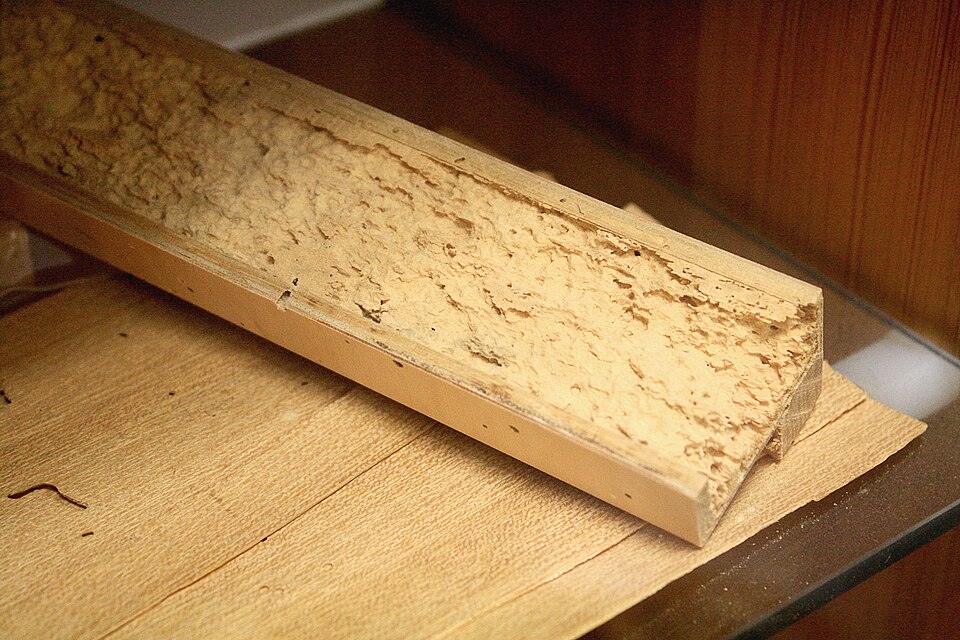
Wood-boring beetles are a real alternative in furniture. UC IPM describes powderpost beetle frass as fine and flour-like, sometimes below small round exit holes. Drywood termite pellets are coarser, hard, and more uniform. Other beetle groups leave different debris, so texture is a clue rather than a species verdict. Furniture dust, sanding residue, and loose material from an old repair may also collect around joints.
Do not identify a pest from one photo alone. Photograph the pile before disturbing it, then clean only the loose debris and note whether more appears in the same place. Moving or tapping wood can dislodge old pellets, so one new fall after movement is not conclusive. Repeated new material from one spot warrants professional identification. For a fuller side-by-side comparison, see termites versus carpenter ants and wood-boring beetles.
What to Do Next
- Document: Photograph the entire piece, the underside or drawer, the debris, nearby holes, and any insect or wings. Record the date and whether the item was recently moved.
- Preserve a sample: Put a few pellets or an intact insect in a small sealed container or bag for an identifier. Keep the rest of the wood intact.
- Check nearby visible wood: Look for matching debris on trim, shelves, floors, or other furniture. A finding on one item does not establish that the home is infested; neither does it rule out a separate hidden infestation.
- Get an identification and scope: If evidence recurs, insects emerge, the item is valuable, or nearby building wood has signs, ask a qualified local pest professional to identify the culprit and state what areas were inspected. The professional inspection guide explains the limits of a visit.
- Decide on the item after identification: Ask whether keeping, treating, or discarding the furniture is appropriate and what follow-up is needed for the surrounding building. Get the proposed scope and limitations in writing; our questions for a termite company can help.
Avoid improvised treatment. Do not drill finished furniture, apply an unverified spray, or try home heat, cold, or fumigation methods based on a photo. Methods depend on the identified pest, the materials in the item, product labels, and local professional requirements. Treating one item cannot prove that hidden insects elsewhere in the building are gone.
When the Building Needs Attention Too
An isolated piece may be the only known location, but pellets or wings near baseboards, window trim, framing, or multiple wooden items widen the question. Request an inspection of accessible nearby areas if the evidence suggests the building may be involved. Ask the inspector to separate what was observed from what is inferred, and to explain any inaccessible areas. The identification hub can help you organize mixed signs before the visit.
Bottom Line
Wooden furniture can harbor drywood termites, but beetles and old damage can leave similar clues. Preserve the evidence, avoid moving a suspect used piece into another building, and use an identification and inspection to decide what to do with the item and whether surrounding wood needs attention.
Sources
Featured image: David McClenaghan / CSIRO, CC BY 3.0. Cropped from the original. The photo shows drywood termites on wood, not furniture.
- Texas A&M AgriLife — Drywood Termites (furniture and used-piece inspection)
- UC IPM — Drywood Termites (signs, activity limits, inspection and treatment limits)
- UC IPM — Wood-Boring Beetles in Homes (furniture lookalikes)
- U.S. EPA — Termites: How to Identify and Control Them (professional treatment and pesticide boundaries)