Identification guide
Signs of Termites: What to Look For (With Pictures)
You may notice termite evidence before you see a live insect: a mud line on the foundation, a small pile of pellets, or discarded wings on a windowsill. The examples below can help you recognize a possible sign and choose a next step. A photograph cannot establish whether an infestation is active or how far damage extends.
If you have not found termite evidence and are looking for routine risk-reduction steps instead, use our guide to preventing termites around your home.
The Short Answer: Five Signs to Look For
If you’re scanning for termites, these are the five things worth checking:
- Mud tubes — pencil-width earthen tunnels on foundations or walls.
- Drywood termite pellets — small droppings, often mistaken for sawdust.
- Swarmers — winged termites; timing varies by species, region, and weather.
- Discarded wings — equal-length wings shed near windows or light.
- Damaged wood — hollow-sounding, blistered, or crumbling timber.
This guide is part of our termite identification guides. If you are not sure what you found yet, start there before choosing a treatment.
Some correctly identified signs can confirm termite presence, but old tubes, pellets, or damage do not by themselves establish current activity. Not finding these signs does not rule out a hidden infestation. Use the photos to compare evidence, not to make a final diagnosis.
1 Mud Tubes
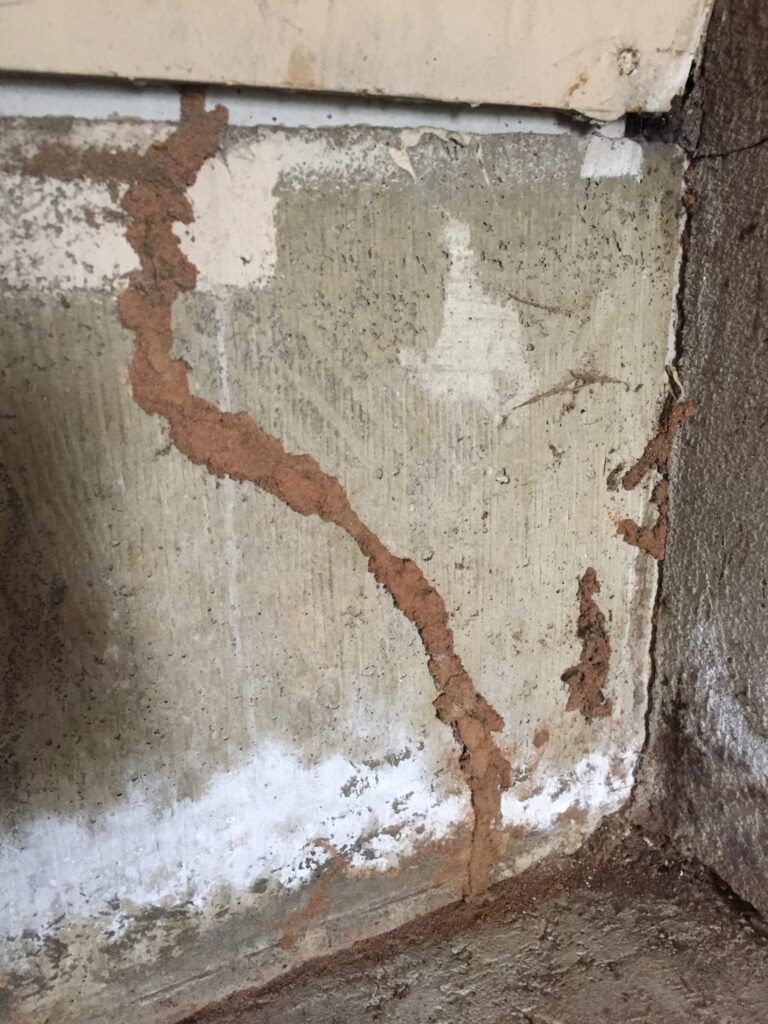
Pencil-width tunnels made of soil and saliva, running up foundations, walls, or piers. They’re the classic sign of subterranean termites, which use them to travel between the ground and your wood without drying out.
2 Frass (Droppings)
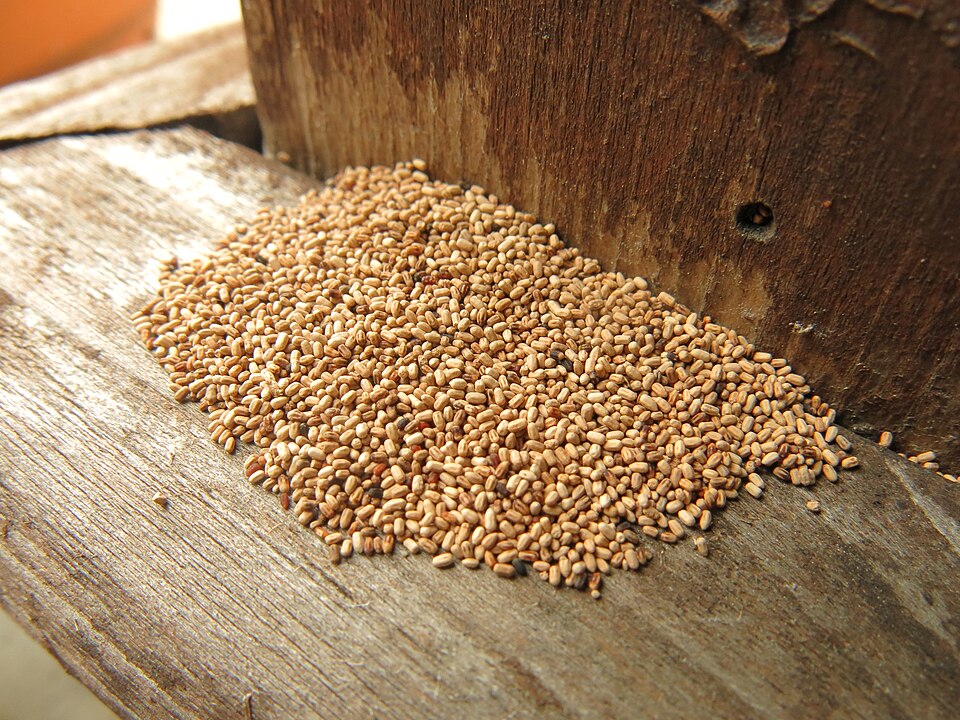
Drywood termites push their droppings — called frass — out of small “kick-out” holes, leaving little mounds of six-sided pellets that look a lot like coarse sawdust, coffee grounds, or ground pepper. Subterranean termites don’t usually leave visible frass, so frass often points to drywood activity.
3 Swarmers (Winged Termites)
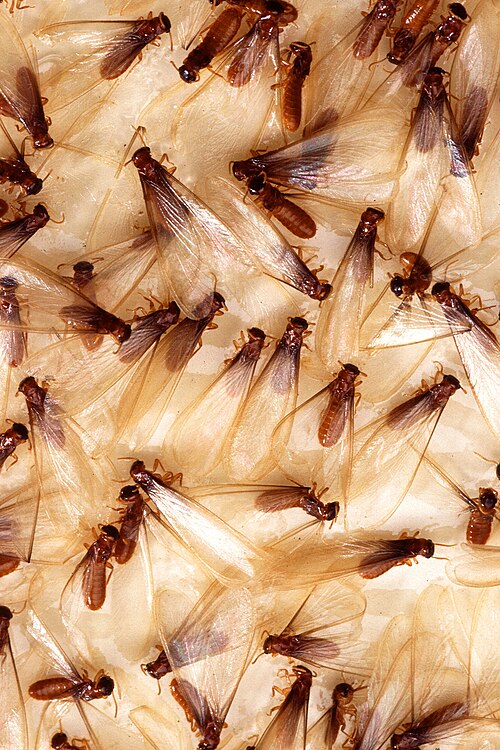
Swarmers are winged reproductive termites that leave an established colony to start new ones. Flights can be brief, and timing depends on species, region, and weather. Many subterranean species swarm in spring, while some drywood species swarm in summer or fall. The photo shows Formosan termite alates collected on a sticky monitoring trap; it does not show the size of a colony.
4 Discarded Wings
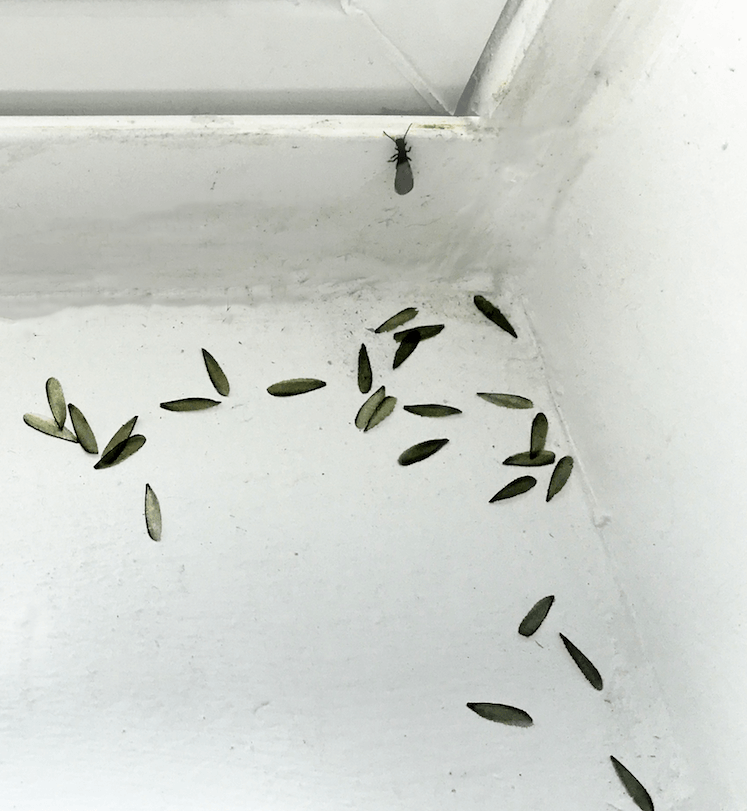
After swarmers land, they shed their wings — so you may find the wings without ever seeing the insects. Termite wings are all roughly equal in length and are often found in small piles on windowsills, along baseboards, or near light fixtures. (Flying ants, by contrast, have front wings noticeably longer than the back pair.)
5 Damaged or Hollow Wood
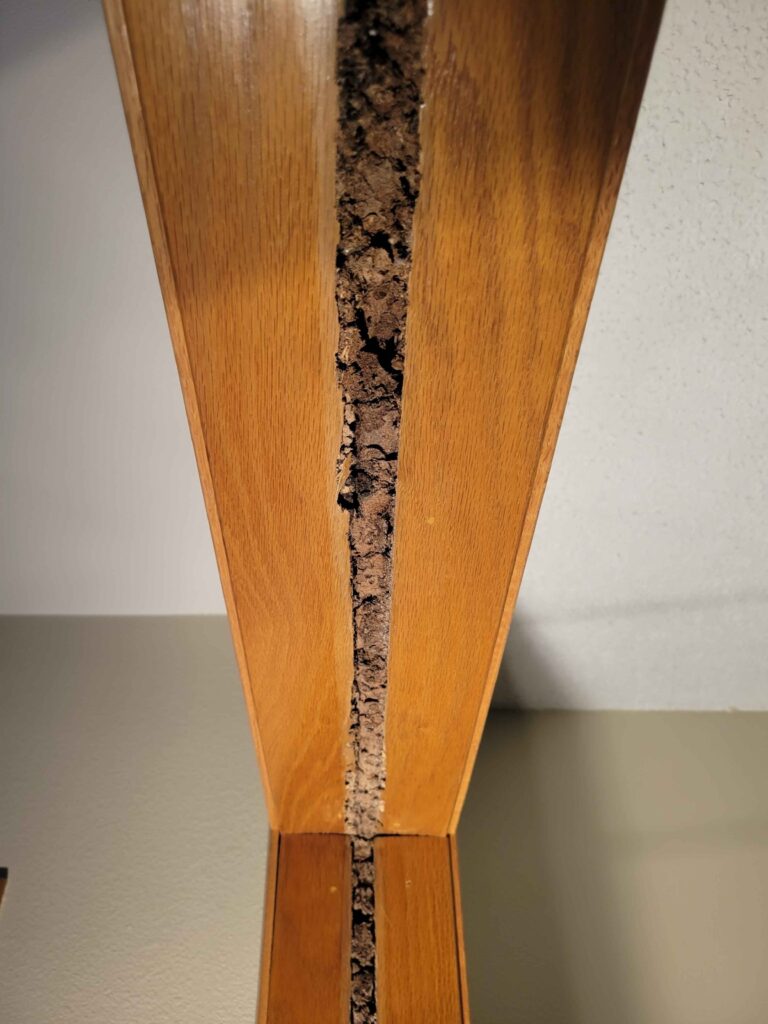
Termite feeding can leave hidden galleries beneath an apparently intact wood surface. Hollow-sounding wood, blistering, or sagging deserve attention, but moisture damage, decay, and other pests can produce similar symptoms. Sound or appearance alone cannot identify the cause. Compare termite damage vs water damage for the differences between galleries, swelling, and wood decay.
Drywood Termite Pellets vs. Carpenter Ant Debris
Carpenter ants excavate wood rather than eat it. Their discarded wood shavings are not the same thing as termite fecal pellets. These clues can help you compare, but color alone is not a reliable test:
| Clue | Drywood termite pellets | Carpenter ant debris |
|---|---|---|
| Shape | Small, fairly uniform pellets with six-sided profiles | Irregular wood shavings, sometimes mixed with insect remains |
| Appearance | Distinct hard pellets; detail may require magnification | Coarse, fibrous shavings rather than uniform pellets |
| Where | Often below small kick-out holes | May accumulate below openings used to discard nest debris |
| Color | Can vary within the same pile | Varies with the wood and other material present |
For the full close-up comparison, see termite droppings vs. frass.
Do the Signs Look Different by Region?
Location helps narrow the possibilities, but a state’s climate cannot identify an insect or rule out an infestation. Local species and swarm seasons vary. Use our termites by state guide for regional context, then compare the actual evidence rather than choosing a treatment from location alone.
When a Sign Means “Call a Professional”
Stop guessing and get a licensed inspection if you see any of these:
- swarmers or discarded wings indoors;
- mud tubes on your home’s foundation, piers, or interior walls;
- suspected termite pellets appearing inside your home;
- soft or sagging wood, especially in a load-bearing area; keep clear and also seek a qualified structural assessment;
- signs during a home sale, inspection, or refinance deadline.
Document the evidence before cleaning it away or attempting treatment. Do not disturb suspect structural wood or delay an inspection while trying to prove activity yourself.
You’ve Spotted a Sign — What Now?
Finding a sign is the start, not the diagnosis. Here’s the honest path:
- Document what you found. Take a close-up and a wider photo, note the location and date, and avoid disturbing the evidence.
- Compare the right clue. Use the pellets guide for loose debris or the mud tubes guide for earthen tunnels. Neither replaces an inspection.
- Check the rest of the house. Work through the termite inspection checklist to cover the other accessible areas in a consistent order and record what you find.
- Consider look-alikes. Compare with carpenter ants and wood-boring beetles. A professional may need a specimen or an on-site inspection to confirm the cause.
- Get routed to the right step. Our decision guide takes your specific situation and points you to observe, safe DIY, comparing options, or calling a pro.
For accessible areas without structural or electrical hazards, our termite inspection tools guide covers basic observation tools and their limits. Do not enter unsafe crawl spaces or open walls to investigate.
The Bottom Line
Mud tubes, pellets, swarmers, discarded wings, and damaged wood are clues worth documenting. Photos can help you compare them, but cannot establish the activity, extent, or structural consequences of an infestation. Suspected evidence on your home deserves a licensed inspection; weakened structural wood also needs a qualified building assessment. For help choosing a next step, use our decision guide.
How We Approach These Guides
TermitePlan is an independent decision resource; we are not an exterminator and do not sell treatments. Identification here is meant to help you recognize evidence and choose a next step, not to replace a licensed inspection. See our Methodology.
Sources
- U.S. EPA: Termites, identification and control.
- UC IPM: Drywood termites, including pellet identification, swarm timing, and inspection limits.
- UC IPM: Subterranean and other termites.
- UC IPM: Carpenter ants, including fibrous wood debris and identification differences.
UC IPM’s regional examples relate to California; local species and timing can differ elsewhere. Photo sources and licenses are credited with each image.