High-risk species guide
Formosan Termites: Why This Subterranean Type Is a Bigger Problem
Short Answer
Formosan termites are a type of subterranean termite — they nest in soil and reach wood the same basic way ordinary subterranean termites do. What sets them apart is scale: Formosan colonies can grow far larger than native subterranean colonies, which is why they have a reputation as one of the most destructive termite pests in the warmer parts of the U.S.
The practical takeaway is simple. If you suspect Formosan termites — especially indoors, in structural wood, or spreading quickly — this is an inspection-first, professional case, not a DIY starting point. Use our decision guide to sort your situation, and read on for the signs, the risk regions, and what to do next.
This page is a high-risk species guide, not a product page. The goal is to help you recognize when Formosan termites might be involved and route you to the right next step — usually a licensed inspection — rather than to sell you a treatment.
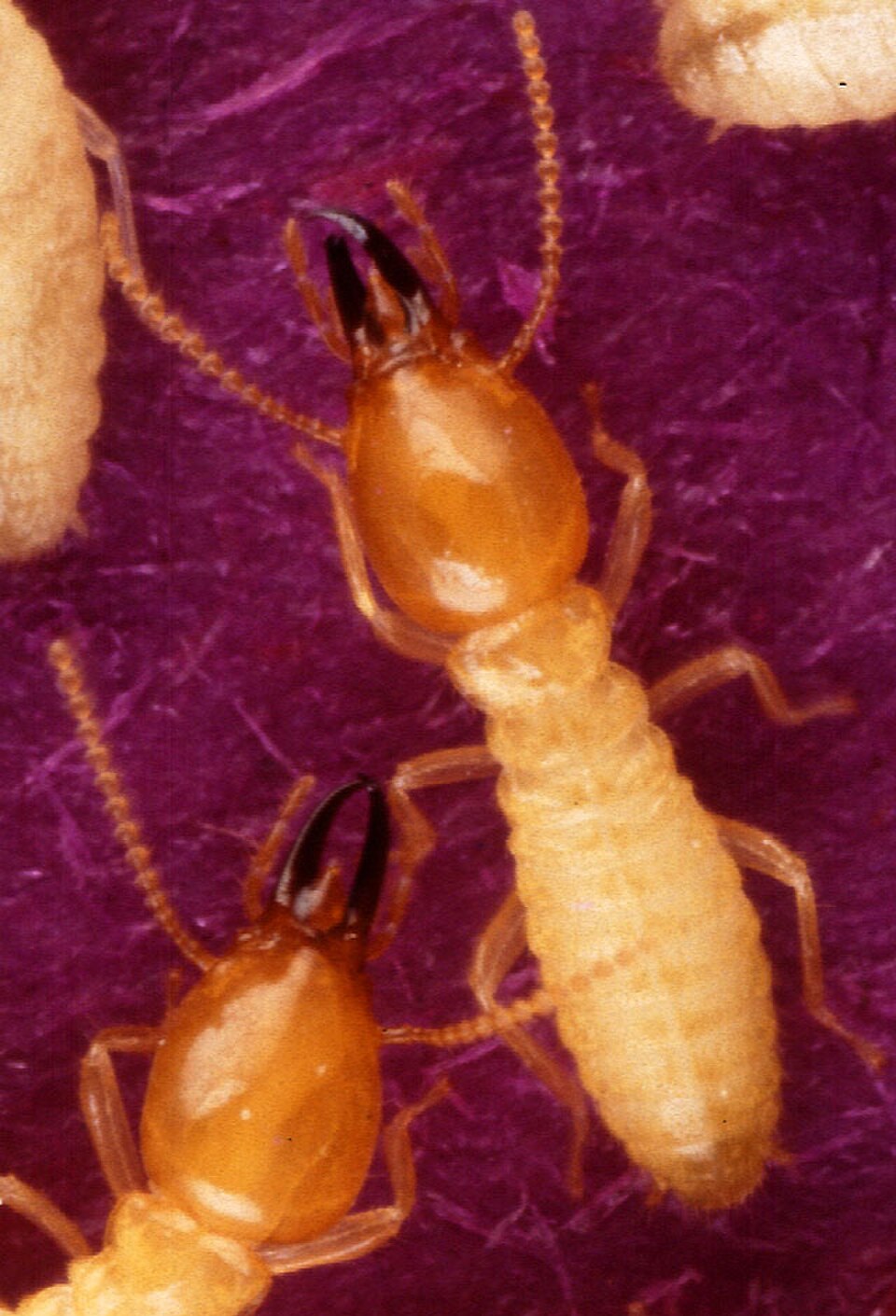
Formosan vs. Regular Subterranean Termites
Both are subterranean termites, so the comparison is about degree, not a completely different animal. But the differences matter for how seriously to take the problem.
→ Scroll the table sideways to see both columns.
| Factor | Formosan subterranean | Native subterranean |
|---|---|---|
| Colony size | Very large — colonies can reach into the millions | Smaller, typically hundreds of thousands |
| Speed & scale of damage | Faster and more extensive because of colony size and aggressive foraging | Serious, but usually slower to accumulate |
| Nesting | Can build “carton” nests in wall voids and structures, sometimes without needing constant soil contact | Rely more consistently on soil contact and mud tubes |
| Moisture | Need moisture but can retain it in carton nests, letting them nest above ground | Depend on ground contact for moisture |
| Where they appear | Warm, humid regions — see risk areas below | Widespread across much of the U.S. |
| Treatment difficulty | Harder — large colonies and hidden nesting often need an integrated professional plan | Still often a professional case, but sometimes narrower |
| DIY suitability | Low — rarely a good DIY starting point | Situation-dependent; still cautious |
Orientation only. The “identifying feature” people mention — a rounded, teardrop-shaped soldier head — is a clue, not something you can reliably confirm yourself. See the identification limits below, and for how the three broad termite types differ, see subterranean vs. drywood vs. dampwood.
Where Formosan Termites Are a Bigger Concern
Formosan termites need warmth and humidity, so in the U.S. they are mainly a concern across the South and in Hawaii. These are broad risk regions, not a precise map — presence varies locally, and new pockets can appear:
If you are outside these regions, Formosan termites are less likely but not impossible. Local specifics matter — a local pest professional or your state’s cooperative extension office can tell you what is active in your area.
Signs That May Point to Formosan Termites
None of these confirm Formosan termites on their own — they are subterranean signs that, combined with your region and the scale of the problem, may raise the suspicion:
Mud tubes
Like other subterranean termites, they build mud tubes — but Formosan activity can produce more extensive tubing. Our guide on mud tubes vs. old damage covers the active-vs-old test.
Swarmers, especially indoors
Formosan swarmers typically fly on warm, humid evenings in late spring and summer, often around dusk and drawn to lights. A swarm indoors is a stronger urgency signal than a species clue — treat it as a reason to get an inspection.
Carton nests
A distinctive Formosan trait: they can build spongy “carton” nests from chewed wood, soil, and saliva inside wall voids and other hidden spaces, which helps them hold moisture and nest away from soil.
Damp or hidden voids
Because carton nests retain moisture, activity can center on wall voids, moisture-prone areas, and hidden cavities rather than only at ground level.
Fast or widespread damage
Damage that seems to progress quickly, or shows up in several places, fits the large-colony profile — and is a reason to move faster on an inspection.
What You Cannot Confirm Yourself
This is the honest limit, and it matters more here than on most pages:
- You cannot confirm Formosan from damage alone. Damage, mud tubes, and even carton material overlap with other termites and other wood pests.
- Workers are not enough. The pale workers you are most likely to see look broadly similar across subterranean species.
- Reliable ID usually needs more. Confirming Formosan often relies on soldiers, swarmers, or specimens examined by someone who knows what to look for — the teardrop-shaped soldier head is a clue for an expert, not a DIY verdict.
- Local help exists. A licensed local pest professional or your state’s cooperative extension office can identify what you have far more reliably than a photo.
So treat “it might be Formosan” as a working suspicion that justifies a professional look — not something to self-diagnose and then self-treat.
Why This Is Usually Not a DIY Starting Point
For most termite problems we are careful to say DIY can fit some situations. Formosan is where that caution gets stronger, for stacking reasons:
- Colony size. Very large colonies are hard to knock down with a partial or single-point treatment.
- Hidden nesting. Carton nests inside voids can sit where a DIY application never reaches.
- Moisture. Their moisture retention makes them resilient and harder to starve out.
- Structural risk. Faster, wider damage raises the stakes of getting it wrong.
- Label and state rules. Effective products carry label restrictions, and rules vary by state.
- Integrated plans. Serious Formosan control often needs a combined, monitored approach rather than one product.
That combination is exactly why a licensed professional is usually the right first move here.
What To Do If You Suspect Formosan Termites
- Photograph the signs. Clear photos of insects, tubes, or nests help a professional or extension office assess what you have.
- Don’t disturb it aggressively. Beyond a gentle look, tearing into nests or tubes can spread activity and destroy useful evidence.
- Check for moisture. Note leaks, damp areas, and wood-to-ground contact — moisture is part of the picture.
- Use the decision guide. Run your situation through the termite treatment decision guide to see how urgent and how professional your case is.
- Call a licensed termite professional. Given the risk profile, this is the core step, not a last resort.
- Ask the right questions first. Use our questions to ask a termite company so you hire well and avoid overpaying.
Treatment Paths
These guides explain how the main methods work so you can follow the conversation with a professional. They describe methods, not a DIY recommendation for a suspected Formosan infestation:
- How the main categories compare: termite treatment types compared.
- Bait versus liquid approaches: bait stations vs. liquid treatment.
- Foam versus liquid delivery: foam vs. liquid treatment.
- What treatment typically costs: termite treatment cost.
- Where DIY does and doesn’t fit: DIY vs. professional.
When To Call a Professional
With Formosan termites the threshold for professional help is low. Get a licensed termite inspection if any of these apply:
- you are in a Formosan risk region and see subterranean signs;
- swarmers or live termites appear indoors;
- you find carton material in a wall void or hidden space;
- mud tubes are extensive or rebuild quickly;
- damage looks fast-moving, widespread, or possibly structural;
- there is a home sale, inspection, refinance, or tenant deadline;
- you simply are not sure what you are dealing with.
An inspection settles both the species and the extent — the two things a photo can’t. For this risk profile, that is not an expense so much as insurance against a much larger repair bill.
Safety & Accuracy Notes
This page helps you recognize when Formosan termites might be involved and routes you toward a professional; it is not a species-verification service or a treatment plan. Confirming Formosan termites reliably usually requires expert examination, and any pesticide use is governed by the current product label and your state’s rules. When the species or the extent of damage drives your decision, confirm it with a licensed inspection rather than a photo.
Bottom Line
Formosan termites are a high-risk type of subterranean termite: same basic biology, much bigger colonies, faster damage, and hidden carton nesting that makes them hard to treat. You can’t confirm them yourself, and they are rarely a good DIY starting point. If you suspect them — especially indoors or in a risk region — confirm quickly and professionally. Start with the decision guide, then get a licensed inspection.
How We Compare These Options
TermitePlan builds species guidance from documented termite biology, behavior, distribution, and the recognized limits of identifying termites without expert examination. We don’t claim laboratory identification, and we route high-risk cases toward licensed professionals rather than DIY products. See our Methodology.