Florida regional guide
Termites in Florida: Types, Warning Signs, and What to Do
Short Answer
Florida has several termite groups that can affect homes, and they do not all call for the same treatment. Subterranean termites usually reach a structure from soil and often leave mud tubes. Drywood termites live inside wood and are more often associated with hard fecal pellets called frass. Dampwood termites depend on persistently wet wood. Florida also has invasive Formosan and Asian subterranean termites, which deserve faster professional attention when suspected.
The practical first step is to identify the evidence and the termite group before choosing a treatment. Use the comparison below, then follow the matching route in our termite treatment decision guide.
Florida Termites at a Glance
Scroll the table sideways to see every column.
| Group | Where it is found | Strongest clues | Usual next route |
|---|---|---|---|
| Native subterranean | The broad statewide baseline | Mud tubes, soil-linked entry, swarmers or shed wings, damage that often follows the grain | Professional inspection; soil treatment or a monitored bait system depending on the structure and infestation |
| Formosan / Asian subterranean | Formosan termites are established mainly in coastal counties and major urban centers; Asian subterranean termites were once concentrated in South Florida but are now confirmed as far north as Hillsborough and Brevard counties | Subterranean signs plus large evening swarms, possible carton material, tree involvement, or wider hidden activity | Faster professional assessment and a plan designed for the confirmed species, colony access, and structure |
| Drywood | An important structural pest group in many Florida communities | Hard six-sided pellets, kick-out holes, localized galleries, swarmers or shed wings; no soil mud tubes | Thorough inspection; localized removal or labeled spot treatment when truly limited, or structural fumigation for broader or uncertain infestations |
| Dampwood | Florida species occur mostly from central Florida southward and are usually tied to wet wood | Persistently wet or decayed wood, soft or hollow areas, clumped or loose pellets | Correct the moisture source, repair or replace damaged wood, then determine whether additional treatment is needed |
This table routes the inspection; it does not confirm a species. For a closer side-by-side explanation, see subterranean vs. drywood vs. dampwood termites.
Why Your Florida Location Matters
Florida’s termite picture changes by region, but county records are not perfect boundaries. UF/IFAS notes that reports are affected by population density, sampling effort, ports, movement of infested wood, and continuing spread. Use the UF/IFAS interactive termite distribution map as a current risk reference, not as proof that a species is present or absent at one address.
Florida also has native drywood and dampwood termites that are common outdoors but have little structural pest status. A winged termite that flies indoors may have come from outside; indoor emergence, repeated activity, pellets, tubes, or damaged wood makes a structural inspection more important.
One localized Florida exception is the conehead termite. FDACS continues survey and treatment work in two Broward County areas around Dania Beach and Pompano Beach. Conehead termites build visible above-ground tunnels on trees, fences, or structures. A suspected sighting in that area should be reported through the FDACS Conehead Termite Eradication Program rather than treated as an ordinary household termite ID.
Warning Signs and What They Can Tell You
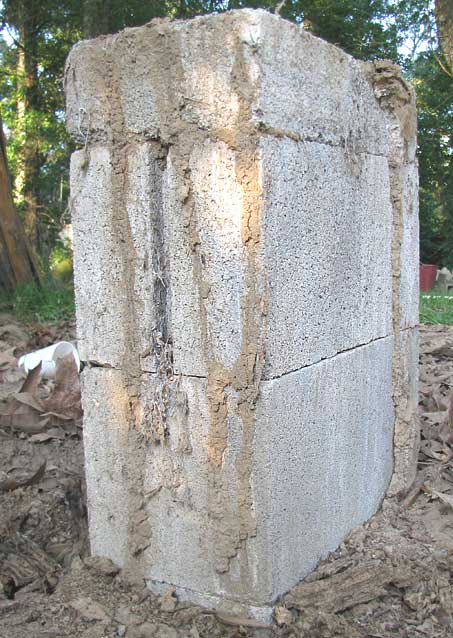
Mud tubes
Soil-colored tubes on foundations, walls, piers, plumbing penetrations, or hidden joints strongly support a subterranean route. A tube can remain after activity stops, so its appearance alone does not prove that the colony is active today. See termite mud tubes vs. old damage.
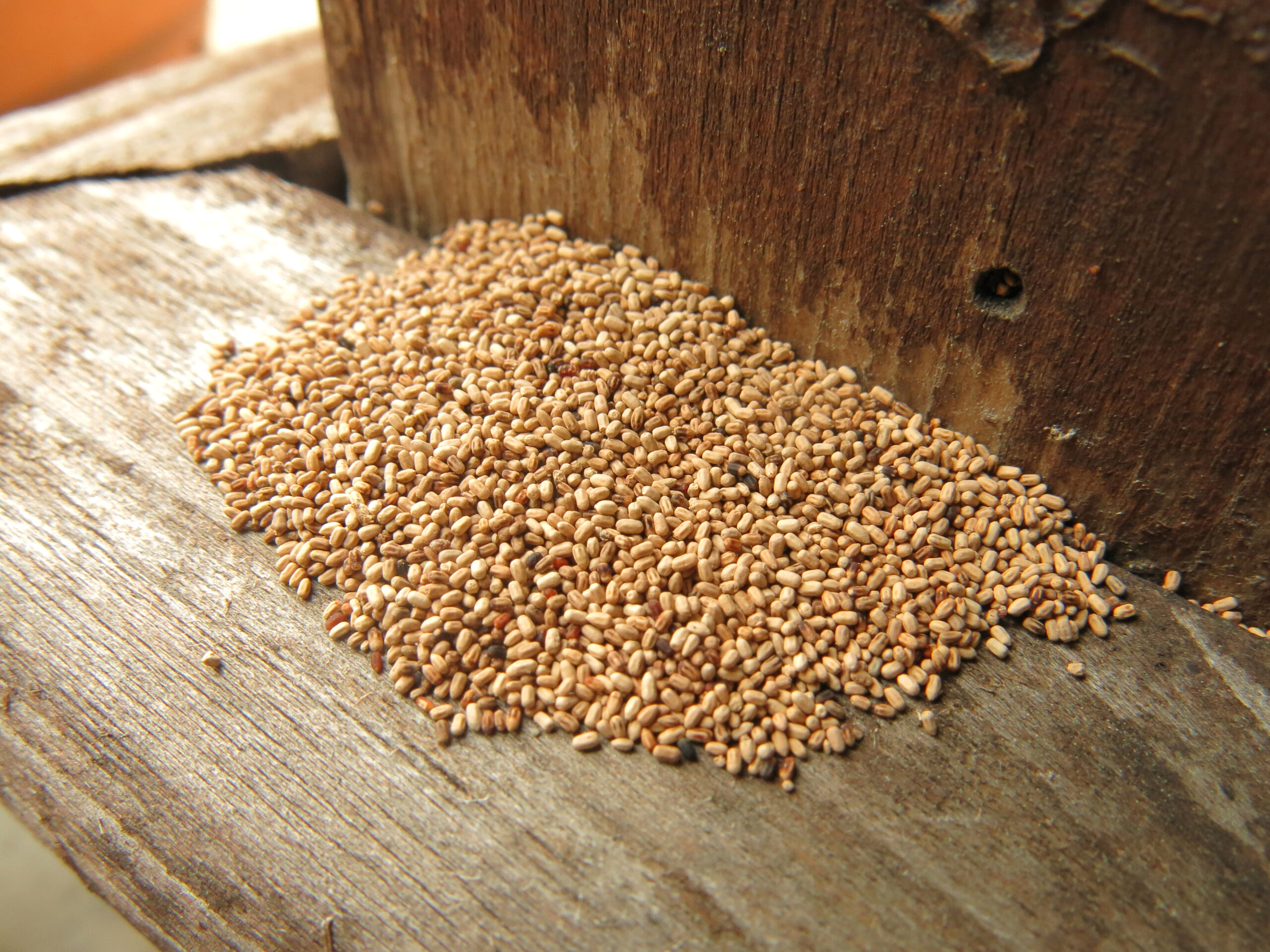
Frass or pellets
Drywood termites push dry, hard, six-sided pellets through small kick-out holes. Dampwood pellets may clump in moist conditions. Sawdust, ant debris, and beetle frass can look similar at a glance, so use our droppings vs. frass guide before assuming the source.
Swarmers and discarded wings
Indoor swarmers or repeated piles of wings near the same window, door, vent, or light deserve prompt inspection. Outdoor swarmers near a home show that termites are in the area but do not automatically prove an indoor infestation.
Damaged, hollow, or soft wood
Subterranean damage often follows the wood grain and may contain soil. Drywood galleries can cross the grain and remain hidden inside apparently sound wood. Soft, wet, decayed wood raises a dampwood and moisture-damage route. Visible damage cannot show how far hidden damage extends.
When Do Termites Swarm in Florida?
Florida does not have one reliable “termite season.” Swarming timing can help orient an inspection, but species, weather, location, and indoor conditions all shift the calendar.
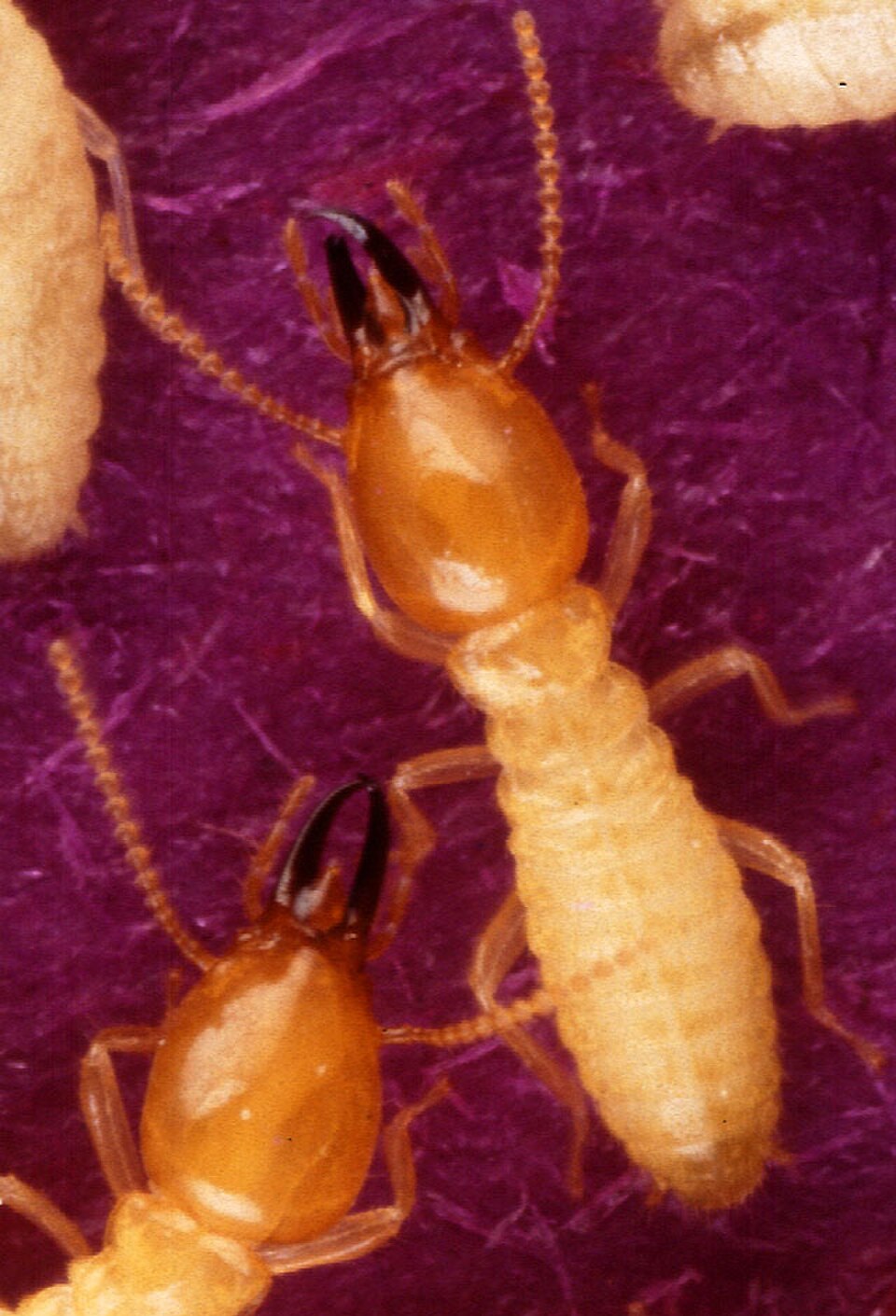
Month and time of day are supporting clues, not a species test. Preserve a useful specimen when possible: UF/IFAS notes that alates and soldiers are generally more informative than workers.
Why Formosan and Asian Termites Need Faster Assessment
Formosan and Asian subterranean termites are invasive Coptotermes species. They follow the subterranean treatment route, but their risk profile is different from an ordinary one-point household clue. Formosan colonies can reach populations in the millions, may involve trees, and can build moisture-holding carton material in structural voids. Asian subterranean termites are a similar high-risk concern, with established records extending from South Florida north to Hillsborough and Brevard counties.
That does not mean every evening swarm is Formosan or that every suspected sighting signals immediate structural failure. It means an indoor swarm, active tubes, carton material, tree activity near the structure, or widespread hidden damage should move the case toward an experienced licensed inspection. Read the dedicated Formosan termite guide for the identification limits and professional threshold.
What about hybrid termites?
UF/IFAS has confirmed rare Formosan-Asian hybrid alates and field colonies in Broward County. As of 2025, hybrids accounted for about 0.1% of sampled alates in parts of the county and had not been confirmed elsewhere in Florida. They are not a new "super termite", cannot be confirmed visually by a homeowner, and do not change the treatment route: suspected hybrids should be confirmed through the UF/IFAS guidance and Termite ID Service.
Get a Licensed Inspection Promptly If
- live termites, swarmers, or repeated piles of wings appear indoors;
- mud tubes enter framing, walls, flooring, or other structural areas;
- pellets keep returning after careful cleanup;
- damage is hidden, extensive, soft, sagging, or possibly structural;
- Formosan or Asian subterranean termites are plausible in your area;
- fumigation, a real-estate transaction, or a repair warranty is involved;
- you cannot confidently distinguish termite evidence from a look-alike.
A photo can help with triage, but it cannot establish colony location, activity level, or structural severity.
Treatment Paths Depend on the Termite Type
Professional liquid soil treatments and monitored bait systems are the main paths. Construction, foundation access, soil conditions, entry points, prior treatments, and the confirmed species affect the choice.
Compare the methods in termite treatment types and bait stations vs. liquid treatment.
The route is still subterranean control, but colony scale, trees, hidden carton nests, and contract coverage make experienced professional planning more important. Do not rely on a single retail spot treatment.
When an infestation is genuinely limited and accessible, the plan may involve removing infested wood or furniture or using a labeled localized treatment. Multiple, hidden, inaccessible, or uncertain colonies may lead to structural fumigation.
Fumigation is regulated professional work, not a DIY procedure.
Fix roof, plumbing, drainage, or other moisture sources; dry the area; and repair or replace wood that is too damaged or decayed. Moisture correction is central, but it does not reverse existing structural damage.
Safety boundary: this guide does not provide pesticide mixing ratios, trench dimensions, drilling layouts, application volumes, or instructions that replace a product label. The current label, the structure, and Florida rules govern any treatment. No method is universally best.
How to Choose a Termite Company in Florida
Florida regulates structural pest-control businesses through the Florida Department of Agriculture and Consumer Services. A business location offering structural pest control must be licensed, insured, and supervised by a Florida-certified operator in the categories it offers. Termites and other wood-destroying organisms and fumigation are separate certification categories.
- Verify the company and credentials. Use the current FDACS AES licensing portal. Ask who the certified operator in charge is and which category covers the proposed work.
- Require an inspection-based recommendation. A quote based only on square footage does not explain the organism, evidence, access, or treatment scope.
- Read the written contract before treatment. Florida requires a written agreement for wood-destroying organism treatment.
- Confirm exactly what is covered. The contract should identify the organism, say whether Formosan termites are covered, state whether treatment is included, and disclose any spot-treatment limitation.
- Distinguish retreatment from repair coverage. A retreatment-only agreement is not the same as a repair warranty. Read limits, waiting periods, deductibles, renewal terms, and maximum liability.
- Understand conditions that can affect coverage. Moisture, leaks, wood-to-ground contact, inaccessible areas, additions, excavation, or untreated portions of the structure may matter.
- For fumigation, follow the certified applicator. The company must provide the contract and product-specific fumigant information. Only the applicator can clear the structure for re-entry.
Use our full checklist of questions to ask a termite company when comparing written proposals.
What Does Termite Treatment Cost in Florida?
There is no responsible single Florida price. The main cost drivers are the termite group, the extent and accessibility of the infestation, foundation and construction details, localized versus whole-structure work, monitoring and renewal terms, and whether the contract includes retreatment only or repair protection.
Use the national ranges in our termite treatment cost guide for orientation, then compare multiple written Florida proposals line by line. A lower headline price may cover less area, exclude Formosan termites, omit monitoring, or provide different warranty protection. This page does not add an unsupported “Florida premium.”
What to Do Next
- Document the evidence. Photograph tubes, pellets, wings, insects, and damaged areas without tearing open more of the structure.
- Note where and when it appeared. Indoor versus outdoor location, repeated evidence, moisture, and time of day help route the inspection.
- Preserve a specimen when possible. Alates and soldiers are more useful than workers for species identification. UF/IFAS provides a termite sample identification service.
- Use the decision guide. Follow the termite treatment decision tree to separate monitor, inspect, professional, and urgent routes.
- Get a licensed inspection when the evidence is active, hidden, structural, Formosan/Asian, or uncertain.
Bottom Line
Florida has multiple termite problems, not one statewide treatment. Mud tubes point toward subterranean termites; hard pellets point toward a drywood route; persistently wet wood raises dampwood concerns; and suspected Formosan or Asian subterranean termites lower the threshold for professional help. Identify the group, verify the company and contract, and choose the treatment only after the evidence and structure have been assessed.
Florida Sources
- UF/IFAS: Termite Species Distribution in Florida and UF Termite Identification Services
- UF/IFAS: Termite Prevention and Control
- UF/IFAS: Subterranean Termites
- UF/IFAS: Drywood and Dampwood Termites
- UF/IFAS: Formosan Subterranean Termite
- UF/IFAS: Hybrid Coptotermes Termites – Separating Fact from Fiction
- UF/IFAS: Updated Formosan and Asian Subterranean Termite Spread
- FDACS: Pest Control Licensing and Certification
- FDACS: Structural Fumigation FAQ
- FDACS: Conehead Termite Eradication Program
- Florida Administrative Code: Chapter 5E-14
How We Build Regional Guides
TermitePlan separates documented species distribution and treatment categories from what a homeowner can actually prove at home. Regional claims are based on university extension and government sources, while uncertain, hidden, structural, or high-risk cases are routed toward licensed inspection. See our Methodology.