
Termite identification
What Does a Termite Nest Look Like? Where Colonies Hide and What You Can See
Short Answer
Most termites in U.S. homes never build a nest you can see. Subterranean termites, the most common kind, keep their colony in the soil, sometimes many feet down, and reach the house through mud tubes. Drywood termites live inside the wood they eat, so the “nest” is a set of tunnels in a board, beam, or piece of furniture. Formosan termites can build spongy carton nests inside wall voids, hidden until a wall is opened.
The one termite in the U.S. with a big, visible nest is the conehead termite in south Florida, which builds dark, lumpy nests on trees and structures and should be reported to the state. If you found a rough mud structure stuck to a wall, it is more likely a mud tube from subterranean termites or a mud dauber wasp nest. The table below shows how to tell them apart.
Where Termites Actually Nest
University of California IPM describes three main groups of termites that damage U.S. structures, and each lives in a different place.
Subterranean termites
Colonies nest in or near the soil, sometimes many feet below the surface. Mature colonies can reach hundreds of thousands of termites. What you see is the route: mud tubes on foundations and wood hollowed along the grain, often with soil inside.
Drywood termites
Colonies live entirely inside dry, sound wood, such as framing, trim, furniture, or dead limbs, with no connection to the soil. The usual clue is a small pile of six-sided pellets pushed out of the wood.
Dampwood termites
Colonies live in very moist, often decaying wood, usually where wood touches soil or a leak keeps it wet. They are most common in cool, humid coastal areas, especially along the Pacific coast.
Formosan termites
Primary nests are in the soil, but colonies can also build carton nests above ground in wall spaces when moisture is available. Texas A&M AgriLife Extension says these nests can be as large as several cubic feet.
Not sure which group you have? Our guide to subterranean vs. drywood vs. dampwood termites compares the signs.
Subterranean Termites: The Nest You Will Not Find
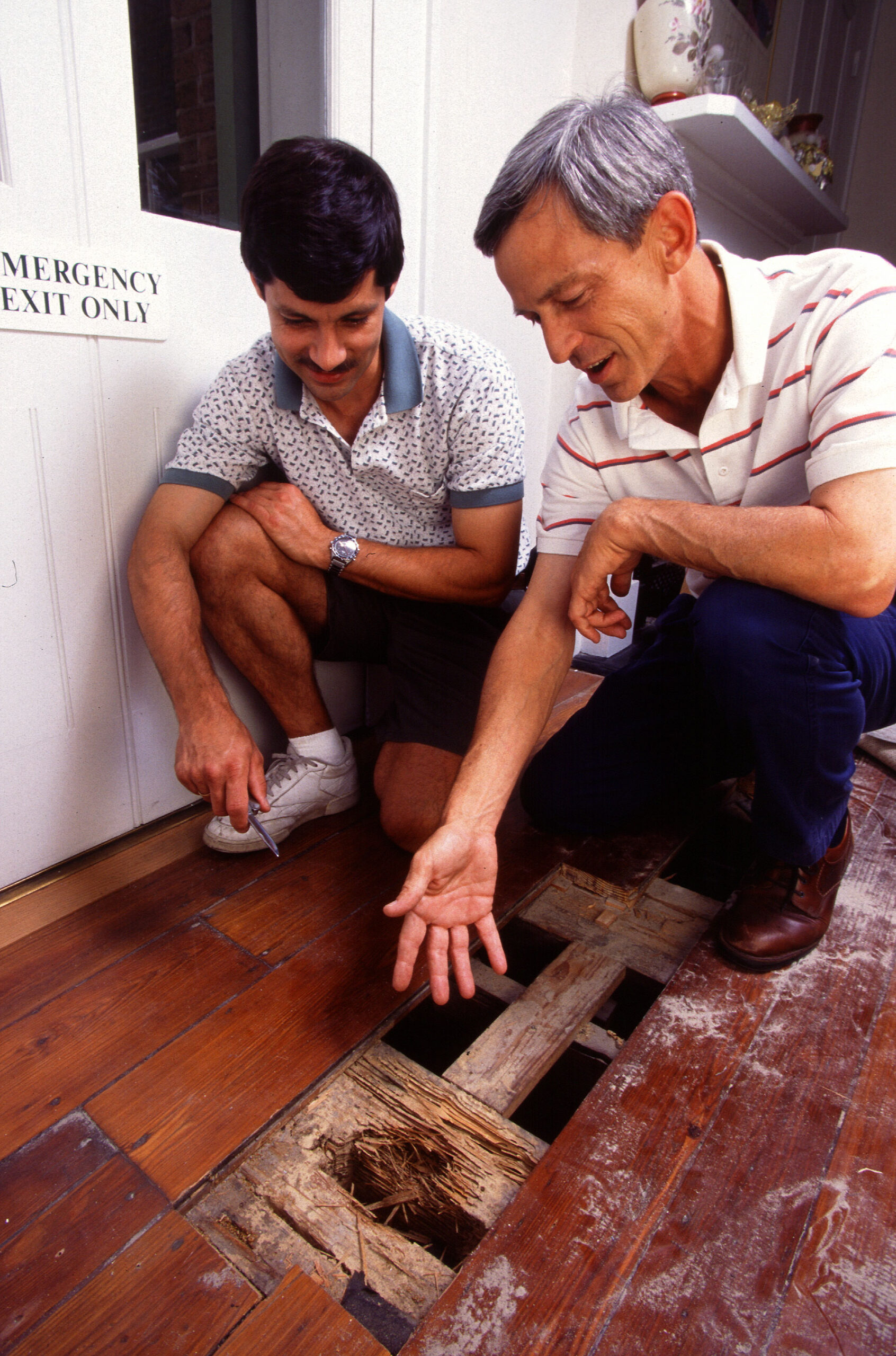
If termites are in your house, the colony is almost always somewhere you cannot reach. Workers travel between the soil and the wood through tunnels in the wood and through mud tubes, which UC IPM describes as earth-hardened tubes made from saliva, soil, and bits of wood or drywall. Some tubes run from the soil up a foundation to wood; some rise from the ground and never reach wood; some hang down from wood toward the soil.
Inside wood, subterranean termites eat the softer springwood and leave the harder layers, so damaged wood often looks layered or hollow and may contain soil or light-brown excrement. A single home can be visited by several colonies. Digging in the yard to find “the nest” is not useful, because treatment works by targeting the termites where they forage or by protecting the soil around the house. Our subterranean termite guide explains how colonies reach a house, and mud tubes vs. old damage shows how to check whether a tube is active.
Formosan Carton Nests
Formosan termites are subterranean termites with much larger colonies. Texas A&M AgriLife Extension describes their nests as made of carton, a mix of chewed wood, soil, saliva, and fecal material. The main nest is in the soil, often away from the house. When moisture is available, for example from a long-running leak, a colony can also build an aerial nest in wall spaces and survive there for months or years, even if it is cut off from the soil nest.
These nests are usually found only when wall coverings are removed during repairs. A carton nest looks like a brown, layered, sponge-like or honeycomb-like mass filling a void. If you uncover one, stop, take photos, and call a licensed inspector rather than breaking it apart. Our Formosan termite guide covers where they occur and why they need a professional plan.
Drywood Termites: The Wood Is the Nest
A drywood colony lives inside the wood it feeds on. UC IPM notes that drywood galleries cut across the grain, some chambers are packed with fecal pellets, and the termites push pellets out through small openings, where they collect on surfaces below. Those pellets are often the first thing a homeowner notices. A piece of furniture, a window frame, or an attic rafter can hold a whole colony. See our drywood termite guide and termite droppings vs. frass to identify pellets.
The One Visible Termite Nest in the U.S.: Conehead Termites
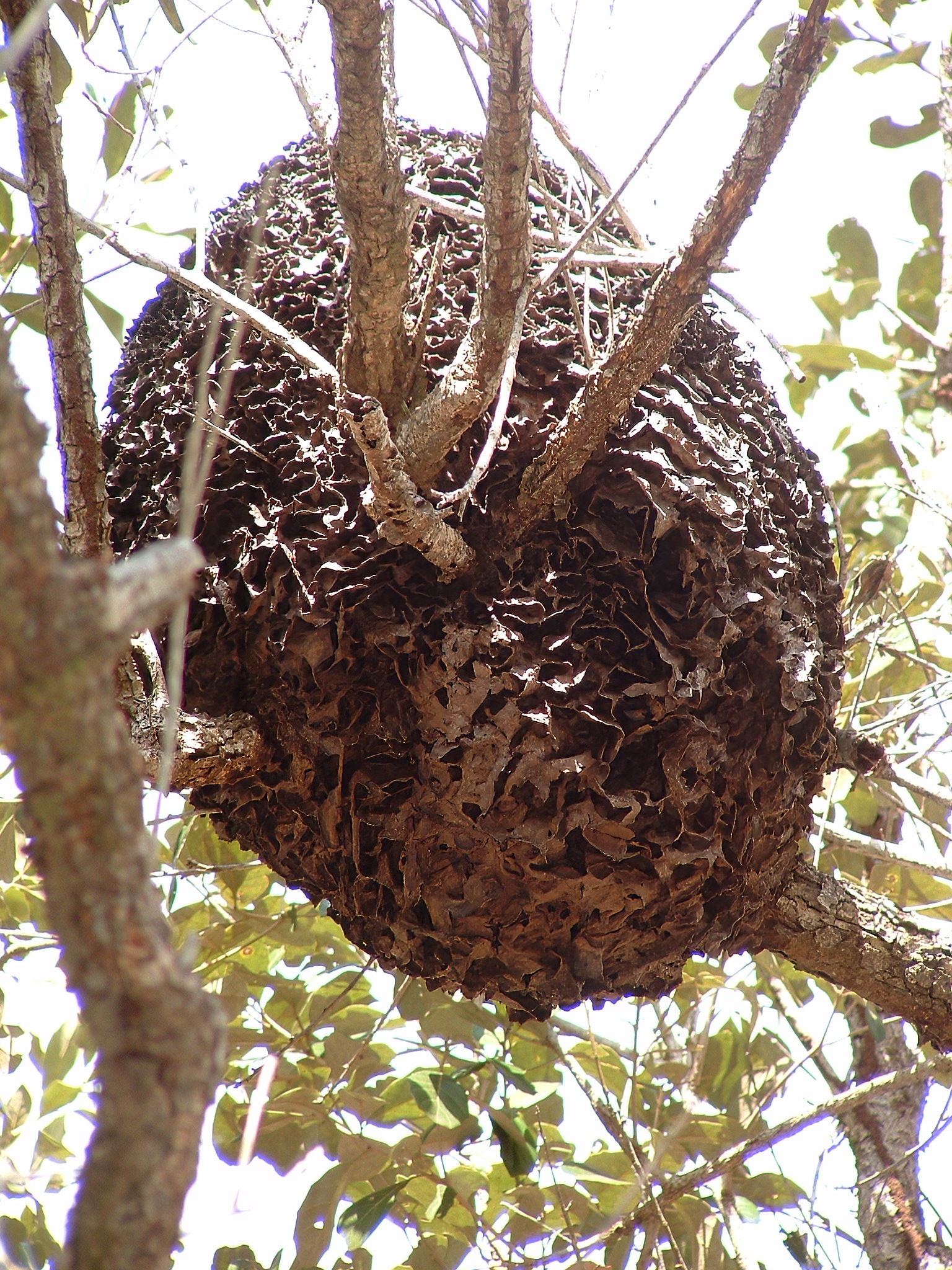
The conehead termite (Nasutitermes corniger) is an invasive tropical species. University of Florida researchers describe it as the first non-native termite of its family established in the United States. Unlike native termites, conehead termites build conspicuous nests above ground and travel along the surface, not underground.
- What the nest looks like: Extension’s Pests in the Home describes nests up to 3 feet across, dark brown to black, hard and bumpy, on trees, in vegetation, on the ground, or on structures.
- What else you may see: tunnels about half an inch wide running across the ground and up trees or walls. Soldiers have a pointed, cone-shaped snout.
- Where: populations were found in Broward County, at Dania Beach in 2001 and Pompano Beach in 2016. In 2019, Entomology Today reported that researchers knew of no live colonies in previously infested areas after a state eradication program, while inspections continued.
- What to do: report a suspected nest to the Florida Department of Agriculture and Consumer Services (FDACS). Standard subterranean and drywood treatments do not work on this species, so do not try to treat it yourself.
Photos of huge nests on trees or poles found online usually come from tropical countries, where many termite species build them. In most of the U.S., a nest like that is not something you will see.
What People Mistake for a Termite Nest on a Wall
A search for “termite nest on wall” usually starts with a rough mud structure on a garage wall, a porch ceiling, or a foundation. These are the common possibilities.
Scroll the table sideways to see every column.
| What you found | Likely cause | How to tell | Next step |
|---|---|---|---|
| Thin, pencil-width mud tube running from the ground up a foundation or wall | Subterranean termite mud tube | Starts at or near soil; may contain small, pale insects if you break a short section | Photograph it, leave most of it intact, and schedule an inspection |
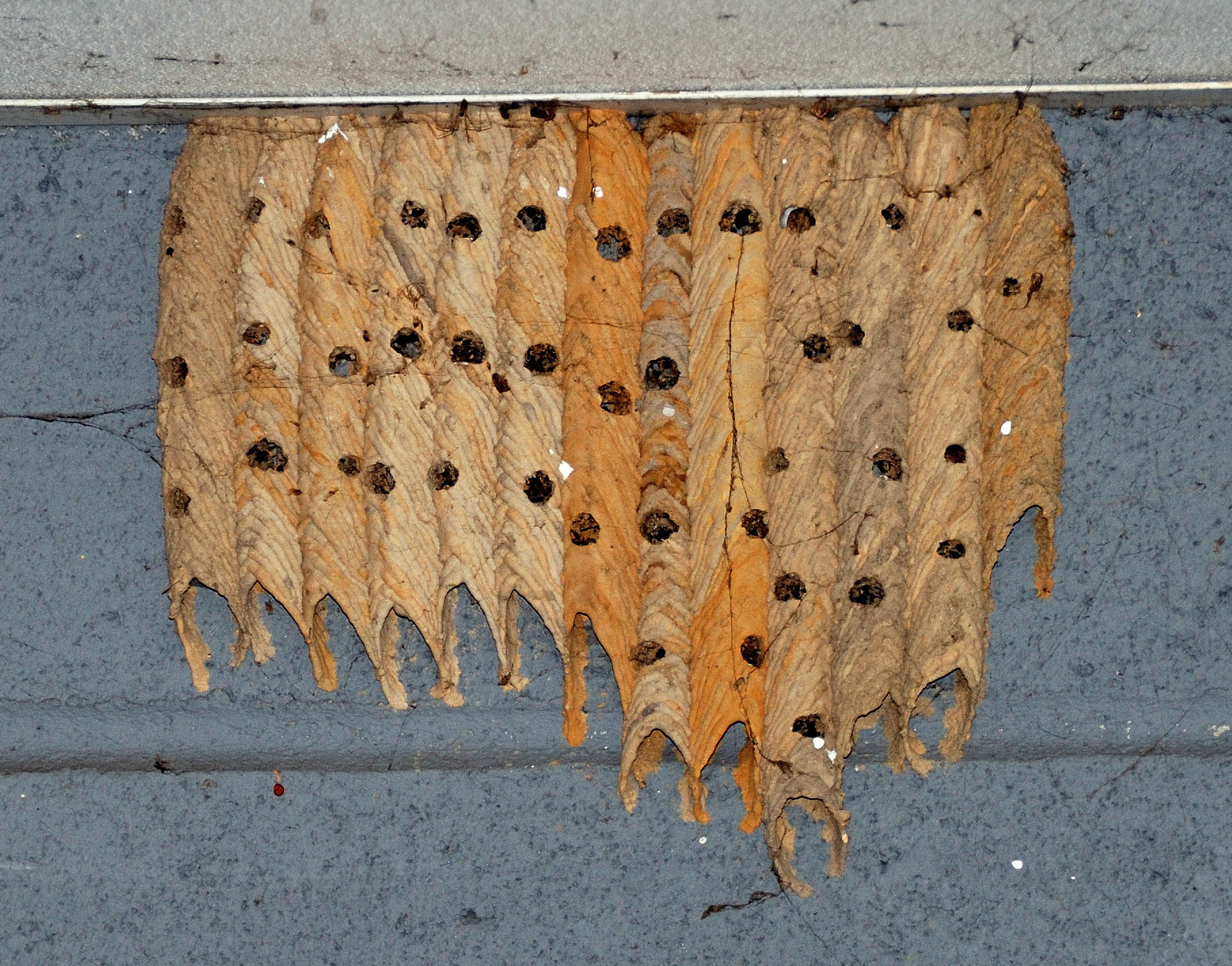
| Rows of parallel vertical mud pipes, often with round holes, in a garage, attic, or under eaves | Organ-pipe mud dauber wasp nest | Not connected to soil; tubes up to six inches or more; round exit holes cut by emerging wasps | No termite action needed; remove when empty if you want |
| Short, blocky clumps of mud on a sheltered wall or ceiling | Black-and-yellow mud dauber nest | A few inches long, usually horizontal, often in a cluster | Same as above |
| Gray, papery comb with open six-sided cells, hanging from a stalk | Paper wasp nest | Made of paper, not soil; wasps may guard it | Keep away from an active nest; call a pest professional if it is in a high-traffic spot |
| Brown, layered, sponge-like mass inside an opened wall | Possible Formosan carton nest | Found with damp wood, mud, or termite activity | Stop work, photograph, and call a licensed inspector |
| Smooth, clean tunnels in damp wood, with coarse sawdust and insect parts nearby | Carpenter ant nest | No mud or soil in the tunnels; debris pushed out in piles | See our termites vs. carpenter ants guide |
Mississippi State University Extension notes that organ-pipe mud daubers are not aggressive and rarely sting, but any wasp nest is best handled when it is empty.
Safety note: Do not tear open walls, ceilings, or a suspected nest to look for termites, and do not spray a wasp nest at close range. Breaking up termite evidence makes an inspection harder, and opening walls can expose wiring, plumbing, or mold.
Found Something? What to Do Next
Inside the house or on the foundation
Photograph the structure close up and from a distance, note where it is, and look for other signs nearby: shed wings, damaged wood, or pellets. If it looks like a mud tube or carton, leave it in place and schedule a licensed inspection.
Outside on a stump, tree, fence, or woodpile
Termites in outdoor wood show a colony nearby, not that the house is infested. Check the foundation and crawl space for tubes. In south Florida, a dark, hard nest on a tree should be reported to FDACS.
Our guides to signs of termites and termite identification walk through other evidence, and termites in a tree stump covers what an outdoor colony means for your house.
Your Next Step
Compare what you found with the table above. If it is a mud tube, a carton-like mass, or damaged wood with soil inside, take photos, leave it intact, and have the house inspected. If it is a mud dauber or paper wasp nest, you do not need a termite inspection for it. If you are in south Florida and see a large dark nest on a tree, report it to the state.
Common Questions
Do termites build nests in walls?
Native subterranean termites usually do not; their colonies stay in the soil and they tunnel into wall framing. Formosan termites can build carton nests inside wall voids when moisture is available, and drywood colonies can live inside wall framing.
How deep is a subterranean termite nest?
It varies. UC IPM says colonies nest in or near the soil, sometimes many feet below the surface, which is why homeowners rarely see one.
What does a termite nest look like on a tree?
In most of the U.S., native termites in a tree are inside dead or damaged wood, not in a visible nest. A dark, hard, bumpy nest on a tree in south Florida could be the invasive conehead termite and should be reported to FDACS.
Is a mud structure on my wall a termite nest?
Usually not. A thin mud tube rising from the soil points to subterranean termites. Clusters of mud pipes or clumps with round holes, especially in a garage or under eaves, are usually mud dauber wasp nests.
Should I destroy a termite nest I find?
No. Breaking up a tube or carton does not control the colony and removes the evidence an inspector needs. Take photos and call a licensed professional.
Sources and Further Reading
- UC IPM — Pest Notes: Subterranean and Other Termites (Publication 7415)
- Texas A&M AgriLife Extension — Formosan Subterranean Termites (E-367)
- University of Florida EDIS — Conehead Termite, Nasutitermes corniger (EENY-745)
- Extension Pests in the Home — Conehead Termites
- Entomology Today — Did Two Florida Populations of Conehead Termites Arise From a Single Colonization Event? (2019)
- Mississippi State University Extension — Organ Pipe Mud Dauber (Bug’s Eye View)