Diagnostic guide
Termite Damage vs Water Damage: How to Tell the Difference
Short Answer
Termite damage is usually about missing wood structure. Water damage is usually about moisture distortion.
That is the fastest way to think about the difference. Termites often hollow wood from the inside and leave galleries that follow the grain. Water damage and wood decay tend to soften, stain, swell, warp, or crack wood, and brown rot can break wood into cube-like pieces across the grain.
The hard part is that the two problems can overlap. Persistent moisture and decayed wood can create favorable conditions for some termites, and termites can hide inside wood that looks mostly normal from the outside. Use the clues below to compare what you see — but do not rely on a photo or one surface mark to diagnose activity, extent, or structural safety.
This guide is part of our termite identification guides. If you are comparing damage, moisture signs, mud tubes, pellets, or lookalikes, start there before choosing a treatment.
Termite Damage and Brown Rot: A Visual Comparison
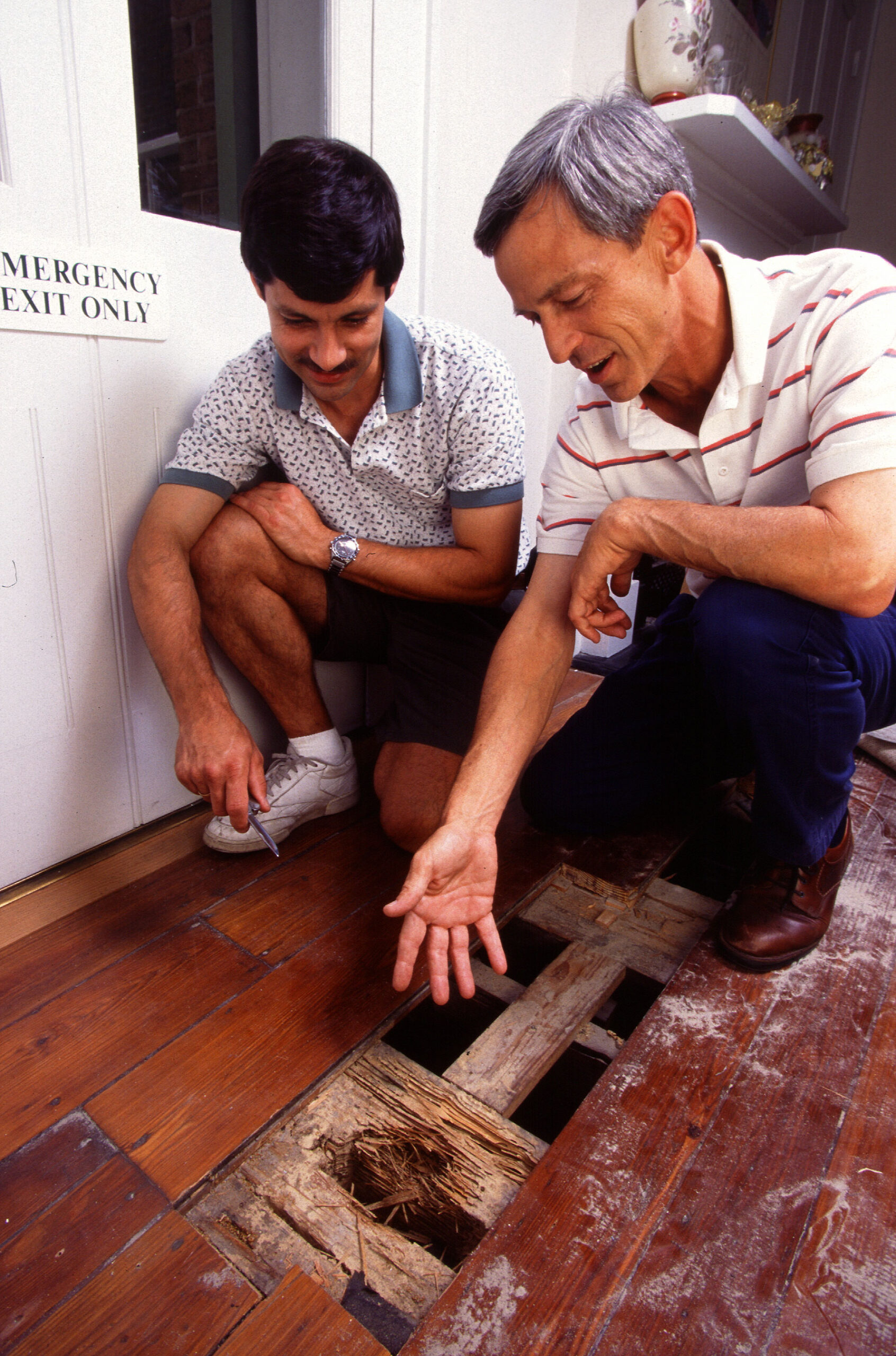
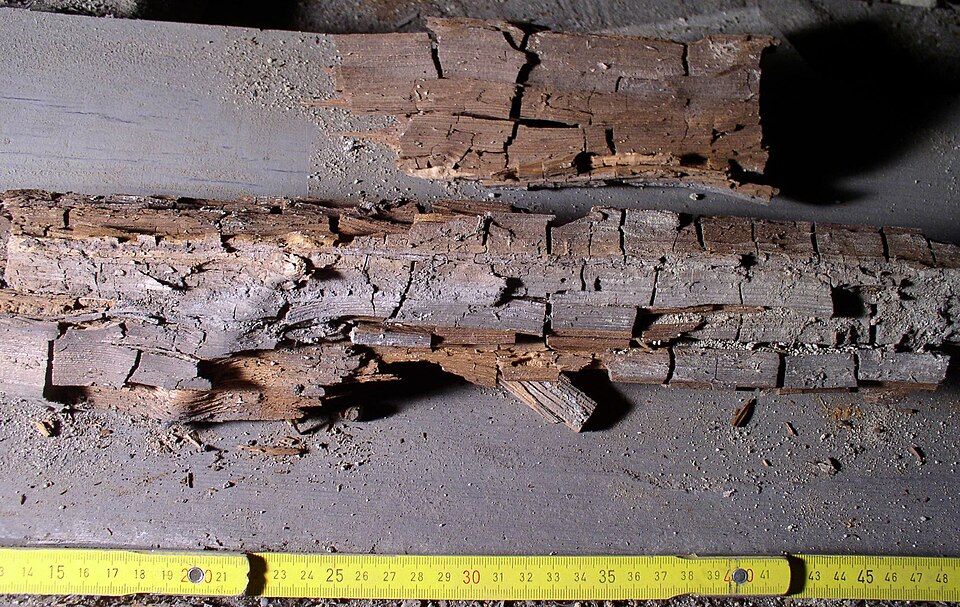
Termite-damaged floor timber and brown rot are shown here. Brown rot is one form of moisture-related decay, not the appearance of every water-damaged board. These are comparison clues, not a diagnosis.
Watch: Termite Damage vs. Water Damage
This short video gives a quick visual reminder: do not cover up damage until you understand whether the clue points to termites, moisture, decay, or a combination.
What Termite Damage Usually Looks Like
Termites eat wood, so the key clue is missing structure. Subterranean termites commonly feed along the grain: the softer springwood is eaten away while harder summerwood layers remain, leaving a layered or tunneled pattern. The surface may still look intact because termites can feed inside the wood first and leave a thin outer shell.
Look for clues such as:
- hollow galleries that run with the grain;
- thin outer wood that breaks or presses in easily;
- mud or soil-like material inside the galleries, especially with subterranean termites;
- mud tubes on foundation walls, piers, sill plates, or nearby masonry;
- blistered or stained paint where activity or moisture is hidden underneath;
- piles of dry, hard fecal pellets near small kick-out holes, which can point toward drywood termites.
Drywood termite damage can look different from subterranean damage. Drywood termites do not need soil contact, and their galleries may be smoother and cleaner, with pellets pushed out through small holes. Subterranean termites are more likely to leave mud tubes and soil in the galleries.
For mud tubes specifically, compare the evidence with the guide to termite mud tubes vs old damage. For pellets and loose debris, use termite droppings vs frass.
What Water Damage Usually Looks Like
Water damage starts with moisture, so the key clue is distortion or decay. A leak, roof problem, plumbing issue, poor drainage, condensation, or repeated wetting can stain and soften wood. Paint may bubble or peel. Trim may swell. Wood may cup, warp, or feel spongy. If decay fungi become established, the damaged wood can lose strength even after it dries.
Brown rot is especially important because it can be confused with insect damage. Brown rot breaks down cellulose and hemicellulose in wood and leaves behind modified lignin. The result can be brown, brittle wood that cracks both with and across the grain. As it dries, it may break into cube-like pieces or crumble into powder.
Look for clues such as:
- brown, black, gray, or yellow staining around a moisture source;
- swollen trim, buckled flooring, soft subfloor, or peeling paint;
- musty odor, mold, mildew, or recurring dampness;
- cracking across the grain, especially cube-like brown rot;
- wood that feels soft, spongy, punky, or crumbly;
- damage centered around a leak, window, roof edge, plumbing line, crawl space moisture, or poor drainage area.
The phrase “dry rot” can be misleading. Wood decay still needs enough moisture to begin and continue. A board may look dry when you find it, but the damage usually started because the wood was wet long enough to support decay.
Termite Damage vs Water Damage: Key Differences
| Clue | More consistent with termite damage | More consistent with water damage |
|---|---|---|
| Main pattern | Hollow galleries, often running along the grain | Swelling, staining, warping, softening, or cubical cracking |
| Grain direction | Channels often follow the wood grain | Brown rot may crack both with and across the grain |
| Inside the wood | Missing wood, layered galleries, sometimes soil or pellets | Soft, punky, spongy, or brittle decayed wood |
| Surface appearance | Surface may look intact while the inside is hollow | Stains, bubbles, peeling paint, swelling, or visible dampness |
| Debris | Mud tubes, soil in galleries, or drywood pellets | Mold, mildew, water staining, decayed wood crumbs |
| Moisture clue | Subterranean termites need moisture and often connect to soil | A leak or wetting source is usually nearby |
| Best next step | Document evidence and consider a termite inspection | Find and fix the moisture source; assess decay |
Where they overlap: both can leave weak or crumbly wood, and severe damage may be hard to read after the wood breaks apart. Water can make termite-damaged wood decay faster, and moisture problems can attract termites — so the same board can show both.
The One Pattern Most People Miss
Both termite damage and water-related rot can look “chunky” or broken, but the direction of the damage matters.
- Long hollow galleries along the grain point more toward termites.
- Cube-like cracking across the grain points more toward brown rot or water-related decay.
- Mud tubes, soil in galleries, or drywood pellets make termite evidence more likely.
- Staining, swelling, mold, and a nearby water source make moisture damage more likely.
This is still a comparison, not a diagnosis. A damaged sill, joist, subfloor, or wall cavity can have both moisture and termites at the same time.
Can You Tell From a Photo?
A photo can help you compare visible clues, but it cannot answer the most important questions: whether termites are currently active; how far the damage extends behind the surface; whether the wood is structurally safe; whether moisture, decay, insects, or several problems are involved; and what treatment or repair is appropriate.
Termites often work inside wood before obvious surface damage appears. Water damage can also hide inside walls, under flooring, behind trim, and in crawl spaces. A single close-up photo may miss the moisture source, the soil connection, nearby mud tubes, pellets, or hidden decay.
If you are comparing a damaged area, take two kinds of photos: a close-up of the pattern and a wider photo showing where the damage is located. Do not cut open walls, pry apart load-bearing wood, enter unsafe crawl spaces, or test weakened areas by standing on them.
What To Do Next
Use this three-level route to decide how urgent the next step is.
1. Looks cosmetic or surface-level
The damage looks minor, there is no sagging or softness, no mud tubes, no pellets, no active moisture, and no spreading stain. Do this:
- take a close-up photo and a wider location photo;
- write down the date and location;
- check nearby areas for a water source, staining, tubes, pellets, or insect activity;
- monitor whether the mark changes over the next few weeks.
This route is for observation only. It is not proof that termites or moisture are absent.
2. Unclear, spreading, or near a moisture source
The area is changing, the wood feels soft, the stain is spreading, the source is unclear, or the damage sits near a window, roof edge, plumbing line, crawl space, sill plate, deck ledger, or foundation. Do this:
- look for a moisture source first;
- compare the debris with termite droppings vs frass;
- compare any earthen lines with termite mud tubes vs old damage;
- use basic observation tools only if the area is safe and accessible;
- consider a pest inspection if insect evidence is present or the pattern is unclear.
For safe observation limits, see termite inspection tools. If the clue is an insect rather than damaged wood, use termites vs carpenter ants vs wood-boring beetles.
3. Structural, active signs, or moisture plus tubes or pellets
This is the high-risk category. Do not try to solve it from photos. Get a professional inspection if you see:
- mud tubes on the foundation, piers, sill plate, crawl space, or interior wall;
- new piles of termite pellets appearing indoors or returning after cleanup;
- hollow, sagging, crumbling, or easily punctured wood;
- damaged joists, beams, subfloor, sill plates, posts, stairs, deck supports, or other load-bearing parts;
- moisture damage and termite signs in the same area;
- swarmers or discarded wings indoors;
A termite inspection and a structural assessment are not the same thing. A pest professional can evaluate termite evidence and treatment options. A qualified building professional may be needed if wood strength or structural safety is in question. If a claim or coverage question is involved, see does homeowners insurance cover termite damage.
If the damage is part of a home sale, refinance, insurance claim, or repair deadline, arrange the appropriate inspection early. Those processes may require specific reports or qualified professionals even when the visible damage looks limited.
For choosing the next route, use the termite treatment decision tree. If you are weighing inspection, DIY limits, or professional treatment, read DIY termite treatment vs professional treatment.
Why Water and Termites Often Show Up Together
Water damage and termite damage are not opposites. They often belong to the same problem chain. Moisture can soften wood, support fungal decay, and make an area more attractive to certain termites. Subterranean termites need moisture and often maintain contact with soil or damp protected spaces. Dampwood termites are especially associated with wet or decaying wood. A leak, poor drainage, wet crawl space, or wood-to-soil contact can create conditions where both decay and termites become more likely.
That means the best answer is not always “termites or water.” Sometimes the answer is “fix the moisture problem and inspect for termites.”
Bottom Line
Termite damage usually means wood structure has been removed, often in galleries along the grain. Water damage usually means moisture has distorted or decayed the wood, with staining, swelling, softness, or cubical cracking across the grain.
But visible damage is only a clue. If the area is structural, spreading, soft, hollow, connected to moisture, or accompanied by mud tubes, pellets, swarmers, or discarded wings, document it and get a professional inspection. Do not disturb suspect structural wood or rely on a photo to decide whether the problem is active.