
Damage and repair guide
How to Assess and Repair Termite Damage: What to Do First
Short Answer
Termite damage repair starts with two separate questions: are termites still active, and is the damaged wood still safe for its job? A termite inspection addresses the insects and the treatment plan. A qualified building professional assesses what must be repaired; suspected damage to a floor joist, beam, support, stair, or roof member may need a more detailed structural evaluation.
Photograph what you found, keep the evidence and any earlier treatment records, and avoid cutting into or covering damaged wood before the scope is understood. If a floor sags, a support looks compromised, or an area feels unsafe, keep people off that area and seek prompt building assessment. Then coordinate the pest and repair work around the findings. No photo, quiet day, or generic cost range can tell you the hidden extent or the right fix for your house.
Still deciding whether the damage came from termites, moisture, or another cause? Start with termite damage vs. water damage. This guide begins after you find wood that may need repair.
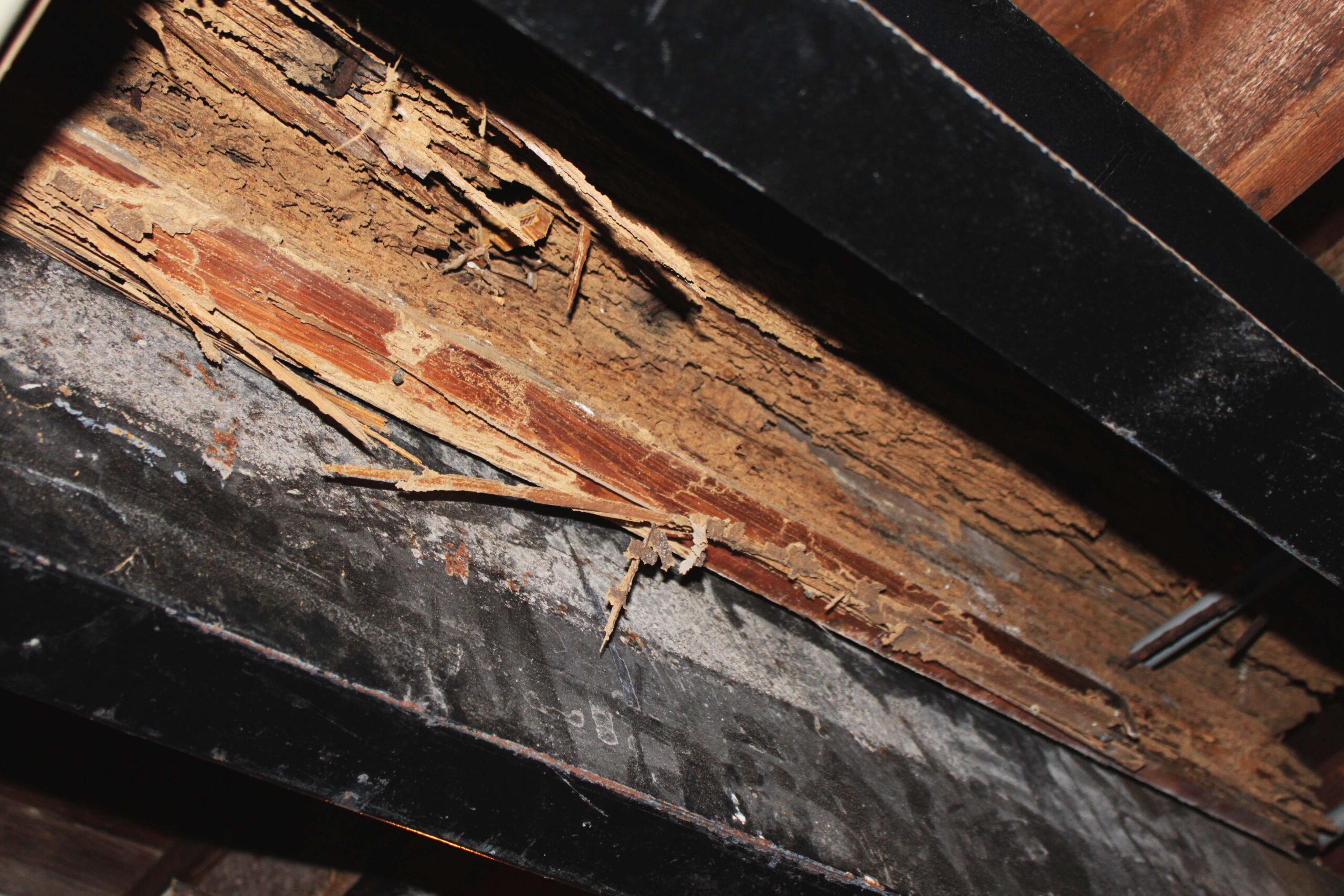
What to Do When You Find Damaged Wood
- Record the location. Take a wide photo showing the room or building side, then a close-up of the affected wood and any mud tubes, insects, wings, pellets, staining, or nearby water source. Note the date and whether the clue is changing.
- Keep the records. Save prior inspection reports, treatment diagrams, invoices, service agreements, warranties, and repair records. They help the next professional separate earlier findings from a new concern.
- Do not hide or disturb the evidence. Avoid painting over galleries, removing structural wood, opening finished walls, or spraying an unidentified spot to see what happens. Ask the inspector and repair professional what access they need.
- Escalate a safety concern. If a floor is sagging or unstable, a support is visibly damaged, or a roof or stair appears affected, keep people away from that area and arrange prompt assessment by an appropriately qualified building professional. Tell the termite inspector about the same location.
Mississippi State University Extension advises a professional inspection when damaged wood is exposed during repairs or structural symptoms such as a sagging floor or roof appear. Those symptoms can have causes other than termites; the photograph and location are a starting point, not a diagnosis.
Is the Damage Old or Are Termites Still Active?
Damaged wood can remain long after an infestation has been controlled. Mississippi State University Extension notes that live termites in damaged wood show activity at the time you find them, while galleries with dried mud but no visible insects may be from an earlier infestation. The absence of visible insects does not clear concealed areas of the house.
Do not use the age of a stain, hole, or repair invoice as a stand-in for a current inspection. Ask a licensed termite professional to identify the organism, map the visible evidence, state which areas could not be inspected, and explain whether further access or treatment is needed. The old or active mud tubes guide explains why a surviving tube alone is not proof of current activity. If work was already done, compare the findings with how to know whether termite treatment worked.
Who Assesses Which Part of the Problem?
→ Scroll the table sideways to see all columns.
| Professional | Question to ask | What the answer does not establish |
|---|---|---|
| Licensed termite inspector or pest control company | What evidence was found, where, how much can be inspected, and is a termite treatment or follow-up needed? | A pest finding alone does not certify that a damaged beam, joist, or floor can carry its intended load. |
| Qualified repair contractor | Which materials and finishes need access, repair, or replacement, and what is the written scope and price? | A repair quote does not by itself confirm the insect is gone or that every hidden area was inspected. |
| Structural engineer or other qualified building specialist, when warranted | What further assessment or design is needed if load-bearing elements or stability may be affected? | The need for an engineer, permit, or specific design depends on the findings and local requirements; it cannot be decided from a web photograph. |
These roles can overlap in a local project, but the written findings should make clear who assessed the pest activity and who assessed the building. See what happens during a professional termite inspection for the scope and limits of that visit.
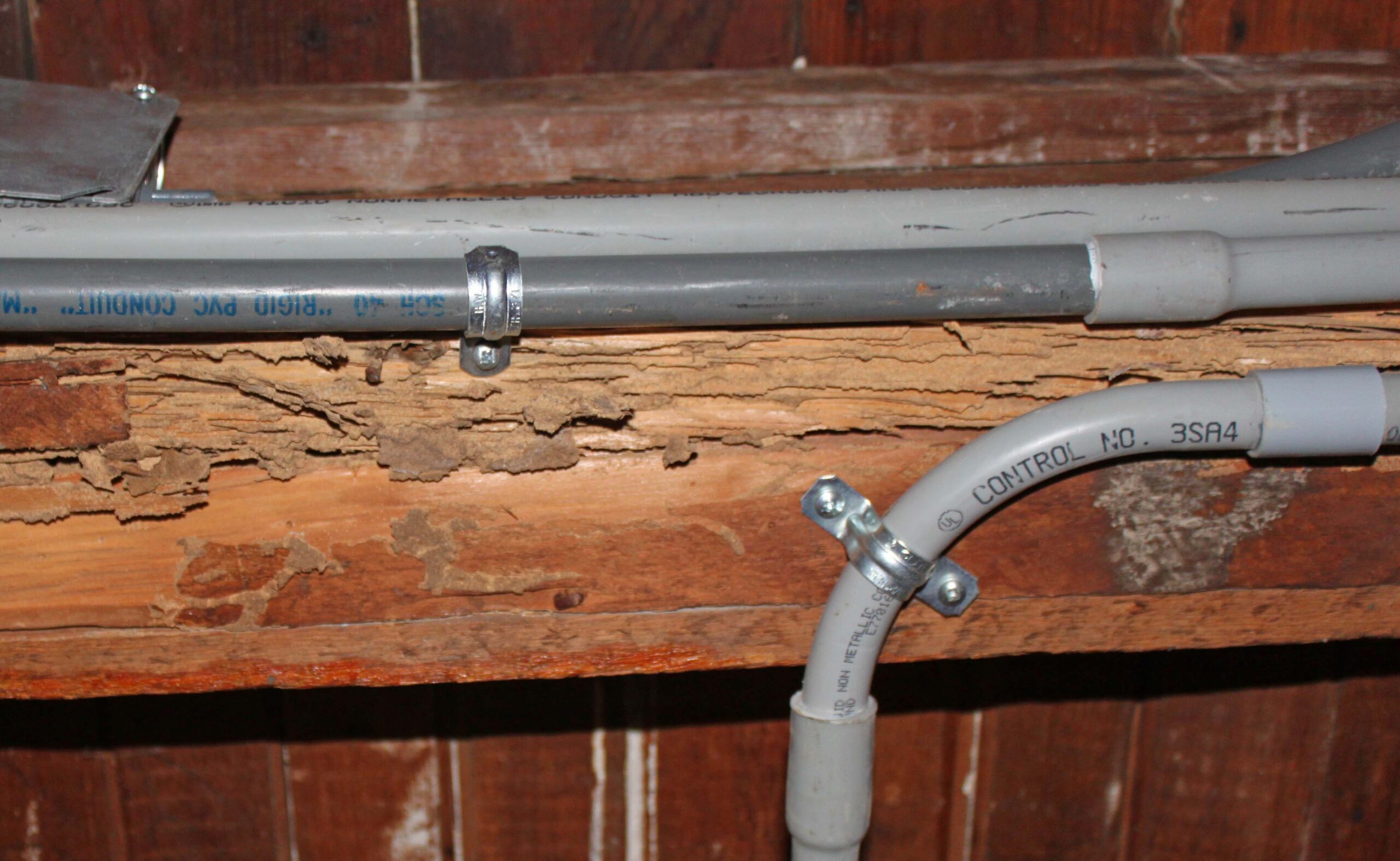
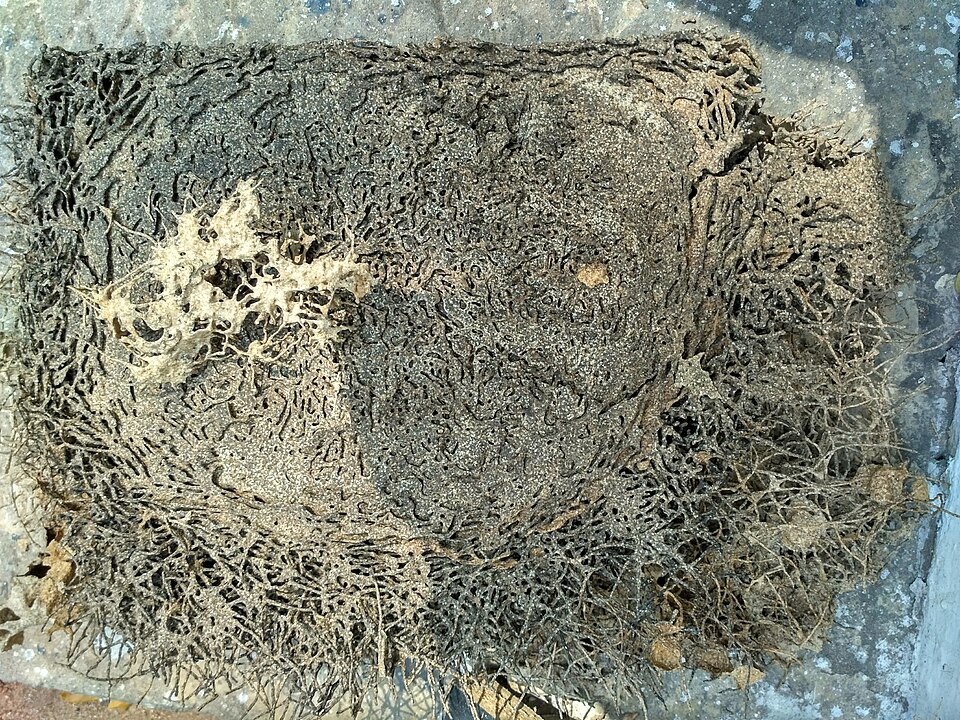
What Might the Repair Involve?
A repair plan follows the material and the role it plays in the building. A scar in removable trim is a different decision from damage in a joist beneath a soft floor. The visible opening also may not show the full extent inside or behind a finished surface.
Finish or nonstructural material
The scope may focus on removing or replacing affected trim, paneling, or other finish after the cause and adjacent areas are assessed. Ask what will be inspected before new material conceals the area.
Framing or support
Ask the building professional to identify the affected members, required access, who will determine the design, and whether permits or further evaluation apply locally. Do not choose a patch, sistered member, or replacement from a photo or a generic guide.
Moisture, decay, and termites can occur together. If water caused or worsened the problem, the repair scope should identify its source as well as the damaged material. For floor-specific clues and what may lie below them, see termites in wood floors.
Safety boundary: This article does not tell you how to cut, shore, reinforce, or replace load-bearing wood. Do not let a cosmetic patch stand in for an assessment of a potentially damaged support. If an area feels unstable, keep people off it until a qualified professional evaluates it.
Should Treatment Happen Before the Repair?
There is no universal order for every house. Active termites may require treatment, but the pest company may need access that repair work would close. Conversely, an unstable area may require prompt building assessment or protective work before ordinary treatment can proceed safely. Ask the termite professional and repair contractor to agree on access, timing, and documentation for this property.
Get the termite findings and treatment scope in writing. Then ask the repair professional which areas must be opened, what the initial estimate includes, and what happens if more damage appears. An insect treatment does not restore lost strength, and replacing visible wood without addressing an active infestation may leave the cause unresolved. For treatment choices and their limits, use the termite treatment decision guide.
How Much Does Termite Damage Repair Cost?
There is no reliable single national price that can describe your repair. The charge depends on how much damage is found after safe access, which components are affected, whether a building assessment or design is needed, local labor and permit requirements, treatment, and restoration of finishes. A small visible mark can lead to a small job or reveal more work after access; the first photo cannot price the second possibility.
→ Scroll the table sideways to see all columns.
| Line in the estimate | What to clarify |
|---|---|
| Inspection and assessment | Separate the termite inspection from any building or engineering evaluation. |
| Access and concealed conditions | Which coverings will be opened, who will do it, and how will additional damage be documented? |
| Wood and structural work | Which specific components are included, and who approved the repair approach? |
| Termite treatment | Is treatment a separate contract, and what follow-up or warranty is included? |
| Restoration | Are flooring, drywall, paint, trim, and cleanup included or excluded? |
| Changes and permits | How are unforeseen work, permit costs, and schedule changes authorized and priced? |
Ask for itemized written estimates with the same scope before comparing totals. The termite treatment cost guide covers pest-control prices; those figures are not a quote for rebuilding damaged wood.
Will Insurance or a Termite Bond Pay?
Standard homeowners insurance generally excludes damage from termite or other pest infestation, according to the Insurance Information Institute. Check your actual policy and ask the insurer to identify the applicable terms before assuming a claim is covered or excluded. Our insurance guide explains the boundaries in more detail.
A termite bond is a separate service agreement, not an automatic repair fund. Some agreements offer retreatment only; others may provide limited repair coverage for qualifying new damage if contract conditions are met. Read the scope, exclusions, notice deadline, inspection requirements, and limits before authorizing work. EPA advises asking whether a termite company is responsible for structural damage if its treatment fails. Use the termite bond guide to review the actual contract.
Questions to Ask Before Approving the Work
- What is confirmed, and what is still uncertain? Ask for the pest findings and the repair assessment separately.
- What areas were inaccessible? A written scope should state where hidden damage may change the job.
- Who will decide the repair method? Ask about qualifications, design responsibility, permits, and inspections that apply locally.
- How will pest treatment and construction be coordinated? Clarify access, timing, follow-up, and what records each company will provide.
- What exactly does the price include? Compare materials, restoration, cleanup, change orders, and warranty terms on the same basis.
For the pest-control contract itself, use our questions to ask a termite company. If this damage is part of a purchase, also review the homebuyer inspection guide and the transaction deadlines.
Your Next Step
Evidence, but no apparent instability
- Document the clue and prior records.
- Arrange a qualified termite inspection.
- Ask for a written repair scope after the affected materials are assessed.
Sagging, compromised support, or uncertain safety
- Keep people off the affected area.
- Seek prompt assessment by an appropriately qualified building professional.
- Coordinate termite findings and any required treatment with the repair plan.
Good termite damage repair begins with a clear record of what was found and who assessed each risk. Confirm the pest problem, assess the building, obtain a written scope, and compare estimates for the same work. The right repair is specific to the structure; a generic method or price cannot substitute for the findings on site.
Sources
- Mississippi State University Extension, Protect Your House from Termites (Publication 2568, April 2024) — signs in damaged wood and when to arrange an inspection.
- U.S. EPA, Termites: How to Identify and Control Them — treatment categories, labels, and professional application.
- U.S. EPA, Tips for Selecting a Pest Control Service — written estimates and questions about guarantees and structural damage responsibility.
- Insurance Information Institute, Which Disasters Are Covered by Homeowners Insurance? — typical infestation exclusions and policy variation.