
Termite type guide
Dampwood Termites: Identification, Signs, and Moisture Control
Short Answer
Dampwood termites live in wood that stays unusually wet, damp, or decayed. In a house, that usually means there is an underlying condition such as a roof or plumbing leak, wood-to-soil or wood-to-water contact, rain or sprinkler exposure, poor drainage, or condensation in a poorly ventilated crawl space. In the U.S., the best-known species is the large Pacific dampwood termite (Zootermopsis angusticollis) of the West Coast; Florida has minor dampwood species of its own.
The practical response is moisture-first: document the evidence, identify and correct the water source, and have weakened wood assessed before deciding whether targeted termite treatment is also needed. Drying one surface, spraying visible insects, or replacing one board does not prove that hidden activity or structural damage is resolved.
This guide belongs to our termite types comparison. Use that page if you are still deciding whether the evidence points to dampwood, drywood, or subterranean termites.
What Makes Dampwood Termites Different
Dampwood termites establish colonies in wood with high moisture content. That wood may be touching soil, but they do not depend on an underground colony and mud-tube route in the way subterranean termites do. They also differ from drywood termites, which can remain inside relatively dry, sound wood.
The moisture requirement changes the entire decision. A dampwood diagnosis is simultaneously a termite question, a water-source question, and often a wood-decay question. Killing visible insects without correcting the condition that keeps the wood wet leaves the property vulnerable to continued termite activity, fungal decay, or both.
Scroll the table sideways to see all columns.
| Factor | Dampwood termites | Drywood termites | Subterranean termites |
|---|---|---|---|
| Colony setting | Wet, damp, or decaying wood | Relatively dry, above-ground wood | Usually soil or a soil-connected route |
| Moisture clue | Persistent moisture is central to the problem | Wood can appear dry and sound outside | Soil moisture supports the colony and travel routes |
| Typical evidence | Large galleries in wet wood; pellets may clump or soften | Hard, ridged pellets below kick-out holes | Mud tubes and soil or mud in galleries |
| Main management question | What keeps this wood wet, and is the wood still structurally sound? | How many colonies or wood members are affected? | How are termites reaching the structure from the soil? |
This is a type-level comparison, not a species verdict. Moisture damage, carpenter ants, beetles, and different termite groups can overlap in the same property.
Dampwood Is a Group, Not One Species
The name dampwood describes a moisture-linked habitat group. The Pacific dampwood termite, Zootermopsis angusticollis, is important in western Washington, western Oregon, and cool humid coastal parts of California. Florida has different dampwood termites in the genus Neotermes, but UF/IFAS describes them as minor or incidental structural pests compared with the state’s major termite species.
Regional context matters. A large termite found near wet wood on the Pacific Coast does not automatically identify a Florida specimen, and a humid climate alone does not prove that dampwood termites are present. For local context, pair this guide with the relevant state termite guide.
What Dampwood Termites Look Like
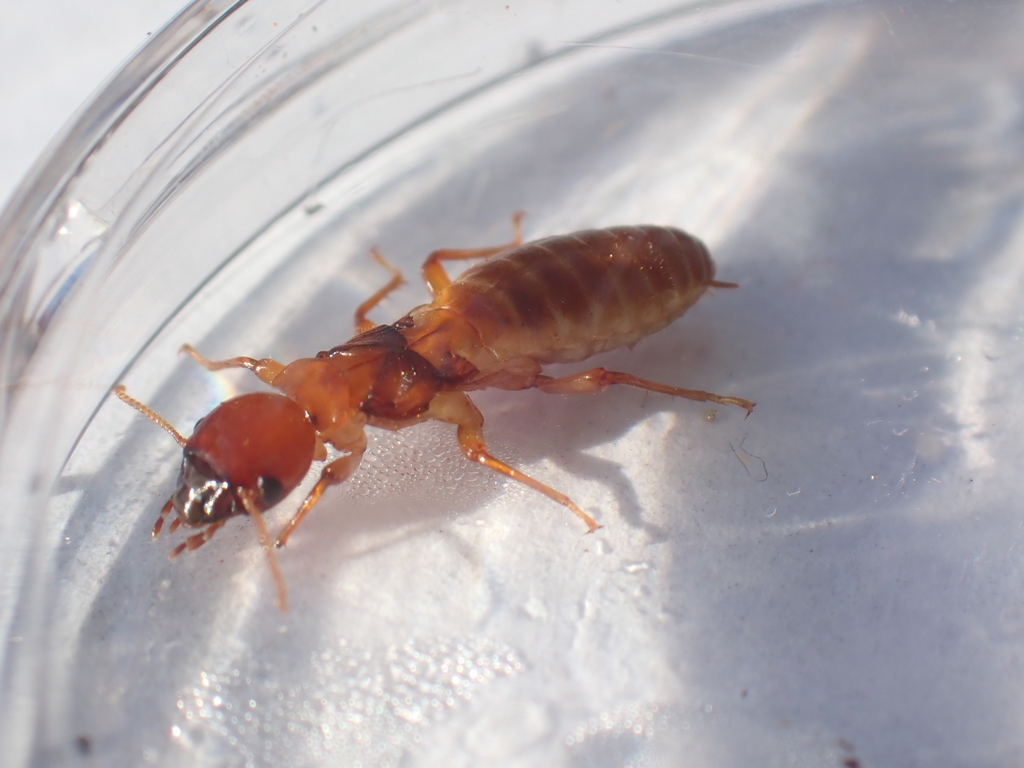
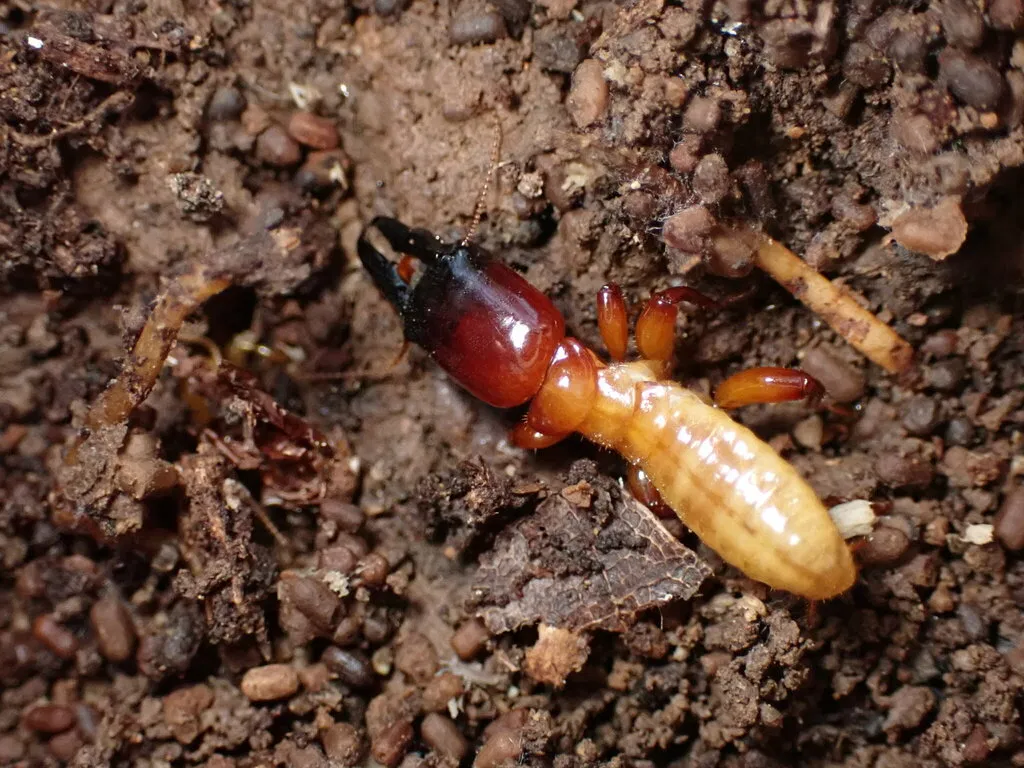
Dampwood termites are often larger than the drywood and subterranean termites found in the same region. Pale nymphs perform much of the colony work, soldiers have enlarged darker heads and jaws, and winged reproductives can be conspicuously large. Pacific dampwood swarmers may exceed one inch including the wings.
Size is a clue, not a verdict. Exact identification may depend on a soldier or swarmer, location, season, and close morphological features. If the insect has wings, first compare it with our flying ants vs. termites guide, then preserve a specimen for a local expert when the species changes the treatment decision.
Signs of Dampwood Termites
Persistently wet wood
The strongest context is wood kept damp by a leak, soil or water contact, rain exposure, irrigation, poor drainage, or condensation.
Large internal galleries
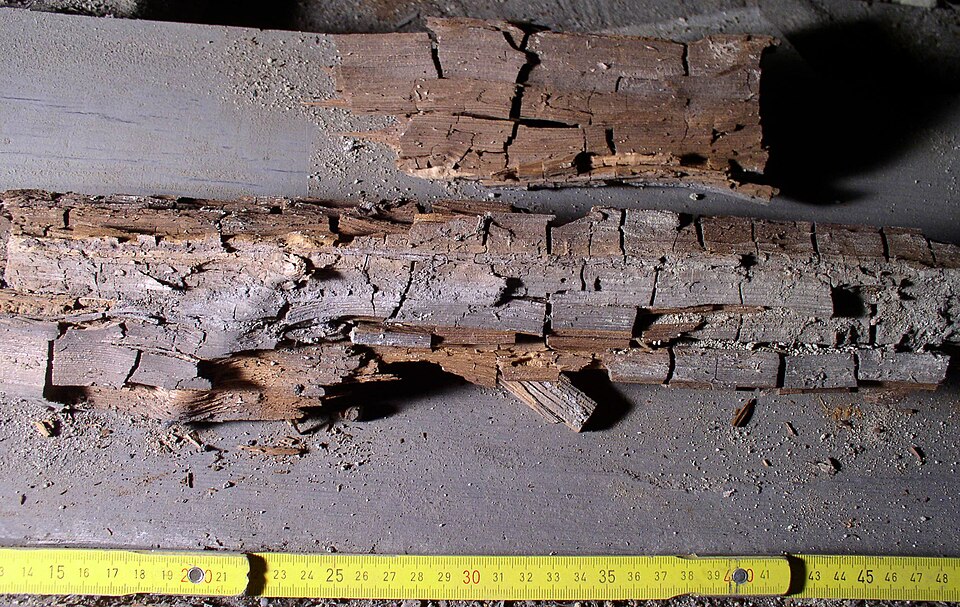
Dampwood termites can create broad, irregular chambers inside softened wood. The outside may not reveal the full hidden extent.
Clumped or softened pellets
Pellets may lose their distinct drywood shape in wet galleries and appear as loose clumps or paste mixed with damp debris.
Large evening swarmers
Some dampwood species fly at dusk or night and collect near lights. A swarmer may have arrived from outdoor wood rather than the building itself.
Damp, soft, cracked, or discolored wood is not proof of termites. Use our termite damage vs. water damage guide to separate feeding evidence from moisture decay, and use droppings vs. frass when pellets or debris are part of the evidence.
Where Moisture Problems Commonly Start
An inspection should look beyond the first damaged board. Common conditions that can keep structural or exterior wood wet include:
- roof, flashing, window, plumbing, or air-conditioning drainage leaks;
- blocked or leaking gutters and downspouts;
- wood siding, posts, stairs, decks, fences, or trim touching soil or standing water;
- sprinklers repeatedly wetting siding, posts, or landscape timbers;
- poor grading or drainage that holds water near a foundation;
- condensation and poor airflow in a damp crawl space;
- buried lumber, stumps, scrap wood, or construction forms.
A termite inspection checklist can help document the wider property. For difficult subfloor conditions, use the dedicated crawl-space guide rather than entering an unsafe or contaminated space.
Dampwood Termites vs. Wood Rot
Wood rot is caused by fungi, not termites, but the two problems often share the same moisture source and may occur together. Rot can make wood soft, cracked, stringy, crumbly, or discolored. Dampwood termite galleries add evidence of insects feeding and living within that wet wood.
Neither softness nor a photograph can establish structural safety. If a beam, sill, joist, post, stair, deck component, or tree limb may fail, keep people away from the area and have it evaluated by the appropriate building or tree professional. A pest inspection identifies insects; it does not replace an engineering or structural assessment.
Do Swarmers Mean the House Is Infested?
Not necessarily. Dampwood swarmers can fly from wet logs, stumps, trees, fences, or other outdoor wood and may be attracted to porch or indoor lights. One outdoor or light-trapped swarmer does not map the colony.
Concern rises when swarmers repeatedly emerge from one structural location, appear with shed wings inside closed rooms, or occur near wet damaged wood. Photograph the insects and location, save a specimen without crushing it, and note the time, weather, and nearby moisture conditions.
Moisture Control Comes Before Treatment
The first management question is what keeps the wood wet. Pacific Northwest Extension states that in many cases dampwood termite management can be achieved by removing infestation-prone material, replacing structurally unsound wood, improving ventilation, and eliminating moisture problems. It also warns that chemical applications alone will not eradicate the pest while the moisture condition remains.
Moisture and repair track
- identify the leak, drainage, contact, or condensation source;
- correct the water condition with the appropriate trade;
- assess whether damaged wood can remain or must be replaced;
- keep the area accessible for follow-up inspection.
Termite track
- confirm that the evidence is termites and identify the likely group;
- map activity beyond the first visible board;
- decide whether moisture correction and wood removal are sufficient;
- use only a labeled targeted treatment when the inspection supports it.
These tracks usually run together. Repairs performed before the insect and damage extent are documented can erase useful evidence; pesticide treatment without water correction can leave the underlying condition intact.
Do You Need Soil Treatment or Fumigation?
Not automatically. A dampwood colony is not a soil-linked subterranean colony simply because the wet wood touches the ground, and it is not a drywood infestation simply because the colony lives inside wood. Soil barriers, bait systems, localized wood treatment, fumigation, and wood replacement solve different problems. For what borate products can and cannot do on exposed wood, see our best borate wood treatment guide.
The inspection should determine the termite group, moisture source, affected wood, hidden extent, and whether more than one termite problem is present. Use termite treatment types compared only after the evidence is identified, and compare any proposal against the actual treatment scope rather than a generic termite label.
What Homeowners Can Safely Do Now
- Document before cleaning. Photograph insects, wings, pellets, damaged wood, staining, leaks, and the wider location.
- Stop an active water source when safe. Shut off or contain a simple leak, but do not enter unsafe crawl spaces, open walls, or disturb electrical or structural components.
- Preserve a specimen. Keep a swarmer or soldier in a small sealed container for identification.
- Map the moisture route. Note nearby plumbing, roof edges, gutters, sprinklers, soil contact, drainage, and condensation.
- Avoid cosmetic cover-ups. Paint, caulk, surface drying, or replacing trim can hide evidence without resolving wet wood behind it.
- Arrange the right inspections. Ask a termite professional about insect extent and the relevant building trade about the water source and wood condition.
A moisture meter can help compare accessible areas, but a reading is not a termite test and does not show hidden structural strength. See our inspection tools guide for those limits.
Prevention and Follow-Up
- repair roof, plumbing, flashing, gutter, and drainage defects promptly;
- keep wood siding, posts, trim, and stored lumber away from soil and standing water;
- redirect sprinklers and downspouts away from vulnerable wood;
- maintain safe ventilation and moisture control in crawl spaces;
- remove buried wood, scrap lumber, stumps, and cellulose debris near the structure where practical;
- keep repair, moisture, specimen, and inspection records together;
- recheck the corrected area for renewed moisture, swarmers, pellets, or damage.
These steps reduce conditions that support dampwood termites and decay; they do not certify that hidden damage is absent. Use the broader termite prevention guide for routine exterior maintenance.
When to Call a Professional
Arrange a licensed termite inspection and the relevant building assessment when:
- live termites, repeated swarmers, or fresh pellets appear inside the structure;
- the moisture source is hidden, recurring, or difficult to stop;
- damage involves framing, joists, sills, beams, stairs, decks, posts, or other load-bearing wood;
- the wood is soft, sagging, hollow, extensively decayed, or unsafe to probe;
- activity may extend behind finished walls, under roofing, or into an unsafe crawl space;
- a living tree, large branch, utility area, or elevated exterior component may be weakened;
- you cannot separate dampwood termites from drywood, subterranean, ants, beetles, or decay;
- there is a sale, refinance, insurance, tenant, or repair deadline.
Ask the termite company to separate the insect finding, moisture finding, inaccessible areas, treatment scope, repair responsibility, and follow-up plan. Use our questions to ask a termite company before approving work.
Bottom Line
Dampwood termites turn a termite problem into a moisture-and-wood problem. Confirm the insect, find what keeps the wood wet, assess structural condition, and correct the moisture source before treating one visible spot as the whole solution. For help routing mixed evidence, use the termite treatment decision guide; for budgeting after inspection, use the separate termite treatment cost guide.
Sources
- U.S. EPA: Termites – How to Identify and Control Them
- UC IPM: Subterranean and Other Termites
- Pacific Northwest Pest Management Handbooks: Wood-infesting pests – Termite
- UF/IFAS: Florida Dampwood Termites
For how TermitePlan researches identification and treatment guidance, see our Methodology.