
Do Termites Die in Winter? What Cold Weather Means for Your Home
Cold weather can make termites harder to see. It does not tell you whether a colony near or inside your home has died. The answer depends on the termite group, the local climate, and the conditions in the soil or wood where the insects are living.
Short Answer
No. Termites do not die off in winter, and cold weather does not reliably eliminate a colony. In cold regions, subterranean termites often forage less near the surface, but protected soil and areas beneath a building can remain suitable for activity. Feeding may slow without stopping. Drywood termites live inside wood rather than retreating into soil, so they need a separate assessment. If you find swarmers, mud tubes, recurring pellets, or damaged structural wood in winter, document the evidence and investigate it now instead of assuming the weather has solved the problem.
For the broader identification decision, use our termite types comparison. This guide focuses on what winter weather can and cannot tell you about a home.
What Happens to Subterranean Termites When the Ground Gets Cold?
Subterranean termites usually live in soil and travel through protected underground routes or mud tubes to reach wood. They respond to conditions around them, not simply the temperature shown on a weather app. When near-surface soil becomes too cold, foraging there is limited, and termites may seek more suitable temperatures deeper in the soil.
That does not provide a universal winter timetable. University of Georgia Extension notes that relatively little is known about winter foraging in very cold climates. The depth of protected soil, foundation conditions, moisture, and local species all matter. A frozen lawn cannot tell you what is happening beneath a slab or inside a wall.
If you are trying to identify a soil-linked route, the subterranean termite guide explains mud tubes, foundation access, and the limits of a one-spot inspection. The winter question is narrower: less visible activity at the surface is not proof that the colony is gone.
Can Termites Still Feed on a House in Winter?
Yes, under some conditions. NC State Extension reports that termite activity and feeding often decline in places with cold winters, but do not necessarily stop. Termites protected from the cold, including beneath a slab, may remain active year-round. UGA Extension also considers continued activity in an infested heated structure likely, while emphasizing uncertainty about winter foraging generally.
This does not mean every colony feeds at the same pace through every winter. An unheated outdoor woodpile, near-frozen topsoil, and a warm, damp area beside a foundation are different environments. It also does not mean visible damage found today was created this winter: without an earlier inspection or photograph for comparison, the age of concealed damage is difficult to establish.
If you already have a termite protection or baiting contract, keep following its monitoring plan. A station with no visible termites during cold weather does not, on its own, demonstrate that a colony has been eliminated. NC State's baiting guidance explains that very cold soil can reduce foraging and delay contact with stations.
What About Drywood Termites?
Drywood termites require a different explanation. They can establish colonies inside above-ground wood without a soil connection. They are often concealed deep in the wood and may not be seen until a swarm or a repair exposes them. The soil-temperature behavior described above for subterranean termites should not be applied to drywood termites.
No swarmers in winter does not clear a piece of furniture, an eave, or structural framing that has shown suspicious pellets or insects. Conversely, an old pellet pile cannot establish that a drywood colony is active today or show how far it extends. See the drywood termite guide for the evidence and inspection questions specific to that group. UC IPM explains why locating the full extent of a drywood infestation can be difficult.
Does Winter Mean the Same Thing Across the U.S.?
No. A winter with frozen topsoil in a colder region is different from a mild winter in much of the South or coastal California. Termite groups and local weather also differ. UC IPM describes seasonal variation in California subterranean foraging and notes that termites can occasionally swarm indoors in winter in buildings with heated basements.
- Colder northern states: when topsoil is nearly frozen, subterranean termites stop foraging near the surface and move deeper into the soil. A colony under a heated building or a slab can stay active through the winter (University of Georgia Extension; NC State Extension).
- The South and Southeast: termites are most abundant in warm regions, and milder winters slow activity less. In North Carolina, swarming can begin in late winter (NC State Extension).
- Coastal California: subterranean foraging varies by season, and indoor winter swarms can occur in buildings with heated basements (UC IPM).
For the species, swarm season, and licensing rules where you live, see our termites by state guide.
Swarming and feeding are separate observations. A local swarm calendar helps interpret winged insects; it does not measure the activity of every hidden colony. Nor does the absence of a winter swarm show that a home is free of termites. Use local species information as context, then judge a finding by what and where it is—not by the month alone.
Winter Termite Signs: What Do They Tell You?
→ Scroll the table sideways to see all columns.
| What you find | Why it matters | What it cannot prove by itself |
|---|---|---|
| Winged insects or shed wings indoors | A swarm may have occurred nearby. Insects seen emerging from a wall, floor, or trim deserve an inspection. | A few insects at a window do not prove they came from inside the building; wings alone do not date the event. |
| Mud tubes on a foundation, pier, or structural wood | They indicate a protected termite travel route was built there. | A tube's appearance alone does not establish whether termites are using it today or whether other routes exist. |
| Hard pellets beneath wood | They can point toward drywood termites, especially when the material recurs beneath the same opening. | One pile cannot establish present activity, identify every hidden colony, or rule out lookalike debris. |
| Soft, hollow, blistered, or visibly tunneled wood | It may justify a closer professional assessment, especially in structural members. | Appearance alone does not reveal the age, full extent, or cause of the damage. |
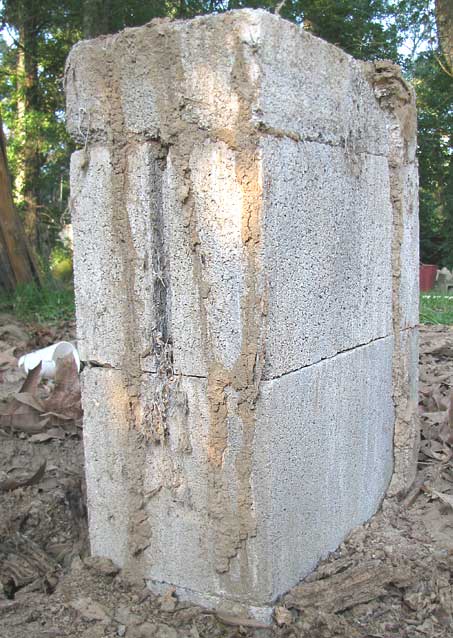
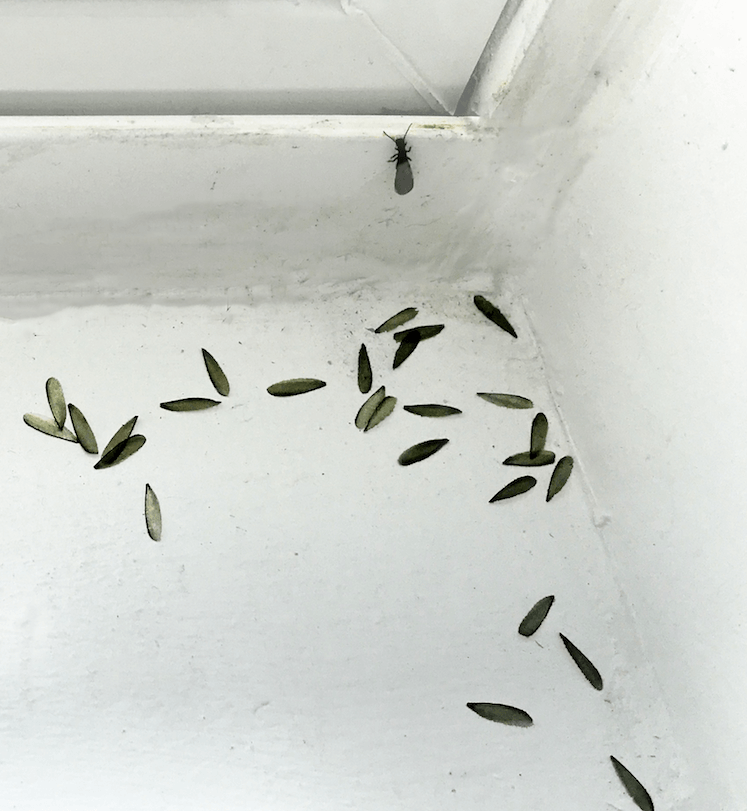
Photograph the whole location before cleaning anything, then take a closer image with a scale reference. If you found winged insects, save a few intact specimens when practical. For the difference between insects that emerged indoors and a few that may have entered from outside, use the indoor swarmer guide. For a foundation tube, use the mud tube and old-damage guide. Do not break open structural wood or treat a dry-looking tube as a reliable all-clear test.
Should You Wait Until Spring to Inspect or Treat?
No new evidence
Use your routine inspection schedule and any existing protection contract. Winter quiet alone is not a clearance test.
Credible building evidence
Record indoor swarmers, new or recurring signs, or possible structural damage and arrange a licensed assessment now.
You do not need to wait for warm weather to report credible evidence. A licensed inspector can assess accessible signs, the construction of the home, moisture conditions, past treatment records, and areas that could not be examined. EPA notes that termites often remain hidden until a swarm or construction reveals them. An inspection is useful even when no insects are visible that day, provided its limits are clear in the report.
Treatment is a separate decision. The suspected termite group, confirmed evidence, access to the affected area, soil or weather conditions, product label, and local rules can change the method or sequence of work. A winter inspection does not automatically mean every treatment must begin that day; cold soil also does not justify postponing evaluation of indoor swarmers, new tubes reaching the structure, recurring pellets, or potentially weakened framing. Ask a licensed company what it can inspect now, what remains uncertain, and how any proposed work will be monitored.
There is no single professional inspection interval for every U.S. home. If your question is about routine timing when you have no new evidence, use the inspection frequency guide to consider your region, treatment history, contract, and building conditions.
Do not open walls, drill wood, or disturb a possibly weakened structural member to check whether termites are active. Preserve the evidence for a qualified inspector.
What to Do If You Find Possible Termite Evidence This Winter
- Record the scene. Note the date and exact location. Photograph the sign and the surrounding wall, foundation, floor, or piece of wood before changing it.
- Keep a useful sample. If possible, place a few intact insects, shed wings, or pellets in a small sealed container for identification. Do not rely on a blurry photo to name the species.
- Check only safely accessible conditions. Note a nearby leak, wet wood, blocked drainage, or wood-to-soil contact. Avoid unsafe crawl spaces and do not open walls or probe a possibly weakened beam.
- Call for an inspection when the evidence points to the building. Indoor emergence, repeated indoor signs, tubes reaching the structure, or possible structural damage warrant a qualified licensed assessment. Tell the inspector what you saw, when you saw it, and whether the property has a treatment contract.
- Base the next step on the findings. Ask which termite group is suspected, what areas were inspected, what remains inaccessible, and why a proposed treatment covers the likely route. A surface spray or the disappearance of visible insects does not answer those questions.
Bottom Line
Cold weather can quiet termite activity, especially near the soil surface, but it does not certify that a colony has died or that a house is clear. Judge winter evidence by its location, recurrence, and connection to the structure. Document credible signs and arrange an inspection when they suggest hidden building activity; let the findings, rather than the season alone, guide treatment.
Sources
- NC State Extension — Termites: Biology and Control: winter feeding, signs, inspection, and limits of visible damage.
- University of Georgia Extension — Biology of Subterranean Termites in the Eastern United States: soil temperature, winter foraging limits, and heated structures.
- NC State Extension — Biology and Behavior of Eastern Subterranean Termites: soil and structural shelter for eastern subterranean colonies.
- UC IPM — Subterranean and Other Termites: different termite groups, California foraging, winter indoor flights, and inspection limits.
- UC IPM — Drywood Termites: wood-dwelling colonies, pellets, and limits of detection.
- NC State Extension — Termites: Baiting Systems: effects of cold soil on foraging and bait contact.
- U.S. EPA — Termites: How to Identify and Control Them: hidden evidence, licensed professionals, and label-based treatment.
Featured photograph: snow-covered house in Asheville, North Carolina. Photo: anoldent / Wikimedia Commons, CC BY-SA 2.0. Resized without cropping. The image shows winter conditions, not termite activity.