
Termites in Pennsylvania: Swarm Season, Signs, Home Sales, and Next Steps
Short Answer
Yes. Penn State Extension says eastern subterranean termites are present throughout Pennsylvania and often damage structural timbers in buildings. In Pennsylvania, winged termites usually swarm between February and June, and most infestations are found in basements, cellars, and the framing just above the cellar walls.
Damage builds over years, not days. If you see swarmers, shed wings, or mud tubes, have the house inspected and compare written proposals from at least three licensed companies. When you sell a home, Pennsylvania’s seller disclosure form asks about known termites, termite damage, pest control contracts, and treatments in the last five years.
Are Termites Common in Pennsylvania?
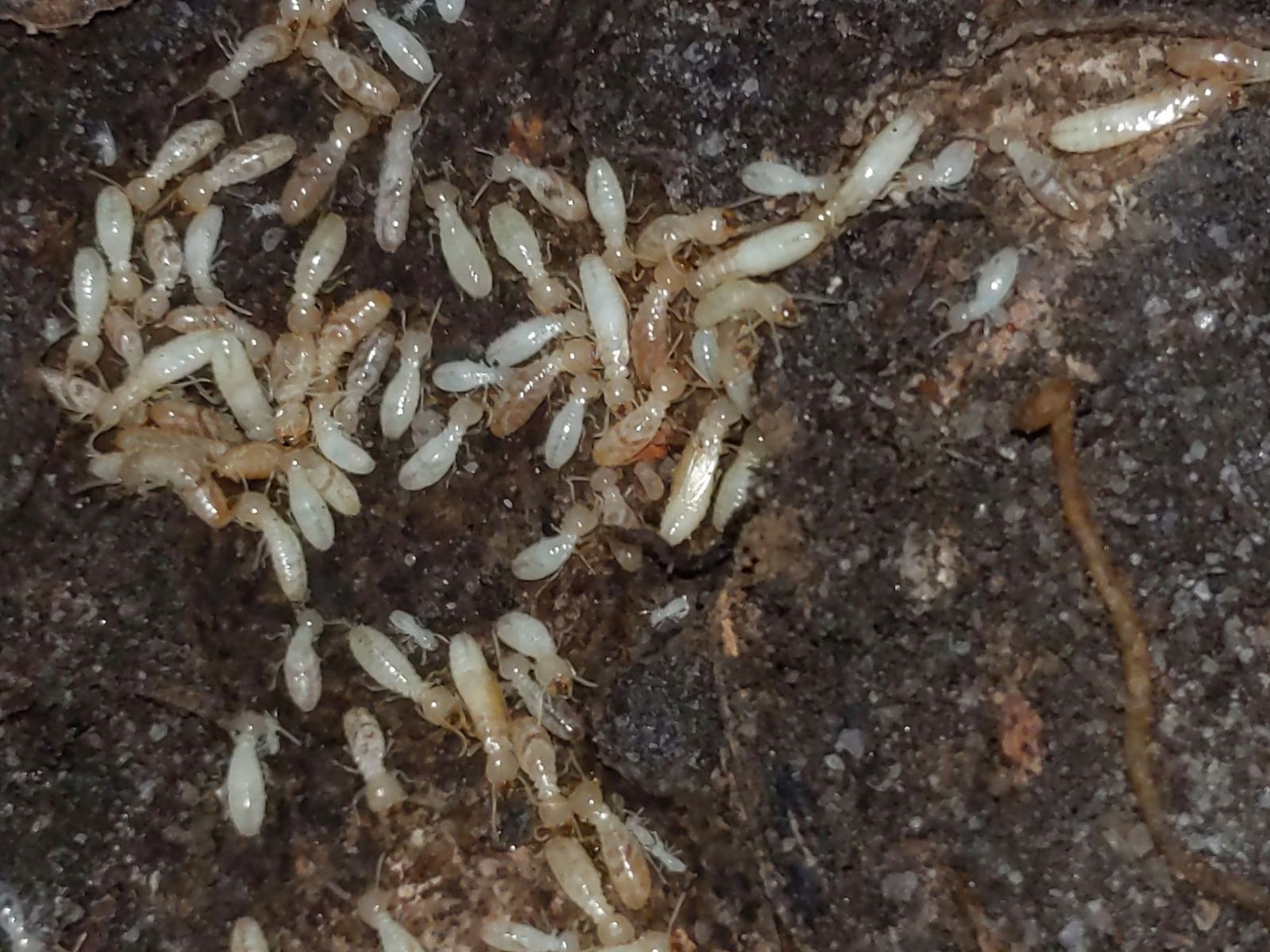
The termite that matters for Pennsylvania homes is the native eastern subterranean termite (Reticulitermes flavipes). Colonies live in the soil, feed on old roots, stumps, and fallen wood, and reach buildings through earthen tubes. Inside a house they eat structural wood, trim, paper, books, and other cellulose. Our subterranean termite guide explains how they live and feed.
Penn State Extension puts the risk in perspective. By the time damage is visible, it is usually the result of years of infestation, and termite problems generally show up some years after construction, usually 10 years or more. Penn State also notes that many Pennsylvania houses are unlikely ever to have termites, because they sit where the risk is low or are built to resist infestation. A low risk is still not a reason to ignore tubes or swarmers.
When Do Termites Swarm in Pennsylvania?
February through June
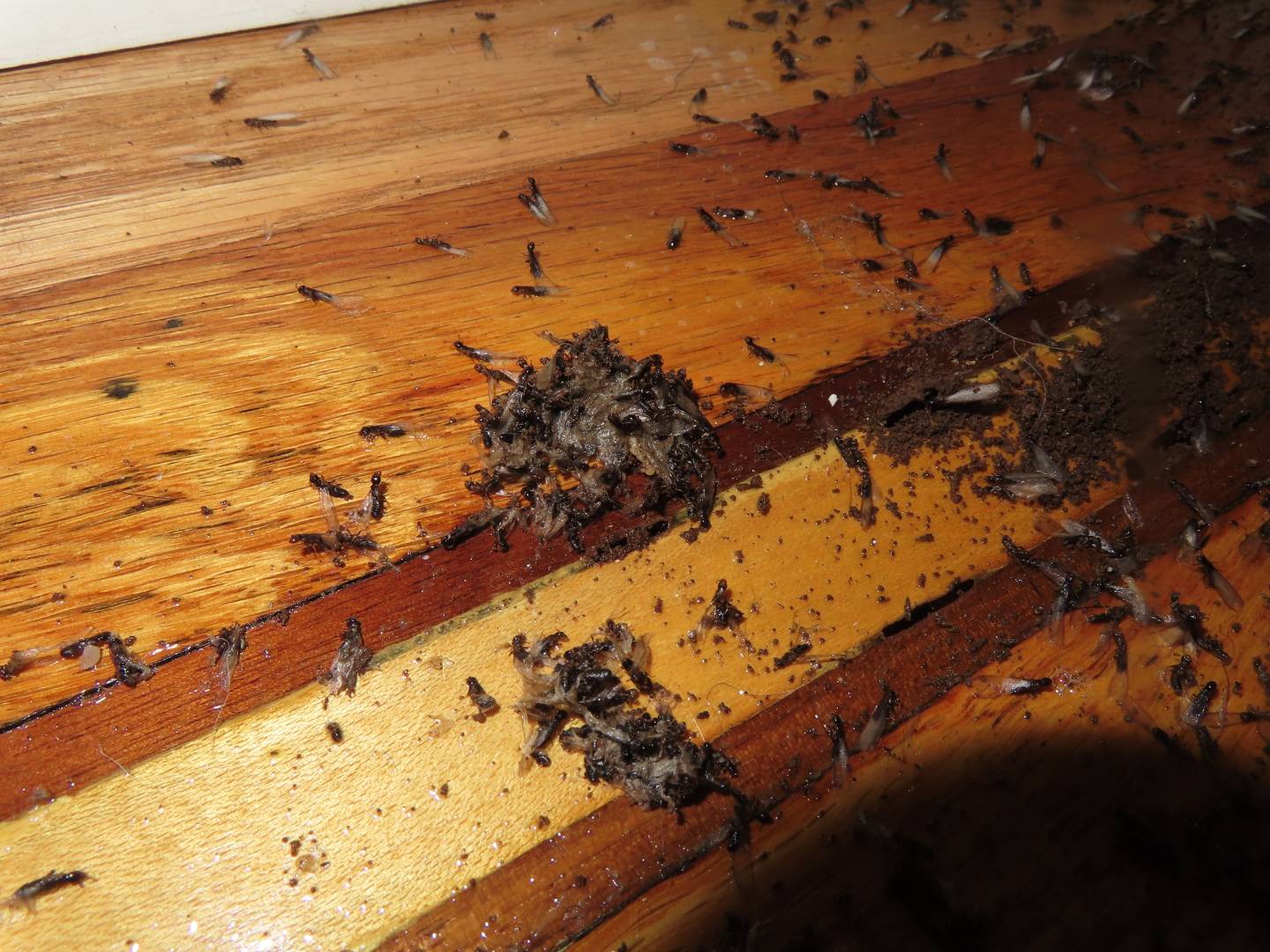
Penn State says swarms of winged termites in Pennsylvania usually emerge between February and June, with indoor swarms most often noticed in late winter or early spring.
Dark bodies, long wings
Swarmers (kings and queens) are dark brown or black and about 3/8 to 1/2 inch long, with two pairs of clear wings of equal length that break off soon after the flight.
Drawn to light
Indoors, swarmers gather at doors and windows. After a short flight they drop their wings and look for a mate. The winged termites themselves do not damage wood.
A sign of a colony
Penn State calls swarming termites or their wings inside a building a sure sign that termites are working there, so treat an indoor swarm as a reason to inspect.
Spring also brings winged ants. Penn State’s quick check: termites have a broad waist, straight antennae, and four wings of equal length, nearly twice as long as the body; ants have a narrow waist, elbowed antennae, and front wings longer than the hind wings. See flying ants vs. termites, black termites and their look-alikes, and, if they are inside, termite swarmers inside the house.
Where to Look in a Pennsylvania House
Pennsylvania has many homes with basements and cellars, and that is where Penn State says most infestations occur: in the basement or cellar and in the structural timbers immediately above the cellar walls, such as mudsills, studs, joists, subflooring, and floors.
Scroll the table sideways to see every column.
| Where to check | What to look for | Why it matters |
|---|---|---|
| Cellar and basement walls | Earth-colored mud tubes running up the masonry | Tubes are protected runways from the soil to wood |
| Mudsills, joists, and subfloor above the cellar walls | Mud-lined galleries, soft or hollow wood | Penn State’s most common infestation zone in Pennsylvania |
| Wooden posts, steps, door frames, and trim set in earth or concrete floors | Tubes at the base, damaged wood | Wood embedded in soil or concrete is especially susceptible |
| Around furnaces, chimneys, water heaters, and hot water pipes | Tubes, swarmers, or wings in winter | Termites favor these warm spots during cold months |
| Siding, window frames, and steps that touch the soil | Mud on the wood, soft spots | Wood in contact with the ground gives termites direct access |
| Windowsills and floors near doors | Swarmers or piles of shed wings in late winter to early summer | Often the only visible evidence of an infestation |
Locations summarized from Penn State Extension, which recommends a professional inspection because experienced inspectors find evidence many homeowners overlook. Our guides to termites in the basement, mud tubes vs. old damage, and signs of termites help you document what you see.
Prevention Around Pennsylvania Homes
Penn State Extension says the less suitable a site is for termites, the less likely a colony is to become established. Its structural steps:
- Remove wood debris, stacked lumber, and firewood from around the building; see termites in firewood.
- Replace wooden posts, steps, and trellises that touch the soil with non-cellulose materials or pressure-treated lumber.
- Where possible, keep wood at least 18 inches above the soil.
- Drain basements, cellars, and crawl spaces, and grade the soil so water flows away from the foundation.
- Keep gutters, downspouts, and French drains working so runoff stays away from the house.
- Fill visible cracks and voids in the foundation with concrete or a suitable caulk.
Safety note: Penn State does not recommend that homeowners treat their own homes for termites, because termiticides are hard to obtain, the equipment is specialized, and building a continuous treated barrier in the soil takes experience. Prevention lowers the risk but does not remove an active colony.
Treatment and Warranties in Pennsylvania
Penn State describes two chemical approaches, often combined with the structural fixes above. A soil treatment creates a treated barrier between the colony and the building by trenching, rodding, or drilling slabs next to the foundation. Baits use cellulose material that termites feed on and carry back to the colony; Penn State notes they are especially useful near wells, springs, drain tiles, ducts in the slab, or a high water table, where soil treatment may be ill advised. Compare the options in termite treatment types compared and bait stations vs. liquid treatment.
Penn State advises contacting at least three licensed companies for estimates, because treatments and warranties differ. When you read a warranty, check:
- What it covers. Subterranean termite warranties do not extend to other wood-destroying organisms such as wood-boring beetles, carpenter ants, or drywood termites.
- Whether additions or soil disturbance next to the foundation limit the coverage.
- Whether it includes a damage replacement clause, and whether existing damage was documented before treatment.
- The yearly renewal fee. Penn State says companies commonly charge about 10 percent of the original treatment price each year to renew.
Penn State suggests keeping a warranty for at least one to two years to confirm that the treatment worked. See what a termite bond is, how long termite treatment lasts, termite treatment cost, and questions to ask a termite company.
Licensing: Who Can Treat Your Home
The Pennsylvania Department of Agriculture’s Bureau of Plant Industry regulates pesticides and certifies pesticide applicators. State rules list Category 12, Wood Destroying Pests, for applicators who use pesticides to control or prevent termites, powderpost beetles, and other wood-destroying pests in homes and other structures. Ask any company that will treat your house for its Pennsylvania pesticide business license and confirm that a certified applicator is responsible for the work. Questions about pesticide use can go to the department’s Pesticide Programs.
Buying or Selling a Home in Pennsylvania
Pennsylvania’s Real Estate Seller Disclosure Law requires sellers in most residential transfers to give the buyer a signed property disclosure statement before the agreement of sale is signed. Exceptions include transfers by an estate or trust fiduciary and some new construction sold with a warranty. Termites, wood-destroying insects, dry rot, and pests are one of the required subjects, and the state’s form asks four questions:
Scroll the table sideways to see both columns.
| Disclosure question | What a buyer can do with the answer |
|---|---|
| Is the seller aware of termites, wood-destroying insects, dry rot, or pests affecting the property? | Ask where, when, and what was done, and point the inspector to those areas |
| Is the seller aware of damage caused by them? | Ask whether the damage was repaired and by whom |
| Is the property currently under contract with a licensed pest control company? | Request the contract and ask whether it can be transferred |
| Is the seller aware of termite or pest control reports or treatments in the last five years? | Request copies of the reports, treatment records, and any warranty |
Questions paraphrased from 49 Pa. Code § 35.335a, item 5. The law says sellers do not have to investigate to complete the form, but must not hide known material defects.
A disclosure statement records what the seller knows; it is not an inspection. Pennsylvania’s home inspection law also excludes inspections limited to wood-destroying insects from its definition of a home inspection, so a termite (wood-destroying insect) inspection is usually a separate service. Your purchase agreement or lender may call for one. Our guides to a termite inspection before buying a house, how to read a termite inspection report, and transferring a termite bond explain the next steps. This section summarizes state law and is not legal advice.
Found signs in your own home
Photograph tubes and swarmers, save a few insects in a sealed bag, check the basement and the timbers above the cellar walls, and get written proposals from at least three licensed companies.
Buying or selling
Read item 5 of the seller disclosure, ask for past reports, treatment records, and any active contract, and schedule a separate wood-destroying insect inspection if your agreement allows it.
Your Next Step
Check the basement or cellar walls, the sill area above them, and wood that touches soil or a concrete floor for mud tubes, then watch windows and doors for wings from late winter through early summer. If you find signs, take photos, save specimens, and call licensed companies for an inspection. For other states, see the full termites by state guide, or compare nearby Ohio and the termite season guide.
Common Questions
When is termite season in Pennsylvania?
Penn State says winged termites in Pennsylvania usually swarm between February and June. Colonies keep feeding in the soil through the rest of the year.
What kind of termites live in Pennsylvania?
The eastern subterranean termite, Reticulitermes flavipes, which Penn State Extension says is present throughout the state.
Why do termites show up in winter in a Pennsylvania house?
Penn State notes that termites favor warm areas around furnaces, chimneys, water heaters, and hot water pipes during cold months, and indoor swarms are often seen in late winter. See do termites die in winter.
Do Pennsylvania sellers have to disclose termites?
The seller disclosure form asks whether the seller knows of termites, wood-destroying insects, dry rot, or pests, related damage, a current pest control contract, and reports or treatments in the last five years. It covers what the seller knows, not what an inspection would find.
Can I treat my Pennsylvania house for termites myself?
Penn State does not recommend it. Professional soil treatments need specialized termiticides, equipment, and experience to build a continuous barrier, and baits should also be installed and serviced by licensed, experienced companies.
Sources and Further Reading
- Penn State Extension — Eastern Subterranean Termites (Steve Jacobs; updated June 2026)
- 7 Pa. Code § 128.42 — Categories of commercial and public applicators (Category 12, Wood destroying pests)
- Pennsylvania Department of Agriculture — Pesticide Programs
- 68 Pa.C.S. Chapter 73 — Seller Disclosures (sections 7302–7309)
- 49 Pa. Code § 35.335a — Seller property disclosure statement
- 68 Pa.C.S. § 7502 — Home inspections: definitions