
Black Termites? What Dark Winged or Wingless Bugs in Your House Usually Are
Short Answer
Termites that look black are almost always swarmers, the winged kings and queens of a subterranean termite colony. Penn State Extension describes them as dark brown or black and about 3/8 to 1/2 inch long, and Mississippi State University notes that eastern subterranean termite swarmers are black. After a short flight they break off their wings, so you may also find black termites without wings crawling near windows.
The termites that actually eat wood are the workers, and they are creamy white, not black. If the black insects you see are shiny, have a pinched waist and bent antennae, and keep showing up in the kitchen, they are more likely carpenter ants or other ants. Either way, black swarmers inside the house are a warning sign worth a professional inspection.
Why Some Termites Look Black
A termite colony has castes that look very different. Penn State Extension describes the eastern subterranean termite colony this way:
Scroll the table sideways to see every column.
| Caste | Color | Size | When you see it |
|---|---|---|---|
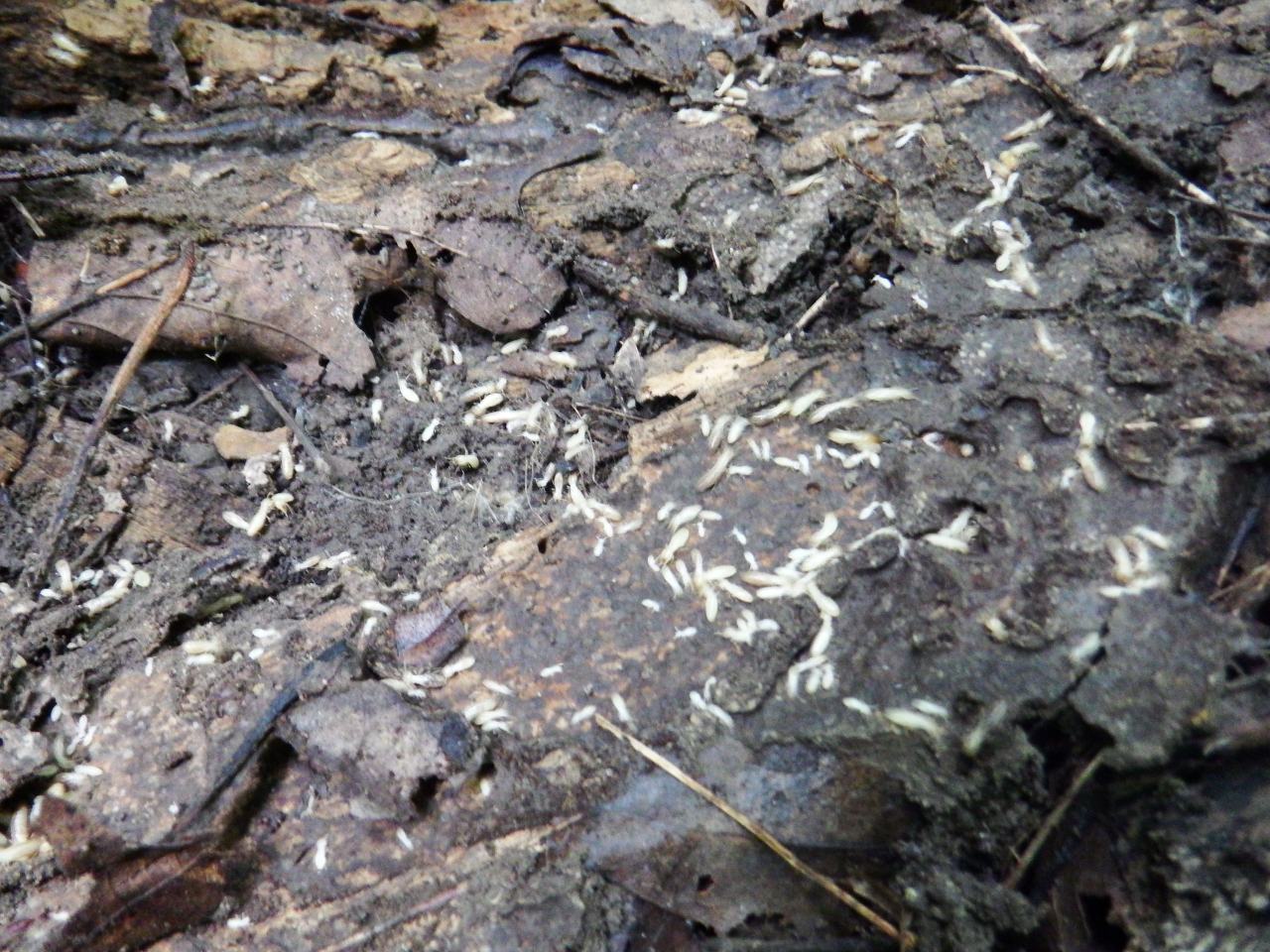
| Workers | Creamy white | About 1/8 to 1/4 inch | Rarely, only when a mud tube or damaged wood is broken open |
| Soldiers | Pale body with an elongated yellowish head and large jaws | About 1/4 inch | With the workers, defending a break in a tube or wood |
| Swarmers (winged kings and queens) | Dark brown or black, with translucent wings | About 3/8 to 1/2 inch long | During a swarm, around doors, windows, and lights |
| Swarmers after the flight | The same dark body, now without wings | Smaller without the wings | Crawling near windows and doors, next to piles of shed wings |
Castes and colors from Penn State Extension. Penn State also notes that the black winged form is the stage homeowners see most, because the other castes avoid light.
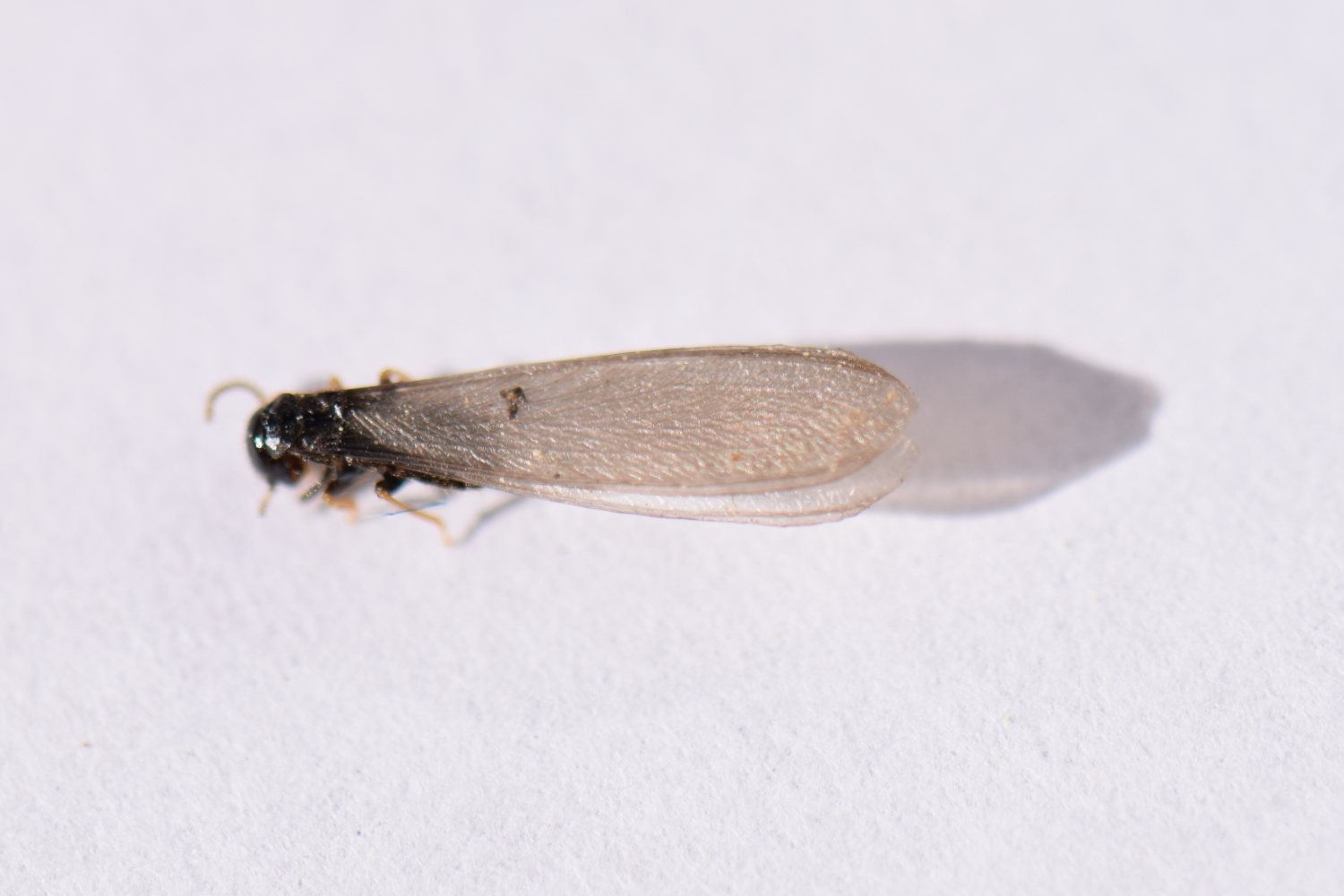
Swarmers keep their wings only briefly. Purdue Extension notes that the wings break at their base and are discarded, sometimes in large piles, and NC State Extension describes mated pairs dropping to the ground, losing their wings, and running off together to look for a nest site. Penn State adds that the winged forms themselves do no damage. They matter because of where they came from. See termite swarmers inside the house for what an indoor swarm means.
Black Bugs With or Without Wings: Termite or Ant?
Color will not settle it. Mississippi State notes that ant swarmers range from light tan to black, and Purdue describes termite swarmers as anywhere from black to yellow-brown. Look at the body shape instead. These checks work on winged and wingless insects alike.
Waist
Termites have a broad, straight waist, so the body looks like one tube. Ants have a narrow, pinched waist between the thorax and abdomen.
Antennae
Termite antennae are straight and bead-like. Ant antennae are bent like an elbow.
Wings
Termites have four wings of equal length, nearly twice as long as the body. In ants the front wings are clearly larger than the hind wings.
Large, shiny, and wingless
Penn State describes black carpenter ant workers as wingless, shiny dark brown to black, and 1/4 to 1/2 inch long, often seen crawling around inside a home.
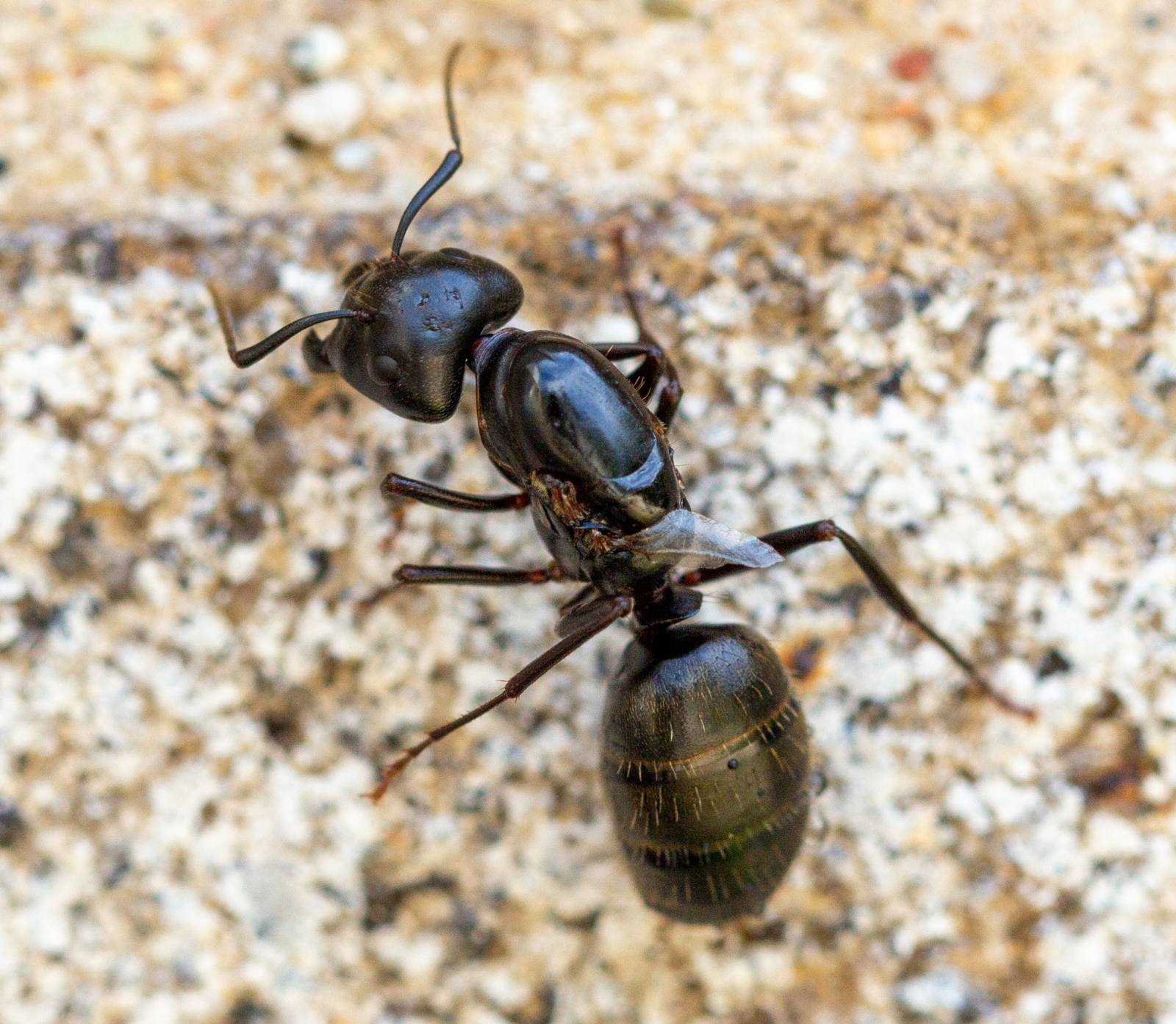
Carpenter ants matter too. Penn State notes that they rarely tunnel into dry, sound wood but can excavate moist, rotting wood and foam insulation for satellite nests, and that they need a different control approach than termites. Our flying ants vs. termites guide and termites vs. carpenter ants vs. wood-boring beetles compare them in more detail.
Are All Termite Swarmers Black?
No. The black or dark brown swarmers are typical of native subterranean termites, the most widespread group in the United States. Mississippi State notes that Formosan termite swarmers are tan to light brown, and, as our Formosan guide explains, they usually swarm in the evening toward lights. Purdue’s range of black to yellow-brown covers both. If the swarmers you found are paler and showed up at night around porch lights in late spring, read our Formosan termite guide. For the native group, see our subterranean termite guide.
Found Black Termites Inside? What to Do
- Collect a few. Put several of the insects and some shed wings in a sealed bag or small jar so an inspector can confirm what they are.
- Note where and when. Write down the room, the window or light they gathered at, and the date. Indoor swarmers often die from lack of moisture, so dead swarmers and wings on sills are a common find.
- Look for other signs. Check the foundation, basement or crawl space walls, and door and window frames for mud tubes; see signs of termites.
- Get a professional inspection. Penn State, NC State, and Purdue all treat swarmers or shed wings indoors as a sign that termites are working in or under the building.
Safety note: Spraying the swarmers with a household insecticide kills only the insects you can see, not the colony in the soil or the wood. Do not break into walls or apply soil termiticides yourself. Save the evidence and let a licensed inspector decide what treatment, if any, is needed.
Straight waist, straight antennae, equal wings or piles of shed wings
Treat it as termites. Collect specimens, check for mud tubes, and schedule a licensed inspection. Our decision guide helps you plan the next step.
Pinched waist, elbowed antennae, large shiny black workers
Likely ants, often carpenter ants. Look for moist or rotting wood, leaks, and coarse debris near where they appear, and ask a pest professional to confirm the species.
Your Next Step
Catch one of the black insects and check its waist and antennae against the list above. If it is a termite, or you cannot tell, keep a few in a sealed bag and book a professional inspection. Our termite identification guide and termite season guide help you put the find in context.
Common Questions
Are black termites more dangerous than white termites?
They are the same insects at different stages. The black swarmers are reproductives that fly off to start new colonies; the creamy white workers are the ones eating wood. Seeing black swarmers indoors suggests a colony with workers is nearby.
Do black termites eat wood?
Penn State says the winged forms do no damage themselves. The damage comes from the workers in the same colony.
What are small black wingless bugs that look like termites?
They can be termite swarmers that have shed their wings, which keep the dark body and straight waist. If the insects have a pinched waist and bent antennae, they are ants.
Why are there black termites near my windows?
Swarmers are drawn to light. When they emerge inside a building, Penn State notes, they swarm around doors and windows, and the shed wings often collect on sills.
When do black termite swarmers appear?
For native subterranean termites, mostly in late winter through spring, often on a warm day after rain. Penn State notes that indoor swarms may appear in late winter or early spring. Timing varies by state; see our termite season guide.
Sources and Further Reading
- Penn State Extension — Eastern Subterranean Termites
- Penn State Extension — Carpenter Ants
- Mississippi State University Extension — Are These Termites or Ants? (Blake Layton)
- Purdue Extension — Finding Winged Termites Is a Red Flag (Timothy J. Gibb, HN-61)
- NC State Extension — Termite Swarmers: What Do They Mean for You? (Crawley and Hayes)