
Termites in Oklahoma: Types, Swarm Season, the ODAFF-1 Report, and Next Steps
Short Answer
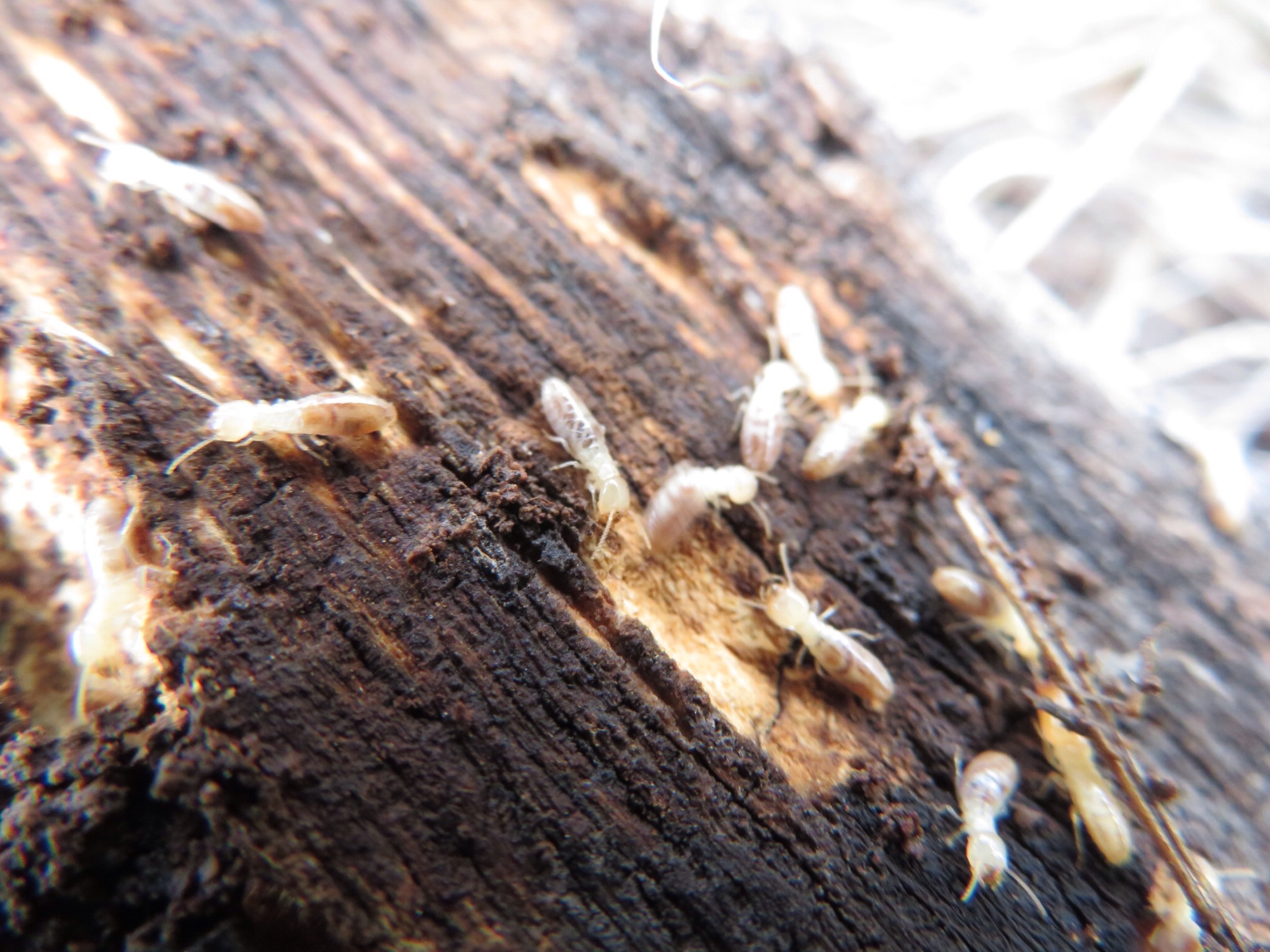
Oklahoma State University says termites are common and abundant in almost all areas of Oklahoma. The ones that damage houses are native subterranean termites, mostly the eastern subterranean termite, which live in the soil and reach wood through mud tubes. They swarm mainly in March through May, with less predictable swarms in September or October. Drywood and dampwood termites occasionally arrive in furniture or lumber but do not appear to establish in the state.
If you see swarmers inside or mud tubes on the foundation, call a pest control company licensed by the Oklahoma Department of Agriculture, Food and Forestry (ODAFF). When a home is sold, the termite inspection must be reported on the state’s Form ODAFF-1, which lists what the inspector could and could not see.
What Termites Live in Oklahoma?
OSU’s entomology museum lists about five native subterranean termite species in Oklahoma. Only a few cause the large-scale damage seen in homes. A genetic study of Reticulitermes samples from 16 Oklahoma counties, published in Florida Entomologist, found these species:
- Eastern subterranean termite (Reticulitermes flavipes): by far the most frequently collected, in 43 of 55 samples. It is the main structural pest. See our subterranean termite guide.
- Arid-land subterranean termite (R. tibialis): 7 samples.
- Light southern subterranean termite (R. hageni): 4 samples.
- Dark southern subterranean termite (R. virginicus): 1 sample.
OSU adds that two drywood termite species have been found in Oklahoma but do not appear to establish, although they may persist for a while, and that dampwood termites are occasionally shipped in with lumber from Oregon or California but are not likely to establish. If you find hard pellets below small holes in furniture or trim, ask the inspector to check for drywood termites; see our drywood termite guide.
When Do Termites Swarm in Oklahoma?
Spring: March to May
OSU Extension describes spring swarms in March, April, and May, with hundreds to thousands of winged termites leaving a colony at once.
Fall: September or October
Fall swarms also happen, but OSU calls them less consistent than spring swarms.
Swarm outside
Termites flying in the yard are normal. OSU says they show many termites are nearby, in the yard and planter beds, but not that the house is infested.
Swarm inside
Swarmers inside the house almost certainly mean an infestation, unless a door or window was left open. Piles of shed wings on sills and tables are another clue.
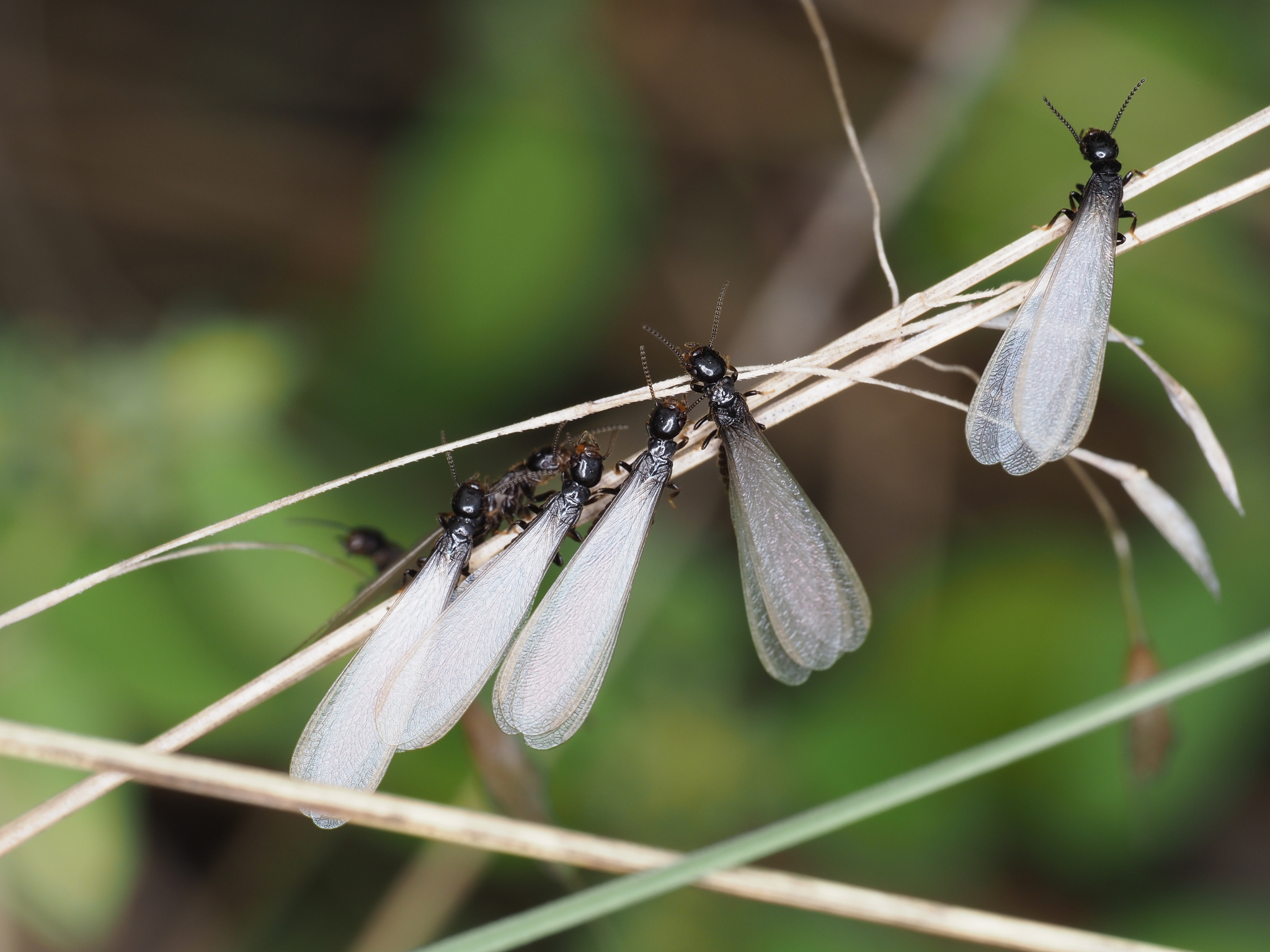
Not sure what you caught? OSU’s quick check: termites have a thick waist, straight bead-like antennae, and front and back wings of equal size that extend past the body; ants have a pinched waist, elbowed antennae, and larger front wings. Our flying ants vs. termites guide and termite season guide go further.
Signs of Termites in Oklahoma Homes
Scroll the table sideways to see every column.
| What you found | What it may mean | Next step |
|---|---|---|
| Mud tubes on the foundation, brick, or siding | Subterranean termites foraging into the house | Photograph them and schedule a licensed inspection |
| Mud in cracks around window sills, door frames, or baseboards | Termites working inside walls | Leave it in place for the inspector |
| Swarmers or piles of wings indoors in spring | Likely an active infestation | Save a few specimens in a sealed bag |
| Wood that sounds hollow, with mud inside when probed | Feeding damage behind the surface | Stop probing and call a company |
| Damage under sinks, around bath traps, or along water pipes | Termites drawn to moisture | Fix leaks and have the area inspected |
| A swarm from a stump, woodpile, or planter bed | A colony nearby, not proof the house is infested | Check the foundation and clean up wood debris |
Signs summarized from OSU Extension. Our mud tubes vs. old damage guide explains how to tell active tubes from old ones.
Safety note: OSU Extension notes that termiticides and baits are generally sold only to licensed pest control companies and state-certified applicators, not to the general public. Do not apply soil termiticides yourself or break into walls looking for termites.
Treatment and Prevention in Oklahoma
OSU Extension describes the main professional options. A soil termiticide barrier is applied completely around the house and works quickly. Bait systems take longer, because termites have to find and feed on the bait, but they use less insecticide. Some homeowners use both. Infested wood may be sprayed or injected, which can mean drilling into walls, and damaged wood should be replaced with treated wood. OSU is candid that no strategy works 100% of the time. Our guides to bait stations vs. liquid treatment and how long termite treatment lasts compare the options.
OSU also says that sanitation and moisture problems have to be fixed first, or getting rid of termites is nearly impossible:
- Remove wood debris, dead shrubs, paper, and cardboard from planter beds and the ground near the house.
- Rake wood-chip mulch back about 6 inches from exterior walls. See termites in mulch.
- Keep firewood off the ground and away from the house.
- Keep gutters clear and point downspouts away from the foundation.
Buying a Home: The Oklahoma ODAFF-1 Report
Lenders may require a termite and wood-destroying insect inspection when a home is sold. ODAFF regulates the companies that do this work, and its rules require the report to be made on Form ODAFF-1, the Oklahoma Official Termite and Wood Destroying Insect Report.
- When it is required: the ODAFF-1 is required for all property transactions. It is not required for routine inspections outside a sale, but those reports must say they are not for a property transaction.
- What is inspected: a thorough visual inspection, including areas around plumbing, window and door frames, baseboards and floors, floored attics, porches and steps, the exterior of slabs and foundations, crawl spaces, and fireplaces.
- What is not: unfloored attics, the inside of hollow walls, areas behind appliances, furniture, cabinets, insulation, or floor coverings, storage or locked areas, and crawl spaces without enough clearance. These must be described on the report, and any structure not inspected must be marked.
- What it reports: construction type, conducive conditions, visible termite activity and damage, other wood-destroying insects, signs of previous treatment, and a diagram. If no visible evidence is found, the report says so.
- Remedial or preventive: a recommendation for remedial treatment must rest on live insects or an untreated previous infestation. A preventive treatment is a recommendation only and requires substantial conducive conditions.
- Posted notice and disclosure: the inspector records where a notice was posted, such as the breaker box, water heater, under the kitchen sink, or at the bath trap. The seller signs a statement that known insect activity, damage, treatment, and any active service agreement have been disclosed.
- Limits: the form does not cover wood-decay fungi or mold, and it advises buyers to get a qualified building expert’s opinion on any damage.
Since September 14, 2020, the old follow-up Form ODAFF-2 is no longer an official document. If repairs or treatment are done after the inspection, ODAFF advises keeping the invoices, treatment records, and photos of the repairs and corrected conditions instead. Our guides to a termite inspection before buying a house and how to read a termite inspection report explain common findings.
Oklahoma Termite Contracts
ODAFF rules require a termite contract on an existing house or a preconstruction job to state the minimum standards for the termite work, and to explain why if any minimum will not be met. If visible termite-damaged material will not be replaced or repaired under the contract, the contract must say so clearly. Read whether your agreement covers retreatment only or also repair, and what renewal requires; our guide to termite bonds explains common terms.
Found signs in your own home
Photograph tubes and swarmers, fix leaks and drainage, clear wood debris and mulch from the foundation, and get inspections and written proposals from more than one licensed company.
Buying or selling
Make sure the inspection is reported on Form ODAFF-1, read the inaccessible areas and recommendations, ask whether an active service agreement transfers, and keep records of any treatment or repairs done before closing.
For questions or complaints about a licensed company, contact ODAFF Consumer Protection Services at 405-522-5981. Our questions to ask a termite company help you compare proposals. This guide summarizes state rules and is not legal advice.
Your Next Step
Check the foundation, porches, and crawl space for mud tubes this week, and look for wings on window sills after spring storms. If you find signs, save specimens, take photos, and call a company licensed by ODAFF. For neighboring states, see our Texas termite guide or the full termites by state guide.
Common Questions
When is termite season in Oklahoma?
Mainly March through May, when OSU Extension says most swarms happen. Smaller, less predictable swarms can occur in September or October. Colonies keep feeding year-round.
Are there drywood termites in Oklahoma?
OSU says two drywood species have been found in Oklahoma but do not appear to establish. Native subterranean termites are the structural pests. Ask an inspector to confirm any unusual termite you find.
What is an ODAFF-1?
It is Oklahoma’s official termite and wood-destroying insect report form. ODAFF rules require it for all property transactions.
Can I treat termites myself in Oklahoma?
OSU Extension notes that termiticides and baits are generally sold only to licensed companies and certified applicators. Homeowner work is best limited to fixing moisture, removing wood debris, and pulling mulch back from the foundation.
Does seeing swarmers outside mean my house has termites?
Not by itself. OSU says swarms outdoors show termites are nearby. Swarmers inside, piles of wings, or mud tubes on the house are stronger signs.
Sources and Further Reading
- Oklahoma State University Extension — Termite Swarming Season (Kard, Plant Disease and Insect Advisory, 2008)
- Oklahoma State University Entomology Museum — Termites (Isoptera) of Oklahoma
- Florida Entomologist — Distribution and Genetic Variation of Reticulitermes in Oklahoma
- ODAFF — Form ODAFF-1, Oklahoma Official Termite and Wood Destroying Insect Report
- ODAFF — Termite handout: Form ODAFF-2 no longer official
- Okla. Admin. Code 35:30-17-105 — WIR inspections
- Okla. Admin. Code 35:30-17-20 — Contract contents