
Tennessee termite guide
Termites in Tennessee: Types, Swarm Season, Contracts, and Next Steps
Short Answer
Termite damage in Tennessee comes almost entirely from native subterranean termites, led by the eastern subterranean termite. They live in soil, reach wood through mud tubes, and usually swarm in daylight from March to May. The invasive Formosan termite has turned up in the Memphis area in the past, but University of Tennessee Extension described it as not established.
Swarmers near a stump or woodpile outdoors point to a nearby colony. Swarmers or shed wings inside call for a licensed inspection. If you sign a termite contract, Tennessee requires a one-year retreatment warranty, a graph of your house, and, if the contract does not cover damage repair, a statement saying so in half-inch letters on the front. Look for that line before you sign.
What Termites Live in Tennessee?
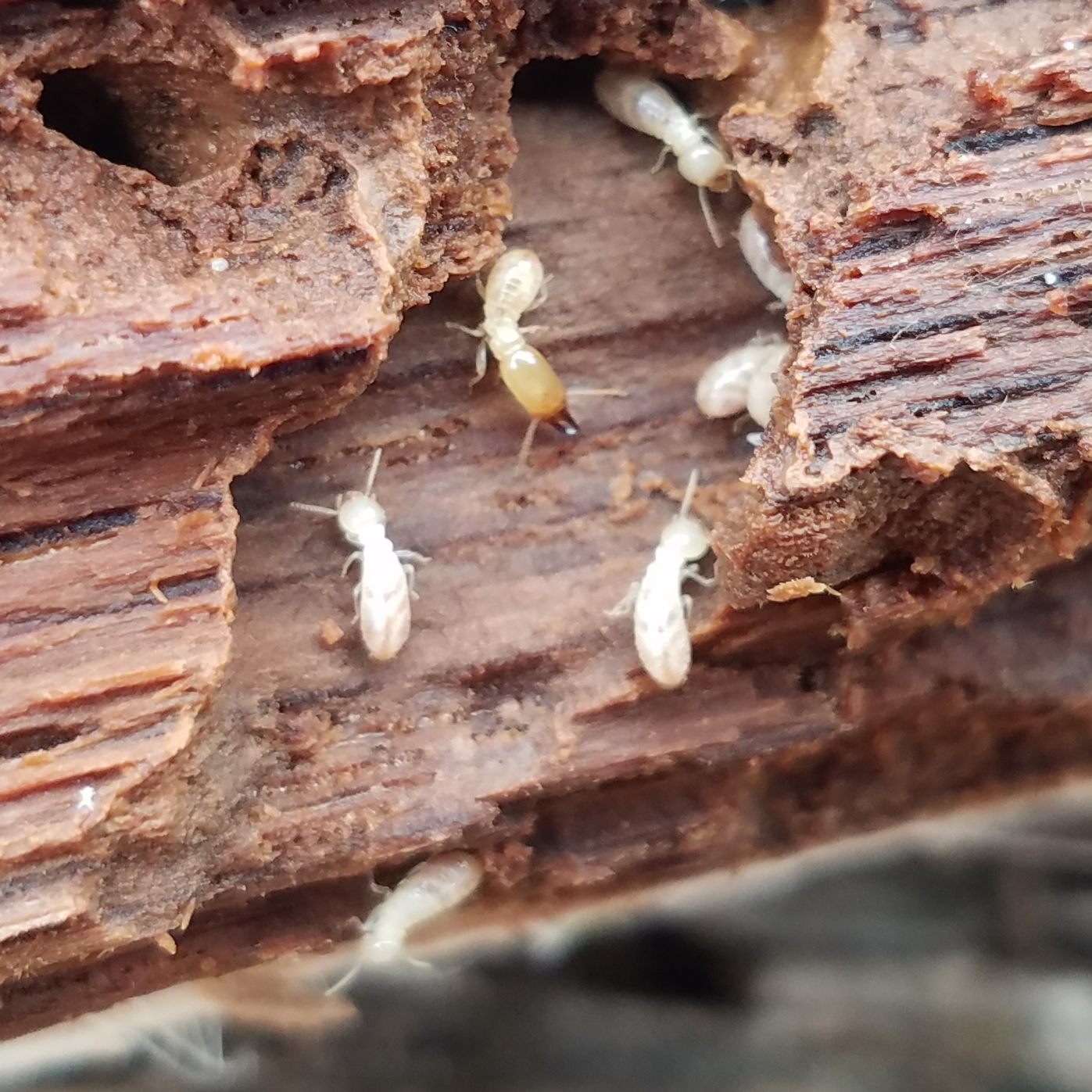
University of Tennessee Extension’s termite control publication lists three native subterranean species. All three live in soil, need moisture, and travel through mud tubes to reach wood.
- Eastern subterranean termite (Reticulitermes flavipes), the most common termite in the state and the one behind most structural damage. See our subterranean termite guide.
- Southeastern subterranean termite (R. virginicus), with a similar habit and a slightly later swarm season.
- Light southeastern subterranean termite (R. hageni), a pale-brown species that swarms in late summer and fall.
What about Formosan and drywood termites?
The Formosan subterranean termite is an invasive species that builds much larger colonies. UT Extension’s publication notes that it has been introduced to the Memphis area in the past but is not established, and asks homeowners to report suspected Formosan termites. Just across the state line, Mississippi State University Extension reports isolated Formosan collections within the last decade in north Mississippi towns including Olive Branch and Oxford, while saying it is not known whether they are established that far north. Formosan swarmers are larger and yellowish-brown, fly at dusk, and gather at lights. Our Formosan termite guide covers identification.
Drywood termites are not established in Tennessee. They occasionally arrive in infested furniture. If you find small, uniform pellets piling up below wood instead of mud tubes, read our drywood termite guide and ask the inspector to check for them.
When Do Termites Swarm in Tennessee?
Each species has its own window. UT Extension gives these typical periods, and swarms can happen at other times, especially inside heated buildings in winter.
Eastern subterranean
Usually March through May, in daylight, often on a warm day after rain. This is the spring swarm most Tennessee homeowners see.
Southeastern subterranean
Usually April through June, and sometimes in the fall.
Light southeastern subterranean
Usually August through October, which is why a fall swarm is not always a sign of something unusual.
Formosan (if present)
Flights run from dusk to about midnight. In Mississippi they usually swarm from early May to early June and are strongly drawn to lights.
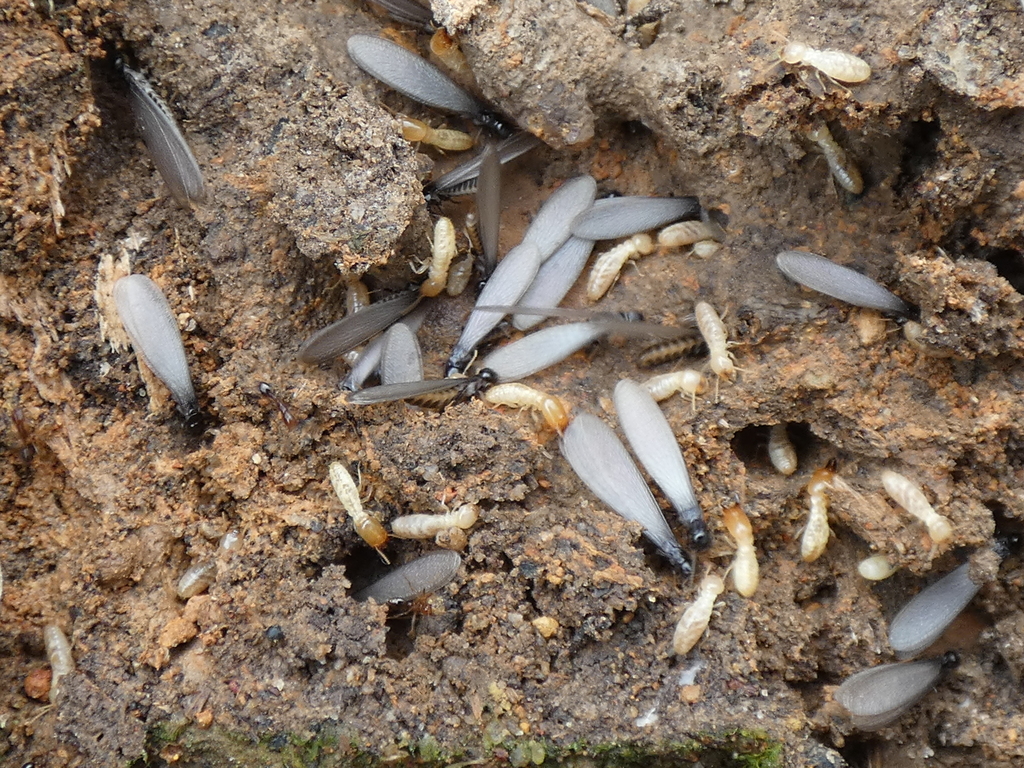
Flying ants swarm in spring too, so compare antennae, waists, and wings with our flying ants vs. termites guide. For swarm windows in other regions, see when termite season starts.
Signs to Check Around a Tennessee Home
- Mud tubes on foundation walls, crawl space piers, slab edges, basement walls, or around plumbing.
- Swarmers or shed wings on windowsills, near light fixtures, or in tubs and sinks, most often in spring.
- Damaged wood that sounds hollow, blisters under paint, or shows soil-packed galleries when probed.
- Moisture and wood-to-soil contact, such as leaking pipes, clogged gutters, damp crawl spaces, mulch piled against siding, and wood touching soil.
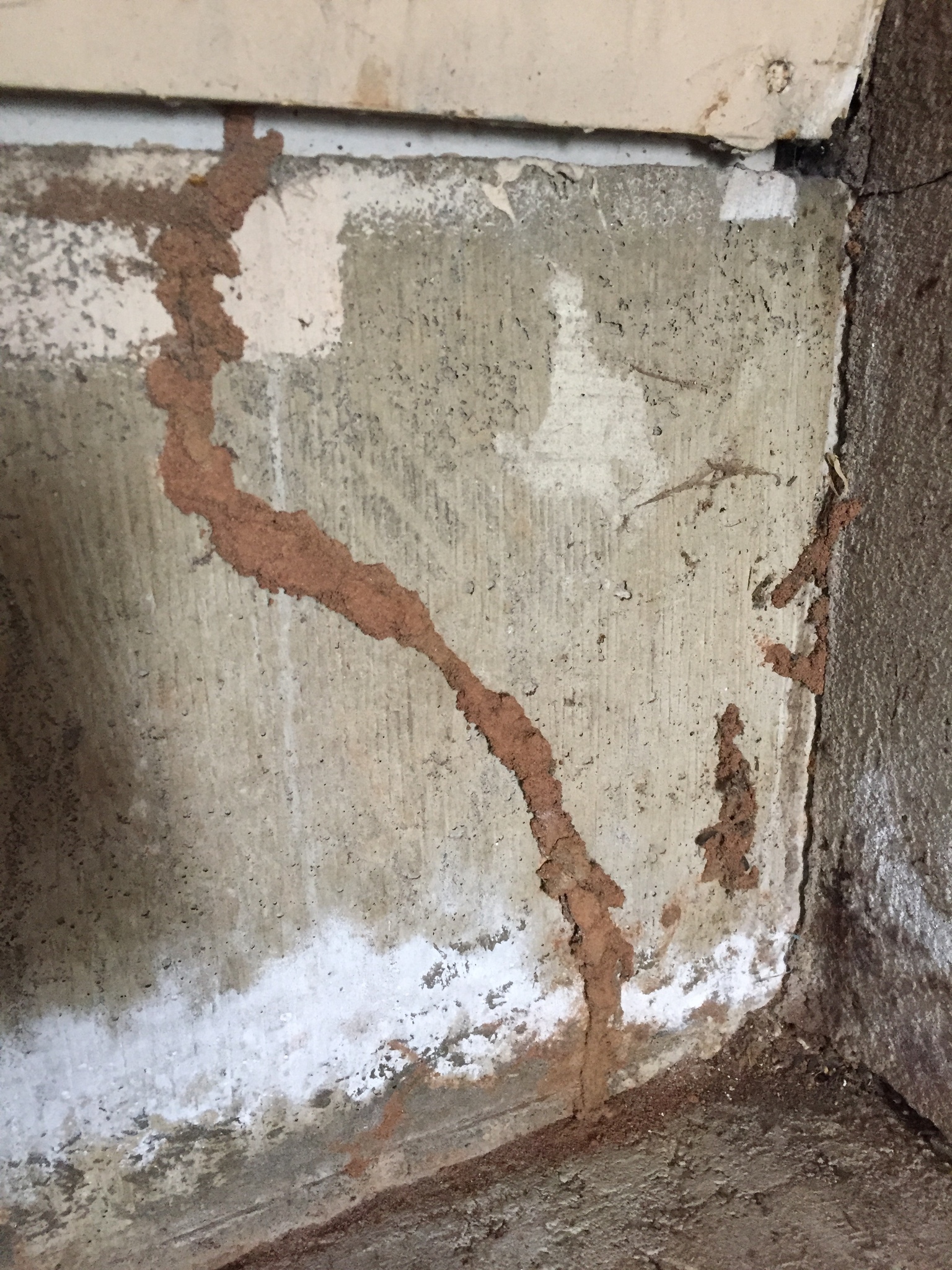
In homes built over a crawl space or basement, tubes and damage often stay out of sight. UT Extension recommends a thorough professional inspection at least once a year. If your home has a crawl space, our crawl space termite guide explains what an inspector checks there.
Found Termites? What They Mean and What to Do
Scroll the table sideways to see every column.
| What you found | What it may mean | Next step |
|---|---|---|
| Daytime swarm from a stump, fence, or woodpile | A colony nearby, not proof the house is infested | Note the spot, check the foundation and crawl space, watch for tubes |
| Swarmers or shed wings indoors | Very likely a colony in or under the structure | Save a few specimens and schedule a licensed inspection |
| A swarm in late summer or fall | Possibly the light southeastern subterranean termite | Treat an indoor fall swarm the same way as a spring one |
| Large yellowish-brown swarmers at lights on a late-spring evening | A possible Formosan swarm, which would be unusual in Tennessee | Collect specimens and have them identified by your county Extension office or an inspector |
| Mud tubes on the foundation, piers, or basement wall | Subterranean termites reaching wood | Photograph the tube and leave it intact for the inspection |
| Termites in a house already under contract | Possible reinfestation | Call the company, ask for the annual inspection records, and keep copies |
Specimens kept in a small jar of rubbing alcohol help an inspector or Extension office identify the species.
Safety note: Do not open walls, crawl into tight or wet crawl spaces, or apply soil termiticides yourself on the strength of a swarm. Treatment choice depends on the species, the construction, and access, and Tennessee regulates how chartered companies perform termite work.
Tennessee Termite Contracts: What the State Requires
Many homeowners call a termite contract a “termite bond.” For the general idea, see what a termite bond is. Tennessee Department of Agriculture rules add specific requirements for any contract to control termites and other wood-destroying organisms.
- A written contract before any treatment, made in duplicate. The company keeps one copy and you get the other.
- A dated inspection and a graph of the property showing where visible wood-destroying insects or their damage were found. Keep it: it records what existed before the contract began.
- A one-year warranty that provides for retreatment. Renewal after that is up to you and the company.
- A clear statement if there is no damage guarantee. Damage repair coverage is optional, but a contract without it must say so in letters half an inch tall on the front of the agreement.
- A provision for transfer of the contract to later owners or renters during its term, which matters when you buy or sell a home.
- A unique contract number that distinguishes it from the company’s other contracts.
Once you are under contract, the company must inspect the property every year and record the date. If it finds termite activity that differs from the previous graph, it must treat and draw a new graph showing the new activity. You can request copies of the annual inspection and treatment records, and the company must provide them within 48 hours.
The rules also cover partial work. A company may perform less than a complete treatment only if it explains the possible outcomes to you, your acceptance appears in bold type in the contract with your initials, and the untreated areas are marked on the graph. If you see that bold clause, ask exactly which areas will be left out and why.
Before you sign
Look at the front page for the half-inch statement about damage. Ask the company to show you the damage or activity it found, check that the graph matches, and ask what treatment will be used and whether any area will be left untreated.
Once you’re under contract
Be home for the annual inspection, ask for a copy of each record, and report new swarmers or tubes promptly. If you are buying a house with an existing contract, ask the seller and the company to transfer it.
Use our questions to ask a termite company and the termite treatment decision guide to compare proposals. This section summarizes state rules and is not legal advice.
Buying a Home: The Tennessee Wood Destroying Insect Infestation Report
A Wood Destroying Insect Infestation Inspection Report is commonly issued when a Tennessee home is sold or transferred. Only a chartered pest control company licensed in the wood-destroying-organisms category may issue one, and the inspection must be done by a person licensed in that category or working under that person’s direct supervision.
- It reports what was visible on the inspection date: whether wood-destroying insects or their damage were present or absent. Obstructions and inaccessible areas must be noted.
- It follows a standard form and must include the property address, a diagram, any areas of damage or active infestation, the inspector’s name, the company’s name, address, and charter number, the inspection date, and any recommended corrective action.
- It is a 90-day warranty of accuracy. Under state law, if the report’s statements prove wrong, the holder may seek damages from the company, including closely related repair costs. Before a damages lawsuit, the company gets a chance to inspect and propose repairs and treatment within 30 days.
- It is not a damage assessment. If the report notes damage or past infestation, ask a contractor or engineer to evaluate the wood before closing.
Our guides to a termite inspection before buying a house and how to read a termite inspection report explain common findings and limits.
Checking a Company and Getting Help
The Tennessee Department of Agriculture’s consumer tips say a company may operate legally only if its charter number is visible on its vehicles. You can ask the technician for a commercial pesticide applicator certification or license card, and a salesperson should carry a solicitor’s card from the department. If you do not know the company, get three bids.
The department’s Pesticide Section can investigate substandard termite treatment under a current contract, failure to issue a termite contract, failure to retreat an active infestation, and wood destroying insect infestation reports. It does not handle pricing or payment disputes, which the department refers to the Tennessee Division of Consumer Affairs or the Better Business Bureau. Start from the department’s pesticide complaints page.
Your Next Step
If you see swarmers inside or find mud tubes, save a few specimens, take photos, and schedule a licensed inspection. If you already have a termite contract, find its front page to see whether damage repair is covered, and ask for your latest annual inspection record. Large evening swarmers at lights would be unusual in Tennessee, so have any you find identified. For neighboring states, see our guides to Alabama, Georgia, Mississippi, and North Carolina, or the full termites by state guide.
Common Questions
Are Formosan termites in Tennessee?
They have been introduced to the Memphis area in the past, but UT Extension described them as not established. Isolated finds have been reported just south of the state line in north Mississippi. If you see large swarmers at lights on a late-spring evening, have them identified.
Does an outdoor swarm mean my house is infested?
Not by itself. Outdoor swarmers show that a colony is nearby. Swarmers emerging indoors, shed wings on sills, or mud tubes on the foundation are stronger signs. Our swarmers inside the house guide explains what to do next.
Does a Tennessee termite contract cover damage repair?
Only if it says so. Damage guarantees are optional, and a contract without one must state that on the front in half-inch letters. Every termite contract must include at least a one-year retreatment warranty.
Does a termite company have to inspect every year?
Yes, for a property under contract. The company must inspect annually, record the date, treat new activity it finds, and give you copies of the records within 48 hours of your request.
How long is a Tennessee WDI report good for?
The report is a 90-day warranty that its statements were accurate on the inspection date. It covers visible areas only and does not guarantee that no termites exist.
Sources and Further Reading
- University of Tennessee Extension — Subterranean Termite Control (PB1344)
- Tennessee Department of Agriculture Rules, Chapter 0080-09-04 (Rule 0080-09-04-.08, wood destroying organisms)
- Tennessee Code, Title 62, Chapter 21, Part 2 — Wood destroying insect infestation inspection reports
- Tennessee Department of Agriculture — Pesticide Consumer Tips
- Tennessee Department of Agriculture — Pesticide Complaints
- Mississippi State University Extension — Formosan termite swarms threaten large part of state