
Mississippi termite guide
Termites in Mississippi: Types, Swarm Season, Formosan Spread, and Next Steps
Short Answer
Every county in Mississippi has the native eastern subterranean termite, which swarms in daylight from late winter on the Coast to early summer in the north. The invasive Formosan termite is established mostly in the southern half of the state and swarms at dusk in May and early June, drawn to lights. Drywood termites are limited to the three Gulf Coast counties.
If you see swarmers inside or find mud tubes, schedule an inspection with a licensed company. Most Mississippi termite contracts cover retreatment only, not damage repair, unless the contract says otherwise. When you buy a home, the Official Wood Destroying Insect Report describes only what was visible, and the state form carries no warranty.
What Termites Live in Mississippi?
Mississippi State University Extension lists three species that matter most to homeowners, plus a few less common ones.
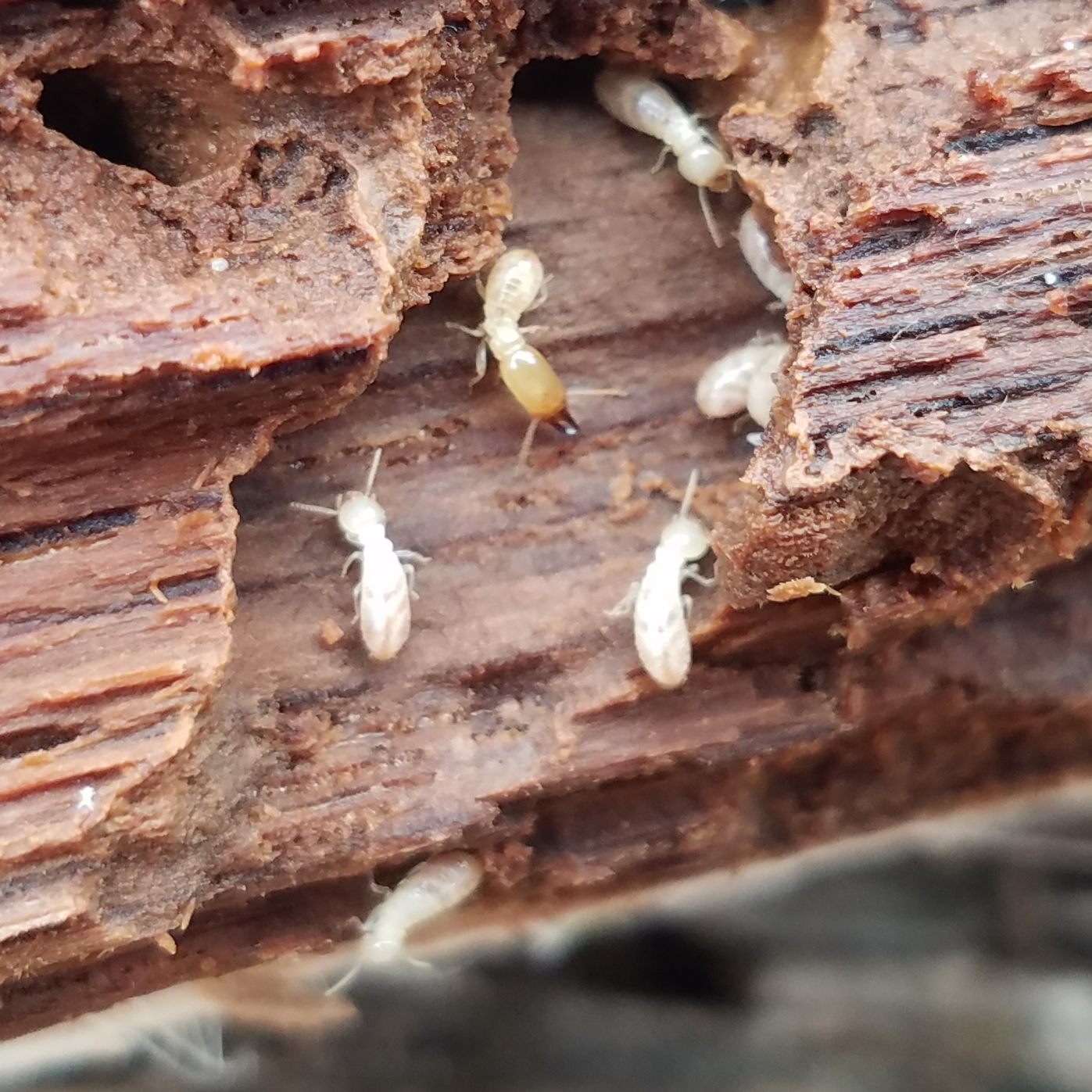
- Eastern subterranean termite (Reticulitermes flavipes), a native species found in all of Mississippi’s counties and the most common cause of damage. See our subterranean termite guide.
- Formosan subterranean termite (Coptotermes formosanus), an invasive species first detected in Mississippi in 1984. It builds much larger colonies and is covered in detail below.
- Southeastern drywood termite (Incisitermes snyderi), native but limited to the three coastal counties, where infestations are relatively uncommon. Its sign is small, uniform, six-sided pellets. See our drywood termite guide.
- Light and dark southern subterranean termites (R. hageni and R. virginicus), less common natives. The light southern termite swarms in the fall and is light brown, so it is sometimes mistaken for a Formosan termite, although it is smaller.
When Do Termites Swarm in Mississippi?
Swarm timing depends on the species and on where you are in the state. These are the typical windows MSU Extension gives.
Eastern subterranean, Coast
From late January, peaking from late February to early April. Swarms usually happen in the morning.
Eastern subterranean, north
Usually April through June, also in daylight. Occasional fall swarms happen statewide.
Formosan
In south Mississippi, usually late April to mid-May, around Mother’s Day, and into June in central Mississippi. Swarms start at or shortly after dusk, and swarmers are strongly attracted to lights.
Southeastern drywood
Mostly May and June, usually at dusk, in the coastal counties only.
Our termite season guide compares swarm timing across the South, and flying ants vs. termites helps you check what you caught.
Formosan Termites in Mississippi
MSU Extension reports that Formosan termites now occur in at least 25 counties, mostly in the southern half of the state, and are especially common from Hattiesburg south. In 2024, MSU Extension also reported isolated Formosan finds within the last decade farther north, in Starkville, Columbus, Louisville, Olive Branch, Tupelo, and Oxford, while noting it is not known whether they are truly established that far north.
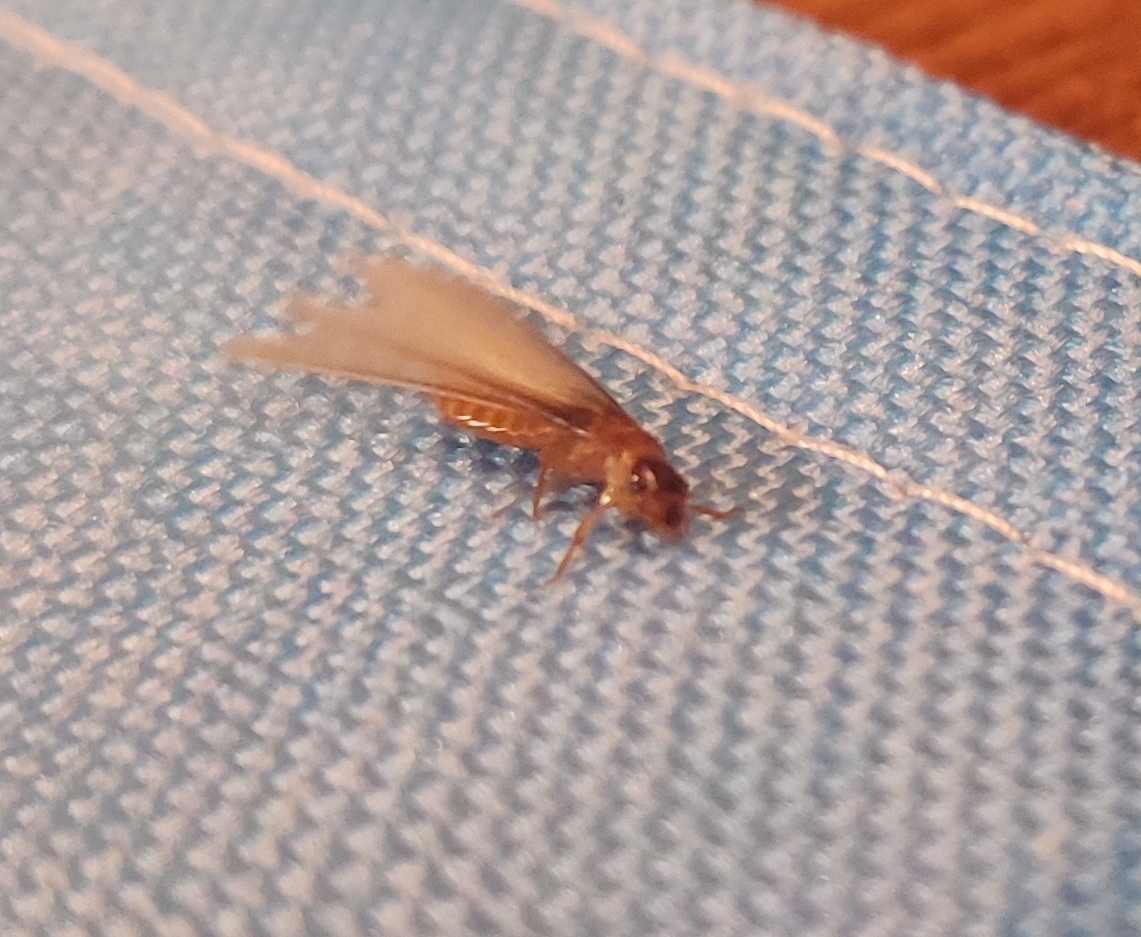
Formosan termites matter because of colony size and where they can live. MSU Extension notes that they can form aerial carton nests that do not need soil contact, so soil treatment alone may not control them, and technicians may need foam treatments or above-ground bait stations over several visits. Odd-shaped mud formations on walls in spring, which MSU calls swarm “castles,” are a likely Formosan sign. Our guides to Formosan termites and what a termite nest looks like explain carton nests.
A few Formosan swarmers inside on a May evening may simply have flown in through an open door or window. MSU Extension says more than a few dozen warrant investigation. Turning off outdoor lights during the swarm season reduces how many are drawn to the house.
Found Termites? What They Mean and What to Do
Scroll the table sideways to see every column.
| What you found | What it may mean | Next step |
|---|---|---|
| Daytime swarm from a stump, fence, or woodpile in spring | A native subterranean colony nearby, not proof the house is infested | Check the foundation and crawl space for tubes |
| Swarmers inside, or dead swarmers on a windowsill | Likely an active infestation in the building | Save a few specimens and schedule a licensed inspection |
| A few tan swarmers at a lamp on a May evening | Formosan swarmers that may have flown in from outside | Collect specimens; if more than a few dozen, have the house inspected |
| Odd mud formations on a wall in spring | Possible Formosan swarm “castles” | Photograph and leave intact for the inspector |
| Small, uniform pellets below wood on the Coast | Possible drywood termites | Ask the inspector to check for drywood activity |
| Termites in a house under contract | Possible reinfestation | Call the company for a follow-up inspection, usually at no added cost |
MSU Extension describes prompt action as critical but not urgent: taking a month or two to get inspections and bids usually will not add much damage.
Safety note: Do not open walls, crawl into tight or wet crawl spaces, or apply soil termiticides yourself. MSU Extension advises against treating your own house, because homeowner products are generally not comparable to professional treatments, and termite work in Mississippi requires a company licensed by the state Department of Agriculture and Commerce.
Mississippi Termite Contracts
A termite contract, often called a termite bond, is an agreement for treatment and follow-up service. MSU Extension’s homeowner publication highlights what to check.
- Retreatment vs. repair. Most contracts today only provide for retreating the house if it becomes reinfested while under contract. Contracts that also cover damage repair cost more and are optional. Read which kind you are signing.
- Annual renewal. The yearly renewal fee usually includes an annual inspection. Renewing keeps the contract and the inspection current.
- Baits stop working when service stops. With a bait system, protection ends when the service visits end. A properly applied liquid soil treatment can keep protecting a home for years even if the contract lapses.
- Formosan areas. Keeping a contract active is especially important where Formosan termites occur.
- Shopping. Get bids from several licensed companies, and do not choose on price alone. Ask what the treatment and contract include before you sign.
Before you sign
Ask whether the contract covers retreatment only or also repair, what treatment will be used, how often the house will be inspected, and what the renewal costs. Get the answers in writing.
Once you’re under contract
Renew on time, be home for the annual inspection, and keep soil, mulch, and pine straw from piling against the treated foundation. Report new swarmers or tubes to the company promptly.
Our questions to ask a termite company and the termite treatment decision guide help you compare proposals.
Buying a Home: The Mississippi Official Wood Destroying Insect Report
Most lenders require a wood destroying insect report when an existing home is sold. Mississippi’s rules set out how it works.
- Who may issue it: a person licensed for wood destroying insect control, or an employee under that licensee’s direct supervision, on the state’s Official Wood Destroying Insect Report form.
- What it covers: a visual inspection of accessible areas for subterranean and drywood termites, wood-boring beetles, and other wood-destroying insects such as carpenter ants and carpenter bees, including signs of previous infestation and damage. Conducive conditions and areas that could not be inspected must be listed.
- What it does not promise: the rule states there is no warranty, express or implied. The Mississippi Home Inspector Board puts it plainly: if the pest control operator cannot see it, it is not reported.
- A posted notice: after the inspection, the company must post a durable sign near the water heater, crawl space access, or under the kitchen sink with its name and the inspection or treatment date. It should not be removed.
- Seller disclosure: MSU Extension notes that the seller’s property condition disclosure must reveal known wood-destroying insect problems, past treatments and repairs, and whether the house is under a termite contract.
If the house is under contract, ask the seller and the company whether you can take it over by paying the renewal. A general home inspection is a separate service from the WDI report. Our guides to a termite inspection before buying a house and how to read a termite inspection report explain common findings. This section summarizes state rules and is not legal advice.
New Construction in Mississippi
MSU Extension explains that pretreatment for new homes is done in two steps: a treatment under the slab before it is poured and a final perimeter treatment that must be applied within one year of completion. Pest control companies must place a sticker on the exterior electrical box showing the treatment date and the company. If you are building or buying a new home, check that sticker and see our pre-construction termite treatment guide.
Your Next Step
If you see swarmers inside or find mud tubes, save a few specimens, take photos, and schedule a licensed inspection. If you already have a contract, check whether it covers retreatment only or repair too, and make sure it is renewed. In south Mississippi, keep outdoor lights off on May evenings and report heavy indoor Formosan swarms to your company. For neighboring states, see our guides to Louisiana, Alabama, and Tennessee, or the full termites by state guide.
Common Questions
Are Formosan termites in north Mississippi?
They are established mostly in the southern half of the state. MSU Extension has reported isolated finds in northern towns such as Oxford, Tupelo, and Olive Branch, but says it is not known whether they are established that far north.
When is termite season in Mississippi?
Native subterranean termites can swarm from late January on the Coast and from April to June in the north. Formosan termites swarm at dusk from late April into early June.
Does a Mississippi termite contract cover damage?
Usually not. MSU Extension says most contracts only provide for retreatment if the house is reinfested. Repair coverage is optional and costs more, so check the contract wording.
How long is a Mississippi WDI report good for?
The state rule does not set a validity period, and the form carries no warranty. It describes the visible, accessible areas on the inspection date, so ask your lender or closing team how recent it must be.
Are there drywood termites in Mississippi?
Yes, but only in the three coastal counties, where infestations are relatively uncommon. Other drywood species occasionally arrive in imported furniture but are not established.
Sources and Further Reading
- Mississippi State University Extension — Species of Termites in Mississippi
- Mississippi State University Extension — Protect Your House from Termites (Publication 2568)
- Mississippi State University Extension — Formosan termite swarms threaten large part of state (2024)
- Mississippi State University Extension — Methods of Termite Control
- 2 Miss. Code R. 1-3-11-01-117.01 — Wood Destroying Insect Report
- Mississippi Home Inspector Board — What a Mississippi home inspector does and doesn’t do about termites