
New construction guide
Pre-Construction Termite Treatment: Methods, Timing, and Paperwork
Short Answer
Pre-construction termite treatment protects a new house against subterranean termites while it is being built. The common methods are a liquid termiticide applied to the soil before the slab is poured and again around the outside after final grading, bait stations installed after grading, borate applied to the framing before insulation and drywall, and physical barriers such as stainless steel mesh, graded stone particles, or metal shields.
It is not a single visit. Soil treatment is done in stages that follow the construction schedule, and later digging or landscaping can break the treated zone. If you are building or buying a new home, ask which method was used, when each stage was done, and who issued the paperwork. Pressure-treated sill plates alone do not count as termite protection on the federal builder’s guarantee form.
Why New Homes Get Termite Treatment
A new slab or crawl space foundation does not keep termites out. Subterranean termites live in the soil, travel through mud tubes, and can reach framing through cracks, expansion joints, and openings around plumbing. Building at the start is the cheapest time to put protection in place, because the soil under the future floor is still open.
Many jurisdictions require it. The International Residential Code, which most U.S. states and cities adopt with local changes, sets out termite protection methods in Section R318 for areas the local code marks as subject to termite damage. The permitted methods include chemical termiticide treatment applied “in strict accordance with the termiticide label,” termite baiting systems installed and maintained according to the label, pressure-preservative-treated or naturally durable wood, approved physical barriers, and cold-formed steel framing. States can go further. North Carolina’s building code requires some type of termite protection for every new residence, and the Florida Building Code requires termite protection for new homes and a certificate from the pest control company to the building department.
Lenders can also require it. For new construction where termite prevention is specified or required by the lender, FHA, or VA, HUD uses a builder’s guarantee form, covered in the paperwork section below.
The Main Pre-Construction Methods
Liquid soil treatment
A licensed applicator treats the soil or fill under the future slab before the vapor barrier and concrete go down, creating a horizontal barrier. A vertical barrier is applied around the outside of the foundation after the final grade is set. Crawl space piers are treated too.
Bait systems
Monitoring stations go in the ground around the house, usually after final grading so they are not buried or damaged. They need ongoing service to work. Some states accept baits alone for new construction; others accept them only with other methods.
Borate on framing
A borate solution (disodium octaborate tetrahydrate) is sprayed on the lower framing after the house is dried in and before insulation and wallboard. Rules differ: Mississippi, for example, requires a liquid perimeter treatment along with it.
Physical barriers
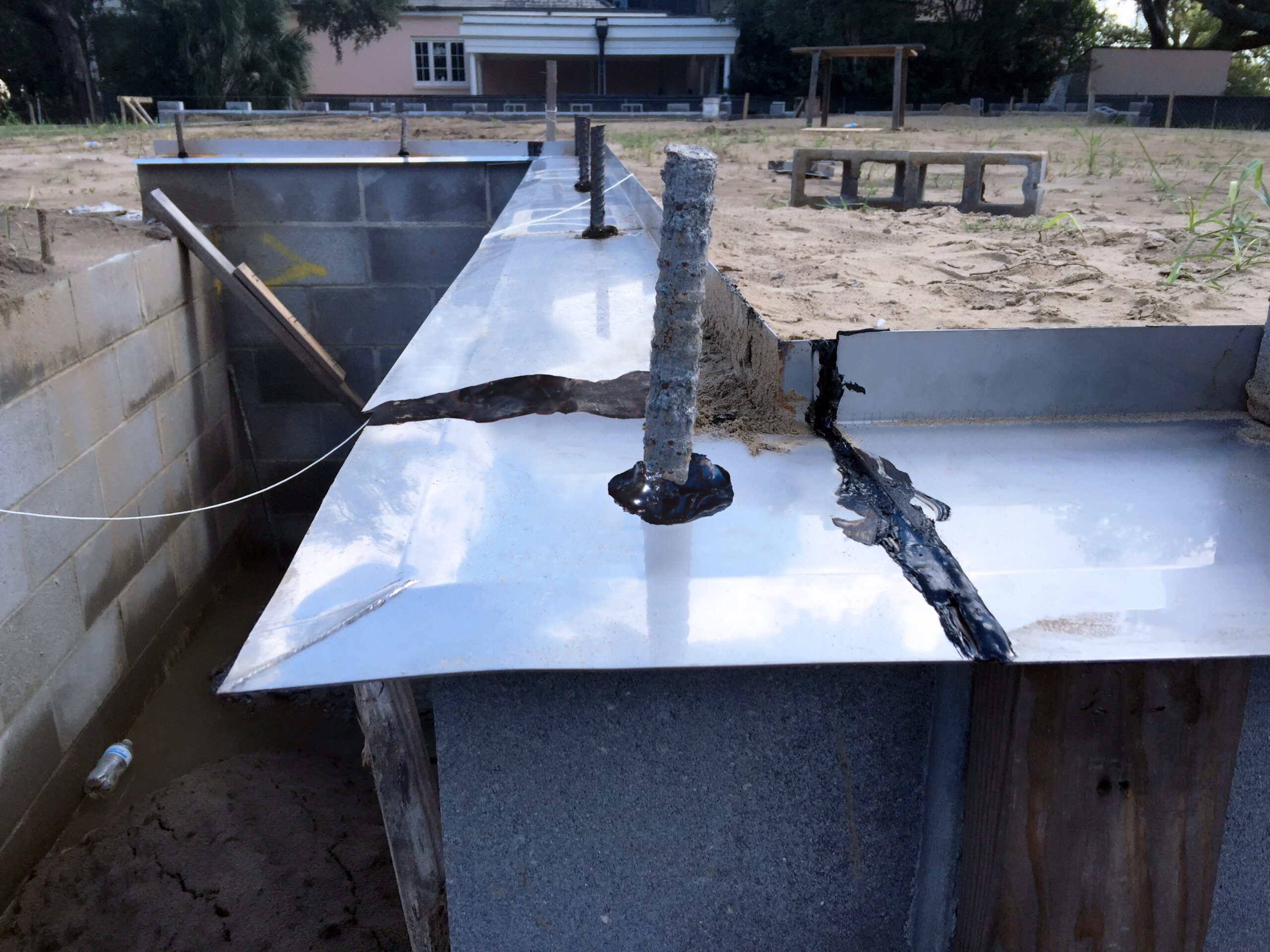
Stainless steel mesh, graded stone particle barriers, collars around pipes, and metal termite shields block or expose termite entry. Extension guides treat most of them as supplements; North Carolina allows stainless mesh as a substitute for liquid or bait treatment.
Each method has trade-offs that also apply to existing homes. Our comparisons of bait stations vs. liquid treatment and Bora-Care vs. Tim-bor explain how they differ, and the termite treatment types guide puts them side by side.
When Each Step Happens During Construction
NC State Extension stresses that soil treatment is applied in stages that follow the building schedule, from foundation work through final grading, and that a one-time application is not enough. This sequence is typical; your state rules and the product label decide the details.
Scroll the table sideways to see every column.
| Construction stage | What usually happens | What to ask or check |
|---|---|---|
| Forms set, fill and plumbing in place, before the pour | Liquid treatment of the soil or gravel under the slab (horizontal barrier), before the vapor barrier; collars or sealant around pipe penetrations if a physical system is used | Was the whole slab area treated after the last excavation? Ask for the treatment record with the date |
| Crawl space foundation built | Soil along foundation walls and around piers treated | Were interior piers and the inside of the foundation walls included? |
| House dried in, before insulation and drywall | Borate applied to the lower framing, if that method is used | Which members were sprayed, and how high up the studs? |
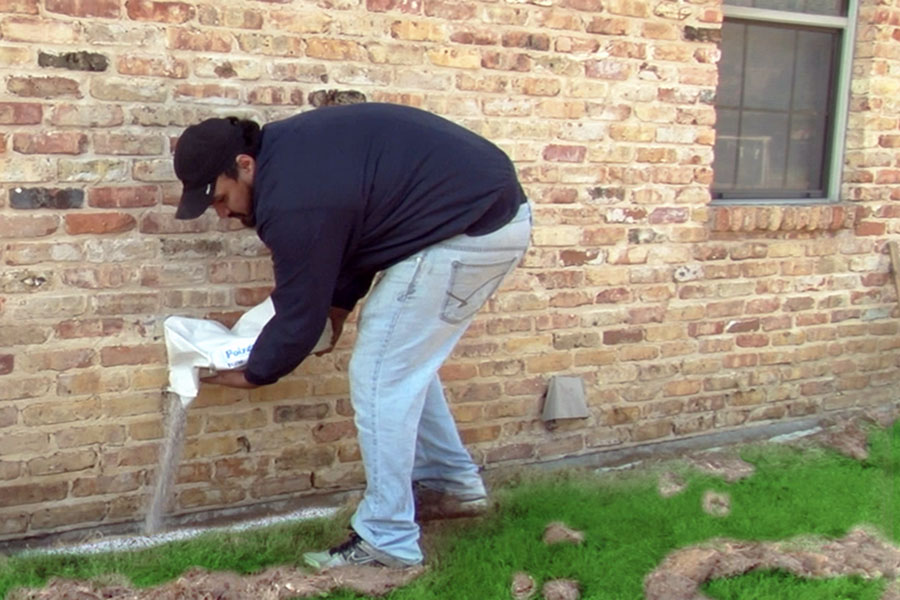
| Final grade set, often after landscaping | Exterior perimeter (vertical barrier) treatment, or bait stations installed | Has the outside treatment actually been done? It is the step most often left open |
| Closing | Builder issues the guarantee and treatment records | Get copies of every form and the name of the pest control company |
Mississippi State University Extension notes that the exterior perimeter treatment must be applied within a year of the date construction is finished, and that a building without it is highly susceptible to infestation.
The Paperwork: HUD-NPMA-99-A and 99-B
For new homes financed with FHA or VA loans, and other new construction where termite prevention is specified or required, the builder completes Form HUD-NPMA-99-A, the Subterranean Termite Protection Builder’s Guarantee, and gives it to the buyer. The current edition is dated 7/2022.
- It names the method. The builder checks a box for treatment by a pest control company (a bait system, field-applied wood treatment, soil treatment, or an installed physical barrier) or for builder-installed pressure-treated lumber.
- It needs the treatment record. When a pest control company did the work, Form HUD-NPMA-99-B, the record of the actual treatment, must accompany the guarantee.
- It rules out a shortcut. The form states that pressure-treated sills alone are not acceptable as a termite prevention method.
- It carries a one-year guarantee. If termites infest the house within one year of closing, the builder arranges treatment by a licensed company at no cost to the buyer and repairs the termite damage.
- It has limits. The guarantee does not cover additions or alterations by the buyer that affect the structure or the treatment, including landscaping and mulch changes that disturb the treated area.
Local paperwork varies. Florida requires the pest control company to issue a certificate of compliance to the building department stating that the building has received a complete treatment for the prevention of subterranean termites. Mississippi requires a sticker on the electric meter showing when the exterior perimeter treatment was applied. Some cities, such as Lewisville, Texas, ask builders for an affidavit before the final building inspection. Keep copies of everything with your closing documents.
What Breaks Pre-Construction Protection
Most failures come from what happens after the treatment, not from the product itself.
- Soil disturbed after treatment. The Florida Building Code requires soil disturbed after the initial chemical treatment to be retreated. Trenching for late utility lines, regrading, and new beds can all open gaps.
- A missing final step. If the outside perimeter treatment or bait installation never happened, half of a liquid barrier system is missing. Ask for the dated record of that stage.
- Water and soil against the house. Florida’s code requires irrigation spray heads, condensate lines, and downspouts to discharge at least 1 foot from the walls, and at least 6 inches between wall coverings and the final grade. Our termite prevention guide covers moisture and wood-to-soil contact.
- Mulch and wood piled on the foundation. HUD’s form lists landscaping, wood mulch, earth-to-wood contact, and firewood against the house among conditions that raise risk. See termites in mulch.
- Hidden entry points. NC State Extension warns that earth-filled porches are hard to inspect and that expansion joints in slab homes can let termites reach baseboards. Our slab foundation termite guide explains these weak spots.
- Additions built later. Mississippi State University Extension notes that additions must also be properly pretreated.
Safety note: Soil termiticides for pre-construction use are applied by licensed professionals in large volumes and must follow the product label. Do not try to pretreat a slab yourself, and keep children and pets away from treated areas until the applicator says they are safe.
Treated Lumber Is Not a Substitute
Codes require treated lumber in certain places, such as sill plates on foundations, but that is decay and termite resistance for those boards only. NC State Extension says treated lumber and termite-resistant materials are not substitutes for an approved termite prevention treatment, because termites can feed on untreated flooring, drywall paper, trim, and other wood in the house. They can also build tubes over treated wood. Our guide on whether termites eat pressure-treated wood explains why.
What It Costs and How Long It Lasts
Pre-construction treatment is usually far cheaper than treating the same house later, because the soil under the slab is open and no drilling is needed. The price depends on the method, the slab area and perimeter length, local rules, and whether baits need ongoing service. Our termite treatment cost guide covers pre-treatment pricing alongside other treatment costs. Ask whether it is included in the construction price.
Protection fades with time. Mississippi State University Extension says some soil-applied termiticides control termites for 8 to 12 years or longer, but treatments do not last indefinitely. The HUD builder’s guarantee covers only the first year after closing. After that, protection depends on regular inspections and any contract you set up. Our guides to termite bonds and how often to get a termite inspection explain your options.
Building a home
Ask the builder before the slab is poured which method will be used and which company does the work. Ask to be told when each stage is done, and confirm the exterior step after landscaping. Keep beds, mulch, and irrigation back from the foundation.
Buying a new-construction home
Ask for the builder’s guarantee and the treatment record, check the dates against the build schedule, and ask whether the perimeter treatment or bait stations are in place. Decide before the one-year guarantee ends whether to start an inspection contract.
Our questions to ask a termite company work for builder-arranged treatment too. If you are buying a newly built home, an independent termite inspection before buying is still worth considering. This guide summarizes codes and forms and is not legal advice; check the rules adopted where you build.
Your Next Step
If you are building, ask your builder today which pre-construction termite treatment is planned and ask for the dated record of each stage. If you just bought a new home, find the builder’s guarantee in your closing papers, check whether the outside treatment was finished, and put a reminder for an inspection before the first year runs out.
Common Questions
Is pre-construction termite treatment required?
It depends on where you build. The International Residential Code requires termite protection in areas the local code marks as subject to termite damage, and states such as North Carolina and Florida require it for new homes. FHA and VA financing can also require the HUD builder’s guarantee.
When is the soil treated?
The soil under a slab is treated after the last excavation and before the vapor barrier and concrete go down. The outside perimeter is treated after final grading, sometimes after landscaping.
Is borate treatment of framing enough by itself?
Not everywhere. Mississippi, for example, requires a liquid perimeter treatment along with borate-treated framing. Ask what your state accepts.
Does pressure-treated lumber protect a new house?
No. It protects the treated boards, not the rest of the house, and HUD’s form says pressure-treated sills alone are not acceptable termite prevention.
What happens after the first year?
The builder’s guarantee on the HUD form lasts one year after closing. After that, schedule regular inspections and consider an inspection or treatment contract.
Sources and Further Reading
- NC State Extension — Termite Prevention: Approaches for New Construction (revised 2023)
- Mississippi State University Extension — Methods of Termite Control
- HUD — Form HUD-NPMA-99-A, Subterranean Termite Protection Builder’s Guarantee (7/2022)
- Charlotte County, Florida — Termite protection, Florida Building Code, Residential (R318)
- City of Lewisville, Texas — Termite protection affidavit (IRC R318)