Treatment guide
Termite Treatment for a Slab Foundation: What Actually Works
Termite treatment for slab foundation homes starts with understanding how termites use existing openings around the concrete. A slab does not keep termites out; it changes how they get in and how the problem is treated. If you have a slab-on-grade home and have found a possible sign, this guide explains why the slab is a special case and what your realistic options are.
Short Answer
Subterranean termites can reach a slab home through cracks, joints, and gaps around plumbing; they do not chew through intact concrete. Treatment may involve a perimeter soil treatment, drilling to reach soil beneath concrete, or a baiting system. The right route depends on the slab, access, evidence, product label, and state rules, so this is frequently a professional job. Confirm the sign before spending money on any product.
The Myth That a Slab Keeps Termites Out
It is a common and understandable assumption: the house sits on solid concrete, so termites cannot get in. In reality, termites do not eat intact concrete. They follow existing cracks, joints, and openings around or through it to reach wood framing above.
Small cracks can provide concealed routes when they extend through the slab or connect to construction gaps. So can the joint where the slab meets a foundation wall, gaps around plumbing penetrations, and blockouts around tub or shower plumbing. Many of these routes are concealed once the house is finished, which is why a slab does not rule out termites.
Where Termites Get Through a Slab
The diagram below shows four common potential routes in simplified cross-section.
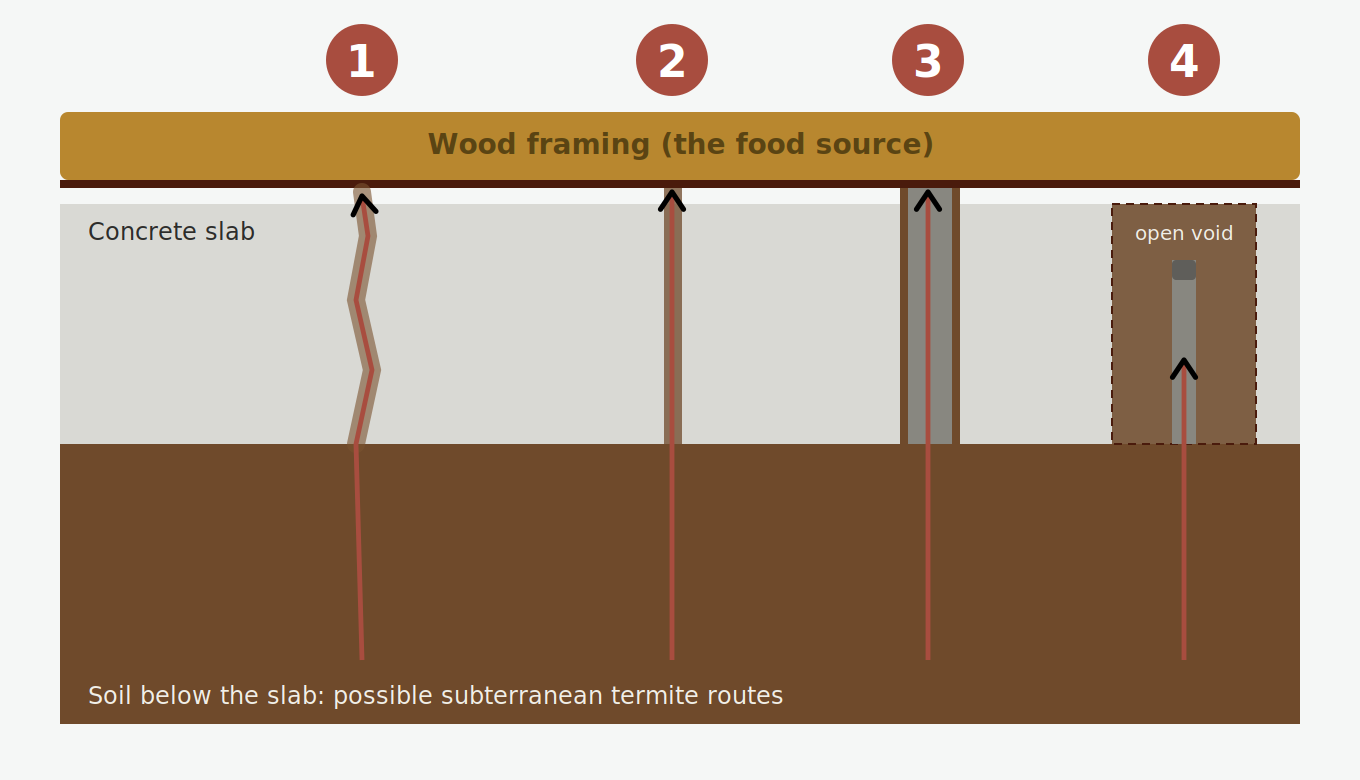
- Crack in the slab — small cracks can become routes when they extend through the slab or link to construction gaps.
- Slab-to-foundation joint — the construction or expansion gap where the slab meets the foundation wall.
- Gap around a plumbing penetration — where a pipe passes up through the slab.
- Bath trap — a blockout or access opening around tub or shower plumbing.
This simplified diagram is illustrative; actual slab construction and treatment access vary.
Watch: Where Termites Get Into Slab Homes
This short video gives a quick visual overview of common slab entry routes. Use the diagram above and the treatment notes below to understand why access and construction details matter.
Types of Slab (and Why It Changes Treatment)
Not all slabs are the same, and the differences affect both where termites enter and whether the slab can safely be drilled:
- Monolithic slab — the slab and its footing are poured as one piece. Fewer joints, but cracks and plumbing penetrations still act as entry points.
- Slab with a stem wall — the slab sits on a separate foundation wall, which adds the slab-to-wall joint as another route.
- Post-tension slab — a slab with steel cables under tension. This one matters for safety: a post-tension slab must not be drilled without first locating the cables and any hidden utilities. Drilling blind can strike a cable. That is specialist work with plans and detection, never a DIY job.
Why a Slab Is a Special Case
With a crawl space, an inspector can often get underneath and see mud tubes, damaged wood, and moisture directly. With a slab, that access does not exist. Subterranean termites are usually connected to soil or a sustained moisture source, and a treatment applied only to the outside perimeter may not reach every route beneath or through the slab. Whether it does depends on the construction, entry points, access, product, and label, which is why slab treatment is rarely a one-size-fits-all fix.
This page follows the usual subterranean-termite route. In regions affected by Formosan termites, an inspector may also consider an above-ground carton nest supported by persistent moisture. A slab foundation does not determine treatment for drywood termites, which live within wood rather than entering from soil; use our termite type comparison if the evidence points away from a soil route.
Your Realistic Treatment Options
Below are the main approaches and what each one does on a slab. For how the methods themselves work, see our treatment types compared guide and bait stations vs. liquid treatment.
→ Scroll the table sideways to see all columns.
| Approach | What it does on a slab | When it fits / what it depends on |
|---|---|---|
| Perimeter liquid barrier | A treated soil zone is created around the foundation (trench-and-treat) | Common first approach; whether it reaches under-slab routes depends on construction and entry points |
| Slab drilling + sub-slab treatment | The slab is drilled so termiticide can reach the soil beneath it | Used when adjacent concrete blocks a soil barrier; not for post-tension slabs without locating cables |
| Baiting system | In-ground stations intercept foraging termites — a no-drill option | A possible alternative without drilling; suitability depends on activity, construction, and a service plan |
| Targeted bath-trap / penetration treatment | Treats a specific known entry point around plumbing | Addresses one route; usually part of a wider plan, not a standalone fix |
Which approach fits is a judgment about your specific slab, not a universal rule. The right termiticide and how it is applied are governed by the product label and by state regulations.
Will the Slab Have to Be Drilled?
Sometimes, and sometimes not. Drilling may be used when a driveway, patio, or the slab itself blocks access to soil that a treatment plan needs to reach. A baiting system can provide a no-drill alternative, but its suitability depends on the evidence, construction, and monitoring plan. A licensed applicator should determine the approach. On a post-tension slab, no drilling should begin until tendons and hidden utilities have been located.
What Affects the Cost?
Slab treatment is priced by the specifics, not by a flat rate. The main factors are the linear footage of the foundation perimeter, the type and accessibility of the construction, whether drilling is required, the method chosen (barrier vs. baiting), and whether the work includes a warranty or ongoing service agreement. For how termite pricing works in general, see our termite treatment cost guide.
The Limits of Doing This Yourself
It is worth being honest about what a homeowner can and cannot do here. On a slab, the signs are hidden beneath the concrete, so you may not be able to judge the extent of a problem from the outside. Products that only kill termites on contact do not protect a structure — effective soil termiticides work by creating a continuous treated barrier, and a barrier with gaps leaves untreated entry routes and reduces the reliability of the treatment. Drilling a slab, working around drains, and anything involving a post-tension slab are not DIY tasks. If the main clue is damaged wood, our guide comparing termite damage and water damage can help you read it.
When This Is a Professional Situation
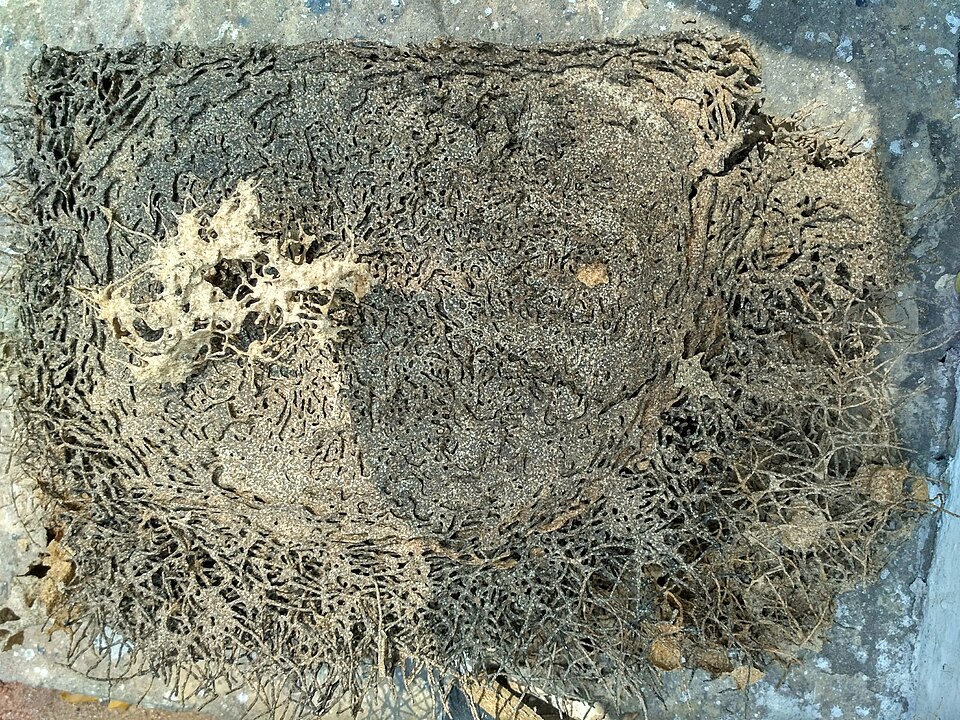
Stop the DIY approach and get a licensed termite inspection if any of these apply:
- swarmers or live termites appearing indoors;
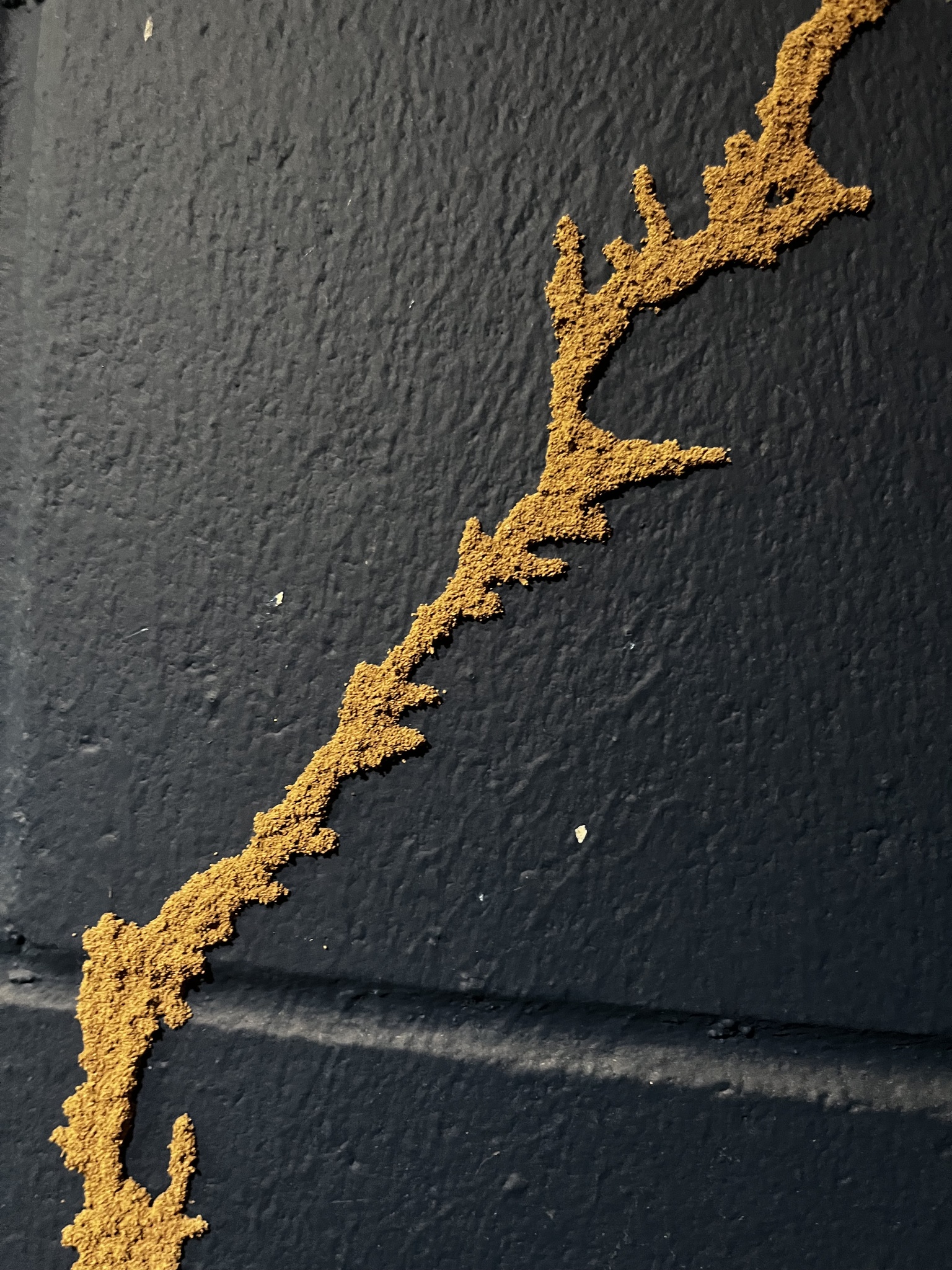
- mud tubes on the foundation, slab edge, or interior;
- damage that may involve structural or load-bearing wood;
- a post-tension slab, drains, or utilities in the area to be treated;
- a home sale, inspection, or refinance deadline.
None of these are situations to experiment on, and treating a slab wrong is expensive to undo. An inspection settles both what you are dealing with and how far it extends. If you want to be ready for that call, our questions to ask a termite company help you hire well without overpaying.
Prevention and New Construction
If you are building or want to reduce future risk, the goal is to remove the conditions termites exploit rather than to treat an active problem. That means minimizing cracks and joints, keeping an inspectable gap between soil and wood, and controlling moisture — directing air-conditioning condensate, downspouts, and grading away from the foundation, since subterranean termites depend on moisture. Pre-construction soil treatment and physical barriers under the slab are options handled at build time. This is separate from treating an existing infestation, which starts with confirming the sign.
The Bottom Line
A slab does not protect a home from termites; it hides the entry points and changes the treatment. Subterranean termites reach the wood through cracks, joints, and plumbing gaps, and reaching them usually means a perimeter barrier, slab drilling, or a baiting system — often a professional job, and always a careful one on a post-tension slab. Start by confirming the sign and its activity with our mud tubes vs. old damage guide, then let our decision guide route you to the right next step. If you are weighing doing it yourself against hiring out, DIY vs. professional lays out where the line usually falls.
Sources
- US EPA: Termites — How to Identify and Control Them
- USDA Forest Service: Subterranean Termites — Their Prevention and Control in Buildings
- UC IPM: Subterranean and Other Termites
- North Carolina Department of Agriculture: Post-Construction Subterranean Termite Control
- UF/IFAS: Native Subterranean Termites
- Building America Solution Center: Termite-Resistant Foundations and Walls
- Post-Tensioning Institute: Locating Post-Tensioned Slab Tendons
For how we evaluate evidence and recommendations, see our Methodology.