
Wood and materials guide
Do Termites Eat Pressure-Treated Wood? What Treatment Does and Doesn’t Stop
Pressure-treated lumber is everywhere around a house: deck posts, fence boards, sill plates on the foundation, landscape timbers. It is treated to resist decay and insects, so finding termite activity near it can be confusing. The useful question is not only whether termites will eat the treated board, but whether they can get around it to the untreated wood next to it.
Short Answer
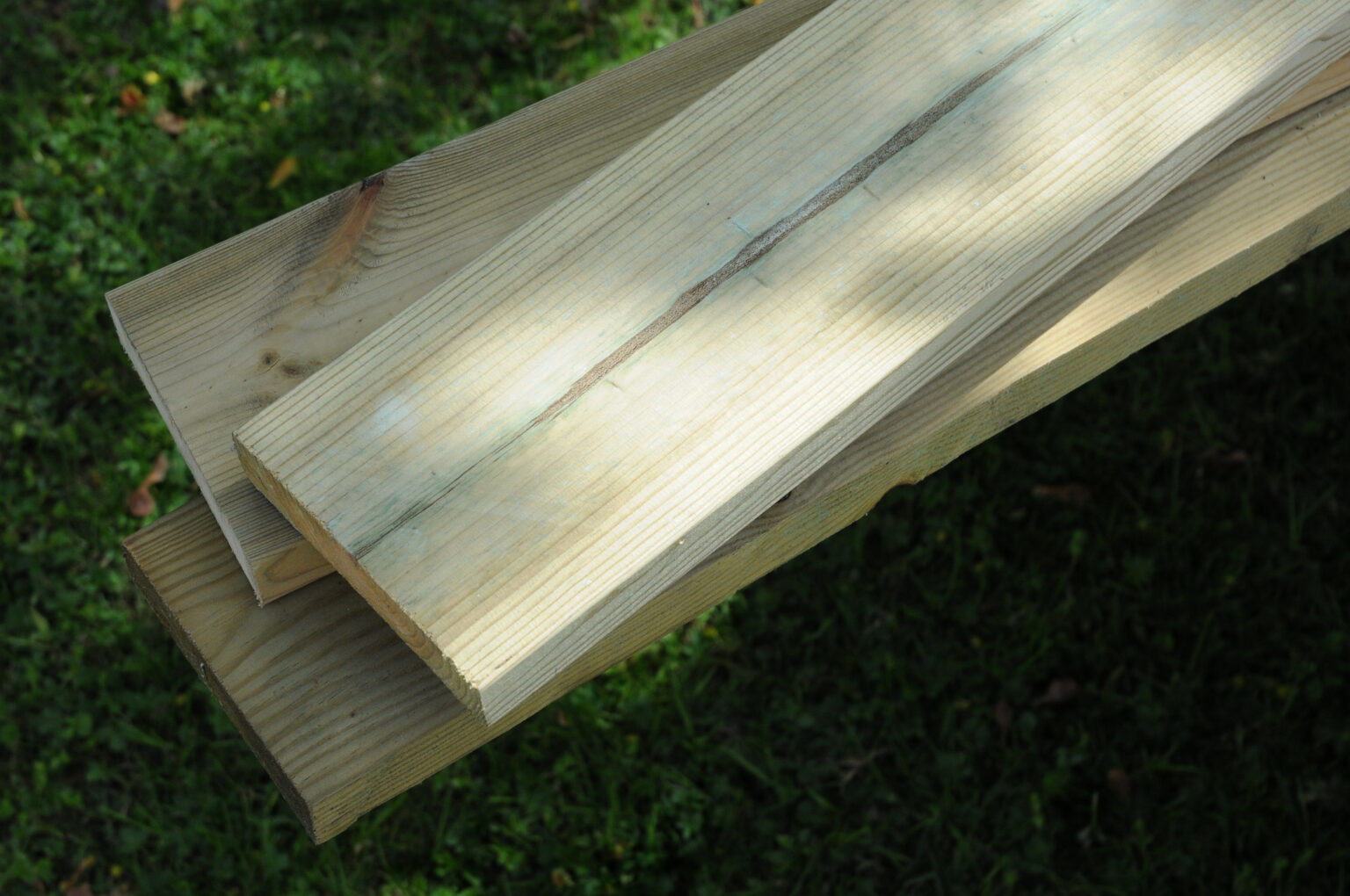
Properly pressure-treated wood, used for the job its rating allows, strongly resists termite feeding. The Wood Products Council says pressure treatment with copper or borate preservatives effectively protects wood from termites and decay. That protection is limited to the treated wood itself.
It is not a termite barrier for the house. UC IPM notes that subterranean termites can build shelter tubes over chemically treated wood and infest untreated wood above it. Problems also show up at fresh cuts and drilled holes, in wood rated for above-ground use but placed in soil, and in wood that has lost preservative over time. If you see mud tubes on or over treated wood, treat it as termite activity and arrange an inspection.
Dealing with a deck or fence specifically? See termite treatment for a deck or fence. This guide explains what the treatment in the lumber can and cannot do.
What Pressure Treatment Actually Does
Pressure treatment forces a preservative into the wood in a closed cylinder, so it penetrates the sapwood rather than coating the surface. Surface-applied products are not a substitute for it, the Wood Products Council notes. What you buy today for outdoor projects is usually treated with a copper-based preservative; borate-treated lumber is a separate product meant for protected indoor framing.
Older decks and play structures may contain chromated copper arsenate (CCA). Under a 2002 agreement with the U.S. EPA, manufacturers ended CCA treatment for virtually all residential uses, including decks, fencing, and landscaping timbers, by December 31, 2003. EPA did not call for removing existing CCA structures.
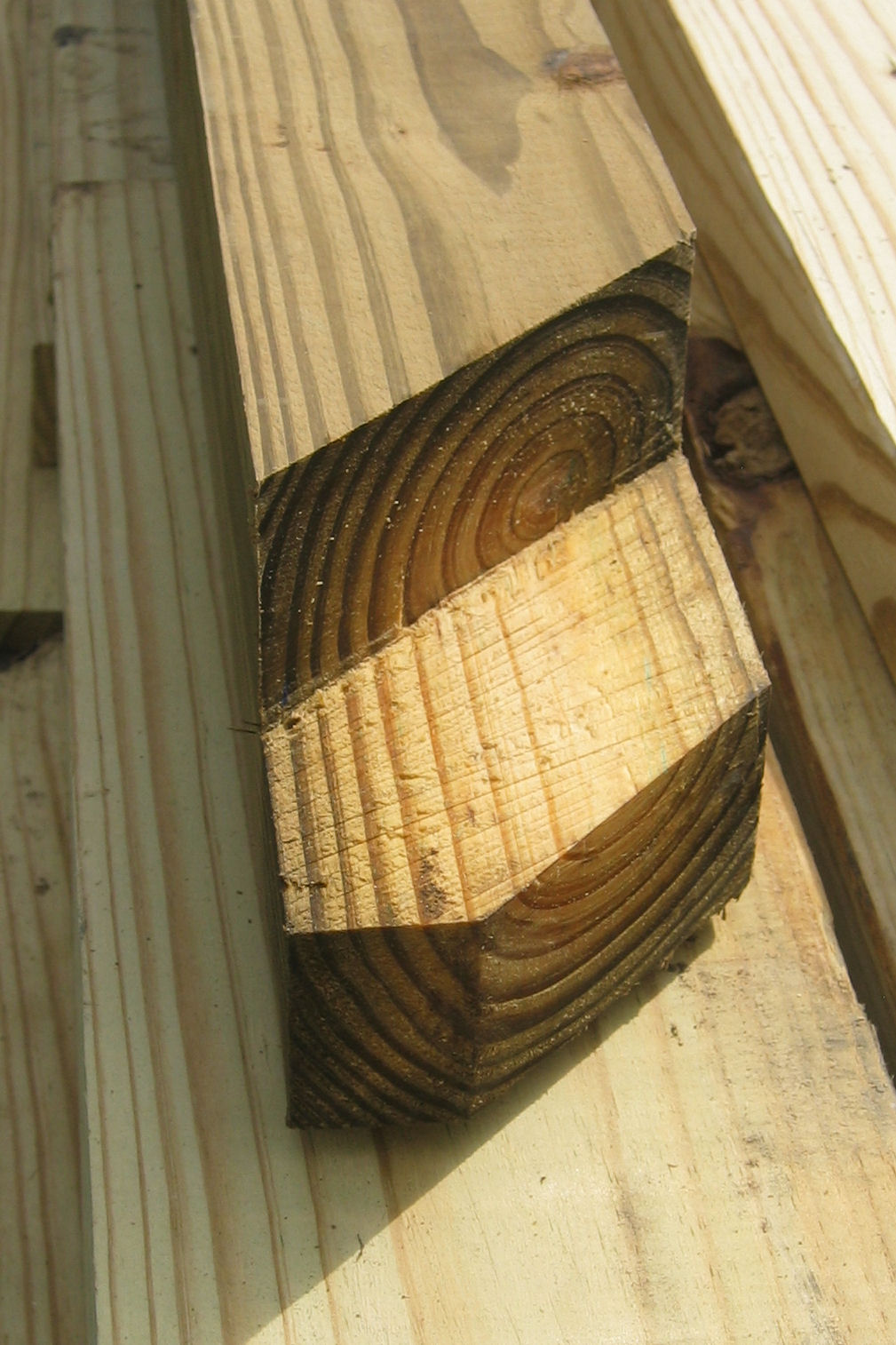
Each treated board is rated for a use category. The rating, chemical, and retention are printed on the end tag or stamp, and NC State Extension notes that the treatment type and concentration dictate where the lumber can or should be used.
How Termites Still Reach Wood Near Treated Lumber
When termites damage a structure built partly from treated lumber, the cause is usually one of these situations rather than termites chewing through sound, properly rated treated wood.
Tubes built over treated wood
Subterranean termites travel inside mud shelter tubes. UC IPM says they can build those tubes across treated wood to reach untreated wood above, such as studs, subfloor, or trim. Compare what you see with our active vs. old mud tubes guide.
Untreated wood beside it
Most of a house is untreated. NC State Extension notes termites can eat nearly anything containing cellulose, including untreated flooring, sheetrock, and other wood, and that treated lumber is not a guarantee termites will stay out. See what termites eat for the full list.
Fresh cuts and drilled holes
Cutting or drilling exposes wood the preservative may not have reached. The American Wood Council, citing the American Wood Protection Association, says drilled holes and cut ends need a field-applied preservative.
The wrong rating for the job
Lumber rated for above-ground use is not made for soil contact. A board or post buried in soil, or kept wet by its surroundings, may need a ground-contact rating; see the table below.
Preservative lost over time
UC IPM warns that without proper protection the chemical in exposed lumber may leach out. Borate-treated wood is water-soluble and is meant to stay dry, according to the Wood Products Council.
Gaps and hidden routes
Termites can pass through cracks as small as 1/16 inch, the Wood Products Council notes. Joints between treated sills, slab edges, siding, and stucco can hide a route that never touches the treated wood.
Visual Guide: How Termites Bypass Treated Wood
A treated sill or deck member can resist feeding while a mud tube crosses its surface and continues toward untreated wood. The illustrated presentation below maps that route and other places to check around a deck and foundation. Use it to understand where the next inspection question lies, not to diagnose damage from a diagram.
View the complete 15-slide presentation: Open the PDF in a new tab. The larger view is easier to read on a phone.
How to use the diagrams: The slides illustrate possible routes; they do not show an inspected home. A board used outside its treatment rating faces higher exposure, but failure is not inevitable. Borate loss depends on the product and moisture conditions. IRC Section R318.1 permits one or a combination of listed termite-protection methods where that code applies; it does not always require several methods together. Follow the applicable local code and product label for a specific project.
Ground Contact vs. Above Ground: Read the End Tag
The use category on the tag tells you what exposure the lumber was treated for. The American Wood Protection Association suggests these minimum categories for common residential parts. Its guidance adds that above-ground parts that are difficult to replace and critical to the structure, such as joists and beams, may need ground-contact treatment.
→ Scroll the table sideways to see all columns.
| Part | AWPA suggested category | What it means for termites |
|---|---|---|
| Posts, structural posts, landscape walls, planter boxes | UC4A, ground contact | The point where soil, moisture, and wood meet. Check the ground line for tubes, soft wood, or decay. |
| Deck ledgers | UC4A, ground contact | Sits against the house, where moisture and hidden access to wall framing are both concerns. |
| Joists and beams | UC3B or higher; UC4A where hard to replace or critical | Above-ground lumber placed close to soil or kept damp is working beyond its rating. |
| Deck boards, railings, stairs | UC3B or higher | Not intended for burial in soil or constant wetting. |
| Sill plates | UC2 or higher | Required treated where wood sits on a foundation; termites can still tube over it to untreated framing. |
| Permanent wood foundations | UC4B | A heavier ground-contact category for below-grade structural use. |
Local codes and the product’s own instructions take precedence. If a tag is missing, ask the supplier or a contractor rather than guessing.
Borate-Treated Wood Is for Dry, Indoor Framing
Borate-treated lumber protects well against termites where it stays dry, but borates dissolve in water. The Wood Products Council says AWPA standards limit borate-treated wood to interior uses that are dry or only occasionally damp, and not in contact with the ground. In Hawaii, where Formosan termites are a major threat, the building code requires borate-treated wood for wood framing, according to the same source. See our Hawaii termite guide and Formosan termite guide.
NC State Extension adds a caution about borate products sprayed on framing during construction: they keep termites from feeding on and tubing over the treated wood, but termites could still enter a slab home through an expansion joint and attack nearby untreated wood such as baseboard molding. For borate products applied to existing wood, see our best borate wood treatment guide.
Is Treated Lumber Enough to Prevent Termites in a House?
No. Building codes require treated or naturally durable wood in specific places, such as sills on a foundation and framing close to soil. In areas with heavy termite pressure, the International Residential Code (Section R318.1, as summarized by the Wood Products Council) requires at least one protection method: a soil termiticide, termite baiting, pressure-treated wood, naturally resistant wood, or a physical barrier. Treated wood can be one of these, but it protects only the treated members.
NC State Extension is direct about the limits: treated lumber is not a substitute for an approved termite prevention treatment or for routine inspection and maintenance. In North Carolina, a termite inspection report for a home sale must note that the building may be infested even if the wood was treated. For the bigger picture, see how to prevent termites around your home.
Termites or Decay in Treated Wood?
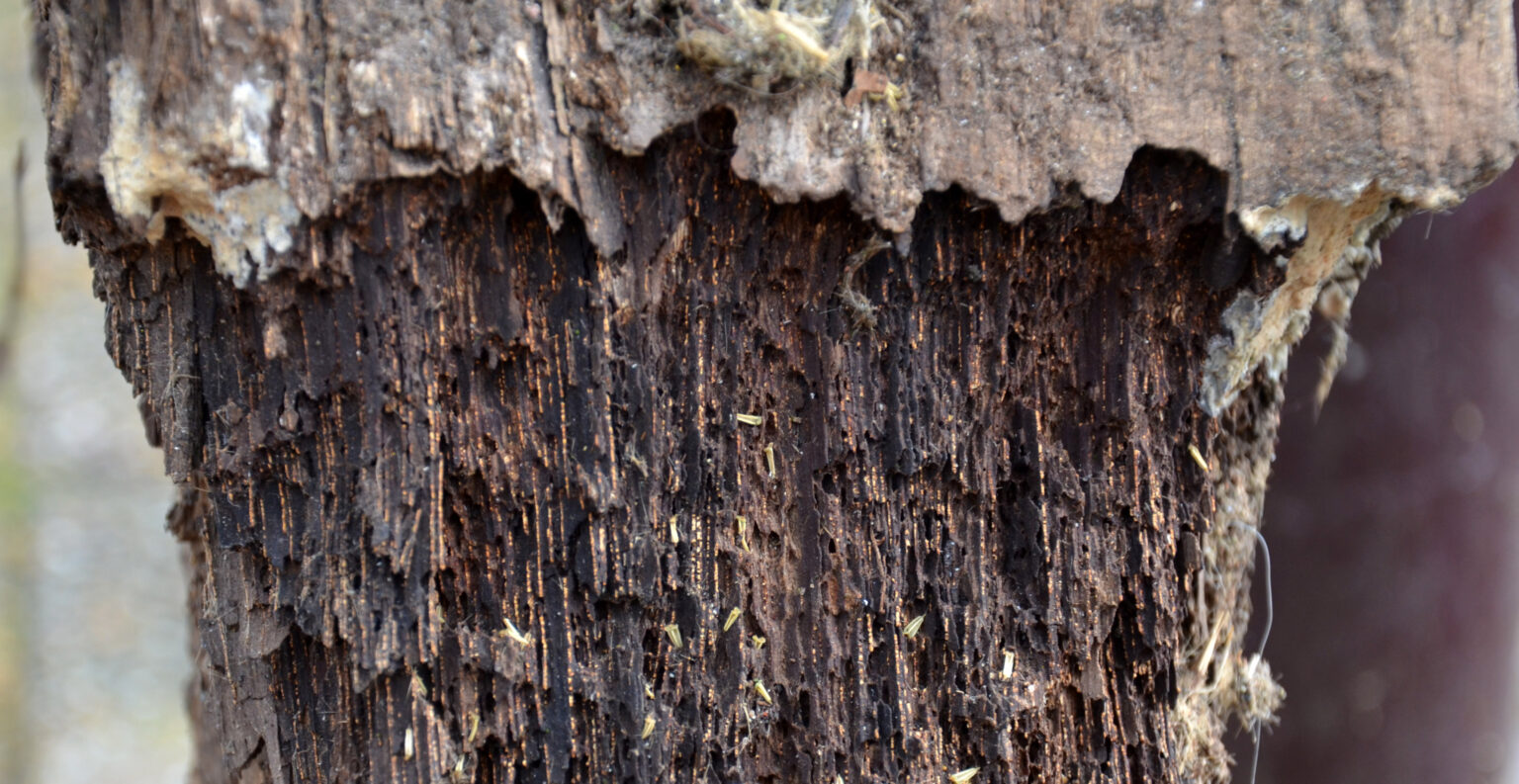
Soft, crumbling, or darkened treated wood at the ground line is often decay rather than termites, especially on older decks and fences. Termite damage from subterranean species usually follows the grain and is packed with soil, while decay tends to crack and crumble across the grain. Our termite damage vs. water damage guide walks through the differences. The two can occur together, because the same constant moisture favors both.
What to Check on a Deck, Fence, or Sill
- Read the tag. Look for the use category on the end tag or stamp of posts and framing, especially anything in or near soil.
- Inspect the ground line. Check where posts, steps, and boards meet soil or concrete for mud tubes, soil in cracks, or soft wood.
- Look past the treated wood. Follow any tube to where it leads: untreated trim, siding, a wall, or framing above the sill. Our crawl space and slab foundation guides cover where to look under a house.
- Check cut ends and holes. On new work, ask whether cut ends and drilled holes were treated in the field.
- Reduce wood-to-soil contact. UC IPM recommends keeping substructural wood at least 12 inches above the soil and using concrete footers for fences or structures that must touch soil; check local code for minimum distances.
- Watch for water. Fix drainage, sprinkler overspray, and leaks that keep wood wet, and pull back mulch and soil from siding. See termites in mulch.
Do not apply wood preservatives or termiticides based on a guess. If cut ends need field treatment, use a product labeled for that purpose and follow its label for protective equipment and disposal. Do not burn treated wood scraps.
Get a Licensed Inspection If
- you find mud tubes on, over, or beside treated lumber, especially where it meets the house;
- untreated wood next to a treated sill, post, or ledger is soft, hollow, or packed with soil;
- you see live termites or swarmers indoors or near a deck that attaches to the house;
- a treated post or beam that carries a deck, porch, or stair is soft at the ground line. Treat the structural question separately and keep people off until it is checked.
Our professional termite inspection guide explains what the visit covers.
Common Questions
Will termites eat pressure-treated wood if there is nothing else to eat?
Sound wood treated for its use category strongly resists termite feeding, which is why codes allow it as one protection method. Exposed cut ends, wood that has lost preservative, and lumber used beyond its rating are the weak points.
Is pressure-treated wood safe in a vegetable garden bed?
That is a separate question from termites. See our termites in raised garden beds guide, which links to extension guidance on treated wood for food gardens.
Does paint or stain on treated wood stop termites?
A coating is not a termite treatment. Subterranean termites can still build tubes across a painted or stained surface, so inspection and moisture control still matter.
Can I treat cut ends myself?
The American Wood Council notes that AWPA Standard M4 specifies copper naphthenate containing 2% copper for field treatment, which is sold in some paint and building supply stores, and that boron-based end-cut products are for interior use only. Follow the product label.
Your Next Step
If you are building, choose lumber with the right use category, treat cut ends, and keep wood off the soil. If you found mud tubes or soft wood near treated lumber, photograph it, leave it in place, and arrange a licensed inspection. Treated wood lowers risk, but it does not tell you whether termites are already in the house.
For other places termite clues turn up, see termite guides by location.
Sources
- UC IPM, Pest Notes: Subterranean and Other Termites (Publication 7415) — termites tubing over treated wood, leaching, wood-to-soil clearance; updated May 2014.
- NC State Extension, “Termite Prevention: Approaches for New Construction” — limits of treated lumber, borate-treated framing, inspection reports; revised February 2023.
- WoodWorks (Wood Products Council), “Effective Termite Protection for Multi-Family & Commercial Wood Buildings” — pressure treatment, borate use limits, code requirements, Formosan termites; 2025.
- American Wood Protection Association, residential use category guide — suggested use categories for posts, ledgers, joists, decking, and sill plates.
- American Wood Council, FAQ on cut ends of pressure-treated wood — field treatment of cut ends and drilled holes under AWPA Standard M4.
- U.S. EPA, news release on the transition away from CCA for residential uses — CCA residential phase-out by December 31, 2003; February 2002.