Outdoor treatment guide
Termite Treatment for a Deck or Fence: What Actually Works?
Short Answer
Termite treatment for deck or fence wood depends first on where the wood is, not which product is easiest to buy.
A small, separate fence section may mainly need removal, replacement, moisture correction, and inspection of nearby posts. Bare, accessible, sound wood may be suitable for a label-approved wood preservative or borate treatment. But a deck ledger, stair, post, or fence that connects to the house can create a hidden route toward siding, framing, a crawl space, or the foundation.
If you see mud tubes, live termites, recurring pellets, sagging wood, or damage in a structural or house-connected area, arrange a licensed termite inspection before choosing treatment. Surface treatment cannot show whether hidden activity remains or whether weakened wood is safe.
First: Is the Deck or Fence Separate From the House?
This is the most useful first split. A freestanding fence at the edge of a yard is a different problem from a deck bolted to the house. Termites in an isolated outdoor board do not automatically mean the home is infested. However, wood that touches the house, hides the foundation edge, crosses an inspection gap, or connects to a deck ledger deserves more caution because the visible damage may be only one part of the route.
- Separate outdoor wood: inspect adjoining boards and posts, document the evidence, replace wood that is no longer sound, and correct soil or moisture contact.
- Attached or touching the house: treat the finding as a possible structure-entry issue and get the connection area inspected.
- Not sure where the connection runs: use the termite inspection checklist for a safe visual review, then use the termite treatment decision guide to choose the next route.
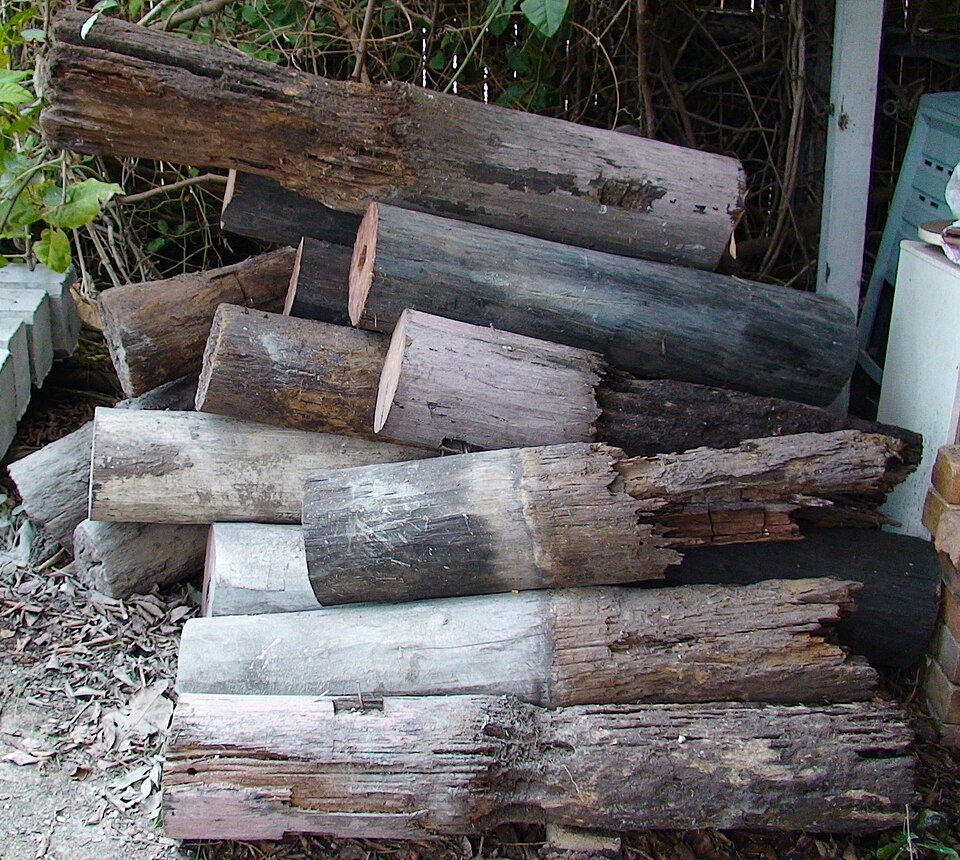
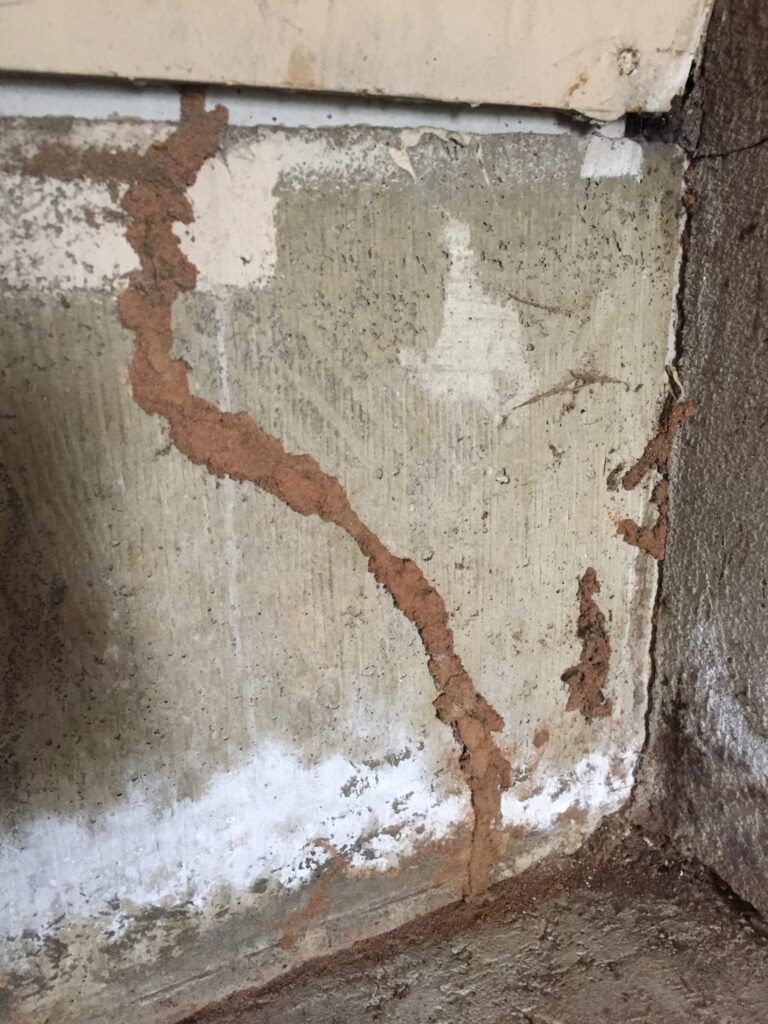
These photos show different parts of the problem: damaged ground-contact wood and a visible travel route on a foundation. Neither image can establish current activity or the full extent of damage at your property.
Deck or Fence Termites: What You Might Be Dealing With
Subterranean termites are the main route to consider for most deck and fence questions. They live in or near soil and can reach wood through direct ground contact, cracks, protected gaps, or shelter tubes. Fence posts, deck supports, stairs, piers, buried scraps, and damp areas can all reduce the separation between soil and wood.
Drywood termites are a regional branch, not a nationwide default. In parts of the United States where drywood termites are established, they can infest dry wood above ground without a soil connection. Hard pellets below small openings may point in that direction, but pellets alone do not locate the colony or prove that activity is current. Use the subterranean vs drywood vs dampwood guide for routing, not a one-board diagnosis.
Dampwood termites and fungal decay are more closely associated with persistently wet or deteriorating wood. If a deck or fence stays wet because of poor drainage, leaks, vegetation, irrigation, or trapped debris, moisture correction and replacement of unsound wood are part of the solution regardless of which organism caused the first damage. Compare uncertain patterns with termite damage vs water damage.
When Borate or Exposed-Wood Treatment Fits
A borate or other registered wood treatment may fit when the goal is protecting bare, accessible, sound wood and the current product label allows that use site and exposure. This is most plausible during construction, repair, or renovation, when framing is open and finishes do not block penetration.
Before treating exposed wood, all of these conditions should be true:
- the wood is reachable without dismantling an unsafe or load-bearing assembly;
- paint, stain, sealant, or another finish will not prevent the product from reaching the wood;
- the wood is still structurally sound and the goal is protection, not proof that an infestation is gone;
- the label specifically covers the surface, location, weather exposure, and follow-up finish you intend to use;
- there is no evidence of a hidden, structural, or house-connected infestation that needs inspection first.
For the method and its limits, read borate termite treatment. If you are already comparing products, see Bora-Care vs Tim-bor. The label is the controlling source for allowed surfaces, preparation, application, and safety.
When Borate Is Not Enough
Borate treats the wood it successfully reaches. It is not a whole-property barrier, a structural repair, or proof that a colony elsewhere has been eliminated. Outdoor exposure also matters: some borate treatments are water-soluble, and weather, finishes, soil contact, and product-specific restrictions can make a casual surface application inappropriate.
Do not treat borate as the answer when wood is painted, sealed, hidden, buried, badly decayed, hollow, sagging, or load-bearing. It is also the wrong first move when mud tubes lead toward the house, termites are visibly active, pellets keep returning, or previous treatment failed. Those situations require identification and scope before product choice.
Safety boundary: do not drill, trench, inject, dismantle a deck connection, or probe weakened structural wood based on this guide. Soil termiticides and many structural applications are pesticide work governed by the product label and state rules. Keep off a deck, stair, or platform that feels unstable and seek a qualified building assessment when strength is in question.
Termite Treatment Options by Situation
| Situation | Likely next route | Why |
|---|---|---|
| Isolated fence board away from the house | Document, inspect nearby sections, and replace unsound wood | A separate outdoor item does not by itself establish a house infestation |
| Fence post set in soil | Replace failed material with a product rated for the actual exposure; correct the contact detail where practical | The buried section remains vulnerable and may hide the worst damage |
| Bare, accessible, sound deck board or framing | A label-approved exposed-wood treatment may fit | The product must reach the wood and match weather and finish conditions |
| Deck ledger, stairs, posts, or framing attached to the home | Licensed termite inspection before treatment choice | The connection can conceal a route into structural framing |
| Mud tubes on piers, posts, foundation, or ledger area | Professional termite inspection | This is strong evidence of a subterranean termite pathway, though activity still needs evaluation |
| Pellets below above-ground wood in a drywood region | Identification and inspection; localized professional treatment or replacement may follow | Pellets can be old, and the occupied area is difficult to map from the pile alone |
| Wet, soft, hollow, or sagging wood | Keep clear, correct moisture, and obtain pest and structural assessments as needed | Treatment does not restore lost strength or resolve decay |
What To Do With Damaged Boards, Posts, Rails, and Framing
Replacement is often the practical answer for a small, nonstructural outdoor component that is already unsound. But replacement and termite control answer different questions. Removing one damaged board does not prove that nearby termites, a soil route, or hidden damage are gone.
- Photograph before removal. Take a close view of the galleries or debris and a wider view showing the board, post, soil line, and distance from the house.
- Check adjoining components. Look at the next rails, posts, stair stringers, supports, and the foundation edge without opening walls or dismantling structural connections.
- Separate repair from diagnosis. A contractor can replace failed wood; a licensed pest professional evaluates termite evidence and treatment scope. One person may not provide both assessments.
- Match replacement material to exposure. A post used in or near soil needs material rated for that condition. Above-ground decking and rails have different exposure demands.
- Do not rely on species names alone. Pressure-treated and naturally resistant woods can lower risk, but no ordinary deck or fence material makes the entire route termite-proof.
How To Lower Risk After Repair or Replacement
Long-term risk reduction is mostly about removing easy pathways and keeping the area inspectable. The details matter more than a promise that one coating or wood species will prevent termites.
- keep non-rated boards, scraps, form wood, and stored lumber out of soil contact;
- use posts and replacement materials rated for the intended above-ground or ground-contact exposure;
- correct leaks, irrigation overspray, blocked drainage, and debris that keeps wood damp;
- avoid letting attached fencing, lattice, mulch, or vegetation hide the foundation and siding edge;
- maintain a visible inspection route around deck connections, posts, piers, crawl-space openings, and the foundation;
- recheck repaired areas periodically and document new tubes, pellets, wings, or moisture changes.
These measures reduce favorable conditions and improve detection. They do not replace treatment when an active infestation has been confirmed.
Choose Your Next Step
Use the highest-risk route that matches what you see.
1. Limited, separate outdoor damage
The affected component is away from the house, nonstructural, and not hiding a soil-to-wood route. There are no mud tubes, live termites, recurring pellets, swarmers, or spreading damage.
Document the area, inspect adjacent sections, replace unsound wood with material rated for the exposure, correct moisture or soil contact, and monitor. This is a repair-and-observe route, not proof that termites are absent.
2. Bare, accessible, sound wood
The wood is open and unfinished, the goal is preventive protection, and there is no sign of hidden or structural activity. Read the exact label to determine whether a registered wood treatment fits the site, weather exposure, and planned finish.
Use the treatment only for the wood it can reach. Do not present a treated board as whole-deck, whole-fence, or whole-home protection.
3. Attached, active, hidden, or structural concern
Arrange a licensed termite inspection if the deck or fence touches the house, the ledger or supports are involved, mud tubes or live termites are present, pellets recur, the evidence is hidden, or the wood is hollow, soft, sagging, or load-bearing.
A pest inspection determines evidence and treatment scope. A qualified building professional may also be needed to evaluate strength. If you are unsure which route fits, start with the termite treatment decision guide or compare DIY treatment vs professional treatment.
What To Ask a Termite Company
A useful proposal should explain the evidence, the area being treated, and what the treatment does not cover. Ask:
- What evidence identifies termites, and do you believe it is currently active?
- Is the problem limited to outdoor wood, or is there a route toward the house?
- Which deck, fence, foundation, crawl-space, or framing areas could not be inspected?
- Is the proposed work a wood treatment, soil treatment, bait system, localized treatment, repair, or a combination?
- What product label, state license, warranty, renewal, and follow-up inspection apply?
- Do any posts, ledgers, stairs, joists, or supports also need a contractor or structural assessment?
For a fuller hiring checklist, see questions to ask a termite company before you sign. For the broader method comparison, use termite treatment types.
Bottom Line
A deck or fence termite problem is not one problem. Start by deciding whether the wood is separate from the house, connected to it, exposed and sound, or already damaged and structural.
Limited damage in a separate outdoor component may lead to replacement, moisture correction, and monitoring. A label-approved wood treatment may fit bare, accessible, sound wood. But mud tubes, live termites, recurring pellets, attached deck framing, or weakened supports call for inspection before treatment. Surface treatment and one-board replacement cannot establish that hidden activity is gone.
Sources
- US Environmental Protection Agency: Termites — How to Identify and Control Them
- US Environmental Protection Agency: Overview of Wood Preservative Chemicals
- University of Florida IFAS Extension: Termite Prevention and Control
- University of California IPM: Subterranean and Other Termites
- University of California IPM: Drywood Termites
- Mississippi State University Extension: Methods of Termite Control
- USDA Forest Service: Protecting Wood Fences for Yard and Garden