DIY & maintenance
DIY Termite Bait Stations: What Homeowners Need to Know
Short Answer
Some termite products are sold for homeowner use, but buying a kit does not establish that your home is protected. Before choosing DIY termite bait stations, find out what is inside them, who may use the product, and what continued servicing requires.
Our recommendation: get a professional inspection if you suspect termites inside the house. A baiting system may still be an appropriate treatment; the inspection helps establish which approach fits the infestation.
This guide focuses on in-ground stations for subterranean termites. If the termite type is uncertain, start with our subterranean, drywood, and dampwood comparison before choosing a product.
This guide is part of our termite product guides. If you are still comparing broad treatment categories, start with termite treatment types compared.
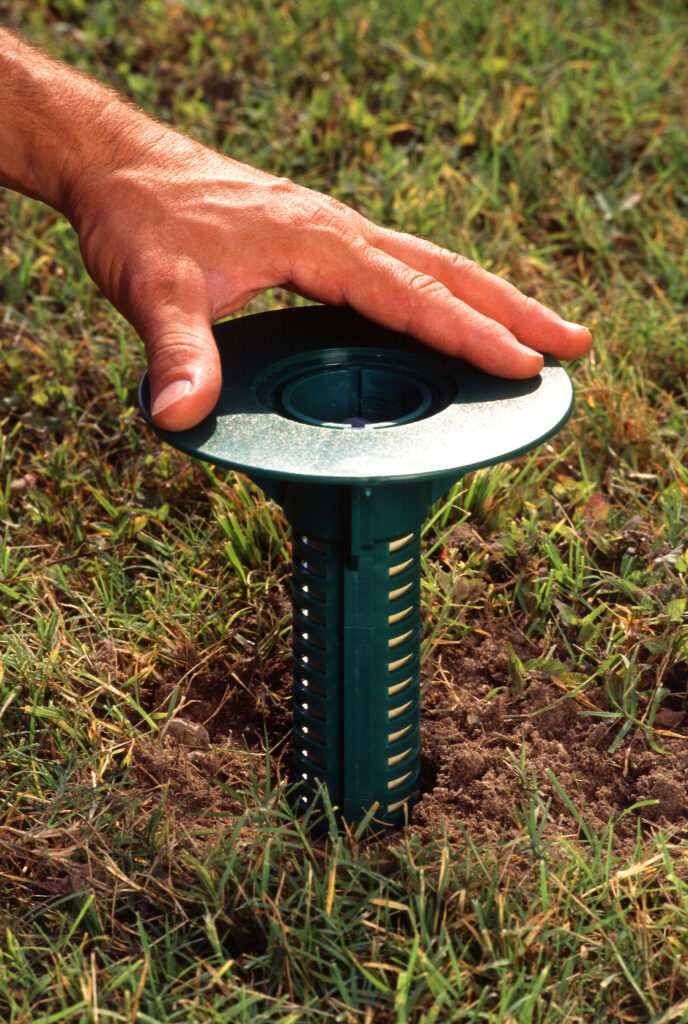
First, Identify What the Station Contains
A plastic housing does not tell you whether a station contains a pesticide. Nor does the word "bait" in a listing establish what is included in the box.
- A monitoring station
- Does it contain only wood or another monitoring material? What is the next step if activity appears?
- A consumer pesticide stake
- What does its label actually claim, and what limitations accompany that claim?
- A professional baiting program
- Who installs and services it, what product is used, and what does the agreement cover?
These are purchasing distinctions, not interchangeable levels of protection.
If you are looking specifically at retail Spectracide stakes, read the product-specific guide to Spectracide Terminate stakes before treating the box as a complete termite plan.
For example, BASF describes Advance stations that begin with monitoring material and Trelona ATBS Annual stations containing active bait at installation. That distinction does not confirm the contents or suitability of a particular retailer's kit. BASF product information.
A station with monitoring material alone is not an active pesticide treatment. Ask for an itemized contents list rather than relying on a picture of the housing.
Before You Buy a Kit
Use these questions to organize your decision:
- What exactly am I buying? Record the product name, kit contents, and the EPA registration number of any included pesticide.
- Which instructions apply? Obtain the label for that exact product. A different refill or similarly named system may have different requirements.
- Who may use it here? Check label restrictions and your state's pesticide or structural pest control regulator when eligibility is unclear.
- Can I maintain it? Identify the permitted replacement components, servicing requirements, and a realistic plan for continued checks.
- Is there an existing agreement? Read it before altering installed equipment or cancelling service.
- What evidence am I relying on? Separate a diagnosis of the building from observations around the yard.
These questions are a planning checklist, not proof that a product is suitable. EPA advises using pesticides according to their labeling and emphasizes the expertise involved in termite treatment. Do not assume that online availability makes a product appropriate for your situation. EPA termite guidance.
What Continued Maintenance Involves
Installation is only the beginning. Bait systems require inspection and servicing, including attention to consumed bait and damaged stations. The applicable label determines the required schedule and replacement criteria. Mississippi State Extension also explains that control can take months; an active infestation may require additional professional measures. Protect Your House from Termites.
Keep a simple station record if you are responsible for a product's permitted maintenance:
- Station ID and location
- Make the same station easy to identify next time
- Date and observer
- Establish who checked it and when
- Observation
- Record what was actually seen without assuming a diagnosis
- Action taken
- Distinguish a check from a replacement or professional visit
- Next required action
- Refer to the applicable label or service instructions
For example, "lid damaged; servicing company contacted" is a useful record. "House protected" is a conclusion that a station log cannot establish.
Before landscaping or other work around installed stations, discuss access and possible disturbance with the servicing provider. Keep its contact details with the station map and service records.
What Activity Does and Does Not Tell You
Termites encounter stations while foraging; the stations do not trap them or create an unbroken physical wall around the building. Finding and feeding on bait is part of how the treatment works, and the time until discovery cannot be predicted reliably. NC State's explanation of baiting systems.
Our practical rule: record station activity and arrange the appropriate follow-up, but do not use a station result to diagnose the entire house. No visible activity is not a reason to ignore new signs in the building.
An outdoor observation also does not automatically prove structural infestation. NC State distinguishes outdoor swarming from indoor swarming, which usually points to infestation within the building. Identification and inspection matter. NC State monitoring guidance.
When to Call a Termite Professional
We recommend professional assessment before attempting DIY treatment when you find:
- Suspected termites or swarming inside the house.
- Mud tubes or suspected damage associated with the building.
- Activity in places you cannot safely inspect.
- Uncertain identification or a previous treatment whose scope is unclear.
- A property-sale deadline requiring documented findings.
This is a decision boundary for homeowners, not a claim that bait is unsuitable for those properties. A professional may select baiting, another treatment, or a combination after inspection. See our DIY versus professional guide for the broader decision.
When comparing companies, ask for the proposed treatment, product information, and agreement in writing. Clarify what follow-up and any guarantee include. EPA recommends evaluating qualifications as well as price. Our questions to ask a termite company can help organize that discussion. EPA service-selection guidance.
What If Stations Were Left by a Previous Owner?
Start with identification and records, not replacement bait. Ask the seller or previous servicing company for the system name, inspection history, and agreement. Establish who owns the equipment and whether service is still active.
Sentricon is a specific example: its manufacturer states that homeowners should not service the system themselves and directs servicing through a Certified Sentricon Specialist. For an existing installation, contact the former provider or an authorized specialist. Sentricon FAQ.
Do not assume that a similar-looking cartridge is compatible. For any unidentified station, obtain system-specific advice before opening, moving, or modifying it. Review our termite bond guide when comparing what an agreement actually promises.
Compare the Commitment, Not Just the Box Price
Build your own comparison using the same period and scope for each option. List the kit or installation, required supplies, replacements, inspection or service costs, and your time. Keep any contractual repair or retreatment provisions in a separate column rather than treating them as equivalent to product purchase.
Leave unknown costs marked as unknown until you have a quote. A low starter price does not answer what maintaining that system will involve. Our termite treatment cost guide covers the wider budgeting questions.
Common Questions
How far apart should DIY stations go?
Use the installation directions for the exact product and site. This guide does not provide a universal distance, depth, or station count. Before ground disturbance, locate underground utilities and establish a safe work plan; uncertainty warrants professional help. NC State installation considerations.
Can I skip checks if nothing seems to be happening?
Follow the applicable servicing instructions. Do not replace them with a schedule based on whether you happen to notice activity.
Should every station contain active bait?
That depends on the system and its instructions. Monitoring-first and active-bait systems exist; do not change the contents based only on another product's setup.
Should I add a spray when I see termites?
Do not improvise a combined treatment. Follow the product instructions and consult the servicing professional about activity. A professional's treatment plan is not an instruction to add another pesticide yourself.
Are bait stations better than liquid treatment?
The appropriate choice depends on the property, infestation, product, and servicing plan. Our bait stations versus liquid treatment comparison addresses that decision separately.
How We Prepared This Guide
We reviewed EPA guidance, university extension publications, and manufacturer information. We did not conduct hands-on product testing. Product examples explain differences; they are not purchase recommendations. State-specific guidance is not a substitute for the rules where you live, and this article does not replace a pesticide label or a property inspection. Read our methodology for the editorial approach.