Termite type guide
Drywood Termites: Identification, Signs, and Treatment Options
Short Answer
Drywood termites live inside dry, above-ground wood and do not need the soil connection that subterranean termites depend on. The clues homeowners most often find are hard, sand-like fecal pellets, tiny kick-out holes, shed wings, indoor swarmers, or hollowed wood with galleries that cross the grain.
The difficult part is not naming the clue; it is finding every hidden infestation. A localized treatment can make sense only when the affected wood and the full extent of activity are reliably identified. Evidence in multiple rooms, inaccessible framing, or structural wood turns the problem into a whole-structure and professional inspection question.
This guide belongs to our termite types comparison. Use that page if you are still deciding whether your evidence points to drywood, subterranean, or dampwood termites.
What Makes Drywood Termites Different
The name describes their habitat. Drywood termites establish colonies inside relatively dry wood above ground: structural lumber, eaves, roof framing, trim, furniture, fences, utility poles, or dead limbs. Unlike subterranean termites, they usually do not travel from a soil nest through mud tubes.
This hidden, self-contained lifestyle changes both detection and treatment. A colony can remain inside one piece of wood with little visible evidence, while a building can also contain several separate colonies. Finding one pellet pile does not tell you whether the problem is limited to that spot.
→ Scroll the table sideways to see all columns.
| Factor | Drywood termites | Subterranean termites |
|---|---|---|
| Where the colony lives | Inside above-ground wood | Usually in soil, reaching wood through the ground or shelter tubes |
| Soil contact | Not normally required | Usually central to colony moisture and access |
| Typical visible clue | Hard fecal pellets, kick-out holes, swarmers, or shed wings | Mud tubes, soil in galleries, workers, or swarmers |
| Damage pattern | Galleries may cross the wood grain; pellets can remain inside galleries | Feeding commonly follows softer grain and may contain soil or mud |
| Treatment question | Can every colony and affected wood member be located, or is whole-structure treatment needed? | How are termites reaching the structure from the soil, and which barrier or bait strategy fits? |
This is a type-level comparison, not a species identification key. Regional species differ, and mixed evidence deserves a professional inspection.
What Drywood Termites Look Like
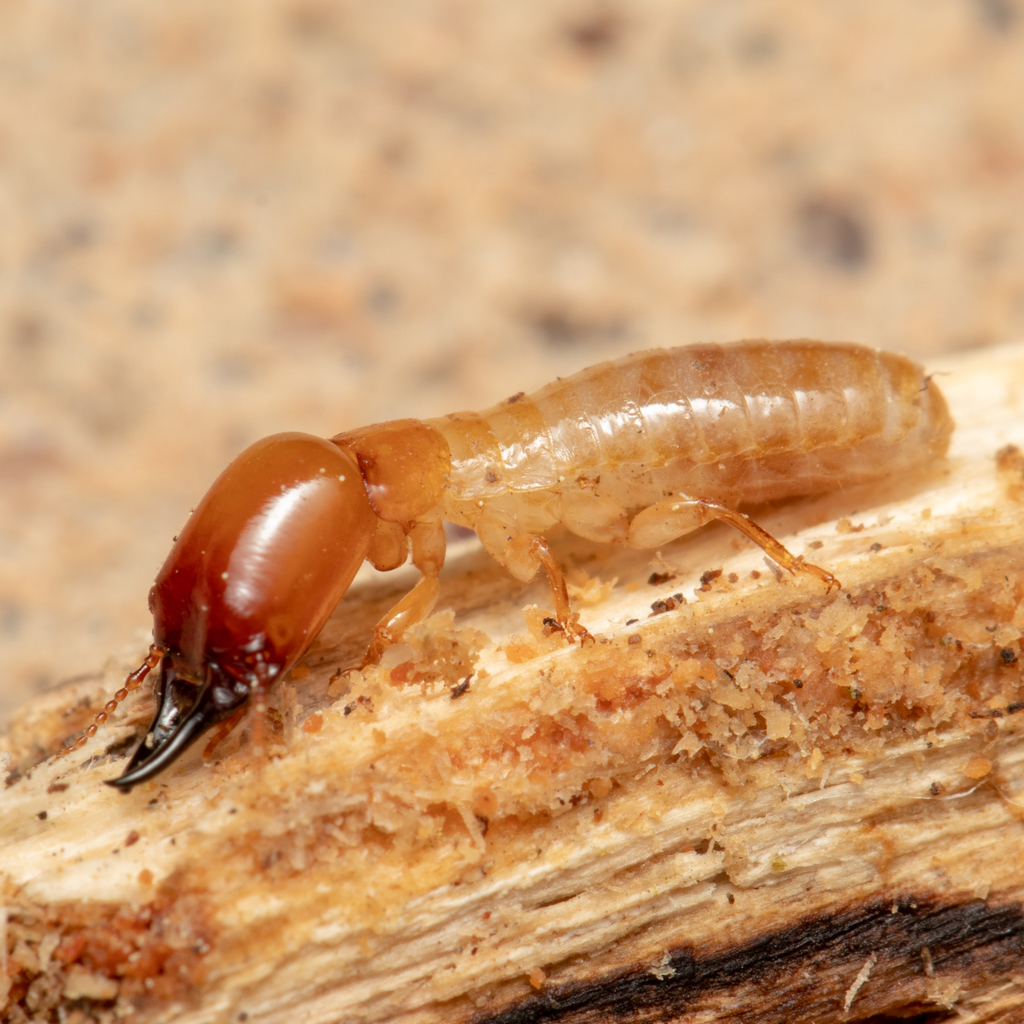
A drywood colony contains several forms. Pale immature termites perform much of the work inside the wood; soldiers have darker, hardened heads and jaws; winged reproductives, or swarmers, leave established colonies to start new ones. Color and size vary by species and region.
Photographs have limits. Workers from different termite groups can look broadly similar, and a regional species example may not match the termite in another state. Swarmers and soldiers provide more useful identification features, but reliable species confirmation may still require a specimen and local expertise. If your main clue is a winged insect, start with flying ants vs. termites.
Signs of Drywood Termites
Pellet piles
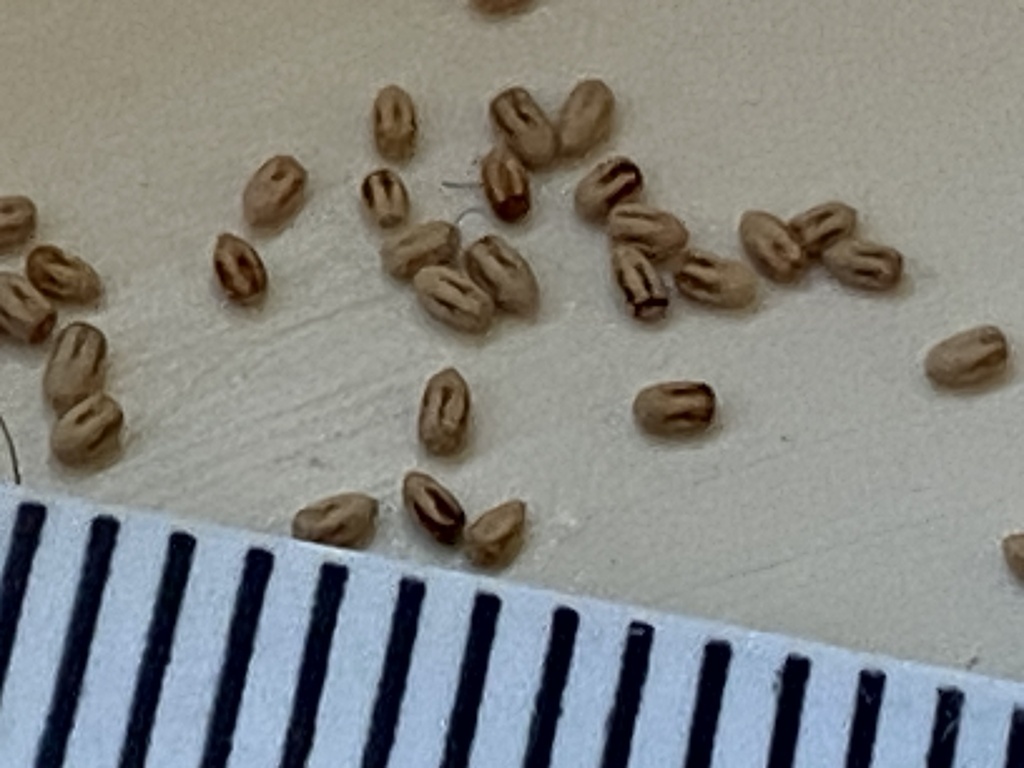
Drywood termites push hard fecal pellets out of small openings. The pellets are usually uniform and feel more like coarse sand than sawdust. Use our frass identification guide for the detailed look-alike comparison.
Kick-out holes
Small openings in infested wood let termites clear pellets from galleries. A hole may be difficult to see even when a pile is obvious below it.
Swarmers or shed wings
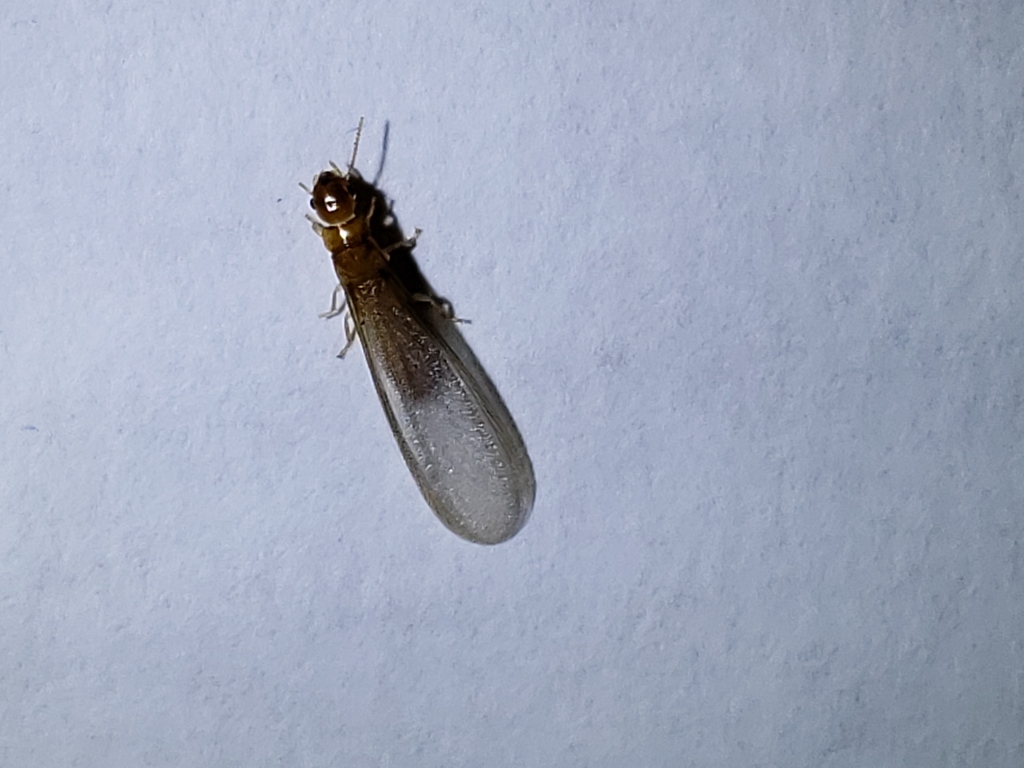
Winged adults or piles of equal-length shed wings indoors indicate that termites are reproducing nearby. Timing varies by species and region, so there is no single national drywood swarm season.
Hidden galleries
Infested wood may sound hollow or show a thin blistered surface over internal chambers. Do not probe load-bearing or finished wood aggressively; inspection damage can hide or destroy useful evidence.
What you usually will not see: soil shelter tubes. Mud tubes point more strongly toward subterranean termites, but the absence of tubes is not enough to diagnose drywood termites by itself. For a broader evidence checklist, see signs of termites.
Where Drywood Termites Occur in the U.S.
Drywood termites are most important across the warmer southern tier of the United States, including parts of the Southeast, Gulf Coast, Southwest, California, and Hawaii. The species and level of pressure vary sharply by region. Infested furniture, lumber, or other wooden items can also move drywood termites beyond their usual outdoor range.
Use local context rather than a national map alone. TermitePlan has detailed guides for California, Florida, Hawaii, Louisiana, and Texas, with the state hub covering the broader regional structure.
Can You Tell Whether the Infestation Is Active?
Pellets confirm that drywood termites produced evidence in that wood, but a pellet pile by itself does not establish current activity or reveal the extent of infestation. Old pellets can remain in galleries and may fall later when wood is moved, vibrated, or disturbed.
You can photograph the area, clean up loose pellets without damaging the wood, and check whether a new pile appears. Fresh pellets returning from the same point support current activity at that location. No new pellets do not clear the rest of the item or structure, and one visible pile does not show how many hidden colonies are present.
Do not drill, inject products, open finished walls, or cut structural wood to look for termites. Those steps can damage the building and still miss separate colonies. Preserve specimens, wings, pellets, and photographs for an inspector.
Localized or Whole-Structure Problem?
This is the central drywood termite decision. It is not simply a choice between a small treatment and a larger one; it depends on whether the full infestation can be found with reasonable confidence.
A localized path may be discussed when
- evidence is confined to one accessible item or wood member;
- inspection can define the affected galleries and boundaries;
- nearby wood is accessible for examination;
- follow-up inspection and a clear warranty are part of the plan.
A whole-structure discussion becomes more likely when
- pellets, wings, or swarmers appear in multiple areas;
- activity may extend into walls, roofs, attics, or inaccessible framing;
- the structure may contain several separate colonies;
- inspection cannot reliably delimit every affected area.
Only an inspection can determine which side of that decision fits the building. Ask the company to explain what evidence supports its proposed scope and what happens if activity returns. Our hiring checklist gives you the questions to use.
Treatment Options and Their Limits
→ Scroll the table sideways to see all columns.
| Approach | Where it may fit | Main limitation |
|---|---|---|
| Remove or replace wood | A limited, accessible item or nonstructural component | Misses colonies in adjacent wood; structural replacement needs qualified construction judgment |
| Localized professional treatment | A well-delimited infestation that can be reached | Detection accuracy is critical; hidden or separate colonies may remain |
| Heat | Sectional or whole-structure nonchemical treatment offered by qualified providers | All affected wood must reach effective conditions; heat sinks and sensitive contents complicate treatment |
| Whole-structure fumigation | Widespread, inaccessible, or poorly delimited drywood infestations | Requires licensed specialists, temporary vacancy, preparation, and no lasting residual protection |
The table explains decision categories, not application instructions. Availability, licensing, building type, and approved methods vary by location.
Soil barriers and ground bait systems address subterranean termite biology; they do not by themselves solve a drywood colony living entirely inside above-ground wood. Compare the broader categories in termite treatment types, and use DIY vs. professional treatment to understand the boundary. For price planning, keep cost estimates on the separate termite treatment cost page.
What Homeowners Can Safely Do Now
- Document the evidence. Photograph the pellets, wings, insects, kick-out holes, and exact room or wood member.
- Save a specimen if possible. Place insects or wings in a small sealed container without crushing them.
- Check nearby visible surfaces. Look for additional pellets or wings without opening walls or damaging wood.
- Separate movable items. If the evidence is in furniture, avoid moving the item to another building until it is identified.
- Arrange an inspection. Ask the inspector to map every evidence location and explain why the proposed treatment is localized or whole-structure.
- Use the decision guide. The termite treatment decision guide helps route mixed or uncertain evidence.
Prevention and Monitoring
- Inspect exposed wood, attics, eaves, trim, and stored wooden items for pellets, wings, and small openings.
- Maintain paint, sealant, screens, and sound exterior wood so swarmers have fewer entry points.
- Use appropriately treated or resistant wood where local building practice recommends it.
- Examine used furniture, salvaged lumber, and transported wooden items before bringing them indoors.
- Keep treatment records and evidence photographs so future inspections can distinguish old findings from new ones.
These steps reduce risk and improve detection; they do not guarantee that hidden termites are absent. A periodic professional inspection may be appropriate in high-pressure regions or after previous drywood activity.
When to Call a Professional
Arrange a licensed termite inspection when:
- pellets return after cleanup;
- swarmers or shed wings appear indoors;
- evidence occurs in multiple rooms or wood members;
- the suspected wood is structural, hidden, or hard to access;
- damage may affect a beam, roof member, floor, stair, or other load-bearing component;
- there is a sale, refinance, insurance, tenant, or inspection deadline;
- you cannot confidently distinguish pellets from beetle powder, carpenter ant debris, or ordinary sawdust.
The inspection should answer two questions: is the evidence drywood termites, and how far does it extend? Treatment selection comes after those answers.
Bottom Line
Drywood termites live inside above-ground wood, often without mud tubes or an obvious route into the structure. Pellets, kick-out holes, swarmers, and shed wings can reveal them, but visible evidence does not map every hidden colony. Document what you found, avoid destructive DIY investigation, and base the localized-versus-whole-structure decision on a thorough inspection rather than on one pile of frass.
Sources
- UC IPM: Drywood Termites
- University of Florida IFAS: Termite Prevention and Control
- University of Arizona Cooperative Extension: Drywood Termites
- University of Hawaii CTAHR: Termites