Identification guide
Termites in the Attic: Signs, What They May Mean, and What to Do Next
Finding pellets, wings, mud, or damaged wood near the roof raises a different question from simply identifying a termite: what does that clue mean in a space you may not be able to inspect safely?
Short Answer
An attic finding does not identify the termite type by itself. Hard pellets and small openings in dry wood may point toward drywood termites. Mud or soil-lined tubes may point toward subterranean termites, which can reach upper parts of a structure. Wings need their own identification and source check. Photograph only what you can see from a safe access point. If framing may be damaged, evidence appears in more than one area, or the wood cannot be examined safely, arrange a professional inspection rather than guessing at a treatment.
If you have not yet found a specific clue and want a safe, whole-home walkthrough, use our termite inspection checklist. This page starts after you have noticed something in or near the attic and need to decide what it may mean.
What the Attic Location Tells You, and What It Does Not
In regions where drywood termites occur, roof framing, eaves, and attic vents can be relevant inspection areas. Texas A&M AgriLife documents attic vents and eaves as possible entry points in Texas and notes that pellets can collect on horizontal attic surfaces. But an upper-level clue does not rule out subterranean termites: LSU AgCenter explains that they can move high through a structure and that exposed attic wood may reveal evidence hidden elsewhere. The clue itself matters more than the height at which you found it.
An attic also changes how much you can conclude. Insulation and finishes can hide wood; a visible spot may not show the full extent of a problem. Rafters, trusses, and other roof members may be structural, so neither a photograph nor a small patch of visible damage can establish that the area is sound. A licensed termite inspector can assess the pest evidence; suspected structural weakness also calls for a qualified building professional.
Read the Clue Before You Guess the Termite Type
Use the visible evidence to choose a route, not to diagnose the whole attic. More than one clue can be present, and none of these observations alone maps the full extent of hidden activity.
Hard pellets or small openings in wood
Uniform, hard pellets below wood and nearby kick-out holes make drywood termites plausible. First compare the material with our frass photo guide, then use the drywood termite guide for that termite route. UC IPM cautions that pellets alone do not show whether an infestation is currently active or how far it extends. Loose debris without a clear source is not enough for identification.
Mud, soil, or shelter tubes
Earthen tubes or soil in damaged wood support a subterranean-termite route even when the evidence is high in the building. Compare the visible sign with our mud tube guide and continue to the subterranean termite guide. Do not assume that a tube-looking mark proves current activity, and do not break into framing to trace where it leads.
Winged insects or shed wings
First establish whether the insects are termite swarmers and whether they appeared to emerge from the building or may have entered from outside. The presence of wings in an attic does not locate a colony. Follow our indoor swarmer guide for identification and next steps.
Damaged or hollow-looking wood
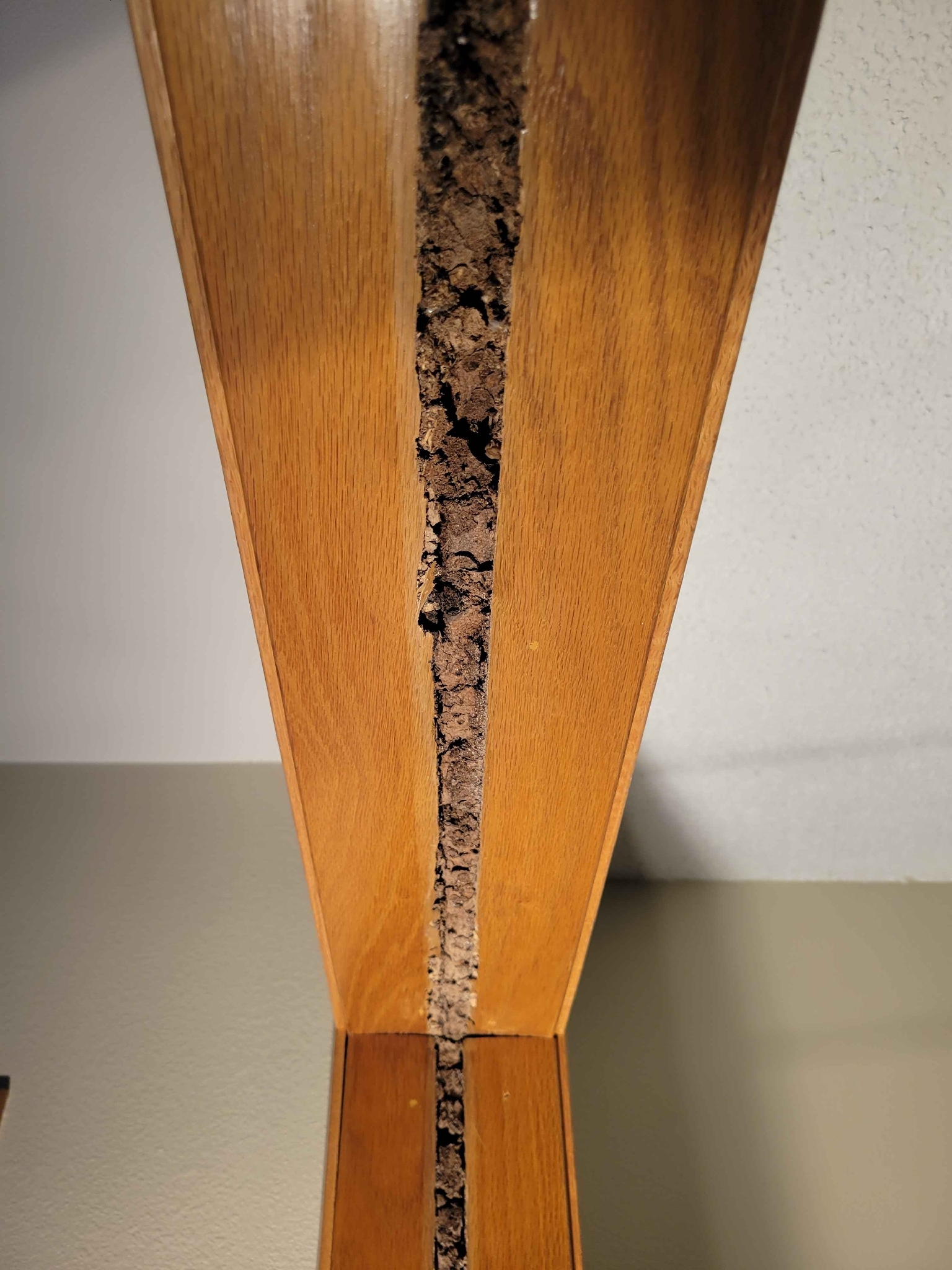
Damage by itself does not identify termites, the termite type, or current activity. Water and other wood-destroying organisms can complicate the picture. Use our termite damage versus water damage guide to organize what you can see, but leave assessment of concealed or possibly weakened roof framing to qualified professionals.
Damp, stained, or decayed framing
A roof or plumbing leak needs attention whether or not termites are present. Moisture and decay alone do not establish a dampwood termite infestation. Document the visible water source from a safe position, arrange appropriate repair, and use the dampwood termite guide only if insect evidence makes that route relevant.
Why Access Changes the Decision
A small, visible clue can sit beside covered or unreachable wood. That makes a claim such as “it is only in this one spot” hard to support without a proper inspection. It also makes the choice of treatment premature: the termite group, the area affected, and access to that area have to be established first. The treatment decision guide is useful after the evidence has been evaluated, not as a way to diagnose the attic from a photo.
Do not treat absence of visible pellets or mud tubes as proof that the remaining framing is clear. UC IPM notes that determining the extent of a drywood infestation takes experience; LSU AgCenter describes attics as places where otherwise hidden evidence may become visible.
What You Can Safely Document From a Safe Access Point
- Take a wide photograph showing where the visible clue is, plus a closer photograph only if you can take it without leaning into an unsafe area.
- Record the date, approximate location, whether you have noticed the sign before, and any known leak or prior termite treatment.
- Note whether insects appeared to emerge from wood or whether you only found them nearby. Do not move deeper into the attic to collect a specimen.
- Keep children and others away from any area with visibly weakened framing, exposed wiring, or uncertain footing.
Stop at the safe access point. Do not step between joists, enter an unboarded or unstable area, lift insulation over suspected damage, cut wood, drill, inject a product, or disturb possible tubes to make a diagnosis. If you cannot see the clue safely, leave that part of the inspection to a qualified professional.
When to Stop and Arrange an Inspection
Arrange a licensed termite inspection if you see termites emerging from the structure, find mud tubes or recurring pellets, notice evidence in several attic areas, or cannot safely view the wood around a suspicious sign. Visible damage in rafters, trusses, beams, or other roof supports calls for caution even when the cause is uncertain. If framing looks sagging or unstable, stay out of that area and ask a qualified building professional to assess structural safety.
Tell the inspector exactly where the evidence was visible and which areas you could not access. Ask for a written explanation of the evidence, the termite group if it can be identified, the limits of the inspection, and what supports any proposed treatment. Our questions to ask a termite company can help you compare the response without accepting a treatment method before the diagnosis is clear.
Bottom Line
The attic is a location, not a termite diagnosis. Match the visible clue to the right identification guide, respect the limits of what you can see safely, and get professional help when roof framing, concealed areas, or multiple signs are involved. Treatment decisions come after identification and scope, not before.
Sources
- Texas A&M AgriLife Extension: Drywood Termites
- UC IPM: Drywood Termites
- LSU AgCenter: Interior Inspection
- UF/IFAS Extension: Termite Prevention and Control
Featured image: Jason Dale / Wikimedia Commons, CC BY-SA 3.0. Cropped from the original.
See our editorial methodology for how we evaluate evidence and homeowner decisions.