Pest identification
Termites vs. Carpenter Ants vs. Wood-Boring Beetles: Reading the Evidence
Short Answer
Three very different creatures can leave signs in your home’s wood: termites eat it, carpenter ants tunnel through it to nest, and wood-boring beetles develop inside it as larvae. You usually meet the evidence before you meet the insect — and the evidence is what points you toward the right group. Mud tubes lean toward subterranean termites; small hard pellets lean toward drywood termites; coarse sawdust-like debris with bits of insect in it leans toward carpenter ants; fine powder falling from small round holes leans toward wood-boring beetles, most often powderpost beetles.
The word “lean” matters. Signs narrow the field to a likely group; they rarely confirm an exact species, and a single blurry insect photo almost never does. Use this page to read the evidence sensibly and confirm the sign. If it points toward termites, our decision guide takes it from there; if it points toward carpenter ants or beetles, the safe next step is a closer look or a general licensed pest inspection instead.
This guide is part of our termite identification guides. If you are comparing insects, debris, mud tubes, pellets, damage, or wings, start there before choosing a treatment.
Below: how to tell the insects apart when you actually have one to look at, what each kind of debris usually means, which clues are strong versus easy to misread, what a photo genuinely can’t settle, and calm, safe next steps — including when there’s no reason to panic at all.
Start With What You Found
You’re almost always identifying evidence first and inferring the culprit second. Before anything else, sort what’s in front of you into one of these:
- An insect — winged or wingless, ideally intact enough to see its waist, antennae, and wings.
- Debris — a pile of something that looks like sawdust, sand, powder, or coffee grounds.
- Holes — small round openings, or slit-like gaps, in wood.
- Tubes — pencil-width lines of dried mud climbing a foundation, wall, or pier.
- Damaged wood — hollow-sounding, softened, or visibly tunneled.
Each of those points somewhere slightly different, so the rest of this guide is organized around the evidence rather than around the bug.
Telling the Insects Apart
The three photos below show representative specimens so you can compare basic body plans: a termite worker, a carpenter ant worker, and an adult wood-boring beetle. When it comes to the features that actually separate termites from ants, the most decisive comparison is between their winged reproductives (“swarmers”), summarized in the table that follows — if that’s what you found, flying ants vs. termites covers the waist, antennae, and wing differences in detail. A clear, in-focus specimen against a plain background, with something for scale, makes any of this far easier.
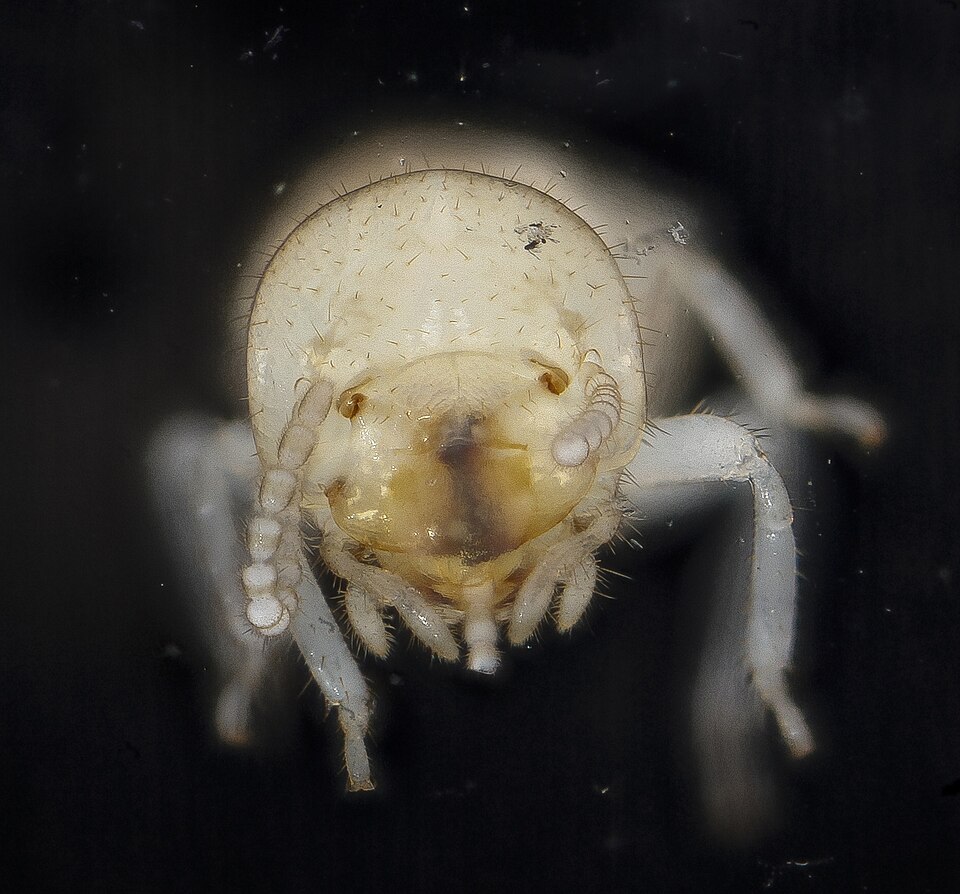
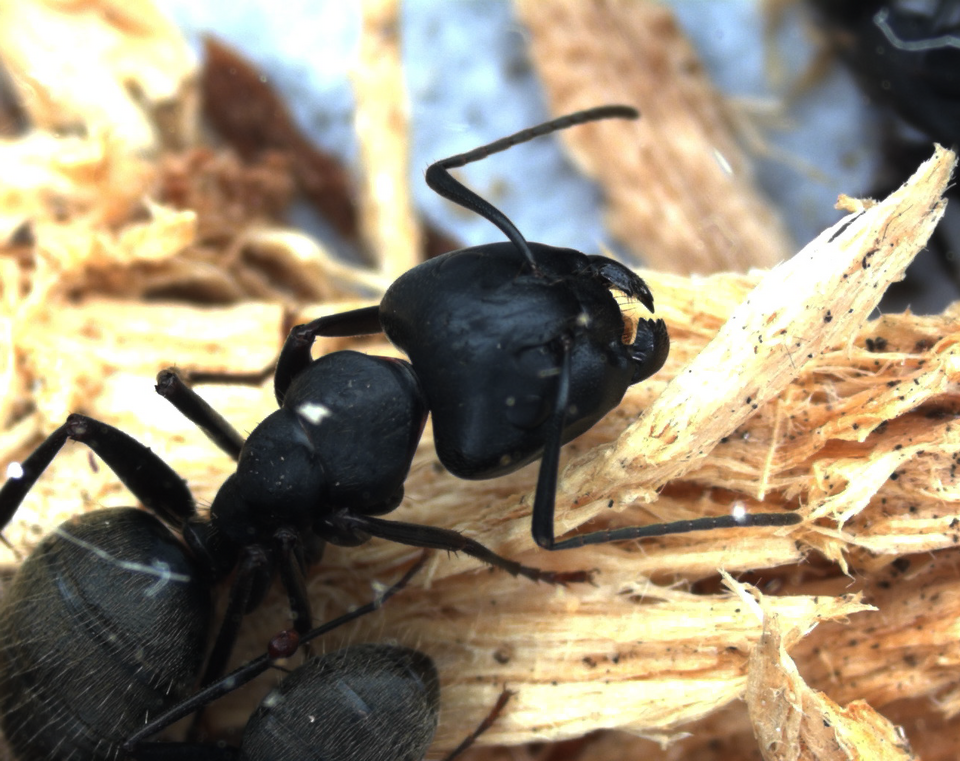

Tap any photo to enlarge. Species shown are representative examples for orientation, not a species verdict for your situation.
Swipe the table sideways to see all columns →
| Feature | Termite swarmer | Carpenter ant swarmer | Wood-boring beetle adult |
|---|---|---|---|
| Waist | Broad, not pinched | Narrow, clearly constricted | Beetle body; no ant-like waist |
| Antennae | Straight, bead-like | Bent / elbowed | Not a field clue — small and group-specific, readable only under magnification |
| Wings | Four wings of about equal length, often longer than the body; shed easily | Front wings longer than hind wings | Hard wing covers, not two pairs of equal see-through wings |
| Color | Workers pale; swarmers darker or tan | Usually black, red-black, or brown | Often small and brown |
| Most useful when | Insect is intact; waist and wings visible | Side view with intact waist and antennae | Adult present alongside holes and frass |
The waist, antennae, and wings separate a termite swarmer from an ant swarmer well. Beetle antennae are a magnification-level identification detail, not a reliable homeowner field clue. Note that only termites and ants have a worker caste and send out swarmers; beetles do not, so with beetles you’re usually identifying an emerged adult alongside its holes and frass, not a “worker.”
Reading the Debris and Signs
Most of the time you’re looking at what the insect left behind, not the insect. Here’s how the common signs usually break down — with the emphasis, again, on usually.
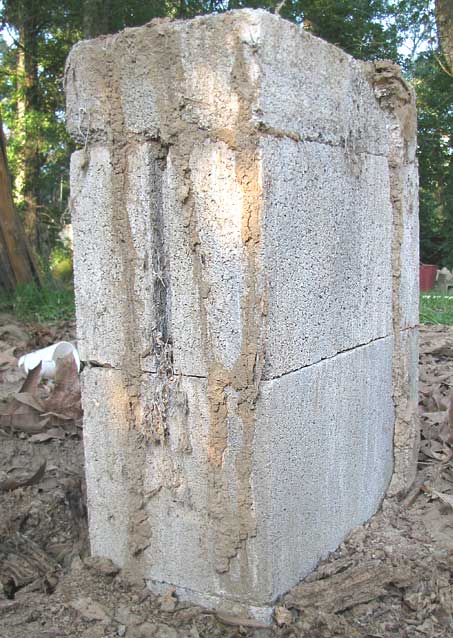
Mud tubes → usually subterranean termites
Pencil-width tubes of dried mud running up a foundation, pier, plumbing penetration, or slab edge are the classic subterranean termite sign; they build them to stay moist while traveling from soil to wood. Mud tubes make subterranean termites the leading candidate — but you still need to know whether a tube is active, because an old tube from a resolved problem can confuse a later inspection. Our guide to mud tubes vs. old damage covers the active-versus-old test.
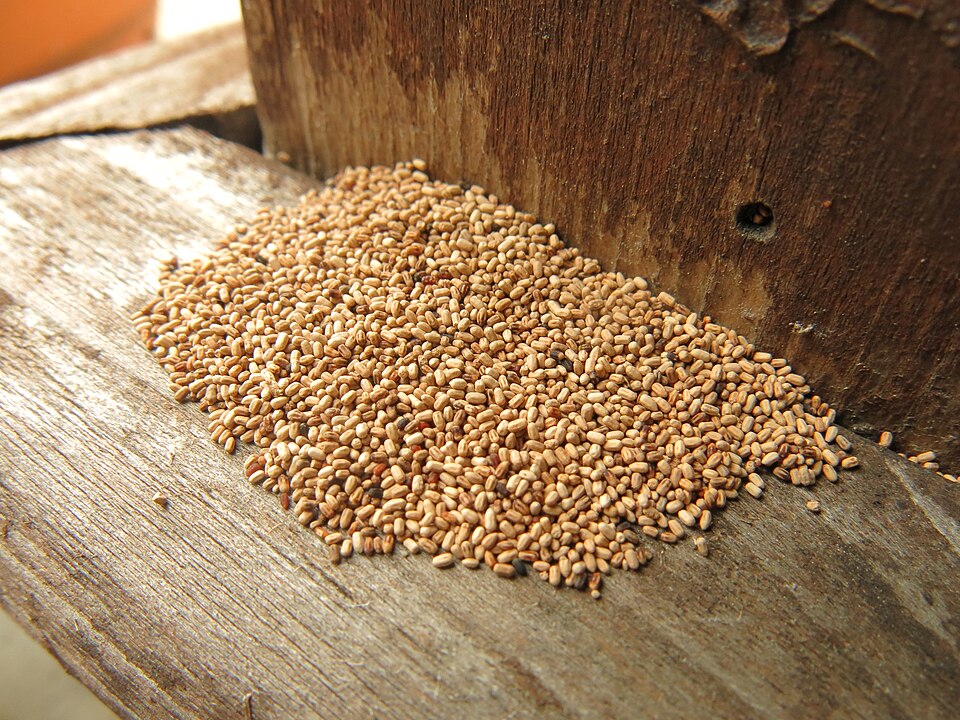
Hard pellets → usually drywood termites
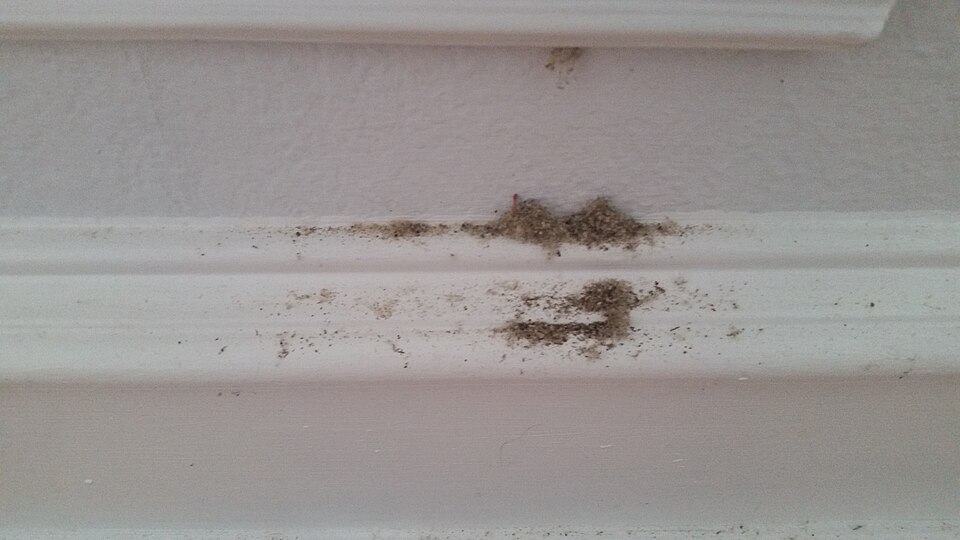
Small, hard, uniform pellets collecting in little piles — often below a windowsill, shelf, or beam — are the hallmark of drywood termites, which push waste out through tiny “kick-out” holes. Up close (under magnification) each pellet is elongated with rounded ends and six flattened-to-slightly-hollowed sides; from normal distance the pile just looks like sand, coffee grounds, or coarse pepper. Because subterranean termites don’t leave this kind of pellet pile, pellets shift suspicion toward drywood — just rule out sawdust and other insects first with droppings vs. frass.
Coarse sawdust with insect parts → usually carpenter ants
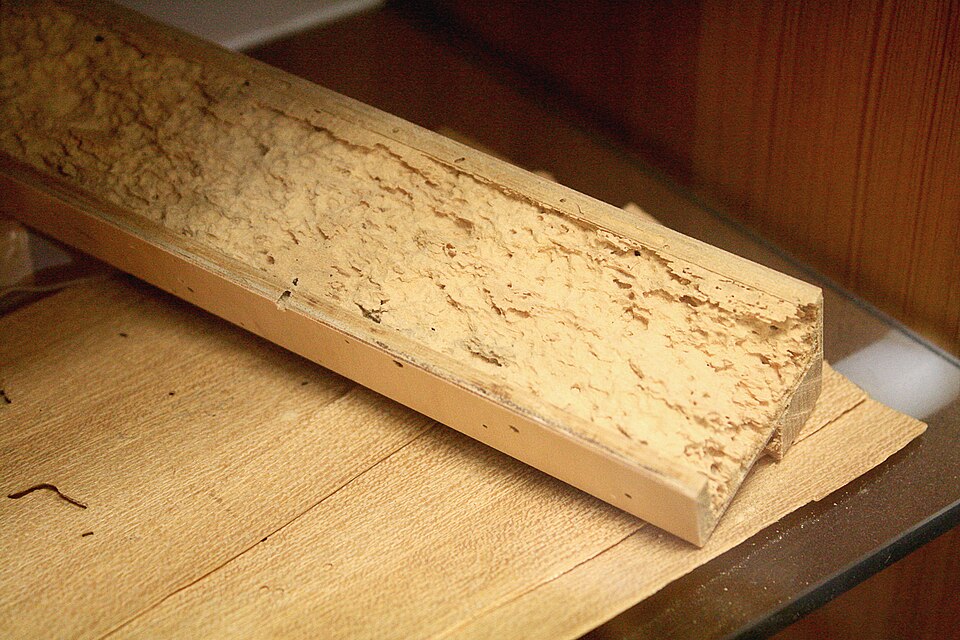
Carpenter ants don’t eat wood — they excavate it to nest and shove the debris out. That debris is coarse and fibrous, tends to pile up near a nest opening, and often contains bits of dead insects mixed in, whereas individual drywood fecal pellets are compact waste; mixed debris on a surface is not conclusive. Their galleries are clean and smooth, almost sanded-looking, rather than mud-packed. A few ants indoors in spring or summer may just be foragers from outside, but recurring debris, indoor trails, winter activity, or many winged ants indoors raises the concern.
Fine powder from round holes → usually wood-boring beetles
Small round holes in wood with fine, flour-like powder beneath them point to wood-boring beetles — most often powderpost beetles. The larvae develop inside the wood and adults chew their way out, leaving the exit holes; hole size and frass texture vary by beetle group. The key active-infestation clue is recurrence: fresh powder that reappears after you clean it up suggests living larvae still inside, whereas old holes with no new powder may be left over from wood that was already infested when it was installed.
Swipe the table sideways to see all columns →
| Evidence | Usually points to | What makes it stronger |
|---|---|---|
| Mud / shelter tubes | Subterranean termites | Tubes on structural supports; live termites or fast rebuilding when opened |
| Hard uniform pellets | Drywood termites | Recurring pile below a small kick-out hole; pellets have similar six-sided shapes; color can vary |
| Coarse sawdust + insect parts | Carpenter ants | Debris near a smooth gallery, with live ants, trails, or damp wood nearby |
| Fine powder + round holes | Wood-boring beetles | Fresh powder that reappears after cleaning |
| Swarmers / shed wings | Termites or ants (needs context) | Many emerging indoors — an urgency signal more than a species clue |
| Gallery texture | Varies by culprit | Mud/soil-packed = subterranean termites (drywood and dampwood look different); clean/sanded = carpenter ant; frass-packed with round exit holes = beetle |
Orientation only, not a verdict. Look-alikes overlap, and dampwood termites — tied mostly to persistently wet or decaying wood — can appear where moisture problems already exist. Confirm the sign before acting.
Correctly identified drywood pellets indicate termite evidence, but do not establish current activity. Old pellets may fall when wood vibrates. Recurrence warrants inspection rather than proving an active colony by itself. See UC IPM on drywood termite detection.
Strong Clues vs. Clues That Fool People
Not every sign carries the same weight. Sorting them honestly keeps you from over- or under-reacting.
- Strong: live termites in or repairing a mud tube; many swarmers emerging indoors; uniform drywood pellets recurring under a kick-out hole; fine beetle powder reappearing below round holes; carpenter ant debris together with live ants, moisture-damaged wood, or winged ants indoors.
- Moderate: dead winged insects at windows; sawdust-like debris under trim or beams; hollow-sounding or softened wood near moisture; old exit holes with no fresh powder; a few swarmers indoors during the local outdoor swarm season.
- Weak or overlapping: “I found some dust”; a single insect photo with no scale and no visible waist, antennae, or wings; old holes in reclaimed wood, antiques, flooring, or furniture; outdoor termites in stumps or logs away from the house; ants indoors in warm weather with no nest, debris, or moisture nearby.
If softened or hollow wood is your main clue, compare wood damage caused by termites or moisture. Decay and insect damage can occur together.
What a Photo Alone Can’t Tell You
This is the honest limit of any identification page, including this one:
- A photo rarely settles the exact species. Termite workers often lack the traits needed for a homeowner-level species identification; carpenter ants may require a keyed examination of worker anatomy; and small brown beetles often need an adult specimen plus hole, wood, and frass context. Magnified specimens, soldiers, or swarmers can carry more useful traits depending on the group.
- Signs point to a group, not a name. Tubes, pellets, coarse debris, and fine powder narrow things to a likely culprit — they don’t confirm the exact species, and look-alikes can mimic parts of the picture.
- A still image can’t show activity. A photo can’t tell you whether an infestation is active or old, or how far it runs inside the wood — usually the decision that actually matters.
- Region changes the odds. Which species are even plausible depends heavily on where you live. For termite specifics by state, see our guides to Florida, Texas, California, Georgia, Hawaii, Louisiana, and South Carolina, or compare termite groups in subterranean vs. drywood vs. dampwood.
The practical takeaway: use the evidence to form a reasonable working guess about the group, and lean on a licensed inspection when the exact species or the extent of the problem actually drives the decision.
Safe Next Steps
Reading the evidence is the first half of the job; deciding what to do is the second. Match your situation to one of these routes.
Document and monitor
When the evidence is weak, old, isolated, or outdoors away from the structure: photograph the insect, debris, or holes with something for scale, clean the debris, mark the date, and recheck for recurrence. Save any intact insects. Clearing debris and seeing none return is useful information — but “nothing came back yet” isn’t the same as “no infestation,” so keep the note.
Inspect more closely
When there’s recurring debris, an unclear winged insect, suspicious holes, damp wood, or accessible mud-like material: trace the debris upward to a hole, crack, sill, or beam; look for a moisture source; and preserve intact insects for identification. Our inspection tools guide covers simple ways to look closer safely.
Licensed pest inspection
When the evidence points at the structure — mud tubes on or in the building, many swarmers indoors, drywood pellets recurring inside, fine powder and round holes recurring in structural wood, or carpenter ant debris with indoor trails or winter activity — get a licensed inspection. It can identify the likely group and assess the accessible evidence and probable extent — more than a photo can, even if some hidden damage or an exact species still can’t be pinned down without further work. For hiring well without overpaying, see questions to ask a termite company, and weigh the broader choice with DIY vs. professional.
Structural assessment
When damage may involve load-bearing members — sagging floors, compromised joists, long-running moisture, or extensive galleries — remember that identifying the pest and repairing the wood are separate questions. A pest company can identify and treat the insect, but significant damaged wood may require an appropriate building professional to assess and repair it.
When there’s no need to panic
Plenty of findings look alarming but usually aren’t emergencies on their own:
- old exit holes in reclaimed wood, antiques, flooring, or furniture, with no fresh powder;
- termites active in stumps, logs, or mulch out in the yard, away from the house;
- a few beetles indoors that likely emerged from firewood brought inside;
- a few swarmers known to have entered through an open window during an outdoor swarm; unexplained indoor emergence still merits inspection.
These are reasons to document and keep an eye out, not to rush. If any of them starts recurring, spreading, or showing up in structural wood, move up to a closer inspection.
A Closer Look at Wood-Boring Beetles
“Wood-boring beetle” is a broad label, not a single pest, but for homeowners the group that matters most is the powderpost beetles (along with the closely related deathwatch and false powderpost beetles). Their larvae feed inside seasoned wood and adults emerge through small round holes, leaving fine, flour-like powder behind. Because infested lumber or furniture can be brought in already carrying larvae, damage sometimes shows up long after the wood was installed — which is why recurring powder merits investigation. Old dust can also be dislodged, so recurrence alone does not confirm living larvae. The larvae also work slowly, so a careful evaluation is almost always more useful than a panic reaction.
Evidence Collection Checklist
If you plan to consult our decision guide or call an inspector, a little documentation makes the answer much better:
- photograph the insect, debris, holes, or tubes with a coin or ruler for scale;
- note the exact location (windowsill, crawl space, beam, furniture) and the date;
- photograph and retain a small sample before any cleanup; record recurrence without delaying an inspection for indoor evidence;
- keep any intact insects in a small sealed container;
- look for and note nearby moisture, leaks, or wood-to-ground contact.
When To Call a Professional
Some situations shouldn’t wait on a confident species ID. Get a licensed professional involved if any of these apply, whichever culprit you suspect:
- many swarmers emerging inside the home;
- active or fast-rebuilding mud tubes;
- drywood pellets or beetle powder recurring in structural wood after cleaning;
- carpenter ant debris with indoor trails, winged ants, or winter activity;
- confirmed wood-destroying insects, or signs that keep recurring in structural wood;
- possible structural or load-bearing damage;
- a home sale, inspection, refinance, or tenant deadline.
An inspection can identify the likely group and assess the accessible evidence and probable extent — more than a still photo can offer.
Safety & Accuracy Notes
This page helps you narrow down a likely culprit from common signs; it is not a species-verification service or a treatment plan. Insect identification often requires specimens examined under magnification, and getting the group wrong can send you toward the wrong response. When the species or the extent of damage genuinely drives your decision, confirm it with a licensed inspection rather than a photo. This guide does not provide pesticide mixing, application, or fumigation instructions.
Where This Fits
This guide pairs with the diagnostic pages — droppings vs. frass for debris look-alikes, mud tubes vs. old damage for subterranean evidence, and subterranean vs. drywood vs. dampwood for termite groups — plus simple inspection tools for looking closer. If your evidence points toward termites specifically, the decision guide is the natural next step; for carpenter ants or beetles, use a closer inspection or a general pest professional.
Bottom Line
Mud tubes lean subterranean termite, hard, six-sided pellets lean drywood termite, coarse sawdust with insect parts leans carpenter ant, and fine powder from round holes leans wood-boring beetle — but signs point to a group, not a confirmed species, and an insect in a photo rarely settles it. Read the evidence and form a reasonable working guess. If it points toward termites, the decision guide turns it into a next step; for carpenter ants or beetles, a closer inspection or a general pest professional is the better route. Either way, bring in a professional whenever the identity, the activity, or the extent of damage is what actually matters.
Sources and Methodology
This guide draws on university extension and government entomology sources, including UC IPM, Mississippi State Extension, the University of Minnesota Extension, University of Maryland Extension, NC State Extension, Penn State Extension, UF/IFAS, and the USDA Forest Service. It is explicit about the limits of identifying species from photographs and does not claim laboratory identification. See our Methodology for how we build and review these guides.