Termite identification
Subterranean vs. Drywood vs. Dampwood Termites: How to Tell Which One You May Have
Short Answer
Most home termite problems in the U.S. fall into three groups: subterranean, drywood, and dampwood termites. The fastest way to narrow down which you may have is not to stare at the insect — it’s to look at the signs. Mud tubes usually point to subterranean termites, small wood-colored pellet piles usually point to drywood termites, and damp or already-decaying wood is the setting where dampwood termites are more likely.
But “usually” is doing real work in those sentences. The evidence narrows the field; it rarely proves a species on its own — and a few workers in a photo almost never do. Use this page to form a reasonable idea of what you may be dealing with, then confirm the sign and choose a next step with our decision guide.
Below are the three types side by side, how to read the most common signs, what you genuinely cannot tell from a photo, and what each type means for your treatment path.
The Three Types Side by Side
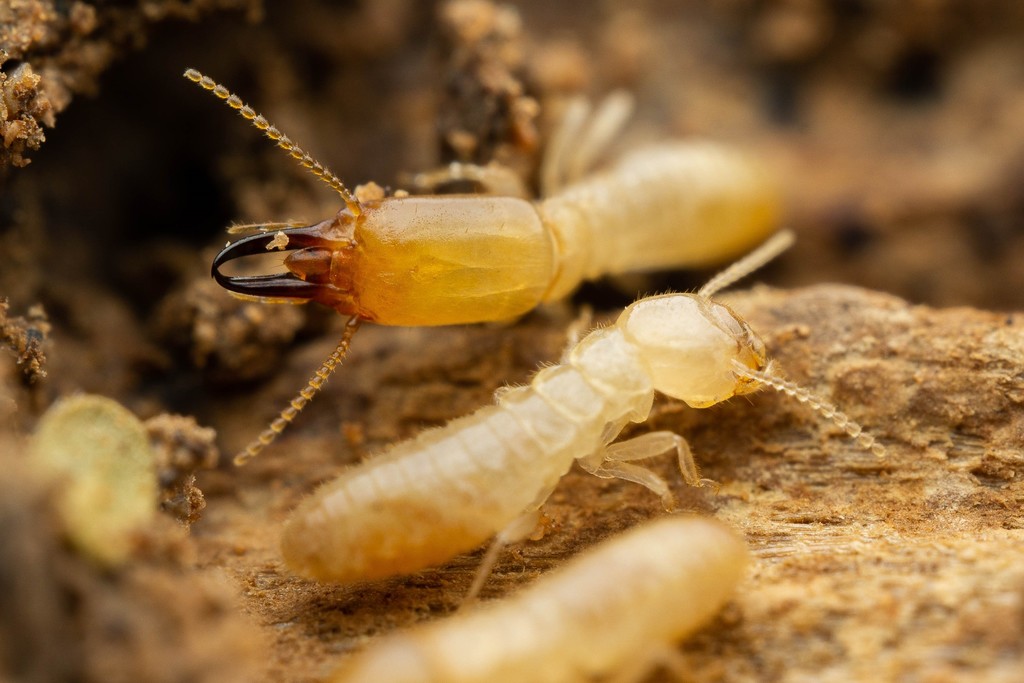
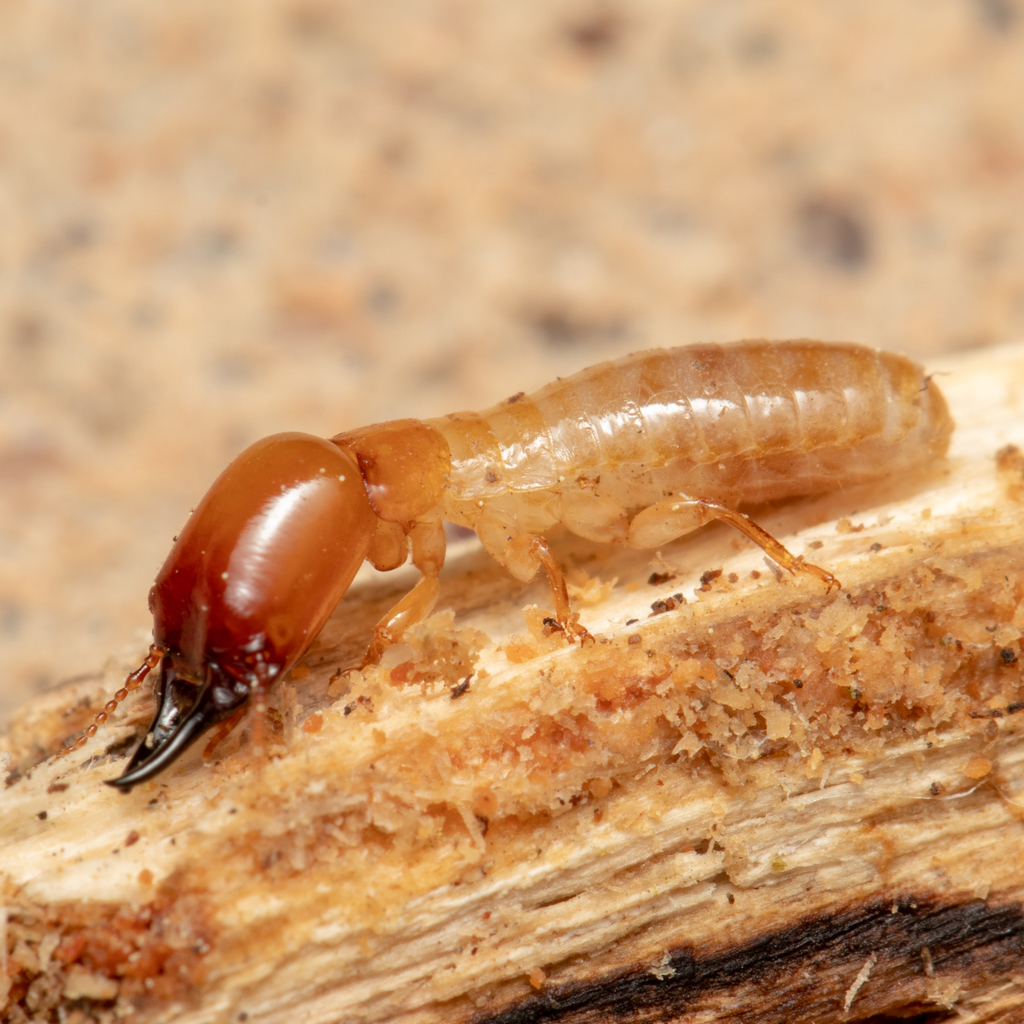
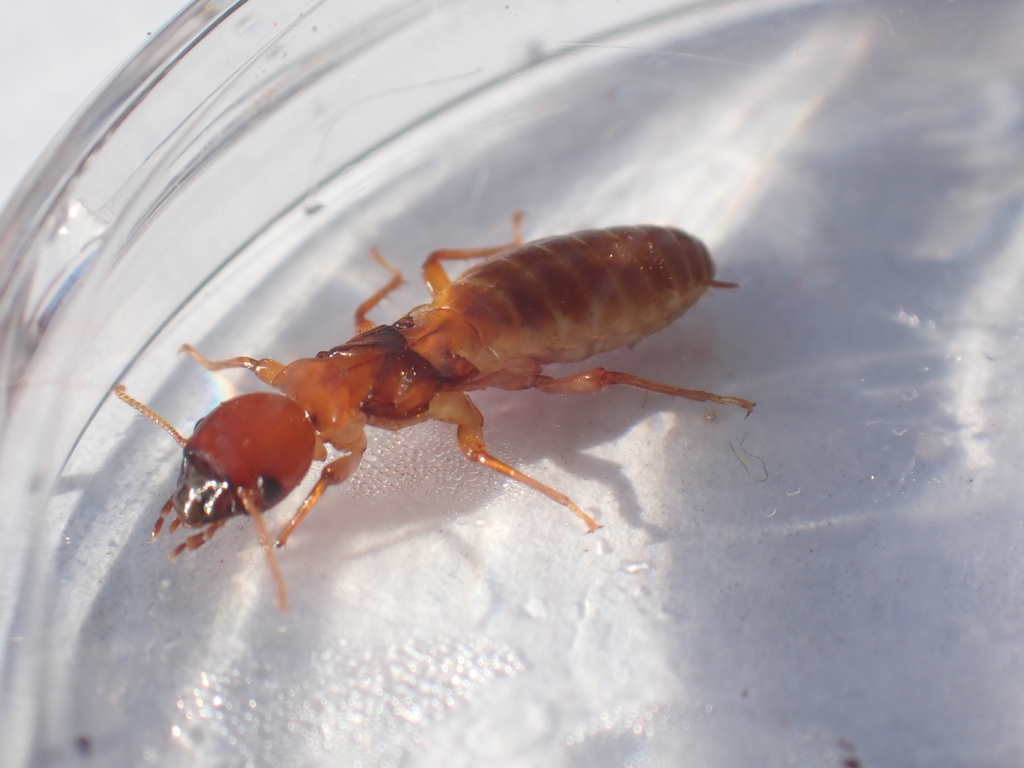
Tap any photo to enlarge. Species shown are representative examples for orientation — see the caution below about identifying termites from workers alone.
| Factor | Subterranean | Drywood | Dampwood |
|---|---|---|---|
| Where they live | In soil; reach wood from the ground up | Inside dry, sound wood; no soil contact needed | In wood with high moisture or decay |
| Moisture needs | High — depend on ground contact for moisture | Low — can live in dry wood | Very high — need damp or rotting wood |
| Signature sign | Mud tubes on foundations, walls, piers | Small pellet frass pushed from “kick-out” holes | Found in damp/decaying wood; fewer visible surface trails |
| Typical setting | Slabs, crawl spaces, foundation contact | Attics, eaves, furniture, dry framing | Leaks, chronic damp, wood-to-ground moisture, some coastal/Pacific areas |
| Relative U.S. prevalence | Most common and most widespread | Common in warm/coastal regions | Least common; localized to damp conditions |
| Why it matters | Often needs soil/barrier or bait approaches | Often a wood-focused or whole-structure question | Fixing the moisture source is central |
Orientation only, not a species verdict. Ranges and behavior vary by region and by the specific species present. Confirm the sign before acting — and treat any “which species exactly” question as one for a professional, not a web table.
Identification by Sign
In practice you are almost always identifying the evidence first, then inferring the likely type. Here is how the common signs usually break down — with the emphasis on usually.
Mud tubes → usually subterranean
Pencil-width tubes of dried mud running up a foundation, pier, or wall are the classic subterranean sign. They build these to keep moisture in while traveling from soil to wood. If you see mud tubes, subterranean termites are the leading candidate — but you still need to know whether the tube is active. Our guide on mud tubes vs. old damage walks through the active-vs-old test.
Pellet frass → usually drywood
Small, uniform, wood-colored pellets collecting in little piles — often below a window sill, shelf, or beam — are the hallmark of drywood termites, which push their droppings out of the wood through tiny “kick-out” holes. Because subterranean termites don’t produce this kind of visible pellet pile, frass shifts suspicion toward drywood. Just be sure it isn’t sawdust or another insect: see droppings vs. frass.
Damp or decaying wood → possible dampwood
Dampwood termites need consistently moist or already-rotting wood, so they turn up around chronic leaks, wood-to-ground contact, and persistently damp areas rather than in dry, sound framing. If your problem is centered on wet or decaying wood, dampwood becomes possible — but so does ordinary wood decay and other moisture pests, which is why the moisture source itself is the thing to address.
Swarmers or discarded wings → needs context
All three types produce winged reproductives (“swarmers”) that fly, mate, and shed their wings. On its own, a swarmer or a pile of shed wings tells you termites are reproducing nearby but not reliably which type — timing, location, and other signs matter. Swarmers indoors are a stronger urgency signal than a species clue: if they’re appearing inside, treat that as a reason to get a professional inspection rather than a reason to identify the species yourself.
What You Can’t Identify From a Photo Alone
This is the honest limit of any identification page, including this one:
- Workers rarely reveal species. The pale, wingless workers you’re most likely to photograph look broadly similar across many species. Subterranean termites in particular are generally not identifiable to species from workers alone — even entomologists often rely on soldiers, swarmers, or specimens under magnification.
- Signs point to a type, not a name. Mud tubes, frass, and damp-wood settings narrow the field to a likely group. They don’t confirm the exact species, and look-alikes (carpenter ants, wood-boring beetles, plain decay) can mimic parts of the picture.
- Activity isn’t visible in a still image. A photo can’t tell you whether an infestation is active or old, or how far it extends inside the wood — which is usually the decision that actually matters.
- Region changes the odds. Which species are even plausible depends heavily on where you live, so a confident single-photo “it’s this exact species” claim online should be treated with caution. For state-specific differences, see our guides to termites in Florida, termites in Texas, termites in California, termites in Georgia, termites in Hawaii, termites in Louisiana, and termites in South Carolina.
The practical takeaway: use signs to form a reasonable working guess about the type, and lean on a licensed inspection when the exact species or the extent of the problem actually drives the decision.
What Each Type Means For Your Treatment Path
Identifying the likely type matters because it points you toward a different next step — not because it tells you exactly what to buy. In every case, confirming the sign and the situation comes first.
- Subterranean (mud tubes, soil contact). Because these come from the ground, the conversation usually involves soil/perimeter barriers or bait systems rather than surface treatment. Compare the categories in treatment types compared and bait vs. liquid. One high-risk subterranean type worth knowing is the Formosan termite, which builds much larger colonies and is usually a professional case.
- Drywood (pellet frass, dry framing). Because they live inside dry wood with no soil link, the question is more often about the affected wood and, in heavier cases, whole-structure options. This frequently moves into professional territory rather than a single DIY product.
- Dampwood (moisture, decay). Here the moisture source is the real target — fixing leaks and wood-to-ground contact is central, and treating the insect without fixing the damp rarely solves it.
If you’re weighing doing it yourself against hiring out, DIY vs. professional lays out where the line usually falls.
When To Use the Decision Guide
Identification is the first half of the job; deciding what to do is the second. Once you have a working idea of the type — or if you’re still not sure — our termite treatment decision guide takes your signs, their location, and any high-risk conditions and routes you to a concrete next step: inspect, monitor, compare products, or call a professional. It’s the natural place to go after this page, especially if the signs are mixed or you found more than one.
When To Call a Professional
Some situations shouldn’t wait on a confident species ID. Get a licensed termite professional involved if any of these apply, regardless of which type you suspect:
- swarmers or live termites appearing inside the home;
- active or fast-rebuilding mud tubes;
- possible structural or load-bearing damage;
- a home sale, inspection, refinance, or tenant deadline;
- drywood signs across framing, furniture, or multiple rooms (a whole-structure question);
- persistent moisture or decay you can’t trace or fix;
- you genuinely can’t tell what type — or even whether it’s termites.
An inspection settles both the species and the extent, which is exactly what a photo can’t. For hiring well without overpaying, see questions to ask a termite company.
Safety & Accuracy Notes
This page helps you narrow down a likely termite type from common signs; it is not a species-verification service or a treatment plan. Termite species identification often requires soldiers, swarmers, or specimens examined under magnification, and getting the type wrong can send you toward the wrong treatment. When the species or the extent of damage genuinely drives your decision, confirm it with a licensed inspection rather than a photo.
Where This Fits
This identifier pairs with the diagnostic guides — mud tubes vs. old damage and droppings vs. frass, the visual signs of termites overview, and with simple inspection tools for looking closer. When you’re ready to decide what to do, start at the decision guide.
Bottom Line
Mud tubes lean subterranean, pellet frass leans drywood, and damp or decaying wood raises the chance of dampwood — but signs point to a type, not a confirmed species, and workers in a photo almost never settle it. Use those signs to form a reasonable working guess, then let the decision guide turn it into a next step, and call a professional whenever the species, the activity, or the extent of damage is what actually matters.
How We Compare These Options
TermitePlan builds identification guidance from documented termite signs, behavior, and moisture and habitat needs, and is explicit about the limits of identifying species from photographs. We don’t claim laboratory identification. See our Methodology.