
Termite biology for homeowners
Termite Life Cycle: How a Colony Starts, Grows, and Swarms
Short Answer
A termite colony starts with one winged pair. After a short swarm flight, the pair drops its wings, seals itself into a small chamber in moist soil or wood, and the queen begins laying eggs. Those eggs become workers, soldiers, and eventually winged reproductives that leave to start new colonies.
The process is slow. University of Florida entomologists report that a native subterranean colony may take five to 10 years to mature enough to produce swarmers, and UC IPM notes that kings and queens can live a decade or more. So a swarm in or next to your house is a sign of an established colony nearby, not a brand-new one.
The Castes in a Termite Colony
Termites are social insects. UF/IFAS describes three main castes in native subterranean colonies: reproductives, soldiers, and workers. The queen’s eggs can develop into different castes depending on what the colony needs.
Workers
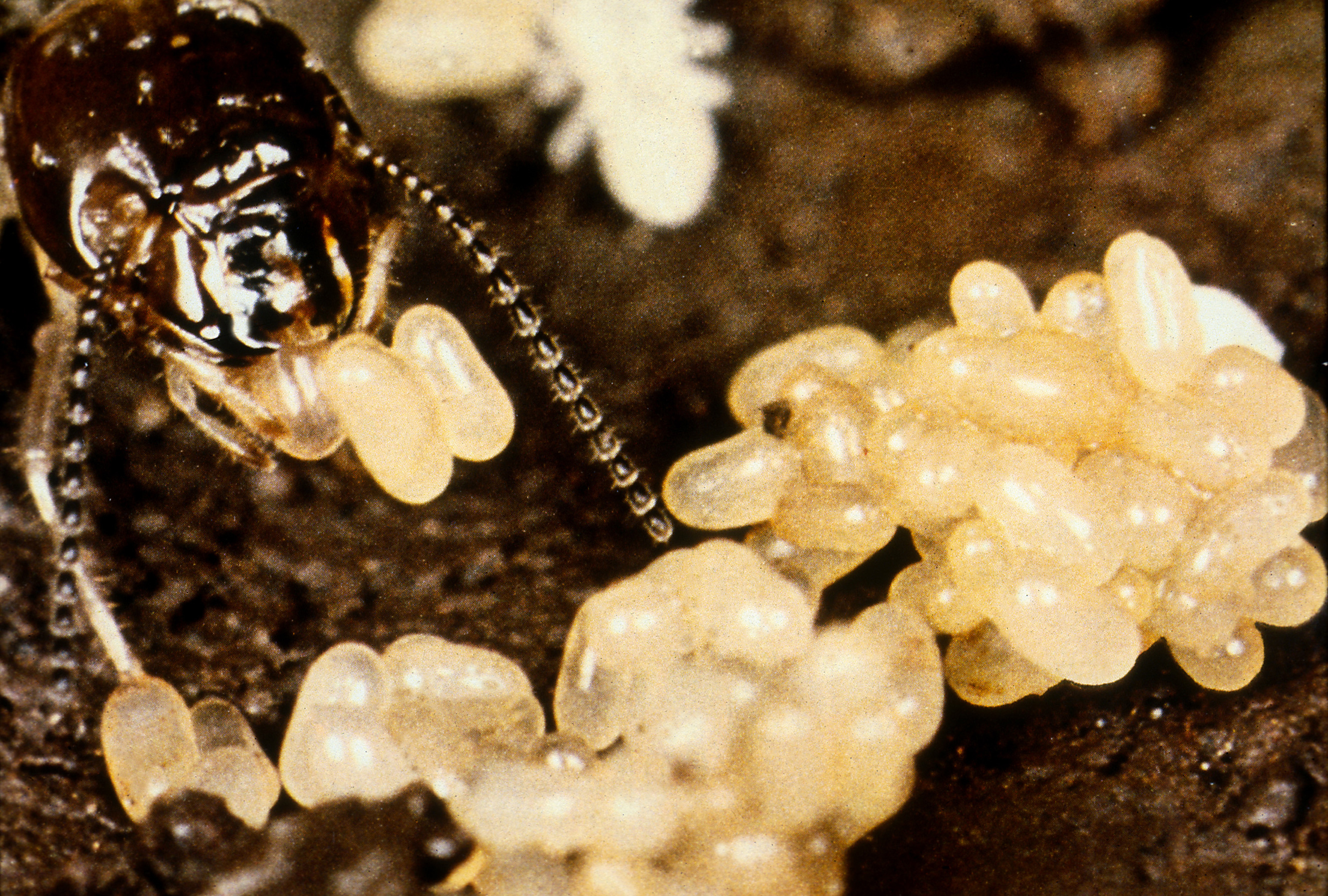
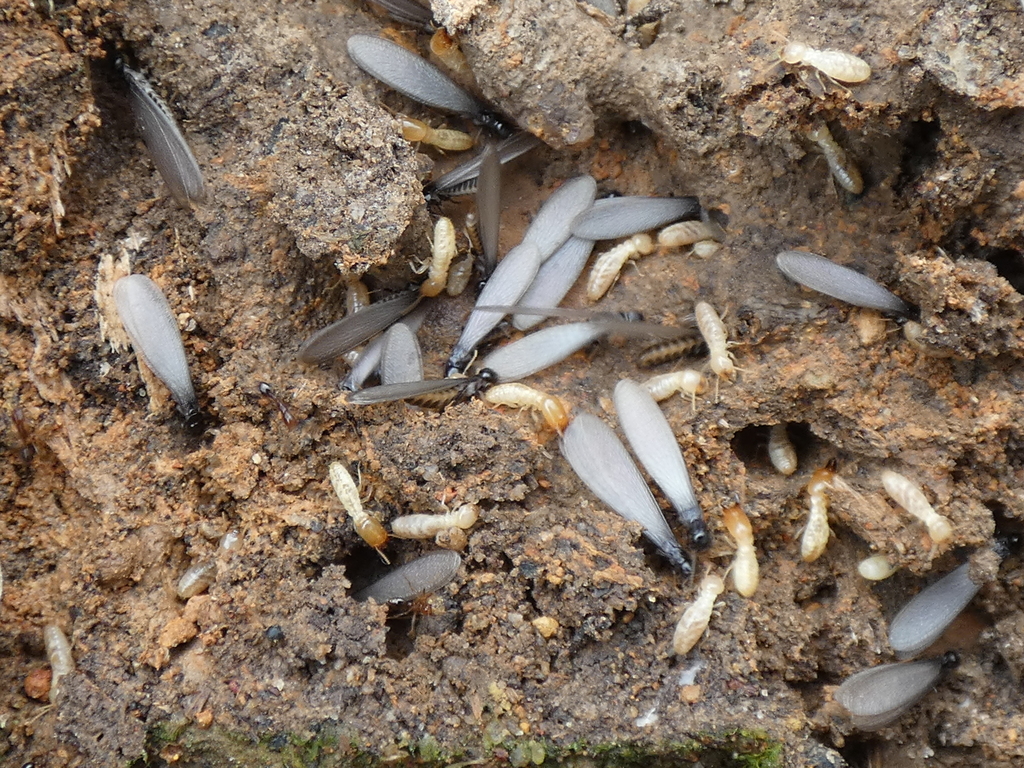
Wingless, soft-bodied, and pale. UC IPM says they are the largest group in most colonies and do nearly everything: forage, feed nestmates including the queen, care for eggs and young, and build mud tubes and galleries.
Soldiers
Wingless, with larger amber or brown heads and bigger jaws. They guard the colony. In native subterranean colonies they are a small share of the colony; UF/IFAS puts it at roughly 1 to 2 percent.
King and queen
The founding pair. The queen’s main job is laying eggs, sometimes thousands in a single day according to UC IPM, and the king stays by her side.
Nymphs and swarmers
Nymphs develop wing buds and become winged adults called alates, or swarmers. UF/IFAS notes that mature colonies produce them seasonally.
From Swarm to Colony, Step by Step
Scroll the table sideways to see every column.
| Stage | What happens | What a homeowner might notice |
|---|---|---|
| 1. Swarm flight | A mature colony releases winged reproductives. UC IPM says most die during the flight to birds, lizards, ants, and other predators, and new kings and queens generally fly less than 100 meters | A burst of winged insects, often after rain; see termite swarm season |
| 2. Pairing | Survivors land and shed their wings. UF/IFAS describes the female searching for a moist crevice with wood while the male follows in tandem | Piles of discarded wings on sills and floors |
| 3. Royal chamber | The pair builds and seals a small chamber in a moist site near wood, mates, and the queen begins laying eggs | Nothing; the new colony is hidden |
| 4. First brood | The king and queen feed the first young on predigested food. Once workers are produced, the workers feed the royals, which stop feeding on wood | Nothing yet |
| 5. Growth | Workers forage, build tubes, and raise more young. UF/IFAS reports native subterranean colonies can reach 100,000 to 1,000,000 termites and forage up to 150 feet | Mud tubes, damaged wood, termites in wood or soil |
| 6. Maturity | After several years, five to 10 for native subterranean colonies per UF/IFAS, the colony starts producing its own swarmers | Swarmers, sometimes indoors; the cycle repeats |
Timing varies by species and climate. Formosan colonies can grow much larger than native ones; see Formosan termites.
How Long Termites Live
UC IPM notes that termites can be long-lived: queens and kings can live a decade or more, while individual workers live one to several years. That long life is one reason a colony can keep feeding on the same structure for years before anyone notices.
A colony also does not depend on a single queen forever. UF/IFAS explains that native subterranean termites can produce secondary, or supplementary, kings and queens from nymphs and even from the worker line. Drywood and dampwood termites develop differently: their “false workers” can still become winged reproductives. Our subterranean vs. drywood vs. dampwood guide covers the practical differences.
What the Life Cycle Means for Your House
- A swarm means a mature colony. Swarmers come from a colony that has been growing for years. If they emerge indoors, see termite swarmers inside your house.
- Workers do the damage. The pale workers you find in wood or mud tubes are the ones feeding. See what termites eat.
- You will rarely see the queen. She stays hidden in the nest, usually underground for subterranean termites. See what a termite nest looks like.
- Killing the termites you see is not enough. Most of the colony never comes to the surface, and secondary reproductives can keep it going.
Do not dig for the queen: there is no practical way for a homeowner to find and remove a subterranean queen, and disturbing tubes or soil can make an inspection harder. Document what you see and leave the evidence in place for an inspector.
Swarmers outside, nothing indoors
Colonies live in most yards. Check the foundation for mud tubes, keep wood and mulch away from the house, and schedule a routine inspection.
Swarmers or workers inside
A mature colony is likely using the structure. Save a few specimens, photograph where they appeared, and get a licensed inspection. Treatments that reach the colony, such as baits or soil treatment, are compared in bait stations vs. liquid treatment.
Your Next Step
If you have seen swarmers or discarded wings, note the date, the room or spot, and whether there was rain the day before. Then check the nearest foundation walls and crawl space for mud tubes, and use our termite identification guide to confirm what you found.
Common Questions
How long does it take a termite colony to cause damage?
It depends on colony size, species, and how long it has been feeding. Colonies grow slowly at first; damage usually builds up over years of feeding rather than weeks.
How long does a termite queen live?
UC IPM says queens and kings can live a decade or more. Workers live one to several years.
Can termites start a new colony inside my house?
A new colony needs a mated pair, moisture, and wood. Subterranean colonies usually start in moist soil; drywood colonies start in dry wood. Swarmers found indoors are usually a sign of an existing colony, which is why they call for an inspection.
What happens if the queen dies?
In native subterranean termites, UF/IFAS explains that secondary reproductives can take over egg-laying, so a colony can survive the loss of its original queen.
Do termite eggs hatch inside wood?
For drywood termites, the whole colony lives in wood. Subterranean termites usually keep eggs and young in the nest in the soil, though above-ground colonies can form where moisture is constant.