
Treatment guide
How Long Does Termite Treatment Last? Protection by Method and What Shortens It
Short Answer
It depends on the method. A professionally applied liquid soil treatment is the longest-lasting option: University of Kentucky Extension says liquid termiticides applied by the label should control termites for at least five years, and Mississippi State University Extension says some of the better products provide control for 8 to 12 years or longer. Bait systems protect only as long as the stations are serviced. Borate stays in wood that stays dry. Fumigation and heat kill the termites present but leave no protection behind.
What happens after treatment matters as much as the product. Digging, new landscaping, erosion, and foundation cracks can open gaps in a treated zone, and no treatment lasts indefinitely. Regular inspections and a service agreement are what keep protection in place over the years.
How Long Each Treatment Method Lasts
This is a summary of what extension and state sources say. Your company’s contract and the product label decide the details for your house.
Scroll the table sideways to see every column.
| Method | How long protection lasts | What ends or shortens it |
|---|---|---|
| Liquid soil treatment (barrier around and under the foundation) | At least five years when applied by the label (UK Extension); 8 to 12 years or longer for some of the better products (MSU Extension) | Product, thoroughness, climate, soil, and termite pressure; soil disturbance, landscaping, erosion, and chemical breakdown |
| Bait stations | Long-term while stations are installed and maintained (MSU Extension) | Stopping the service; empty, buried, or damaged stations |
| Borate on bare wood | Remains in treated wood that stays dry | Water: borates are water-soluble and can leach, so they are not used on wood in ground contact or exposed to weather (MSU Extension) |
| Foam or spot treatment | Only in the voids or areas treated | Termites in untreated areas; foam is mainly a supplement to other treatments (MSU Extension) |
| Fumigation (tenting) or whole-structure heat | No residual protection | New swarmers can start colonies afterward (NPIC, UC IPM) |
| Pre-construction treatment | Same as the method used; the builder’s HUD guarantee covers the first year after closing | Exterior treatment never finished, soil disturbed after treatment |
Product claims vary. Ask the company which product it used, how much of the house was treated, and what its warranty covers. Our termite treatment types guide compares the methods themselves.
Why a Soil Treatment Wears Out or Fails Early
A liquid treatment works by creating a zone of treated soil that termites tunnel into on their way to the house. MSU Extension notes that the length of residual control is one of the most important qualities of a termiticide, and that because treatments do not last indefinitely, buildings need to be retreated periodically to stay protected.
Early failures usually have a different cause. University of Kentucky Extension says that termites returning the year after treatment usually point to an untreated gap in the barrier, not to the product breaking down. Arizona’s Pest Management Division lists the common ways a treated zone gets broken:
Soil disturbance
Digging for utilities, regrading, or new construction can move treated soil or replace it with untreated soil.
Landscaping
Planting beds and new soil mixed in along the foundation can bury or dilute the treated zone. Keep mulch and soil back from siding; see termites in mulch.
Erosion
Rain and irrigation can wash treated soil away, especially where downspouts or sprinklers hit the foundation.
Hidden entry points
Foundation cracks, slab joints, and plumbing openings can let termites in without crossing treated soil. These are hard to find.
Additions are another weak point. MSU Extension notes that any addition to a building also has to be treated properly. If you build a deck, porch, or room addition, ask whether the treatment needs to be extended. Our slab foundation termite guide explains why slab homes are harder to protect.
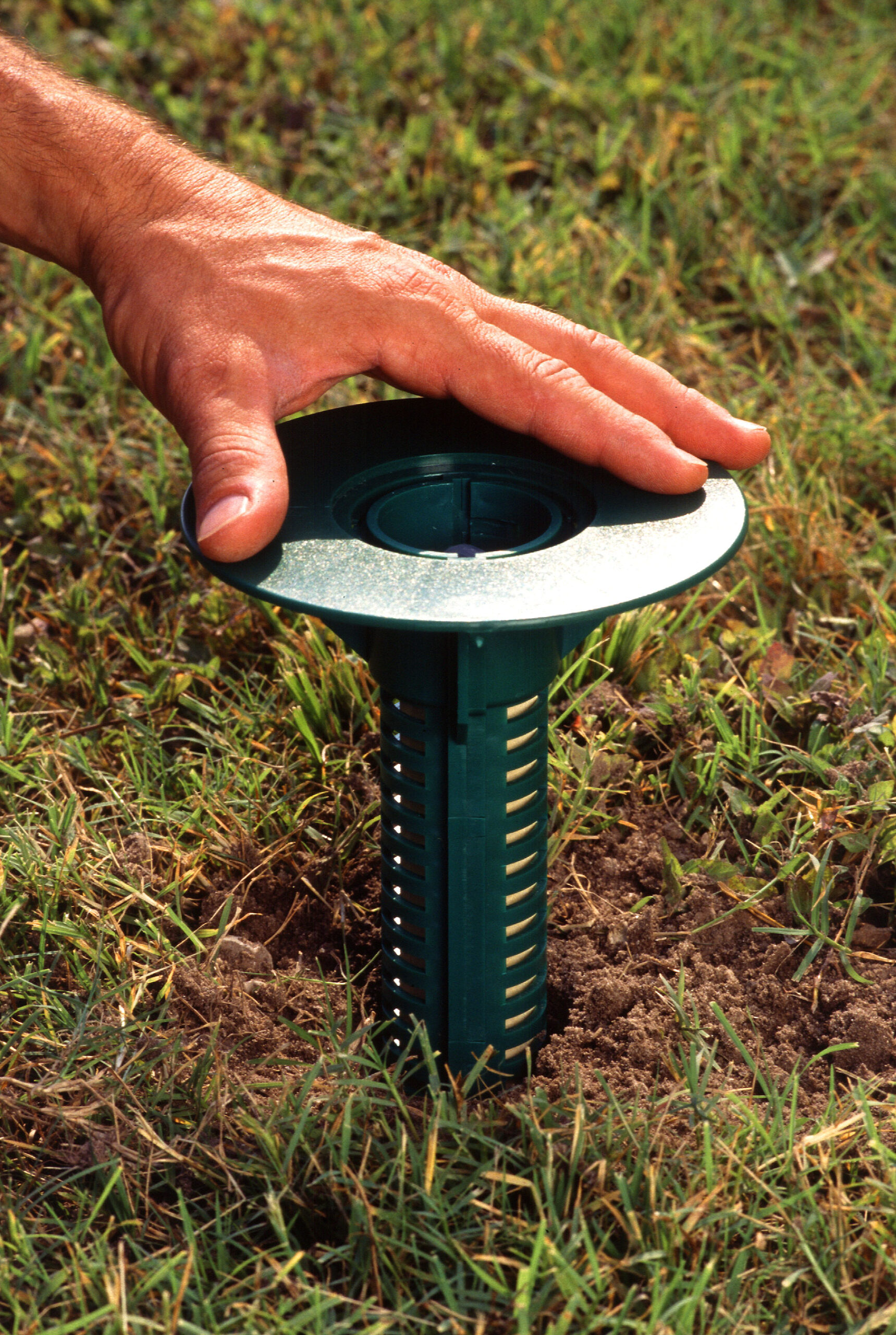
Bait Systems: Protection Lasts as Long as the Service
Baits work differently from a soil barrier. Termites find the stations, feed on a slow-acting bait, and share it with the colony. University of Kentucky Extension says it may take weeks or months for termites to find the stations and months more to achieve control, and UC IPM notes that baits can take several months or even years and must be followed by constant monitoring.
MSU Extension calls in-ground baits an effective long-term method when they are properly installed and maintained. The flip side is that a station nobody checks is just a plastic tube in the ground. If you buy a house with bait stations, find out whether a service contract is active. Our comparison of bait stations vs. liquid treatment explains the trade-offs, and the guide to bait stations vs. detection stakes explains why retail stakes are not the same thing.
Treatments That Leave Nothing Behind
Fumigation and whole-structure heat are designed to kill drywood termites that are already in the house. NPIC and UC IPM both note that they leave no residual protection, so a new swarm can start a colony later. UC IPM notes that preventive products can be applied afterward for longer-term protection. Our guide to termite fumigation explains what tenting does and does not cover.
Spot treatments and foam reach only the wood or voids they are applied to. MSU Extension describes foam mainly as a supplement to other treatments. If a company treated one room, the rest of the house is not covered by that treatment. See termite treatment without tenting and termite foam treatment.
Signs Your Protection May Have Lapsed
- Swarmers inside the house, especially in spring. See termite swarmers inside your house.
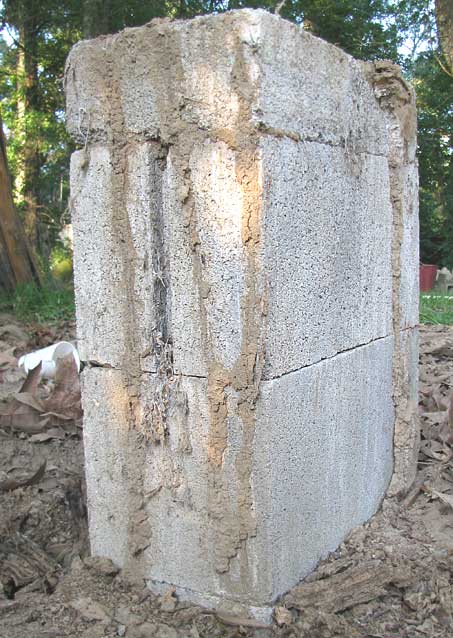
- New mud tubes on the foundation or in a crawl space, or old tubes that have been rebuilt after you broke them.
- Fresh drywood pellets after cleanup, in the same places, months after fumigation or spot treatment.
- Lapsed paperwork: a service agreement that was not renewed, bait stations nobody checks, or a treatment record that is many years old.
- Changes around the house: an addition, new patio, regrading, or new beds along the foundation since the last treatment.
Our guide on how to know if termite treatment worked explains what is normal to see after treatment and what calls for follow-up.
Safety note: Do not add your own termiticide on top of a professional treatment. Products, rates, and placement are set by the label. Call the treating company first and let it inspect before anything else is applied.
Warranties, Renewals, and Retreatment
University of Kentucky Extension says most companies will retreat affected areas at no extra charge if termites return, as long as the customer keeps the annual renewal current, and that buying treatment without an ongoing service agreement is a bit of a gamble. MSU Extension adds that a building can need preventive retreatment simply because of how much time has passed since the last treatment.
Read what your agreement covers. Some cover retreatment only; others also cover repair of new damage. Our guides to termite bonds and how often to get a termite inspection explain how renewals and inspections fit together. If you are building, the pre-construction termite treatment guide covers the first-year builder’s guarantee.
Recently treated
Keep the treatment record and the warranty, note the product and the date, and put the renewal and the next inspection on your calendar. Report new activity to the company instead of treating it yourself.
Treated years ago, or you just bought the house
Find out what was used and when, whether bait stations are serviced, and whether a transferable agreement exists. If the record is old or missing, schedule an inspection and ask whether retreatment is due.
Our questions to ask a termite company include what to ask about product life, retreatment, and warranty terms. This guide summarizes extension and state sources and is not legal advice about any contract.
Your Next Step
Find your last termite treatment record. If you know the method, the product, and the date, compare them with the table above and check whether your agreement is current. If you cannot find a record, or it is more than a few years old, book a professional inspection before the next swarm season.
Common Questions
How long does a liquid termite treatment last?
University of Kentucky Extension says liquid termiticides applied by the label should control termites for at least five years, and MSU Extension says some of the better products last 8 to 12 years or longer. Soil disturbance, erosion, and gaps can shorten that.
How long do termite bait stations last?
They protect only while they are serviced. Stations need regular checks and bait replacement; a station that is not monitored offers no ongoing protection.
Can rain wash away termite treatment?
Erosion from rain and irrigation is one of the ways Arizona’s Pest Management Division says a treated zone can be broken. Borate on exposed wood can also leach out in water.
How long after treatment do termites die?
University of Kentucky Extension says termites already inside generally die off after a liquid treatment because they cannot return to the soil for moisture. Baits are slower: weeks or months for termites to find them and months more for control.
Do I need to retreat every year?
Usually not. What most homes need every year is an inspection. Retreatment is done when termites return, when the treated zone is disturbed, or when enough time has passed that the company recommends it.
Sources and Further Reading
- University of Kentucky Extension — Termite Control: Answers for Homeowners (ENTFACT-604, rev. 2018)
- Mississippi State University Extension — Methods of Termite Control
- UC IPM — Pest Notes: Subterranean and Other Termites (Publication 7415)
- Arizona Department of Agriculture, Pest Management Division — Termite Recurrence Guide
- National Pesticide Information Center — Structural Fumigation