
Alabama termite guide
Termites in Alabama: Types, Swarm Season, Contracts, and Next Steps
Short Answer
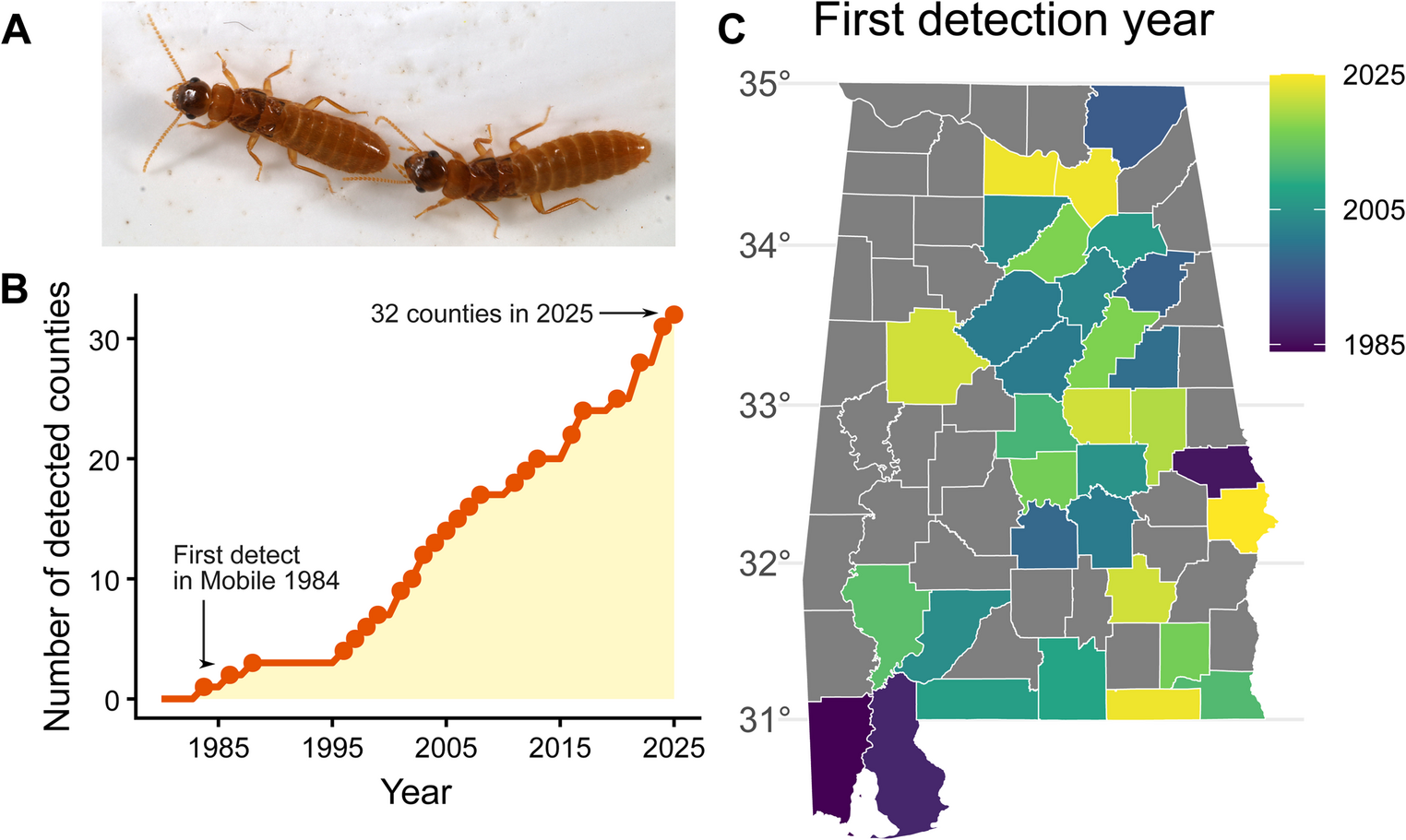
Most termite damage in Alabama comes from subterranean termites: the native species found across the state and the invasive Formosan subterranean termite. Auburn University researchers have now recorded Formosan termites in 32 of Alabama’s 67 counties, spreading north from Mobile, where they were first confirmed in 1984.
Swarmers outdoors near a stump or woodpile point to a nearby colony. Swarmers or shed wings inside the house call for a licensed inspection. If you sign a termite contract, Alabama requires a boxed statement at the top of the front page saying whether it covers retreatment only or retreatment and limited repair. Check that box before you sign.
What Termites Live in Alabama?
Alabama Extension describes the state’s climate as especially favorable to termites, which can stay active through most of the year in most of the state. Two groups matter most to homeowners.
- Native subterranean termites. Several native species, mainly Reticulitermes termites such as the eastern subterranean termite, live in soil and reach wood through mud tubes. They cause most of the structural damage each year. Their swarmers are small and dark and usually fly in daylight. See our subterranean termite guide.
- Formosan subterranean termites. This invasive species builds much larger colonies. Its swarmers are larger and yellowish-brown, fly at dusk, and gather at lights. Our Formosan termite guide covers identification.
Drywood termites are less common. In neighboring Mississippi, the southeastern drywood termite is found only in the three coastal counties. If you find small, uniform pellets collecting below wood rather than mud tubes, ask the inspector to check for drywood termites specifically.
Where Formosan termites have spread
A 2026 study by Xing Ping Hu of Auburn University and Nobuaki Mizumoto compiled 40 years of Alabama records, mainly from Alabama Extension and the Alabama Pest Control Association. Formosan termites were first detected at the Port of Mobile in 1984. By 2025 they had been confirmed in 32 counties, and the count was still rising. Jackson County, in the northeast corner of the state, is the northernmost inland record.
The researchers found that a county’s interstate highway was the strongest predictor of early detection, which suggests that infested materials moved by road have carried them inland. Earlier forecasts held that Formosan termites would not establish in North Alabama. The records now include well-established infestations in northern counties such as Cullman County. In short, Formosan termites are no longer only a Mobile and Baldwin County problem.
When Do Termites Swarm in Alabama?
Swarm timing depends on the species, your latitude, and the weather. Alabama does not publish a single statewide swarm calendar, so use these windows as a guide rather than fixed dates.
Formosan termites
In Alabama, Formosan swarm flights usually run from April to June, depending on latitude and temperature, according to the Auburn study. They fly at dusk and after dark and are strongly drawn to porch lights, streetlights, and lit windows.
Native subterranean termites
Native swarmers fly in daylight, often on warm days after rain. In neighboring Mississippi, Mississippi State University reports coastal swarms beginning as early as late January and peaking late February to early April, with northern counties swarming mostly April through June.
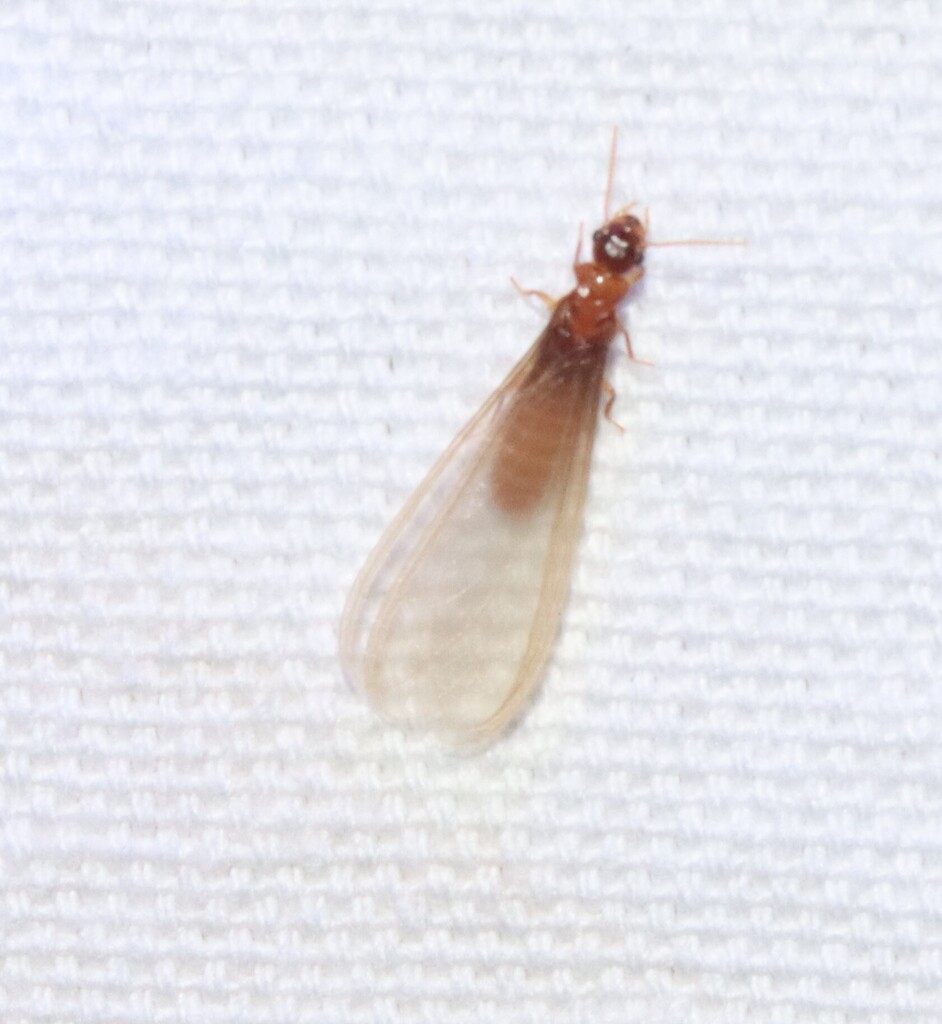
Flying ants swarm in spring too, so compare antennae, waists, and wings with our flying ants vs. termites guide. For swarm windows in other states, see when termite season starts by region.
Signs to Check Around an Alabama Home
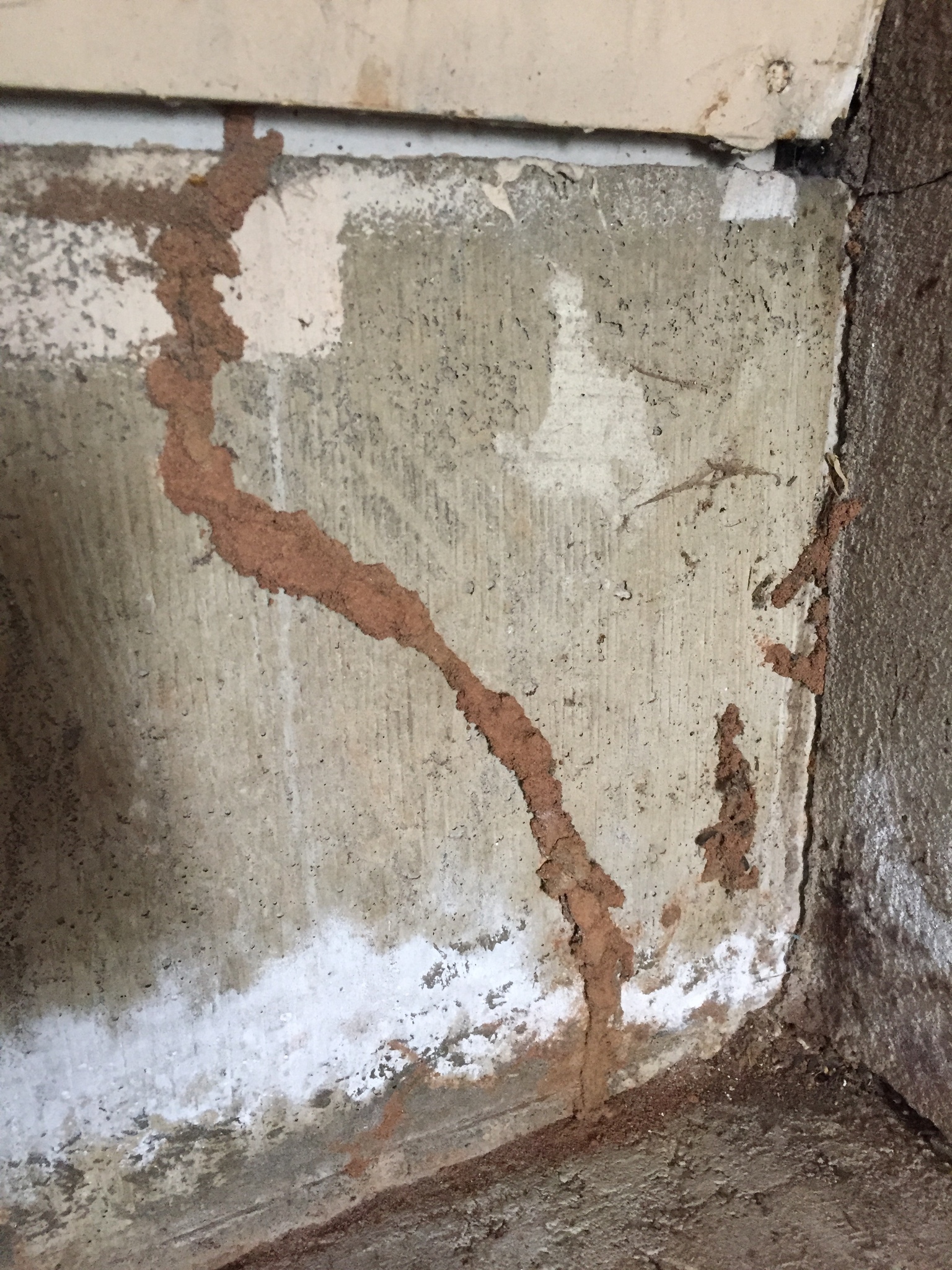
- Mud tubes on foundation walls, crawl space piers, slab edges, or plumbing penetrations.
- Swarmers or shed wings on windowsills, near light fixtures, or in bathtubs and sinks.
- Damaged wood that sounds hollow, blisters under paint, or shows soil-packed galleries when probed.
- Moisture problems such as leaking pipes, roof leaks, clogged gutters, and wood touching soil. Alabama Extension advises keeping the house and the area around it dry and removing stumps, fallen logs, and wood debris near the home.
Termites are quiet, and damage often stays hidden in the least visible parts of a structure until it is advanced. Mobile homes and RVs parked for long periods deserve a look too. Alabama Extension notes that their concealed voids and moisture-prone areas make Formosan infestations hard to spot. If your home sits over a crawl space, our crawl space termite guide explains what an inspector checks there.
Found Termites? What They Mean and What to Do
Scroll the table sideways to see every column.
| What you found | What it may mean | Next step |
|---|---|---|
| Daytime swarm from a stump, fence, or woodpile | A colony nearby, not proof the house is infested | Note the spot, check the foundation and crawl space vents, watch for tubes |
| Swarmers or shed wings indoors | Very likely a colony in or under the structure | Save a few specimens and schedule a licensed inspection |
| Dozens of large swarmers at lights on a May evening | A possible Formosan swarm in your area | Turn off outdoor lights, collect specimens, and have them identified |
| Mud tubes on the foundation or piers | Subterranean termites reaching wood | Photograph the tube and do not break it before the inspection |
| Hollow or damaged wood | Termites, decay, or old damage | Ask for an inspection and, if damage is extensive, a building professional |
| Termites in a house already under contract | Possible reinfestation | Call the company, read your contract’s boxed statement, and keep records |
Specimens kept in a small jar of alcohol help an inspector or your county Extension office identify the species.
Safety note: Do not open walls, crawl into tight or wet crawl spaces, or apply soil termiticides yourself on the strength of a swarm. Treatment choice depends on the species, the construction, and access, and Alabama regulates how licensed companies perform termite work.
Alabama Termite Contracts: What the State Requires
Many Alabama homeowners call a termite contract a “termite bond.” For the general idea, see what a termite bond is. Alabama’s own rules, set by the Alabama Department of Agriculture and Industries, add specific requirements for subterranean termite work.
- A written contract before any work begins, covering at least one year. Renewable contracts may run longer.
- A boxed statement at the top of the front page, in bold letters inside a heavy black line, saying either that the contract provides retreatment only and does not cover damage repair, or that it provides retreatment and repair of termite damage only within the limits stated in the contract.
- A foundation diagram or sketch for an existing home that discloses any visible evidence of active or previous infestation. The rule notes that this evidence may mean damage, which you or a qualified building expert should evaluate.
- Reinspection intervals, the renewal fee, and how many years that fee stays fixed, plus the total price of the treatment.
- A signed report after each annual inspection showing whether subterranean termites were found.
- A signed Official State of Alabama Waiver Form before treatment if part of the house cannot be treated to the state’s minimum standards. You keep a copy, and a later owner should receive one when the contract transfers.
- Bait systems require a contract naming the bait product and a diagram showing the stations. They must be monitored within 90 days of the last check unless the product label says otherwise.
Alabama also limits retreatment. Once a home under contract has had its initial treatment, routine annual retreatment is prohibited. It is allowed only when there is visible evidence of reinfestation, soil conditions that let the termiticide move out of the treated area, construction or excavation that disrupts the soil barrier, evidence the barrier has broken down, or when the home is no longer under contract. If a company proposes retreating every year, ask which of these conditions applies.
Before you sign
Read the boxed statement first. Ask what “limited repair” covers and its dollar limit, how long the renewal fee is fixed, which treatment will be used, and whether any area will be left untreated under a waiver.
Once you’re under contract
Be home for the annual inspection, keep each signed report, and report new swarmers or tubes promptly. Before switching companies, ask how existing damage will be documented so responsibility is clear later.
For a structured way to compare proposals, use our termite treatment decision guide. This section summarizes state rules and is not legal advice. For questions about a company or a contract, contact the Alabama Department of Agriculture and Industries.
Buying a Home: The Official Alabama Wood Infestation Report
Lenders may require the Official Alabama Wood Infestation Inspection Report to finance a sale or refinance. A person certified and permitted for wood-destroying-organism work must issue it after an inspection of the visible, accessible areas of the house. Know what it does and does not tell you.
- It records visible evidence of active or previous infestation by termites, wood-boring beetles, or wood-decay fungi on the inspection date.
- It does not cover hidden areas. Inspectors are not required to examine inaccessible spaces, and concealed infestations or damage may be missed. Spray-foam insulation, for example, can hide framing an inspector would otherwise check.
- It carries a 90-day treatment guarantee. If an infestation is found within 90 days on a structure the report showed as apparently free of it, the company must treat it free of charge. The rule promises treatment, not repair of damage.
- It is not a damage assessment. If the report notes previous infestation or damage, ask a contractor or engineer to evaluate the wood before closing.
Our guide to how to read a termite inspection report explains common findings and limits, and the professional termite inspection guide covers what a full inspection includes.
Your Next Step
If you see swarmers inside or find mud tubes, save a few specimens, take photos, and schedule a licensed inspection. If you already have a termite contract, find its boxed statement so you know whether it covers retreatment only or repair as well. Formosan termites are still spreading, especially along interstate corridors, so watch outdoor lights for evening swarms from April to June wherever you live in Alabama. For neighboring states, see our Tennessee and Mississippi termite guides or the full termites by state guide.
Common Questions
Are Formosan termites in North Alabama?
Yes, in places. Auburn researchers report well-established infestations in northern counties such as Cullman, and Jackson County is the northernmost inland record as of 2025. Many counties still have no confirmed detection.
Does an outdoor swarm mean my house is infested?
Not by itself. Outdoor swarmers show that a colony is nearby. Swarmers emerging indoors, shed wings on sills, or mud tubes on the foundation are stronger signs. Our swarmers inside the house guide explains what to do next.
Can a termite company retreat my house every year?
Not routinely. Alabama prohibits annual retreatment of a home under contract after the initial treatment unless one of the conditions in the state rule applies, such as visible reinfestation or a disturbed soil barrier.
Does a wood infestation report guarantee there are no termites?
No. It reports what was visible and accessible on the inspection date. Its 90-day guarantee covers free treatment if an infestation turns up, not repairs.
Does an Alabama termite bond pay for damage?
Only if the contract says so. The boxed statement on the front page tells you whether it is retreatment only or includes repair, and repair coverage is limited to what the contract states.
Sources and Further Reading
- Hu & Mizumoto — Four decades of inland invasion by the Formosan subterranean termite in Alabama (Urban Ecosystems, 2026)
- Alabama Extension — Termite Territory Is Expanding in Alabama
- Alabama Extension — Defending Your Mobile Home: Formosan Termite Control in RVs (ANR-3220)
- Alabama Administrative Code 80-10-9-.16 — Subterranean termite contracts
- Alabama Administrative Code 80-10-9-.18 — Official Alabama Wood Infestation Inspection Report
- Alabama Administrative Code 80-10-9-.21 — Annual retreatment for termite control
- Alabama Department of Agriculture and Industries — Pesticide Management
- Mississippi State University Extension — Species of Termites in Mississippi