
Treatment decision guide
Termite Treatment Without Tenting: When It Works and When It Doesn’t
A company has offered to treat your termites without covering the house in a fumigation tent. That can be a sensible plan, or it can leave part of the problem untouched. The answer depends on which termite you have, how well the infestation has been located, and what the written proposal actually covers.
Short Answer
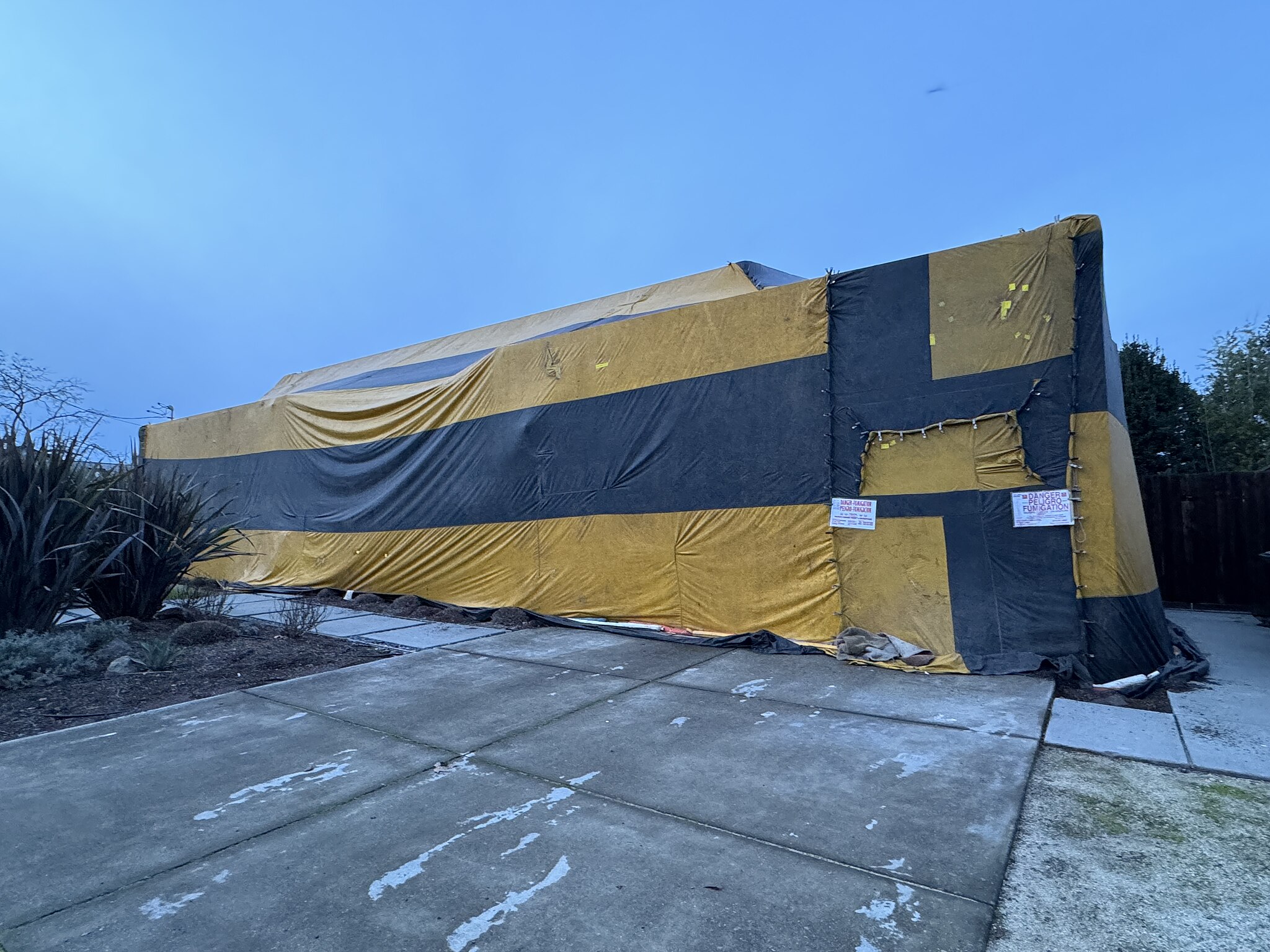
Yes, some termite problems are handled without tenting, but “no tent” means different things for different termites. For drywood termites, a localized treatment may be reasonable when an inspection suggests that the evidence is confined to a clearly defined, accessible area. Hidden colonies can still be missed. Whole-structure fumigation is designed to treat hidden and accessible infestations at the same time.
For subterranean termites, tenting is usually not the relevant comparison at all. Their colonies live in or near the soil, out of reach of fumigation or heat, so professionals manage them with soil treatments or bait systems instead. Whatever the method, no treatment is a permanent cure, so compare the written scope, follow-up, and warranty before you sign.
Not sure which termite you are dealing with? Start with our subterranean vs. drywood vs. dampwood comparison. This page assumes a company has already identified the termite and proposed a no-tent plan.
Drywood vs. Subterranean Termites: Why the Question Changes
“Can I avoid tenting?” is mainly a drywood termite question. Drywood colonies live inside the wood they eat, so a treatment that reaches every piece of infested wood can control them. The hard part is knowing where every piece is.
Drywood termites
- Colonies live inside wood above ground, sometimes in several separate spots.
- The real choice is between localized treatment of known areas and whole-structure treatment, such as fumigation or whole-house heat.
- A no-tent plan stands or falls on how completely the infestation was located.
Subterranean termites
- Reproductives and most of the colony live in nests near or below ground level.
- UC IPM says fumigation and heat, which suit drywood termites, cannot control them for that reason.
- Professional soil treatments or monitored bait systems are the usual routes. See bait stations vs. liquid treatment.
If a proposal recommends fumigation alone for confirmed subterranean termites, ask how it would reach a colony in or near the soil. If the company cannot identify the termite, request that finding in writing before comparing methods.
What “No Tent” Does and Doesn’t Mean
The phrase sounds simple, but it describes how a treatment is delivered, not what it covers. Keep these four distinctions in mind when you read a quote.
No tent ≠ whole-house coverage
Localized treatment targets specific boards or areas. Infestations that were not found are not treated.
No tent ≠ no chemicals
Many localized treatments inject or apply a pesticide into wood or voids. Ask which product is planned and request its label.
No tent ≠ no time away from home
Whole-structure heat still requires vacating, typically for hours rather than the several days fumigation takes. Follow the applicator’s re-entry instructions for any method.
No tent ≠ lasting protection
Neither fumigation nor heat leaves residual protection against new termites, and localized treatment protects only what it reaches.
When a Localized Plan May Be Reasonable
Our drywood termites guide explains when a localized or whole-structure approach is usually discussed. When you are evaluating a specific proposal, look for written evidence that supports a localized plan:
- The termite is identified as drywood, and the report says how.
- Evidence was found in a defined item or area, such as one window frame or a piece of furniture; the report records what was found and does not claim a hidden colony has been ruled out.
- The report documents which surrounding wood, attic areas, and nearby rooms were inspected, and which could not be reached.
- The treated wood can actually be reached by the proposed method.
- The proposal includes a follow-up inspection and says what happens if new evidence appears.
Even then, a localized plan is a judgment about the evidence, not a guarantee. UC IPM notes that there is always some doubt about how far drywood colonies extend and how many are in a home, so one can never be sure all infestations were treated with a localized method.
When a No-Tent Plan May Miss the Problem
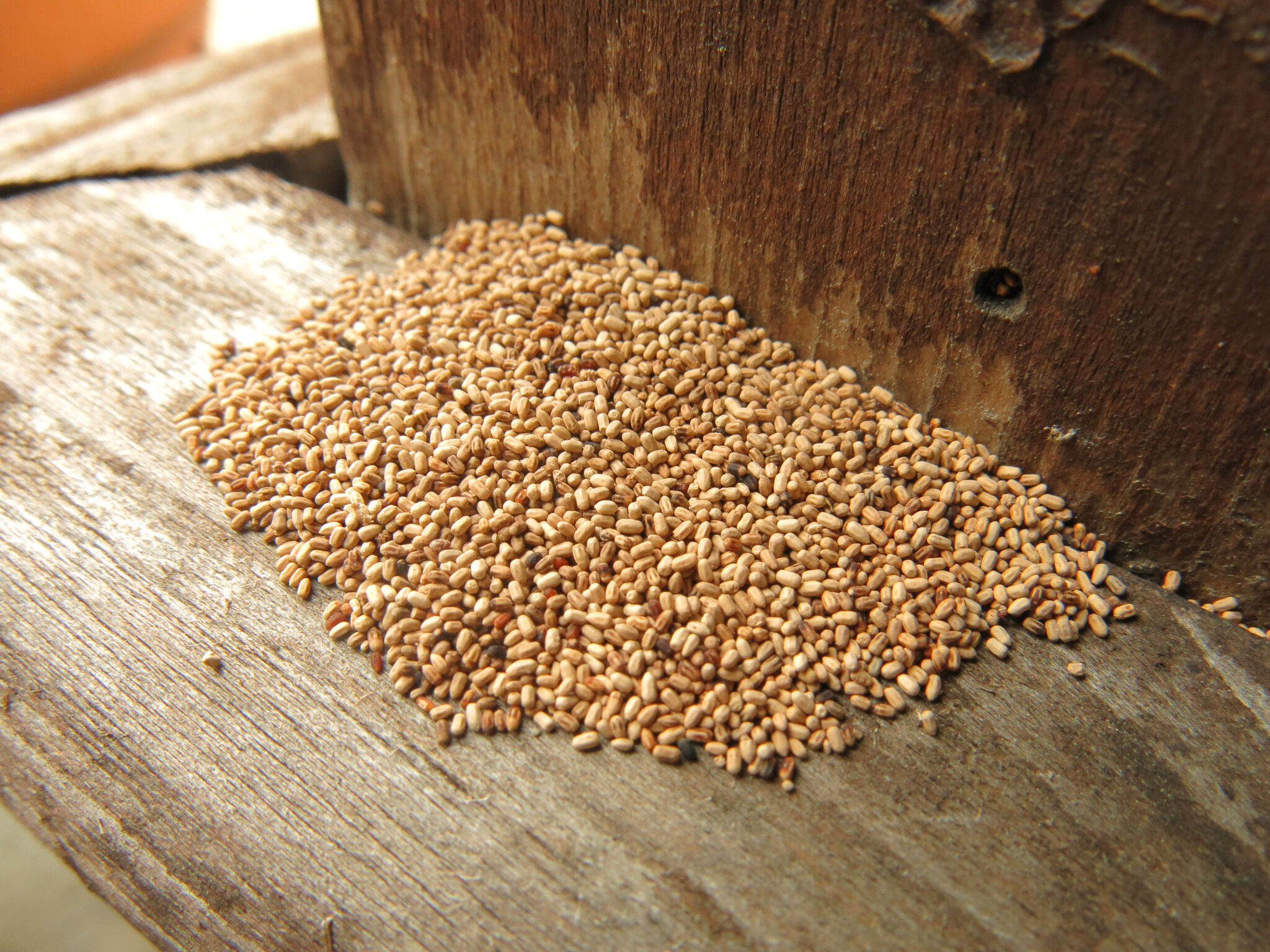
- Evidence in more than one area. Pellets or kick-out holes in separate rooms can mean separate colonies.
- Evidence near walls, ceilings, or the attic. Activity may extend into framing that cannot be seen without removing finishes.
- An undefined boundary. If the inspector cannot say where the infestation ends, a localized treatment has no clear target.
- Inaccessible areas. Finished walls, stored items, or a blocked attic limit what was inspected. Our guide to reading a termite inspection report covers how those limits are recorded.
- Repeated evidence after an earlier spot treatment. New activity may be a missed colony or a new one; either way, it calls for a fresh inspection rather than another round of the same plan.
The Coverage Map: Compare What Each Quote Actually Includes
Two proposals can use the same treatment name while covering different parts of the home. Mark the inspected area, the treatment boundary, and every exclusion on a copy of the floor plan or inspection diagram. The fictional example below shows why the written scope matters more than the method name.
→ Scroll the table sideways to see all columns.
| Coverage question | Quote A: window only | Quote B: documented inspection | What to compare |
|---|---|---|---|
| Evidence found | Pellets beside one window frame. | Pellets at the same frame; nearby trim and attic also inspected. | Does each report identify the termite and show where evidence was found? |
| Area inspected | The visible window frame only. | Window, adjacent visible framing, and accessible attic; wall cavity listed as inaccessible. | What was actually inspected, and which areas could hide another colony? |
| Area to be treated | One window frame. | Named frame and adjacent accessible wood, if the findings support it. | Can you point to the exact treated members on a diagram? |
| Unknowns and exclusions | No exclusions listed. | Finished wall cavity excluded and flagged for follow-up if new evidence appears. | An empty exclusion line does not prove the rest of the house was cleared. |
| Follow-up and warranty | “Guaranteed” without a defined area or inspection date. | Written reinspection date and terms for activity inside and outside the treated area. | Which findings trigger a return visit, and what work would cost extra? |
Illustrative example, not an actual inspection or a recommendation for either quote. A more detailed inspection documents uncertainty; it still cannot rule out every hidden drywood colony.
The method still matters. Localized chemical treatment, spot heat, wood replacement, whole-structure heat, and fumigation reach different areas and have different limits. Ask the company to connect its chosen method to the marked treatment boundary. For the methods themselves, see treatment types compared and our foam treatment guide. For subterranean termites, compare soil and bait proposals instead; fumigation and heat do not reach colonies in or near the soil, according to UC IPM.
Why Two No-Tent Quotes Can Be Very Different
One company may quote a modest spot treatment while another recommends fumigation for the same house. Before choosing the lower figure, check whether the two quotes describe the same job:
- What was inspected. A quote based on one room cannot be compared with one based on the whole structure, including the attic.
- How much wood is included. One board and a section of wall framing are different jobs.
- Access. Opening finishes, moving stored items, or working in the attic changes the work.
- The treatment boundary and exclusions. Look for what is specifically not covered.
- Follow-up. Whether a reinspection is included, and when.
- The warranty. Whether it covers only treated areas or the whole structure, and for how long.
A lower quote may simply cover less. For typical price ranges by method and a rough estimator, use our termite treatment cost guide. Prices vary by region and house, so the written scope matters more than any average. EPA’s consumer guidance also advises comparing two or three bids on value, not price alone, and checking whether structural changes could void a warranty.
Seven Questions to Ask Before Accepting a No-Tent Quote
These questions focus on the coverage gap that a no-tent plan can create. For licensing, insurance, and general contract questions, use our list of questions to ask a termite company.
- Which termite is confirmed, and how was it identified? A localized drywood plan makes no sense for subterranean termites, and the reverse is also true.
- Which rooms, attic areas, and structural members were inspected, and which could not be reached? Ask for the inaccessible areas to be listed.
- What evidence shows the infestation is confined to the areas you plan to treat? “We only saw it here” is different from “we checked the surrounding framing and found nothing.”
- Exactly which locations are included, and which are excluded? Ask for a diagram or a room-by-room list.
- What product or nonchemical method will be used, and by whom? Ask for the product label and the applicator’s license, and confirm any time you need to stay out of the area.
- How and when will results be checked? Ask what a follow-up inspection includes and what evidence would count as new activity. Our guide on how to know if termite treatment worked explains what to watch for.
- What does the written warranty cover, exclude, and require if signs return? Check whether new activity outside the treated area is covered or would need a new contract.
EPA notes that firms offering termite services must be licensed by your state, that you may ask for a copy of the product label, and that the applicator should tell you when you may reenter the building.
When to Get a Second Inspection
A second opinion is worth the time when:
- the company cannot name the termite or show where it found evidence;
- the proposal treats “the problem area” without a defined boundary;
- evidence appears in more than one room, but only one spot is in the quote;
- the salesperson promises that a spot treatment will eliminate all termites in the house;
- the follow-up schedule or warranty terms are vague or verbal only.
UC IPM’s California guidance suggests getting at least three structural inspection reports before you decide on drywood treatment and reading any guarantee carefully. If two inspectors disagree about the extent, ask each one what evidence supports their conclusion.
Safety boundary. Do not drill, inject, heat, or open walls yourself to test a company’s theory. Home-use products are not a substitute for professional drywood treatment, and fumigation and structural heat are licensed professional work. If damage may affect load-bearing wood, have a qualified building professional assess it; see our termite damage repair guide.
Common Questions
Can you get rid of drywood termites without tenting?
Sometimes. A localized method may control an infestation where the affected wood is found and the treatment reaches it. An inspection cannot guarantee that every hidden colony has been found, so the documented scope and follow-up matter as much as the method.
Is heat treatment the same as fumigation without a tent?
No. Heat works only where infested wood actually reaches a lethal temperature, and some areas are hard to heat; see how termite heat treatment works. Fumigation gas spreads through the sealed structure. Neither leaves lasting protection against new termites.
Do I have to leave the house for no-tent treatment?
It depends on the method. Whole-structure heat requires vacating for several hours. For localized chemical treatment, the applicator should tell you whether and when you can return to the treated area.
Will a spot-treatment warranty cover termites in other rooms?
Only the written terms can answer that. Ask the company to identify the covered rooms or structural members, any exclusions, and what happens if evidence appears elsewhere.
Your Next Step
Put each quote next to the inspection report. Confirm the termite type, mark the areas each company inspected and plans to treat, and list what is excluded. If the boundary of the infestation is not clear, get another inspection before choosing the cheaper plan.
Sources
- University of California IPM, Pest Notes: Drywood Termites, Publication 7440 — whole-structure vs. localized treatment, detection limits, fumigation, heat, localized methods, and guarantees; updated 08/2014.
- University of California IPM, Pest Notes: Subterranean and Other Termites, Publication 7415 — why fumigation and heat do not control subterranean termites; soil and bait treatments; updated 05/2014.
- U.S. EPA, Termites: How to Identify and Control Them — professional treatment categories, state licensing, labels, and re-entry.
- U.S. EPA, Choosing a Pest Control Company — consumer guidance on selecting a pest control firm.
- U.S. EPA, Citizen’s Guide to Pest Control and Pesticide Safety, Choosing a Pest Control Company — comparing bids, written treatment details, and warranty conditions.