Termite type guide
Subterranean Termites: Identification, Signs, and Treatment Options
Short Answer
Subterranean termites usually live in soil and reach a home through hidden ground routes or mud tubes that protect them from drying out. Common clues include earthen tubes on foundations or piers, indoor swarmers or shed wings, pale workers in damaged wood, and galleries that often follow the wood grain and contain soil or mud.
The treatment question is not simply how to kill the termites you can see. It is how they are reaching the structure and how the property will be protected after that route is addressed. Professional liquid soil treatments and maintained bait systems are the two main system-level approaches. Surface sprays, broken tubes, or one localized application do not prove that the colony or the structure is under control.
This guide belongs to our termite types comparison. Use that page if you are still deciding whether your evidence points to subterranean, drywood, or dampwood termites.
What Makes Subterranean Termites Different
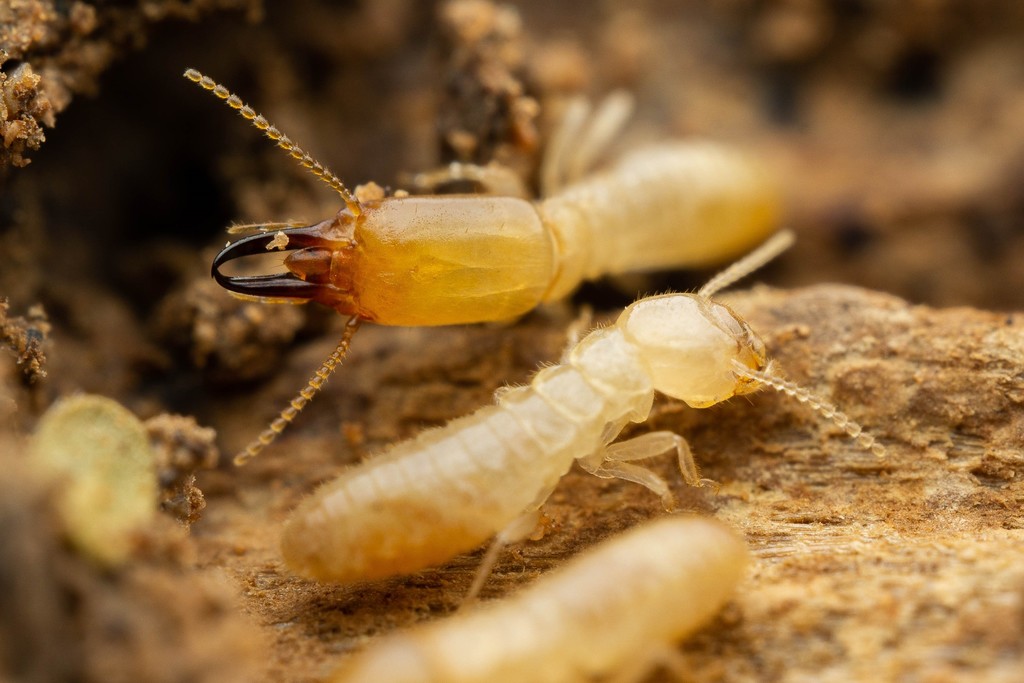
The soil connection is the central difference. Native subterranean termites are the most common termite group across most of the United States. Colonies usually occupy soil or soil-connected locations, where moisture protects their soft bodies. Workers travel through the ground, inside wood, or through shelter tubes instead of remaining exposed to open air.
This behavior changes the treatment route. A drywood colony may live entirely inside one piece of above-ground wood, but a subterranean infestation usually requires the inspection to map foundation access, soil contact, moisture, hidden construction joints, and activity that may extend beyond the one place where termites became visible.
Scroll the table sideways to see all columns.
| Factor | Subterranean termites | Drywood termites |
|---|---|---|
| Colony location | Usually in soil or a moisture-supported soil connection | Inside relatively dry, above-ground wood |
| Typical travel sign | Mud or shelter tubes across foundations, piers, walls, or other gaps | No soil tube required; pellets may be pushed through kick-out holes |
| Common wood evidence | Galleries often follow softer wood grain and may contain soil or mud | Cleaner galleries may cross the grain; hard fecal pellets are common |
| Main treatment question | How are termites reaching the structure from the soil, and how will that route be managed? | Can every affected colony and wood member be located, or is whole-structure treatment needed? |
This is a type-level comparison, not a species verdict. Mixed evidence or structural damage deserves a licensed inspection.
What Subterranean Termites Look Like
Workers are pale, soft-bodied, wingless termites that forage and feed inside protected routes. Soldiers are also wingless but have darker, hardened heads and jaws. Winged reproductives, called swarmers or alates, are darker and leave established colonies to pair and begin new ones.
A photograph has limits. Workers from different termite species can look very similar. Soldiers and swarmers provide more useful features, but regional species identification may still require a specimen and local expertise. If the insect has wings, compare it with our flying ants vs. termites guide.
Signs of Subterranean Termites
Mud tubes
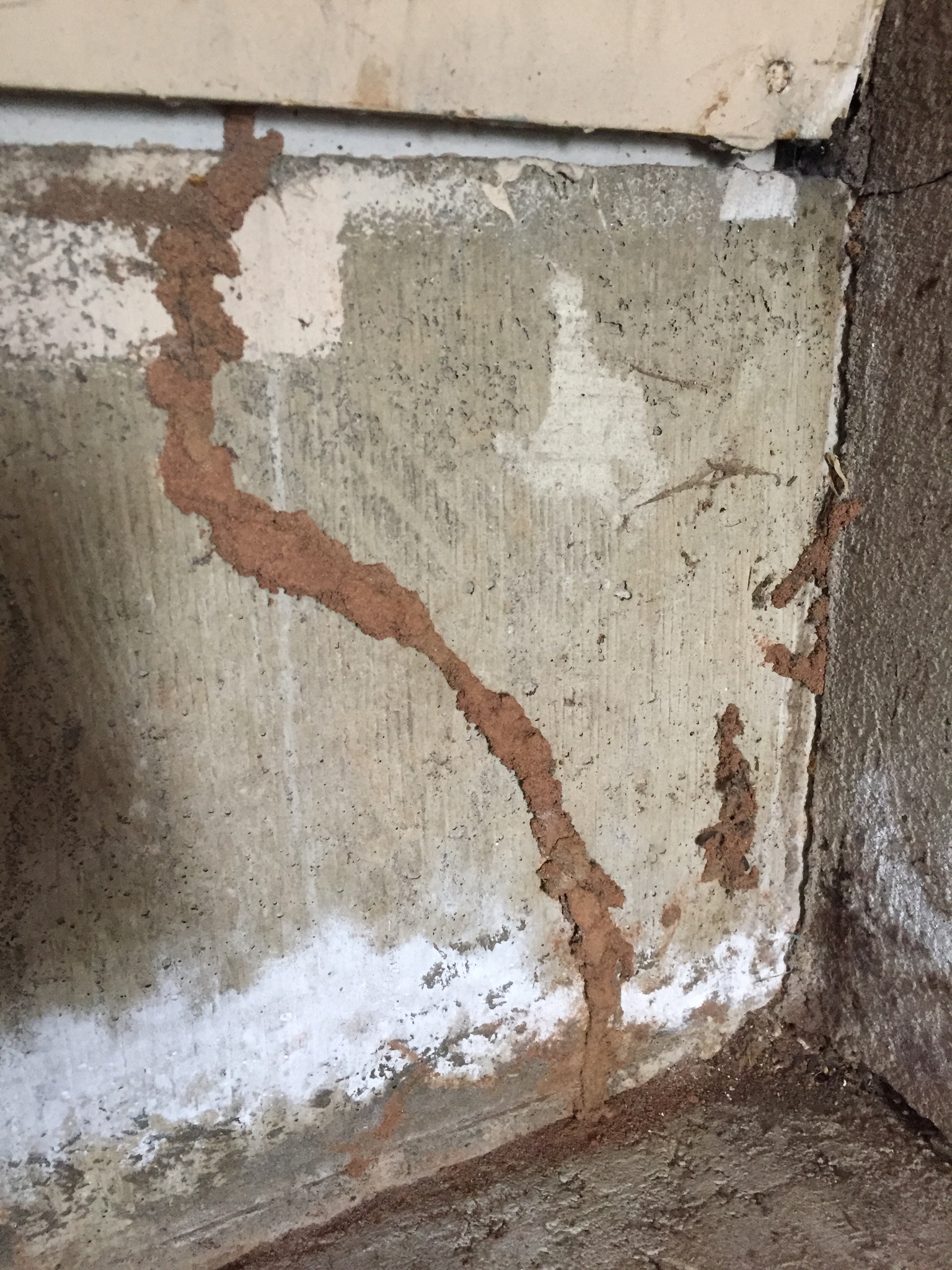
Soil-colored shelter tubes may cross a foundation, crawl-space pier, slab edge, wall, or floor framing. A correctly identified tube shows past or present termite travel, but appearance alone does not prove current activity.
Indoor swarmers or wings
Winged termites emerging indoors, or repeated piles of equal-length shed wings, are a strong inspection signal. An outdoor swarm nearby does not by itself prove the house is infested.
Mud-packed galleries
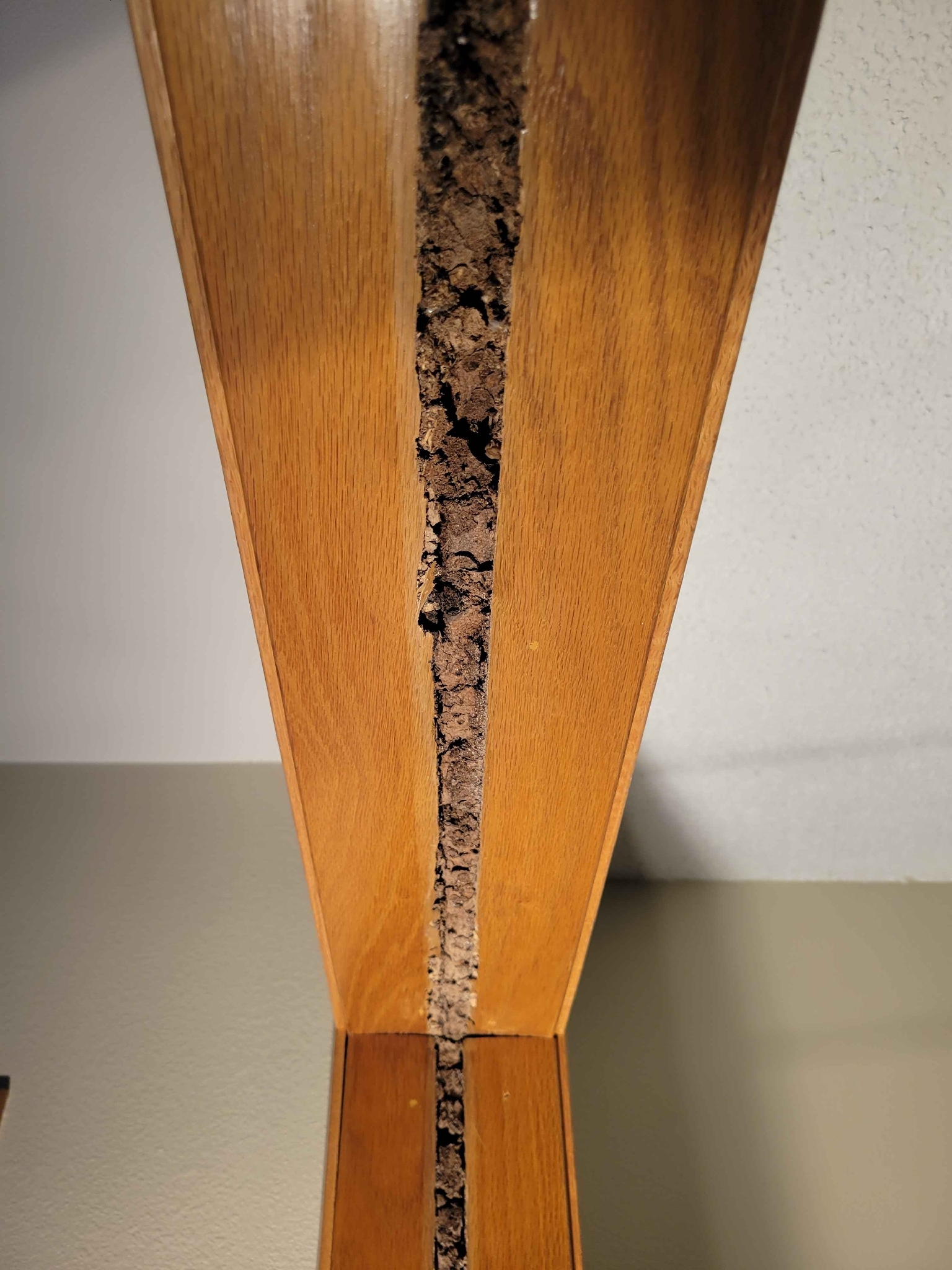
Subterranean feeding often follows softer grain and may leave soil or mud inside the damaged wood. Hidden galleries can extend beyond the first visible opening.
Moisture and soil access
Wood-to-soil contact, leaks, poor drainage, damp crawl spaces, and hidden foundation gaps increase concern, but a conducive condition is not proof of infestation by itself.
Hard, uniform pellet piles point more strongly toward drywood termites than subterranean termites. Use the broader signs of termites guide when the evidence is mixed.
How They Reach a House
Subterranean termites can exploit very small protected routes, so the entry point may not be where the damage becomes visible. An inspection may need to account for:
- foundation walls, cracks, expansion joints, and utility penetrations;
- slab edges, attached porches, garages, and other concrete transitions;
- crawl-space piers, supports, plumbing routes, and damp subfloor areas;
- wood siding, framing, posts, foam insulation, mulch, or debris that contacts soil;
- leaks, condensation, grading, gutters, irrigation, or drainage that keeps foundation areas wet.
Construction changes the inspection and treatment plan. Use the dedicated guides for a slab foundation or a crawl space when that detail drives your decision.
Does a Mud Tube Mean the Infestation Is Active?
A mud tube is evidence that termites built a protected route there. Live workers or soldiers inside a tube, a tube that is repaired after a small documented break, new tubes, indoor swarmers, or fresh activity in nearby wood raise concern about current activity.
An empty, dry, or damaged tube does not prove that the colony is gone. Termites may use another route, abandon one section, or remain hidden elsewhere. Photograph the tube before disturbing it, note its location and date, and use our full mud tubes vs. old damage guide for the limits of an active-versus-old check.
Native Subterranean vs. Formosan Termites
Most U.S. subterranean problems involve native species, but some regions also have invasive Formosan subterranean termites. Both follow a soil-linked treatment route, yet Formosan colonies can be much larger and may build moisture-holding carton material in structural voids. Suspected Formosan activity lowers the threshold for a fast professional assessment.
Do not identify Formosan termites from damage severity or one worker photograph. Location, swarmers, soldiers, carton material, tree activity, and professional identification all matter. Read the dedicated Formosan termite guide for that narrower decision.
Treatment Options and Their Limits
Scroll the table sideways to see all columns.
| Approach | What it is meant to do | Main limitation or question |
|---|---|---|
| Professional liquid soil treatment | Create a treated zone at critical soil and foundation routes to control termites moving between colony and structure | Coverage depends on construction, access, soil, label requirements, and whether the treatment can be made continuous where needed |
| Maintained bait system | Let foraging termites find cellulose bait and carry a slow-acting active ingredient through the colony | Discovery and control take monitoring, correct placement, continued service, and a clear response plan for structural activity |
| Localized void, wood, or foam treatment | Address a known accessible activity point as part of a larger plan | Reaching one point does not prove the soil colony, other entry routes, or the rest of the structure are controlled |
| Moisture correction and wood repair | Reduce conducive conditions and restore damaged components after the cause and structural scope are understood | Important support work, but not a substitute for controlling an active subterranean infestation |
This table explains decision categories, not pesticide application instructions. Product labels, state rules, construction, and the inspection determine the actual plan.
Liquid Treatment or Bait System?
Neither method is automatically best for every property. The useful comparison is how each proposal addresses the confirmed access routes, how it will be monitored, and what the service agreement promises.
Questions for a liquid proposal
- Which foundation and soil routes will be included?
- Are slabs, porches, piers, wells, drains, ducts, or inaccessible areas relevant?
- What areas cannot be treated as proposed, and how does that affect coverage?
- What inspection and retreatment terms follow the initial work?
Questions for a bait proposal
- Is the system installed with active bait or monitoring material first?
- Who checks the stations, and on what schedule?
- What happens if termites are found on the structure?
- What ends if service or payments stop?
Use our detailed bait stations vs. liquid treatment comparison before evaluating proposals. For the wider category map, see termite treatment types compared. If foam is being proposed for one accessible area, read what termite foam can and cannot do.
What Homeowners Can Safely Do Now
- Document the evidence. Photograph tubes, insects, wings, damaged wood, and the wider location before cleaning or disturbing anything.
- Mark the exact location and date. Note whether the sign is indoors or outdoors and whether it is near a slab edge, pier, plumbing route, leak, or soil contact.
- Save a specimen when practical. Place swarmers, soldiers, or wings in a small sealed container without crushing them.
- Correct obvious water problems. Address leaks, drainage, clogged gutters, or irrigation near the foundation without disturbing installed bait stations or treated soil.
- Arrange an inspection. Ask the inspector to map the evidence, likely entry routes, inaccessible areas, and the reason for the proposed treatment scope.
- Compare the contract, not just the price. Confirm inspection, monitoring, retreatment, repair, renewal, exclusions, and transfer terms. Use our termite company questions.
Do not drill slabs or walls, trench around foundations, inject products, mix termiticides, or probe weakened structural wood as a diagnostic shortcut. These steps can create safety, contamination, utility, moisture, and building-damage risks while still missing hidden activity.
Prevention and Monitoring
- Keep gutters, downspouts, grading, and drainage moving water away from the foundation.
- Repair plumbing, roof, flashing, and air-conditioning drainage problems promptly.
- Reduce wood-to-soil contact and remove buried wood, stumps, cardboard, and scrap lumber near the structure.
- Keep firewood and cellulose debris away from the house.
- Keep foundation and crawl-space inspection areas visible where practical.
- Do not move, cover, or tamper with installed bait stations or treated soil without checking the service plan.
- Keep inspection, treatment, renewal, and evidence records together.
These steps reduce conducive conditions and make future evidence easier to find; they do not certify that a hidden infestation is absent. Use the complete termite prevention guide for routine exterior maintenance.
When to Call a Professional
Arrange a licensed termite inspection when:
- mud tubes enter the foundation, crawl space, framing, walls, or floor system;
- swarmers or repeated piles of shed wings appear indoors;
- live termites are found in structural wood or inside the building;
- wood is soft, hollow, blistered, sagging, or possibly load-bearing;
- activity may be hidden under a slab, behind finished surfaces, or in an unsafe crawl space;
- Formosan termites, carton material, tree involvement, or widespread activity may be present;
- there is a sale, refinance, insurance, tenant, repair, or inspection deadline;
- you are comparing treatment proposals and cannot tell what routes or areas each one covers.
The inspection should identify the evidence, likely termite group, construction and entry conditions, inaccessible areas, proposed treatment scope, and follow-up plan. Structural safety concerns also require a qualified building professional.
Bottom Line
Subterranean termites are a soil-linked problem, so the visible tube or damaged board is only one part of the decision. Document the evidence, map moisture and foundation access, and compare a professional liquid treatment with a maintained bait program based on the structure and inspection findings. Do not treat a broken tube, surface spray, or one localized application as proof that the colony or the home is protected. For help routing your exact situation, use the termite treatment decision guide; for budgeting after inspection, use the separate termite treatment cost guide.
Sources
- U.S. EPA: Termites – How to Identify and Control Them
- UC IPM: Subterranean and Other Termites
- NC State Extension: Monitoring and Management of Eastern Subterranean Termites
- NC State Extension: Biology and Behavior of Eastern Subterranean Termites
- NC State Extension: Termite Baiting Systems