
North Carolina homeowner guide
Termites in North Carolina: Types, Swarm Season, Signs, and Next Steps
Short Answer
Subterranean termites are the main termite concern for North Carolina homes. More than one native species occurs in the state, so there is no single, reliable swarm calendar for every property: winged termites may appear from late winter into fall depending on the species and weather. Seeing termites near an outdoor stump does not prove that your house is infested. Finding swarmers inside, earthen tubes near the foundation, or unexplained damage is a stronger reason to arrange a professional inspection. In a home purchase, ask what the North Carolina WDIR-100 report did—and did not—inspect. See NC State’s statewide termite guide and NCDA&CS homeowner reporting guidance.
What Types of Termites Are Found in North Carolina?
Subterranean termites are the primary structural concern. Several native subterranean species live in North Carolina. Their colonies generally use the soil and protected passageways to reach suitable wood, including wood in houses. The Eastern subterranean termite is an important example, but you cannot identify the exact species from a mud tube or a damaged board alone. See our subterranean termite guide for the general biology and identification basics.
What about Formosan termites?
The North Carolina Department of Agriculture and Consumer Services says this introduced subterranean termite has been identified in a few locations, but is not widely distributed in the state according to its published guidance. This is not a current county-by-county survey. If an inspector suspects Formosan termites, ask what evidence supports the identification rather than assuming they are widespread. Our Formosan termite overview explains the broader species differences.
When Do Termites Swarm in North Carolina?
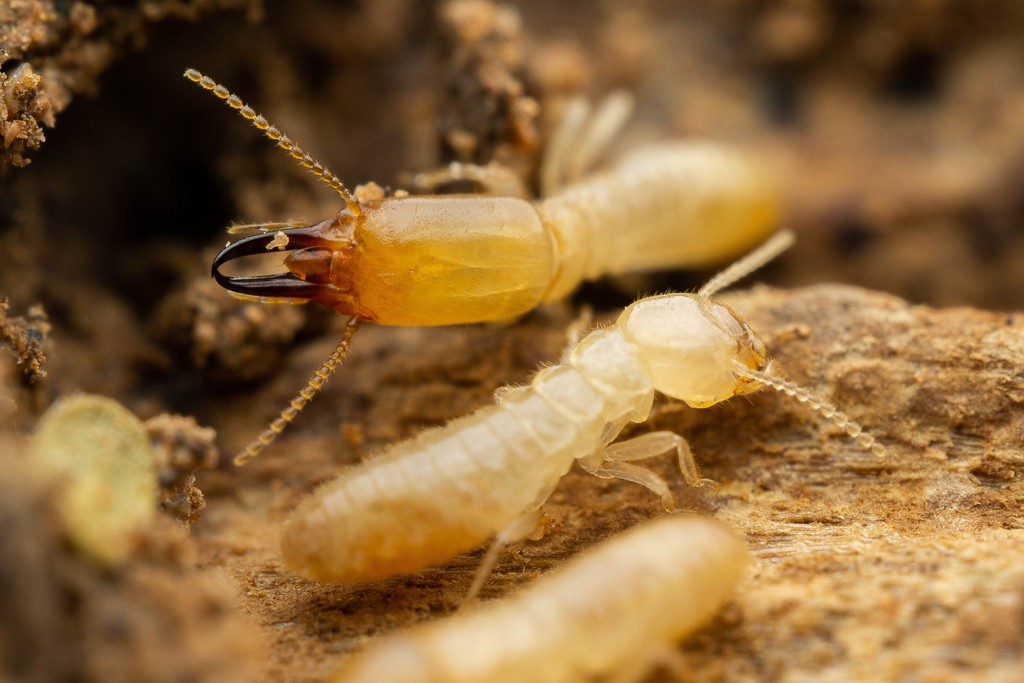
A swarm is when a mature colony releases winged reproductive termites. NC State reports that the combined swarming periods of at least three native subterranean species extend from late winter into September or October. That broad interval does not mean that one species swarms throughout all those months—or that every part of North Carolina follows the same schedule.
For Eastern subterranean termites, a separate NC State account describes swarming most typically from late spring to late summer, while allowing earlier spring or later fall events depending on warmth, rain and colony conditions. Warm days following rain can favor swarming. An unusually early or late appearance should not be used by itself to identify a species. See NC State’s statewide overview and Eastern subterranean biology guide.
A lack of winged termites in winter does not prove that a colony has disappeared. For general cold-weather activity, read Do Termites Die in Winter?.
Termite Swarmers Outside vs. Inside Your Home
Swarmers outdoors: Winged termites around a stump, landscape timber or wooded area can originate from a colony elsewhere on the property or nearby. This is a reason to pay attention to favorable conditions, not proof that your house is infested.
Swarmers indoors: Winged insects or piles of discarded wings near windows, doors or lights warrant closer attention. NC State notes that indoor termite swarms often indicate a colony in or beneath a structure. Flying ants can look similar. Photograph the insects or keep a specimen for identification; if there is uncertainty, request a licensed inspection. See NC State’s swarmer guidance and our termite swarmers inside a house guide.
Signs to Check Around Your Foundation and Crawlspace
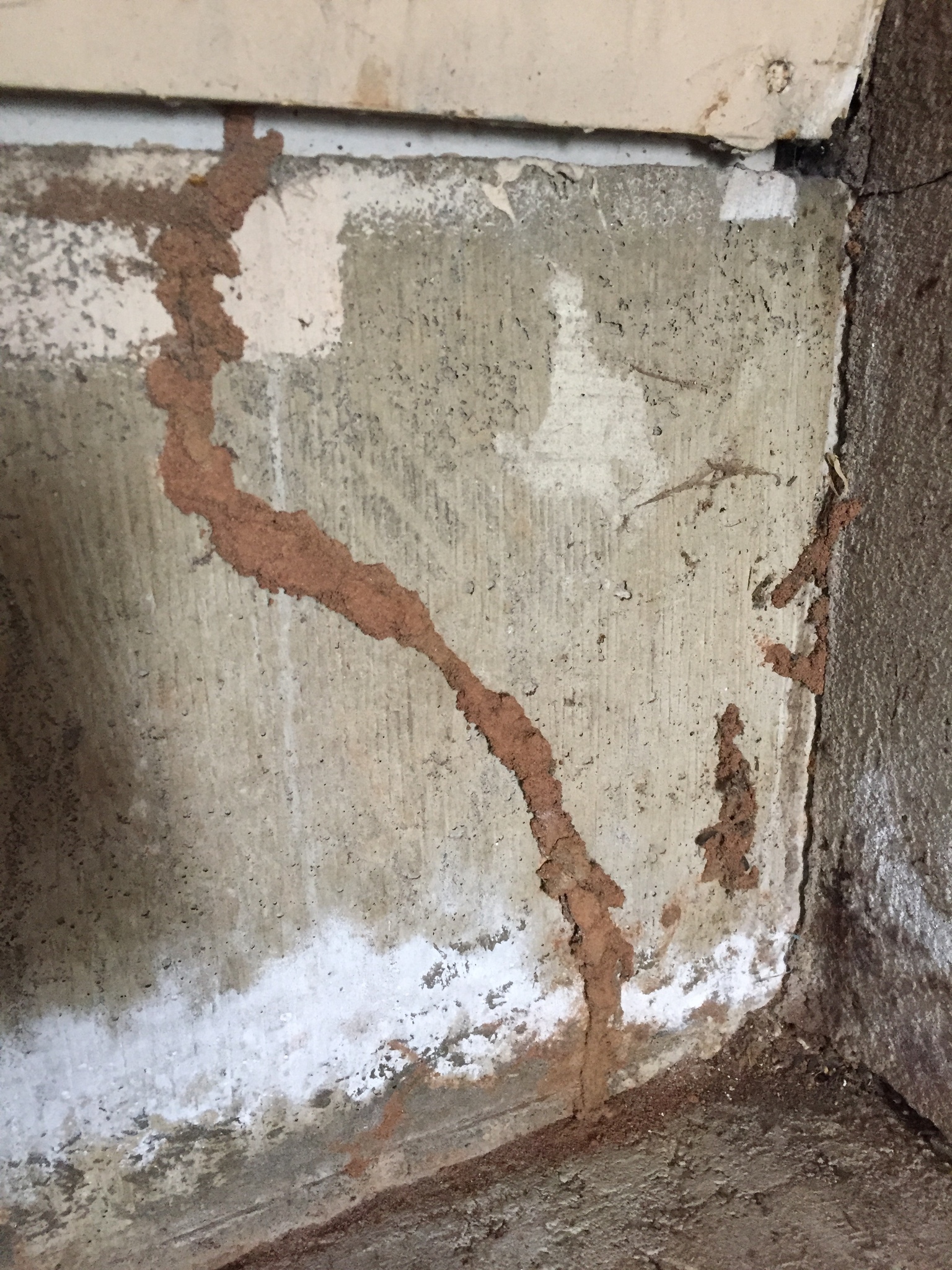
- Earthen shelter tubes crossing foundation walls, piers or other structural surfaces. Subterranean termites can use these protected passageways to travel between soil and wood.
- Winged insects or discarded wings indoors, particularly near light sources. Ants are a lookalike, so identification matters.
- Damaged or weakened wood at accessible framing, trim or flooring. Moisture, fungi and other insects may produce overlapping symptoms.
- Conditions that may conceal evidence, such as obstructed crawlspaces or inaccessible foundation areas. The absence of a visible tube in one location is not a clearance.
A licensed inspector can assess accessible areas and advise whether another specialist is needed to determine how far structural damage extends. Avoid tearing out or concealing suspected evidence before it is documented. NC State explains the range of mud tube locations. For a broader image-based comparison, use our signs of termites guide.
Why Moisture and Wood-to-Soil Contact Matter in NC Homes
Leaks, wet crawlspaces, cellulose debris beneath a structure, and wood in direct soil contact are conditions that can make termite access more likely. They are risk conditions, not confirmation that termites are present. Check whether downspouts and grading are directing water away from the foundation, repair plumbing leaks, and avoid storing wood or cardboard against structural wood. Don’t block required ventilation or make a crawlspace unsafe while attempting DIY inspection. See NCDA&CS post-construction guidance, our crawlspace treatment guide and home prevention guide.
What to Do When You Find Possible Termites
Scroll the table sideways to see all columns.
| What you find | What it may indicate | Next step |
|---|---|---|
| Swarmers only outside, away from the house | A nearby outdoor colony, not proof of house infestation | Watch for foundation and indoor signs; correct moisture/wood contact issues |
| Swarmers or piles of wings inside | Possible structural activity; may also be ants | Photograph/save an insect and arrange identification/inspection |
| Mud-like tubes along a pier or foundation | A possible subterranean termite route | Photograph exact location and arrange professional inspection |
| Soft or stained wood with no insects | Possible moisture, decay or pest damage | Check the leak and obtain appropriate pest/structural evaluation |
| Evidence in a home with an existing service agreement | Coverage and next steps depend on the contract | Contact the servicing company; ask how reinspection and retreatment apply |
Do not assume that surface sprays or removing the visible swarm solves an underlying colony problem. NC State explains why superficial DIY treatments are unreliable: NC State: Termites—Biology and Control.
North Carolina Inspections: What WDIR-100 Does and Does Not Tell You
When a North Carolina property is being sold, the state’s Wood-Destroying Insect Information Report (WDIR-100) is the official form used to report observed wood-destroying insect evidence. The NCDA&CS says the form is required on almost every residential structure sold, but that wording should not be interpreted as an unconditional rule for every transaction or every routine inspection.
A WDIR-100 is based on a visual examination of accessible areas and can record evidence of wood-destroying insects, past activity, and conditions conducive to termites. It may also address other wood-destroying insects. It is not a certificate that a building is termite-free, not a warranty, and not a report on the amount or structural significance of damage. Ask which areas were inaccessible; a structural engineer or qualified building professional may be needed to evaluate compromised wood. See NCDA&CS’s WDIR guide and our inspection report reading guide.
For a routine termite problem, arrange a proper inspection with a company licensed for the relevant North Carolina structural pest-control work. The WDIR-100’s real-estate purpose should not be confused with every service visit or annual check.
Treatment Contracts and Options in North Carolina
Common professional approaches to subterranean termites include liquid soil treatments and termite bait systems. The correct choice depends on the structure, access, prior treatments, evidence and service terms; a moisture repair by itself generally does not replace colony control when termites are confirmed. Compare options after the inspection rather than choosing solely from an online photo. See NCDA&CS post-construction treatment guidance.
NCDA&CS says termite control agreements must be in writing and include such information as the license details, a foundation diagram, visible damaged timbers, whether reinspections are planned, retreatment conditions and total price. Retreatment-only coverage is not the same as a damage-repair agreement. Read exclusions, renewal conditions and homeowner obligations before signing. See NCDA&CS’s contract and warranties guide and our professional inspection guide.
North Carolina Termite FAQs
Do termites swarm during winter in North Carolina?
Some native species can swarm in late winter under suitable conditions. A visible swarm date alone is not a reliable species ID, and the absence of a winter swarm does not establish that termites are absent.
Does an outdoor termite swarm mean my house has termites?
No. NC State says outdoor swarming around stumps and landscape timbers does not, by itself, indicate house infestation. Check the structure separately.
Are Formosan termites common throughout North Carolina?
No statewide-common claim is supported by the NCDA&CS guidance reviewed here. It reports Formosan termites in a few locations and says they are not widely distributed; distribution may change over time.
Does a WDIR-100 guarantee a termite-free home?
No. It reports visible evidence and conducive conditions in accessible areas at inspection; it is not a warranty or structural engineering report.
Should I inspect the crawlspace myself?
You can note visible signs safely from accessible areas, but do not enter unsafe, confined or obstructed spaces. A licensed professional should assess questionable evidence and access limitations.
Your Next Step
Photograph what you found and note whether it is outside, indoors, or on the structure. Indoor swarmers, mud tubes on a foundation, or suspect building wood call for a licensed inspection. If you are buying a home, read the WDIR-100 and its access limits before making a treatment or repair decision. For neighboring regions, use our termites by state guide.