California regional guide
Termites in California: Types, Warning Signs, and What to Do
Short Answer
California has three genuinely important termite routes. Subterranean termites are widespread and remain the main statewide structural concern. The western drywood termite is California’s second most important termite pest and can live entirely inside dry wood. Dampwood termites are a real coastal and moisture-related concern, especially where wood stays wet.
The evidence determines the next step: mud tubes point toward a soil-linked subterranean route, hard pellets point toward drywood termites, and persistently damp or decayed wood raises a moisture-first dampwood concern. Compare the clues below, then use our termite treatment decision guide.
California Termites at a Glance
Scroll the table sideways to see every column.
| Group | Where it is most relevant | Strongest clues | Usual next route |
|---|---|---|---|
| Subterranean | Abundant through most of California, including high-elevation areas; colonies live in soil | Mud tubes, soil-linked entry, swarmers or shed wings, damage that may contain soil | Licensed inspection; a soil treatment or monitored bait system may be considered after the structure and access are assessed |
| Western drywood | Pacific coastal region, Central Valley, and Southern California deserts; colonies live inside dry wood | Hard six-sided pellets, kick-out holes, localized galleries, daytime swarmers; no soil tubes | Thorough inspection; localized treatment or wood removal when truly limited, or whole-structure fumigation when activity is widespread or inaccessible |
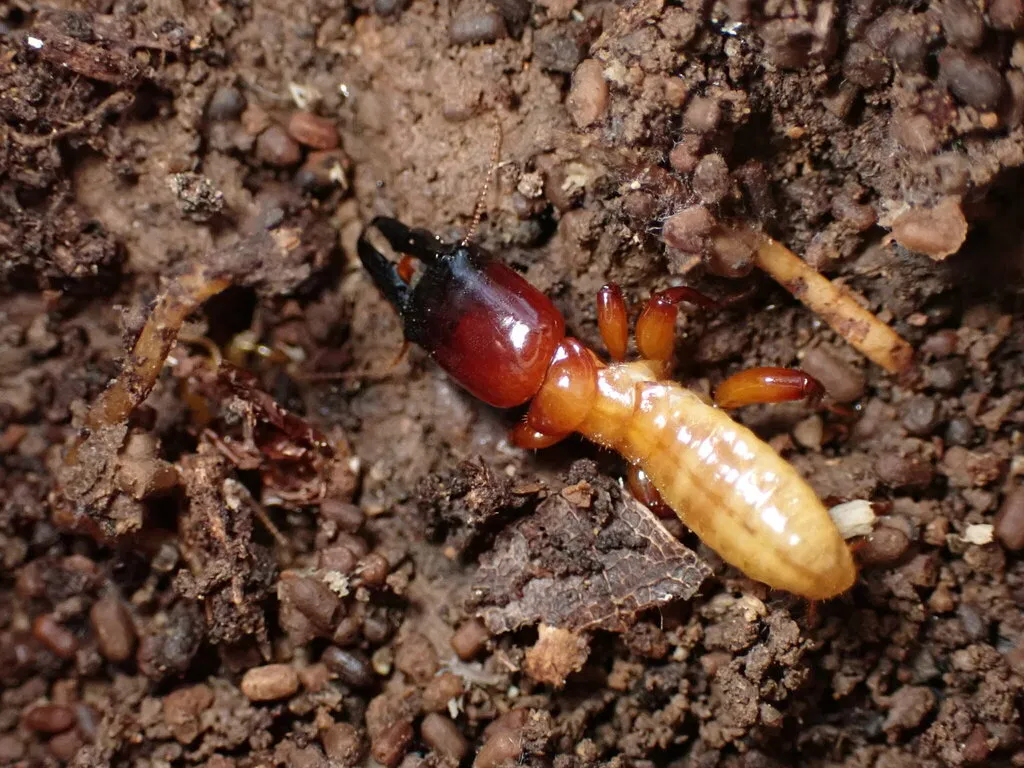
| Dampwood | Most often associated with cool, humid coastal areas and persistently moist wood | Large termites or evening swarmers near lights, damp decayed wood, moisture or wood-soil contact | Correct the moisture source and assess damaged wood; treatment depends on whether termites remain after conditions are corrected |
| Formosan subterranean | Reported at only a few locations in Southern California | Subterranean evidence plus evening swarms at lights or broader hidden activity; photo identification is not enough | Prompt assessment by a company experienced with subterranean termites; do not assume every swarm is Formosan |
This table routes an inspection; it does not confirm a species. For a direct comparison, see subterranean vs. drywood vs. dampwood termites.
Why Your California Region Matters
California’s termite picture follows climate and moisture more honestly than county lines. A species record does not prove activity at one address, and the absence of a nearby record does not clear a structure.
Drywood termites can also move in infested lumber, furniture, fencing, or other wood. Inspect used and antique wood items for pellets, kick-out holes, shed wings, or damaged areas before bringing them indoors.
Warning Signs and What They Can Tell You
Mud tubes
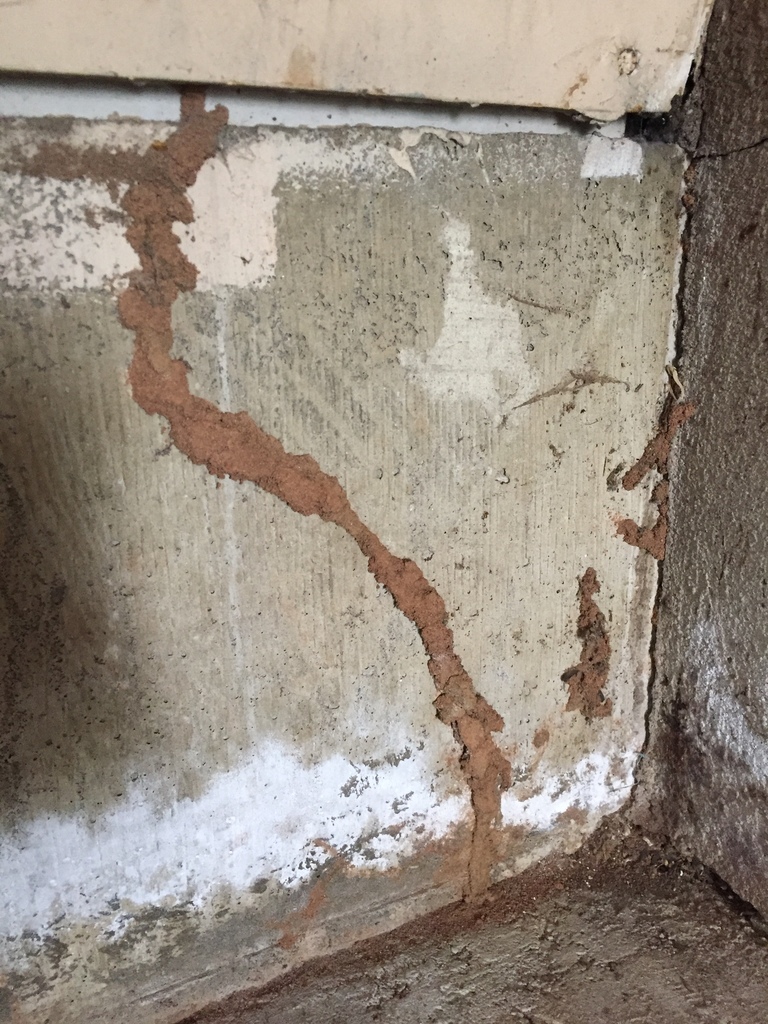
Soil-colored tubes on foundations, piers, walls, plumbing penetrations, or hidden joints strongly support a subterranean route. Tubes can remain after activity stops, so appearance alone cannot confirm that termites are active today. See termite mud tubes vs. old damage.
Hard pellets or frass
Drywood termites push small, hard, six-sided pellets through kick-out holes. Sawdust, carpenter-ant debris, and beetle frass can look similar at a glance, so compare the evidence in our termite droppings vs. frass guide.
Swarmers and discarded wings
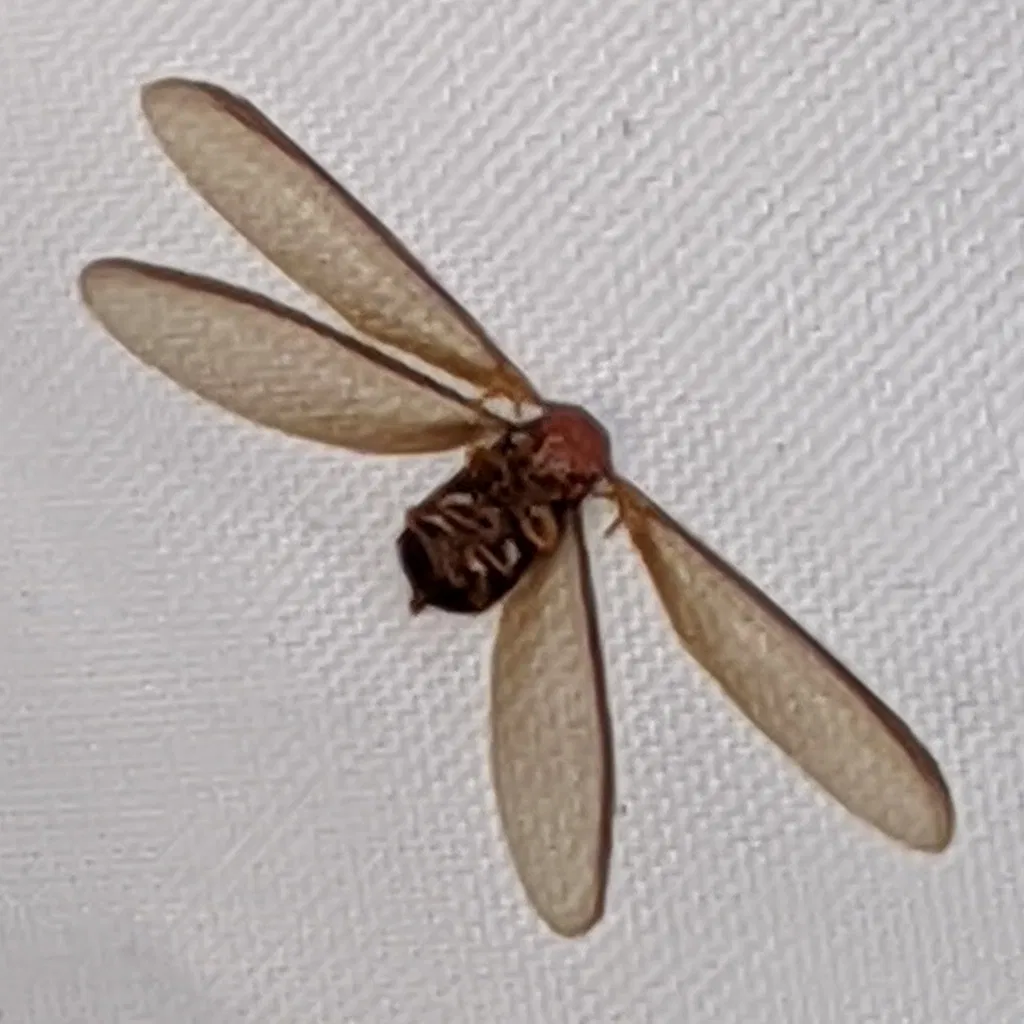
Repeated indoor swarmers or piles of wings near the same window, door, vent, or light deserve inspection. Outdoor swarmers show that termites are nearby but do not automatically prove an infestation inside the home.
Damp, damaged, or hollow wood
Soft wet wood, leaks, poor drainage, or wood-soil contact raise a dampwood and decay concern. Subterranean damage may contain soil; drywood galleries may remain concealed inside wood that looks sound. Visible damage cannot reveal the full hidden extent or establish structural safety.
When Do Termites Swarm in California?
California does not have one universal termite season. Species, rainfall, temperature, elevation, and time of day create several overlapping windows.
Timing supports an identification; it does not establish one. Preserve a winged reproductive or soldier when possible, since workers are harder to identify reliably.
Get a Licensed Inspection Promptly If
- live termites, repeated swarmers, or piles of wings appear indoors;
- mud tubes enter framing, walls, flooring, or another structural area;
- pellets return after careful cleanup;
- wood is soft, sagging, extensively damaged, or potentially structural;
- activity is hidden, widespread, or present in several areas;
- a property transaction, fumigation, or written repair certification is involved;
- you cannot confidently separate termite evidence from a look-alike.
Photos help with triage, but they cannot establish colony location, current activity, hidden extent, or structural severity.
Treatment Paths Depend on the Termite Type
Professional liquid soil treatments and monitored bait systems are the main categories. Foundation type, soil, entry points, access, drainage, and earlier treatments affect the plan.
Compare them in termite treatment types and bait stations vs. liquid treatment.
A genuinely limited, accessible infestation may be addressed with wood removal or a labeled localized treatment. Multiple colonies, inaccessible galleries, or uncertain extent can lead to whole-structure fumigation.
The inspection must establish whether a local approach can reasonably reach the infestation.
Correct leaks, drainage, ventilation, or wood-soil contact and remove wood that is too decayed or damaged. Moisture correction removes the condition these termites need, but it does not restore structural strength.
This remains a subterranean-control route, but suspected activity should be assessed promptly by a company familiar with the species. California detections are limited, so do not label an ordinary swarm as Formosan from timing or a phone photo alone.
See the dedicated Formosan termite guide.
Fumigation vs. Local Treatment for Drywood Termites
Whole-structure tent fumigation is an established California option for drywood termites when colonies are widespread, inaccessible, or difficult to delimit. It treats the structure as a whole, but it does not repair damaged wood and does not provide permanent protection against a later reinfestation.
Localized treatments, heat, and removal or replacement of infested wood may be considered when the activity is truly limited and accessible. Their success depends on finding and reaching every relevant gallery. No method is universally best, and a low price does not show that a smaller treatment matches the actual extent.
Fumigation safety: structural fumigation is licensed Branch 1 work. Occupants, pets, and plants must leave as directed, and only the fumigation professional can test and clear the structure for re-entry. This guide does not provide fumigant names, concentrations, exposure times, aeration procedures, or tarping instructions.
How to Choose a Termite Company in California
California structural pest work is regulated by the Structural Pest Control Board (SPCB). The license branch must match the service: Branch 3 covers wood-destroying organism inspections and non-fumigation termite work, while Branch 1 covers structural fumigation.
- Verify the company and individual. Use the California DCA license search and confirm that the license is current.
- Match the branch to the work. A Branch 3 field representative or operator performs the WDO inspection and report. A company offering fumigation must have the appropriate Branch 1 authority.
- Require an inspection-based proposal. It should identify the evidence, organism or treatment route, affected areas, access limits, recommended work, and alternatives.
- Read the contract and guarantees. Compare treatment area, exclusions, follow-up, renewal fees, retreatment terms, repair coverage, and transfer rules.
- Review the pesticide notice. California requires written information about the target pest, pesticide and active ingredient before treatment; Branch 1 fumigation generally requires at least 48 hours’ notice unless the statutory exception applies.
- Ask what remains unresolved. Inaccessible areas, moisture, damaged framing, and uncertain colony extent should be stated rather than hidden behind a broad promise.
Use our complete termite-company question checklist and compare the boundaries in DIY vs. professional termite treatment.
Buying or Selling a Home: California’s WDO Report
California uses a Wood Destroying Pests and Organisms Inspection Report, often called a termite or pest report. A licensed Branch 3 field representative or operator must physically inspect the property. The report can cover termites and wood-boring beetles as well as wood-destroying fungi and dry rot.
A WDO inspection is not legally required for every California sale, but many lenders require one before financing. It helps to understand its limits:
- The report distinguishes evidence of infestation or infection from conditions considered likely to lead to one.
- It is a visual inspection of accessible areas on one day. Areas identified as inaccessible have not been cleared.
- It is not a warranty and not an engineering assessment of structural capacity.
- The company files the property address and inspection record with the SPCB. The full report is not automatically public; a copy must be requested from the company or the Board.
Consumers can check whether a WDO inspection was reported for an address during the previous two years through the SPCB WDO Search.
What Does Termite Treatment Cost in California?
There is no responsible single California price. The termite group, number and location of colonies, structure size, foundation, access, local treatment versus whole-structure fumigation, moisture repairs, monitoring, and warranty terms can all change the total.
Use our termite treatment cost guide for national orientation, then compare multiple written California proposals line by line. Make sure the lowest quote is not simply treating less of the problem.
What to Do Next
- Document the evidence. Photograph tubes, pellets, wings, insects, moisture, and damaged areas without opening more of the structure. See our inspection tools guide.
- Record where and when it appeared. Indoor versus outdoor location, time of day, rain, repeated evidence, and moisture help route the inspection.
- Preserve a specimen when possible. A winged reproductive or soldier is generally more useful than a worker.
- Use the decision guide. Follow the termite treatment decision tree to separate monitor, inspect, professional, and urgent routes.
- Choose the license branch after the route is known. Branch 3 handles the inspection and ordinary termite work; Branch 1 is required when structural fumigation is selected.
Bottom Line
California is not a one-termite state. Subterranean termites are the broad statewide concern, western drywood termites make pellets and can remain entirely inside dry wood, and dampwood termites connect the problem to persistent moisture, especially along the coast. Identify the evidence before choosing a treatment, match the company’s California license branch to the work, and treat a WDO report as a careful accessible-area inspection rather than a guarantee.
California Sources
- UC IPM: Subterranean and Other Termites
- UC IPM: Drywood Termites
- UC ANR: Destructive Termite Alert — Formosan Termites in Southern California
- California Structural Pest Control Board: The Three Branches of Structural Pest Control
- California Structural Pest Control Board: Termite Inspection Information
- California Structural Pest Control Board: WDO Inspection Search
- California Business and Professions Code §8516: WDO Inspections and Reports
- California Business and Professions Code §8538: Pre-application Notice
- California Business and Professions Code §8560: License Branches
How We Build Regional Guides
TermitePlan separates documented species distribution and treatment categories from what a homeowner can actually prove at home. Regional claims are based on university extension and government sources, while uncertain, hidden, structural, or high-risk cases are routed toward licensed inspection. See our Methodology.