
Bathroom termite guide
Termites in a Bathroom: Moisture Clues vs. Termite Evidence
Short Answer
A stain beside the shower, loose tile, or a soft baseboard tells you there may be a moisture or building problem. None of those signs alone confirms termites. A suspected mud tube connected to the structure, identifiable termite swarmers emerging indoors, or termites found in fixed wood gives you a stronger reason to arrange a licensed termite inspection.
Bathrooms can hide the area that matters: wood behind finishes, a plumbing wall, or the space around a tub drain. Photograph what is safely visible, address any leak, and tell the inspector exactly what you found and what you could not see. Do not remove tile, open a wall, or treat a spot based on a surface mark.
The useful question is not simply “Do termites like bathrooms?” It is whether the clue you found identifies an insect, shows a possible route into fixed wood, or only tells you that water has been present. This guide helps you sort those observations before choosing a next step. For a comparison of damage patterns in any room, use our termite damage vs. water damage guide.
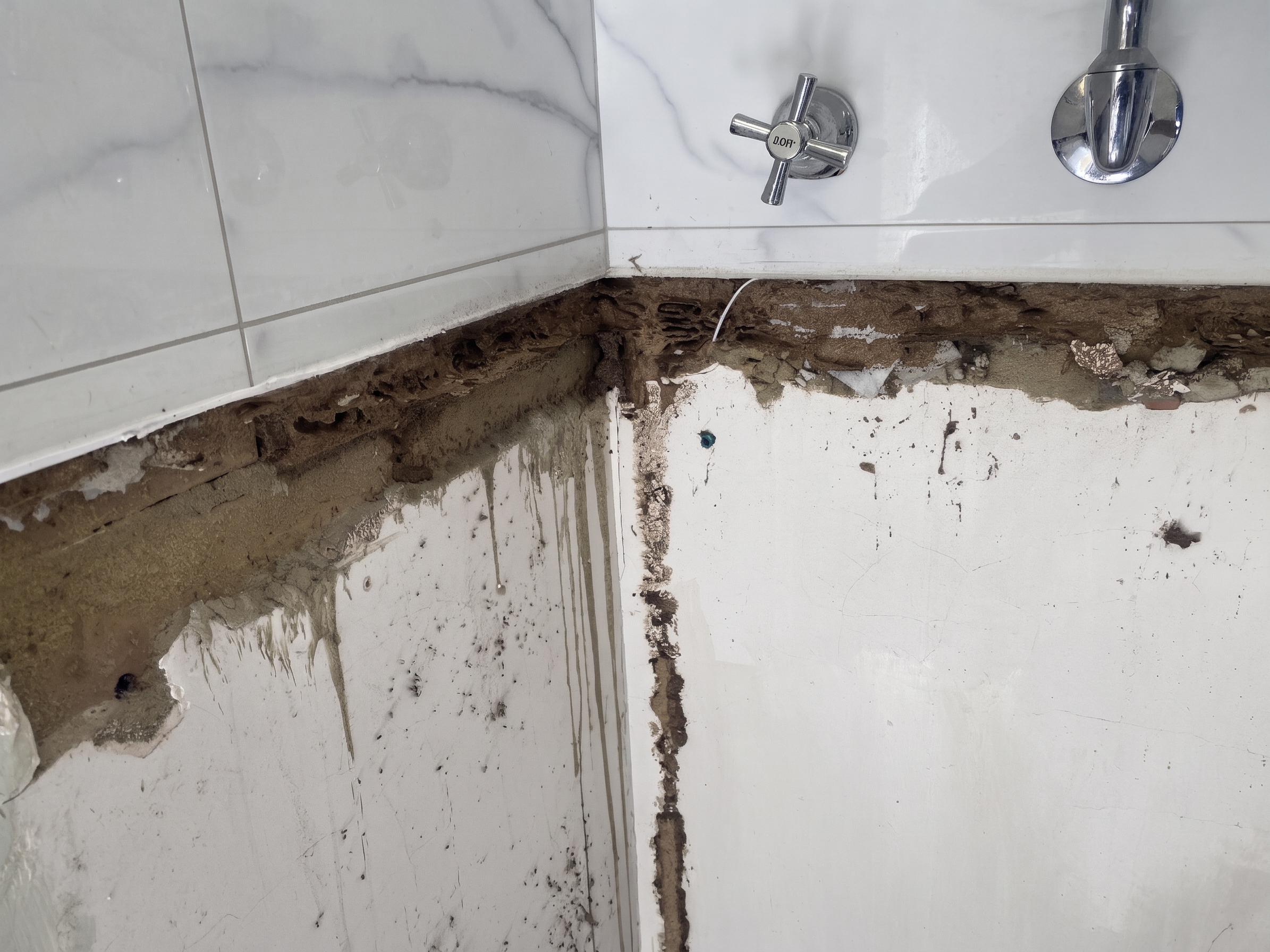
What Did You Find in the Bathroom?
→ Scroll the table sideways to see all columns.
| Visible clue | What it supports | Next step |
|---|---|---|
| Water stain, loose tile, peeling paint, or swollen trim | Moisture or movement may have affected the finish. The cause is not established. | Find and address the water source. Document changes; look for separate insect evidence without opening the finish. |
| Soft or damaged wood near a tub, shower, or toilet | Water, decay, insects, or more than one problem may be involved. Softness does not identify termites. | Do not test weakened wood by pulling it apart. Arrange a building assessment if strength is in question; inspect for termites if there is insect evidence. |
| Earthen tube on an accessible foundation edge, plumbing entry, or fixed surface | A possible subterranean termite shelter tube; its appearance alone does not date activity. | Photograph the whole visible route and arrange a licensed termite inspection. Leave the evidence intact. |
| Winged insects or loose wings in the room | Possible swarmers, but the insects need identification and the room does not necessarily reveal their source. | Photograph or retain an intact specimen if safe. Note whether insects actually emerged from a fixed part of the room. |
| Live termites in fixed wood | Direct evidence of termites at the observed location. | Stop disturbing the area and arrange a professional inspection of the building and accessible routes. |
This table is a practical reading of the cited extension guidance, not a way to certify activity, species, hidden extent, or structural safety from a photograph.
Moisture Clues Are a Starting Point, Not a Diagnosis
A shower leak, failed seal, plumbing drip, or repeated wetting can leave stains, swell trim, soften a subfloor, or damage wallboard. Those changes deserve attention even if no insect is present. Moist wood is a condition that can favor some termites, but a damp bathroom does not prove that termites found it. UC IPM explains that subterranean termites require moisture and often maintain a connection to soil; drywood termites have different moisture needs. Mississippi State University Extension identifies plumbing leaks and moist wood as conducive conditions.
If the only observation is a stain or damp finish, start with the water problem. Record when and where the mark appeared and whether it is changing. Avoid calling it termite damage without insect evidence or an on-site assessment. The damage comparison guide shows why wood galleries, decay, and surface swelling need different interpretations.
Which Signs Make Termites More Plausible?
Suspected mud tubes
An earthen line on a fixed surface may be a protected route used by subterranean termites. An empty-looking or dry tube cannot clear the building; older evidence also cannot establish current activity by itself.
Identified insects
Termites seen in fixed wood are stronger evidence than a surface stain. If winged insects appeared in the bathroom, identify them and distinguish insects emerging from the structure from insects merely found near a light or window.
Wings or pellets
Discarded wings and hard, uniform pellets can be useful clues, but each needs context and identification. Their location on a bathroom floor does not prove which concealed surface produced them.
Wood galleries
Hollow channels with soil-like material in exposed fixed wood may support termite damage. They do not, without live insects or further inspection, establish when damage occurred or how far it extends.
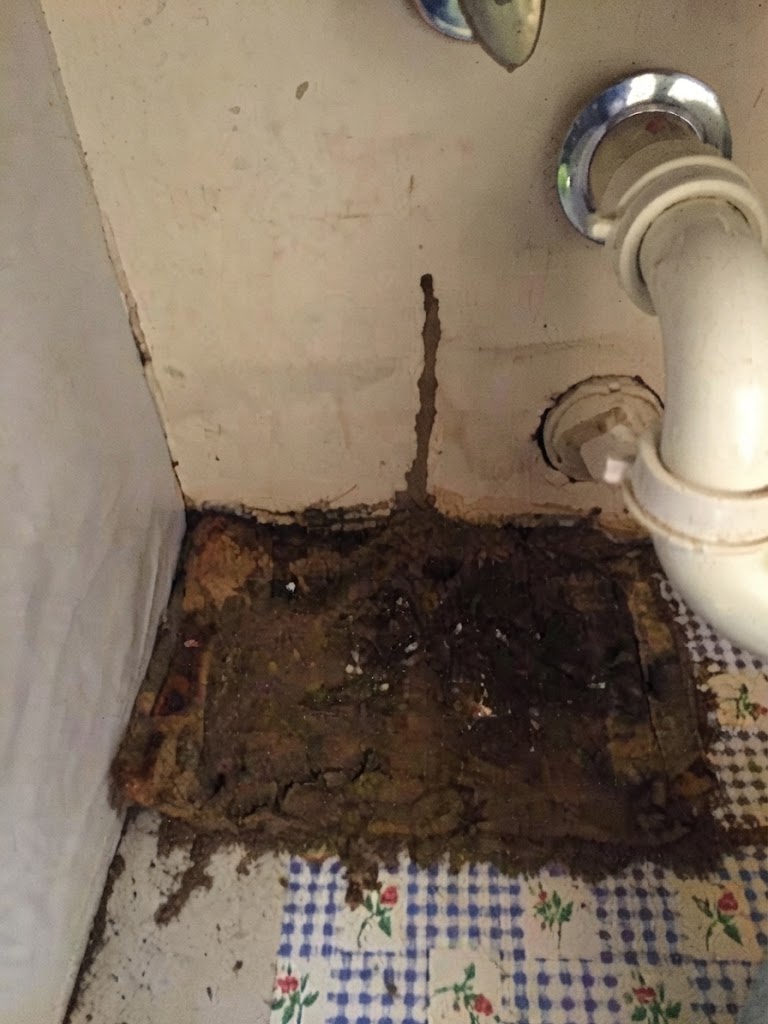
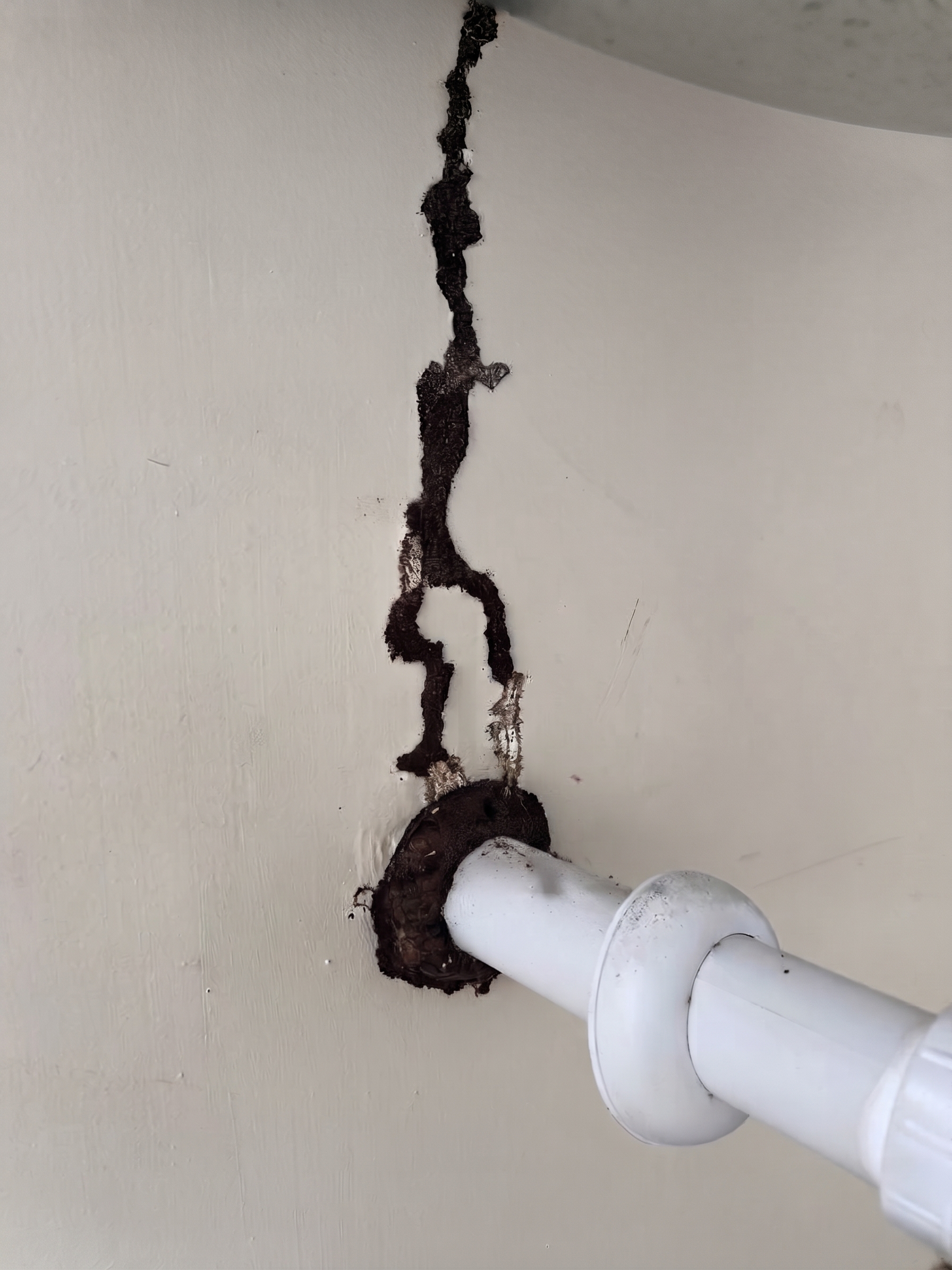
Mississippi State University Extension distinguishes swarmers, shelter tubes, visible damage, and old evidence. If you have an insect rather than a damaged surface, use our indoor swarmer guide before assuming it is a termite.
Why Bathrooms Can Hide the Important Area
Tile and wallboard can cover framing. A tub or shower may limit access to the space around its drain and adjacent plumbing. The construction varies from one home to another, so a photograph of one bathroom cannot map the route in yours. Texas A&M AgriLife tells professional inspectors to examine plumbing, particularly bathrooms on slab construction, and to pay attention to the bath trap area. It also notes that inspection tools do not guarantee detection of every termite or damaged area.
If your home has a normal, safely accessible plumbing access panel, note what is visible without taking apart fixtures or reaching into an unsafe space. If there is no access, record that limitation for the inspector. Do not assume that a missing access panel means termites are present, and do not cut into a wall or floor yourself to check. The question for a professional is which areas were inspected, which remained concealed, and whether further access is justified by the evidence.
Keep the observation non-destructive. Do not lift tile, remove a tub surround, open an electrical box, break a suspect tube, probe possibly weakened framing, or apply pesticide into a hidden opening. Keep clear of standing water, exposed wiring, or an unstable floor. Photograph the clue and ask a qualified professional to assess what is inaccessible or unsafe.
What You Can Safely Record Before an Inspection
- Take one wider photo showing the location in the bathroom and a closer photo only if the clue is safely visible. Keep the suspected material in place.
- Write down the date; whether the clue is beside the tub, shower, toilet, plumbing wall, baseboard, or an accessible foundation edge; and whether you actually saw insects emerge there.
- Note a known leak, recent repair, prior termite treatment, or recurring appearance of wings or pellets. These details give an inspector context; they are not a diagnosis.
- Point out covered or inaccessible areas and ask what evidence supports any proposed treatment. Separate an insect inspection from an assessment of structural strength.
Our whole-house inspection checklist covers other accessible zones. The professional inspection guide explains what an inspector can report and why “no visible evidence” does not clear hidden areas.
When Should You Call a Professional?
Moisture clue only
Arrange the appropriate plumbing or building repair and document the affected area. If wood remains soft, damage spreads, or the cause is unclear, have it assessed. Keep watching for separate insect evidence.
Possible termite evidence
Arrange a licensed termite inspection if you find a suspected tube on the building, termites in fixed wood, recurring pellets from wood, or identified swarmers emerging indoors. Ask which concealed bathroom areas could not be checked.
If the floor, wall framing, or another component appears to be failing, keep people away from the weak area and seek a qualified building professional for structural safety. A pest inspection and a structural assessment answer different questions. You can address an active leak while the termite evidence is being evaluated; neither task depends on guessing the insect from a stain.
Common Bathroom Questions
Can termites be behind bathroom tile?
Termites can affect concealed wood, and tile can block a view of what is behind it. Tile itself does not tell you whether termites are present. Ask an inspector to explain the access limits and the evidence that would justify further investigation.
Does a leaking shower attract termites?
A leak can create a moisture condition favorable to some termites and to wood decay. It does not prove that termites are present or identify their route. Fix the leak and evaluate any separate insect evidence.
Does a soft bathroom floor mean termites?
No. Water damage, decay, and other building problems can soften a floor. Keep off an area that seems weak, arrange a qualified assessment of the floor, and seek a termite inspection if mud tubes, identified insects, or other credible evidence is also present. Our termites in wood floors guide explains how to check what lies beneath a soft floor.
Can an empty mud tube mean the problem is over?
No. A tube can be old or temporarily unused, and its appearance alone does not establish the status of the rest of the building. NC State Extension explains that termites can abandon and rebuild tunnels. Preserve the observation and have building-associated tubes assessed.
The Bottom Line
A bathroom stain is a reason to investigate water, not proof of termites. A suspected tube on the structure, identified termites, or insects emerging from fixed wood changes the question and warrants a licensed termite inspection. Photograph what is safely visible, fix leaks, and be explicit about the areas hidden by tile, tubs, and plumbing walls. Do not choose treatment from a surface mark alone.
Sources
- Texas A&M AgriLife Extension: Subterranean Termites — professional inspection around plumbing and bath traps; limits of detection tools.
- UC IPM: Subterranean and Other Termites — termite groups, moisture needs, shelter tubes, and hidden evidence.
- Mississippi State University Extension: Signs of Termite Infestation — swarmers, tubes, damage, and limits of dating evidence.
- Mississippi State University Extension: Conducive Conditions — moisture and plumbing leaks as risk conditions.
- NC State Extension: Monitoring and Management of Eastern Subterranean Termites — limits of interpreting empty or old tubes.