
Garden and home decisions
Termites in Raised Garden Beds: What to Do Around Vegetables
Short Answer
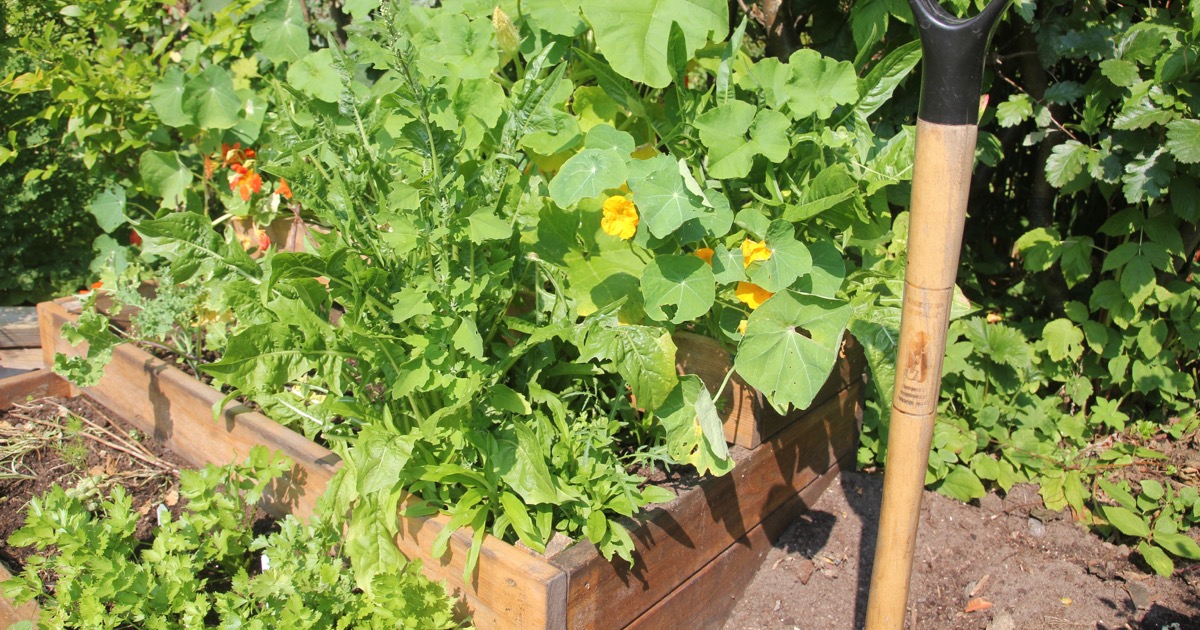
If you find termites in a raised vegetable bed, first identify what they are using: a decaying frame, buried logs or wood scraps, or possibly plant roots and stems. Photograph the evidence and check the nearby house. Termites outdoors do not, by themselves, prove that a house is infested.
Avoid putting a structural termite product or homemade mixture into edible soil. Remove replaceable decayed wood when practical, keep the bed usable for growing, and seek local Extension or a licensed termite professional when plants are being damaged, the frame is failing, or you see signs at the house. A termite sighting alone does not mean the soil or harvest has been contaminated by a pesticide.
Found termites in loose landscape chips instead? Start with our termites in mulch guide. If the insects are in ordinary ground soil outside the bed, use our termites in garden soil guide to check what the find means for the house. This page addresses a food-growing bed, its frame and fill, and the extra limits on pesticide use around edible plants.
Check What You Found Before Choosing a Response
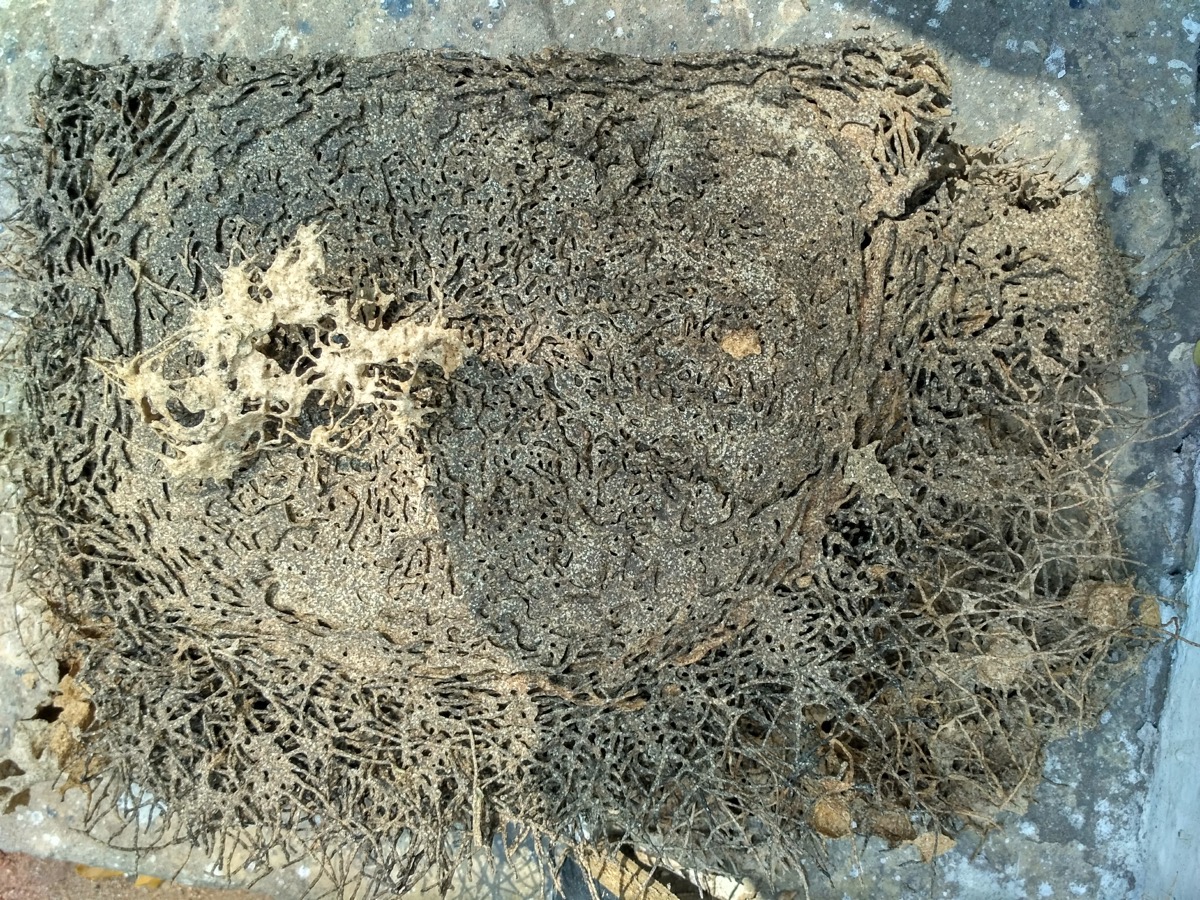
Photograph the insects where you found them, the inside and outside of the bed frame, any buried wood, and any affected plants. Save a specimen if identification is uncertain. Ants and other soil insects can be mistaken for termites, and a damaged plant alone does not identify the cause. Your local Extension office or a licensed inspector can help confirm an uncertain find.
Look separately at the house-facing side of the bed and the visible foundation. Mud tubes on a foundation, damaged building wood, or swarmers indoors are a different decision from termites confined to garden wood. See our subterranean termite guide for the structural signs in more detail.
→ Scroll the table sideways to see all columns.
| What you found | What it suggests | Next step |
|---|---|---|
| Termites in soil or woody fill, with no visible damage | They may be foraging on buried cellulose. Their presence does not establish plant injury or a house infestation. | Confirm the insect, document the location, and look for logs, scraps, or large wood chunks. Monitor the bed and house separately. |
| Soft or hollow raised-bed boards | The frame may need repair even if the colony extends beyond the bed. | Check stability, replace damaged nonstructural bed components when practical, and inspect for other affected wood. |
| Damaged roots or stems with termites present | Termites can sometimes injure plants, but disease, drought, and other pests may also be involved. | Document both the plant injury and insects; ask local Extension for identification and crop-specific advice. |
| Mud tubes or damaged wood at the house, or indoor swarmers | The building needs its own assessment regardless of what happens to the bed. | Arrange a licensed termite inspection and show the inspector the garden evidence and any treatment records. |
These are decision categories, not a diagnosis from a photo or instructions to apply a pesticide.
Why Are Termites in a Raised Bed?
A wooden frame, buried branches, logs, untreated scraps, or partly decomposed woody fill can supply cellulose. Termites may travel through the surrounding soil to reach it; finding them in the soil does not mean mineral soil is their food. LSU AgCenter specifically cautions against using large logs or wood chunks as filler in beds where termites are a concern. Fully decomposed organic matter in a suitable growing mix is a different material from buried lumber.
Wet, deteriorating boards deserve attention because they can lose strength and keep wood available to foraging termites. Removing that wood can reduce a food source and improve the bed, but it does not prove an underground colony has been eliminated.
Can Termites Damage Vegetables or Herbs?
Sometimes. Alabama Cooperative Extension documents cases of subterranean termites feeding on vegetable roots or stems, particularly in its regional context. LSU AgCenter also warns that roots may be attacked. That evidence supports checking damaged plants; it does not mean every termite found in a bed is eating the crop or that every wilted plant has termite damage.
If a plant is declining, photograph the roots and stem base as well as the insects. Check ordinary growing conditions and other pests, too. An Extension specialist can help distinguish termite injury from a coincidental find before you discard plants or treat the bed.
Should You Replace Soil or Rebuild the Frame?
Keep and monitor when
- the frame is sound and the crop is growing normally;
- no large buried wood needs removal;
- there are no signs at the nearby building;
- you can recheck the bed and document changes.
Repair or rebuild when
- boards are soft, unstable, or extensively damaged;
- logs, scraps, or large wood chunks were used as fill;
- plant injury is confirmed and the bed needs a closer assessment;
- the bed blocks inspection of a nearby foundation.
Replacing all the topsoil is not a reliable way to eliminate termites that may be foraging from a colony below or beyond the bed. If buried woody filler is the problem, remove that material as practical and refill with an appropriate growing mix. Keep drainage in mind when rebuilding. A frame repair solves a frame problem; continue to watch for activity in surrounding soil and at the house.
What Can You Do Before Considering a Pesticide?
- Confirm and map the evidence. Record the insects, damaged board or fill, affected plant, and distance and route to the house. Keep photos for follow-up.
- Check the frame’s condition. Replace loose or decayed bed boards when they no longer support the soil safely. Do not cut or probe building components yourself.
- Remove unnecessary buried wood. If the bed contains large logs, scraps, or woody filler, consider rebuilding that portion with suitable growing medium. This removes a local food source, not necessarily the colony.
- Keep the building inspection line visible. Do not let a bed conceal foundation signs; for broader yard maintenance, see termite prevention around the home.
- Recheck rather than assume success. Watch the frame, plants, and nearby structure. New damage or persistent insects may call for local Extension or professional review.
Do not pour bleach, fuel, salt, boric-acid mixtures, or a structural termiticide into an edible bed as an improvised treatment. “Natural” and “sold for gardens” do not establish that a specific product is labeled for termites at this site and around these crops.
What About Termiticides, Baits, and Beneficial Nematodes?
Pesticide decisions must be made from the exact product label: the permitted site, crop, target pest, application method, and restrictions all matter. A product used to protect a structure is not automatically authorized in vegetable soil. University of Maryland Extension explicitly cautions against transferring one commonly used structural termiticide into a food-growing bed. This guide does not prescribe a chemical or a harvest interval.
Termite baits are a separate professional treatment category, but their placement and use still depend on the product label and the relationship to edible plants. Beneficial nematodes are discussed in Extension materials; Maryland describes termite-control results as variable. Do not count on them to eliminate a subterranean colony or to protect a house.
If a pesticide has already been applied: keep the product container or exact name, EPA Registration Number, label, date, location, amount, and crop details. Do not make a harvest decision from a general article. Ask your local Extension office or the National Pesticide Information Center for advice about that specific exposure.
Which Materials Make Sense for a Replacement Bed?
Untreated or naturally durable wood
A straightforward choice if you accept that boards will eventually weather and need replacement. Check for damage as part of normal bed maintenance.
Stone, brick, or concrete block
These remove the wooden frame as a food source. The bed still needs suitable growing medium and drainage; nearby buried wood can still attract foraging termites.
Modern residential-use treated lumber
Suitability depends on the preservative and use rating. UMD and OSU discuss modern copper-based products separately from older arsenic-treated CCA lumber. For how treated lumber holds up against termites, see do termites eat pressure-treated wood.
Unknown salvaged lumber
Avoid guessing what treatment an old board or railroad tie received. Choose a material with a known history for a food-growing bed.
Oregon State University’s study of a specific copper-azole-treated lumber found increased copper in soil near the wood but no corresponding increase in the vegetables tested under those study conditions. That is useful evidence, not a guarantee for every preservative, soil, crop, or older board. No frame material makes the surrounding yard termite-free.
When to Call a Professional
- you see mud tubes, damaged building wood, or swarmers inside the house;
- the bed touches or hides the foundation and you cannot assess the building side;
- damage extends beyond a replaceable bed board, or the structure may be affected;
- the termite identity, extent of damage, or reason for crop injury remains uncertain;
- a pesticide has already been applied and you need a site-specific crop-safety decision.
For a building concern, ask a licensed termite professional to inspect the structure. For crop injury or pesticide exposure, also contact local Extension or NPIC with the evidence and product details.
Frequently Asked Questions
Can I eat vegetables from a bed where I found termites?
Finding termites does not by itself show that a pesticide was applied or that the harvest is contaminated. Check whether a pesticide was actually used and whether plants are damaged. If a product was applied, crop advice depends on its exact label and exposure details; ask local Extension or NPIC before deciding what to harvest.
Do termites live in garden soil?
Subterranean termites can move through soil and forage into a bed. Soil presence alone does not locate the whole colony or tell you whether the house is affected.
Will replacing the soil get rid of termites?
Not reliably. Removing buried wood and rebuilding growing media can remove a local food source. Replacing topsoil alone does not eliminate a colony that can return from deeper or nearby soil.
Will cedar or a liner make a raised bed termite-proof?
No material should be treated as a guarantee. Choose known, appropriate materials; maintain drainage and inspect the frame. A liner is not a substitute for assessing termite activity or for keeping the nearby foundation visible.
Bottom Line
Separate the garden problem from the building problem. Confirm the insect, identify damaged wood or plants, remove unnecessary woody fill when practical, and repair an unsound frame. Avoid improvised pesticide applications in edible soil. Signs at the house call for a structural inspection; uncertainty about crop damage or a past pesticide application calls for case-specific Extension or NPIC advice.
Sources
- University of Maryland Extension: Termites in a Raised Garden Bed (2024)
- University of Maryland Extension: Termites Ah! (2026)
- Alabama Cooperative Extension: Termites Infesting Organic Vegetables
- LSU AgCenter: Termites Can Cause Trouble in the Garden
- University of Maryland Extension: Growing Vegetables in Raised Beds
- Oregon State University Extension: Pressure-Treated Wood for Raised Beds
- U.S. EPA: Introduction to Pesticide Labels