
Firewood and winter home care
Termites in Firewood: What to Do Before Bringing Logs Indoors
Found insects in your woodpile, or beside the fireplace? Separate the log problem from the house problem before deciding what to do.
Short Answer
Pause before carrying visibly infested logs indoors. Photograph the insects, keep the main supply outside, and do not spray wood intended for burning. A discovery in firewood is a reason to identify the insect—not proof that your house is infested.
Check two things separately: what is in the logs, and whether there is evidence on the building. Do not assume that treating or removing the pile resolves a house infestation. The same applies to termites in a tree stump in the yard.
What to Check Before You Carry a Log Inside
- Look at the insects. Photograph them close enough to show the body and antennae. Include a wider view showing where you found them.
- Look at the wood. Note mud tunnels, visible galleries, pellets, or loose debris. Do not identify termites from a hole or a sawdust pile alone.
- Look at the storage location. Is the pile touching soil, siding, or the garage wall? Check the safely visible building surface nearby without opening walls.
- Check the wood’s history. Set aside painted, pressure-treated, pesticide-treated, or unknown treated wood rather than putting it in your fireplace.
For a closer identification check, use our termite identification guide. These steps are a practical screening sequence, not a test that certifies a log or house pest-free.
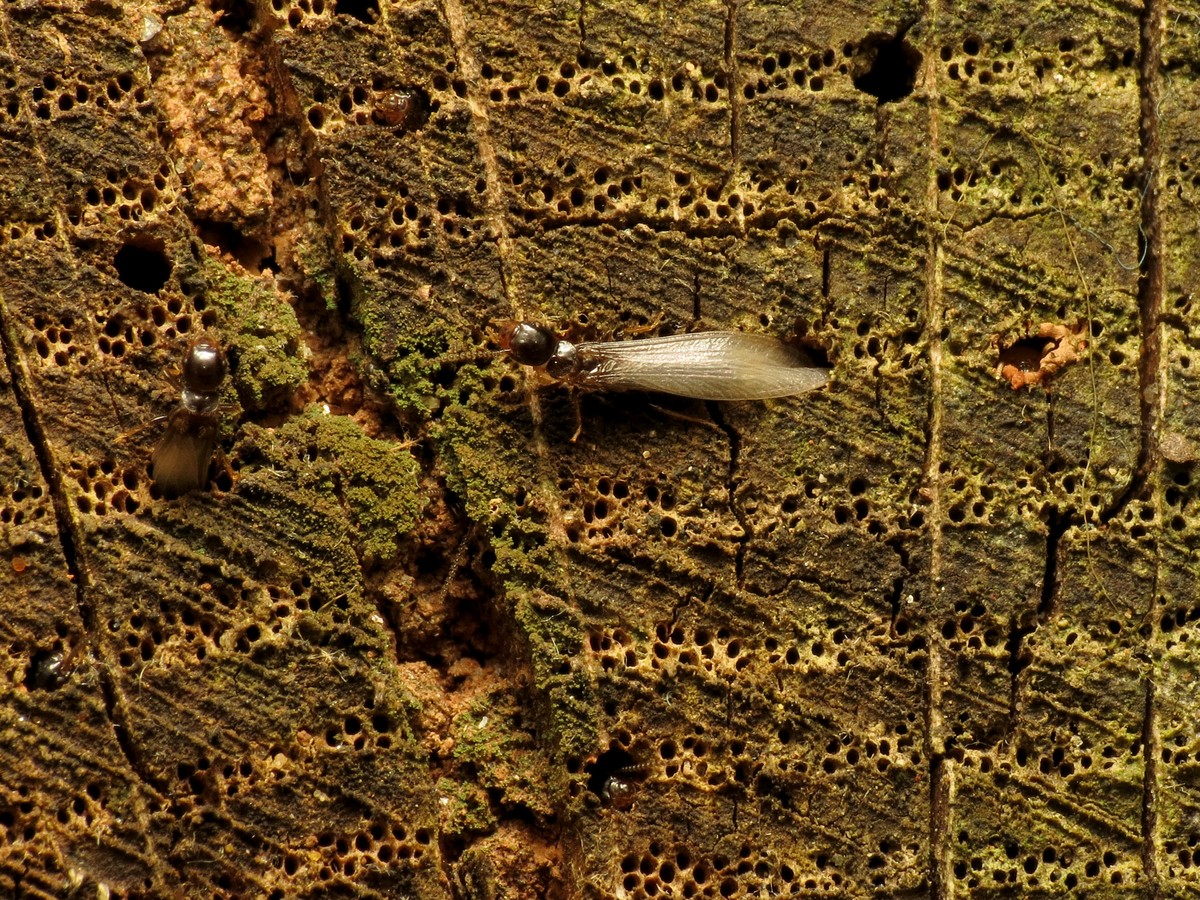
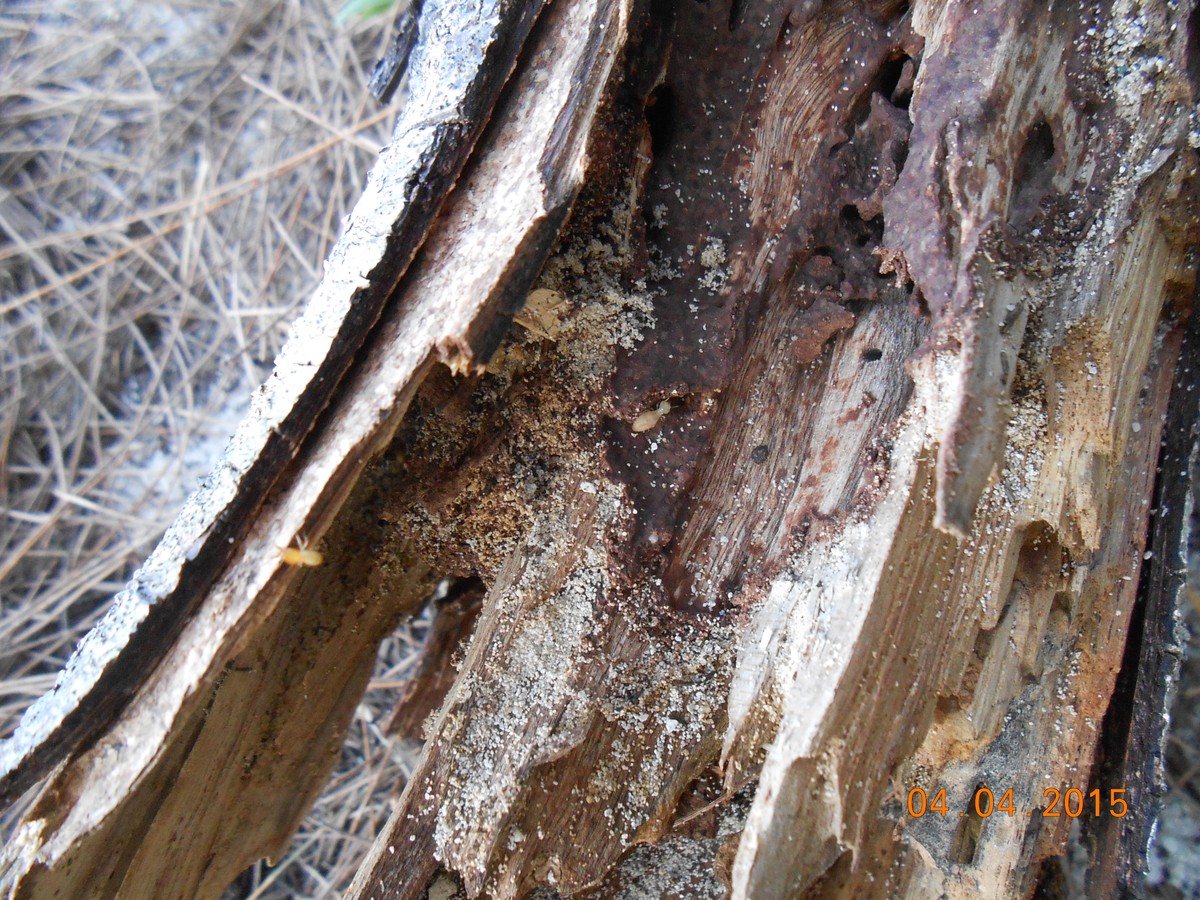
Can Termites in Firewood Infest Your House?
In the soil-nesting scenario described by Iowa State Extension, workers feed in logs while their colony remains in the ground. Workers accidentally carried indoors do not establish a new colony. A pile against the house, however, can provide a route toward the structure.
That distinction explains why a few workers in a carried log and a woodpile against your foundation deserve different responses. Neither observation alone establishes what is happening inside the building.
The species matters. UC IPM explains that drywood termites nest within wood and do not need soil contact. Do not apply the soil-worker reassurance to every infested log. If identification is uncertain, keep suspect logs outside and ask an Extension diagnostic service or qualified termite inspector to identify them.
See subterranean termites and drywood termites for the different colony habits.
What If Insects Appear Beside the Fireplace?
Outdoor wood can hold inactive insects that emerge after warming indoors. Many are temporary hitchhikers rather than pests of the building. Iowa State recommends sweeping or vacuuming unexpected insects and discarding them.
- Photograph an insect before cleanup if possible.
- Inspect the nearby logs; stop adding suspect wood to the indoor supply.
- Clear the insects and loose debris, then note whether more appear and where.
- If activity continues independently of the logs, or you find signs on the house, investigate the building rather than assuming the fireplace supply explains everything.
An insect at the hearth does not prove it came from the wood. For wings found indoors, use our indoor swarmers guide.
Do You Have to Throw the Firewood Away?
Not automatically—but “just burn it” is not a universal answer either. Decide based on insect identification, fuel condition, treatment history, and local movement or disposal rules.
Wood that may be unsuitable fuel
EPA’s archived Burn Wise guidance excludes painted, pressure-treated, glued, wet, rotted, diseased, and moldy wood from burning. Evidence of insects does not override these fuel restrictions.
Wood you cannot identify confidently
Keep it separate from the indoor supply while you obtain identification. Ask local Extension or the relevant agriculture authority about appropriate handling; do not give away or transport suspect logs as a quick solution.
For otherwise suitable untreated fuel, insect presence alone does not settle whether local use or disposal is appropriate. Follow the appliance instructions and any local restrictions. This guide does not prescribe burning every infested log.
Can You Spray Firewood to Kill Termites?
No. Do not apply insecticides to firewood intended for burning. Purdue Extension warns that burning chemically treated wood can produce harmful fumes. Spraying the visible surface also does not establish that insects deeper in a log have been eliminated.
Termite spray, foam, and borate products are not a preparation step for fireplace fuel. If you already treated logs, keep them out of the fire and consult the product label and manufacturer about handling or disposal.
How to Store Firewood Near Your House or Garage
Purdue Extension recommends at least 3 feet between the pile and the building, lifting wood above the ground, allowing airflow, and bringing inside no more than a couple of days’ supply. The distance is an Extension recommendation, not a nationwide code requirement or a guaranteed termite barrier.
- Keep the main pile outdoors rather than against the house or garage.
- Use supports that keep the logs off soil and allow drying.
- For rain protection, cover the top while leaving the sides ventilated, following EPA storage guidance.
- Keep nearby building surfaces visible so the pile does not conceal evidence.
An attached garage should not be treated as a pest-free long-term storage area. Minnesota Extension also identifies stored wood and moisture as relevant to carpenter ant problems. For broader exterior maintenance, see termite prevention around your home.
If you find insects in stored wood or a tube along the garage slab, use our termites in a garage guide to check whether the clue is limited to the item or involves the building.
Are They Termites, Ants, or Beetles?
Possible termite workers
Light-colored bodies, broad waists, and relatively straight antennae support a termite identification. Mud on logs or in galleries adds context but does not identify every species.
Ants
A narrow waist and elbowed antennae point toward ants. Carpenter ants excavate rather than eat wood; their galleries are typically smooth. Color alone is not enough.
Beetles and other insects also occur in firewood. Capture clear evidence rather than choosing a pesticide from the appearance of a hole. Our termites, ants, and beetles comparison covers the broader identification differences.
When the House Needs Its Own Check
Purdue notes that termites in firewood close to a home may warrant a building inspection. Give priority to evidence on the foundation, framing, or indoor wood that is separate from the logs.
Photograph possible building evidence and use our mud tubes versus old damage guide. Do not interpret quiet logs, cold weather, or an empty tube as proof the house is clear.
Do Not Move the Problem to Another Location
USDA APHIS recommends buying firewood where you will burn it and using properly heat-treated firewood when movement is necessary. Forest pests can travel in logs; parks and jurisdictions may have additional rules. Check the destination and relevant agriculture authority before transport.
Commercial heat treatment is different from spraying logs. This article provides no home oven, freezer, or improvised heating schedule for eliminating insects.
Your Next Step
Identify what you found, separate suspect logs from the indoor supply, and improve the pile’s location. Check any building evidence independently. A firewood discovery calls for a decision about the logs—not an automatic whole-house treatment.
Sources
- Iowa State Extension: Firewood Insects — soil-nesting workers, nuisance emergence, and cleanup.
- Purdue Extension: Enjoy Firewood, but Insects May Emerge — storage, insecticide warning, and inspection considerations.
- University of Minnesota Extension: Carpenter Ants — identification and wood-associated conditions.
- UC IPM: Drywood Termites — colonies within wood and diagnostic limits.
- EPA: Best Wood-Burning Practices — archived guidance, no longer updated after October 2025.
- USDA APHIS: Buy Firewood Where You Burn It — local sourcing and heat-treated wood.
Sources checked October 13, 2026. The screening sequence combines these sources into homeowner actions; it is not a quoted institutional protocol.