Georgia regional guide
Termites in Georgia: Types, Warning Signs, and What to Do
Short Answer
Georgia is primarily a subterranean-termite state. Native Reticulitermes termites are the main statewide structural concern. Formosan subterranean termites have been found in Georgia, but University of Georgia sources describe them as rare and recorded at only a few locations.
Drywood termites add an important regional difference: they are more often found in furniture and picture frames in central and northern Georgia, while native drywood species can infest structures in south and southeast Georgia. Match the evidence to the termite route below, then use our termite treatment decision guide.
The Termites You May Meet in Georgia
Scroll the table sideways to see every column.
| Group | Georgia relevance | Strongest clues | Usual next route |
|---|---|---|---|
| Native subterranean | The dominant structural termite route statewide; colonies live in soil and reach wood through hidden gaps or shelter tubes | Mud tubes, soil-linked entry, black swarmers or discarded wings, damaged wood that may contain soil | Licensed inspection; a liquid soil treatment or monitored bait system may be considered after the structure, access, and earlier work are assessed |
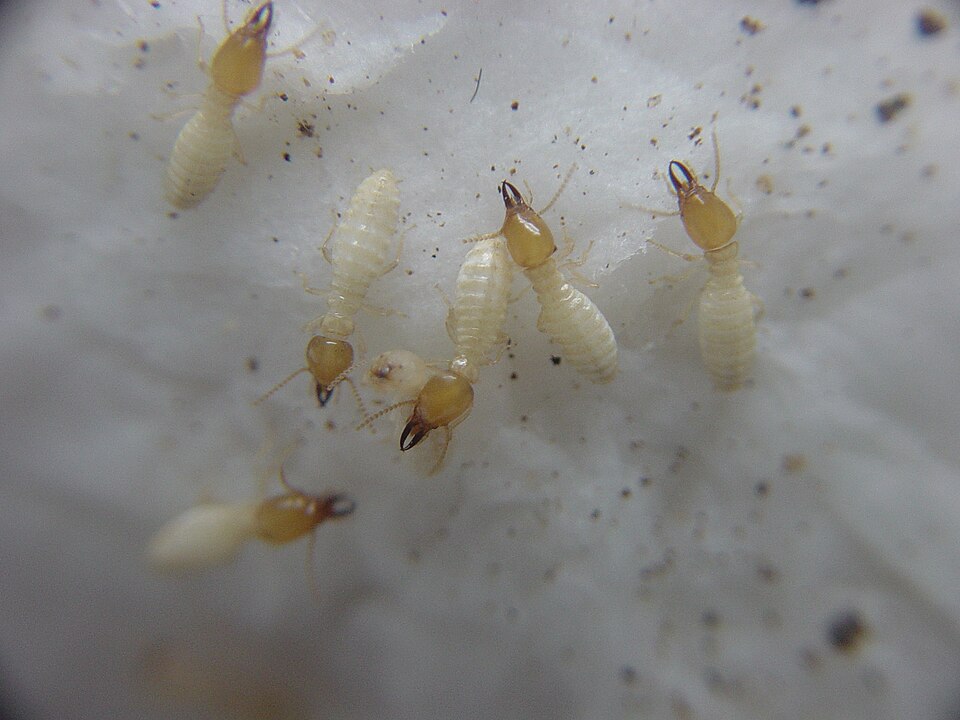
| Formosan subterranean | Present but rare and patchily distributed; UGA has documented Georgia infestations since the early 1990s | About 1/2-inch caramel or brownish-yellow swarmers at dusk near lights; soldiers can help a trained identifier | Prompt professional identification and a subterranean-control plan; do not label every evening swarm as Formosan |
| Drywood | Often found in furniture or picture frames in central and north Georgia; native species can be structural pests in south and southeast Georgia | Hard, uniform fecal pellets, kick-out holes, shed wings, or galleries inside dry wood without mud tubes | Thorough inspection; furniture or wood removal, localized treatment when truly limited, or structural fumigation when infestation is widespread or inaccessible |
| Moisture-related damage | Dampwood termites are not a headline Georgia structural group, but wet or decayed wood still needs attention | Leaks, poor drainage, wood-soil contact, fungal decay, or persistently soft wood | Correct moisture and have damaged wood assessed; do not assume that every wet-wood problem is a dampwood-termite infestation |
This table routes an inspection; it does not confirm a species. Compare the groups in subterranean vs. drywood vs. dampwood termites.
Why Your Georgia Region Matters
Georgia sits in a warm, humid part of the country where subterranean termites are important statewide. Regional differences are most useful for understanding how drywood risk and moisture conditions change, not for declaring any address termite-free.
Drywood termites can travel in furniture, picture frames, railroad ties, lumber, and other wood. A transported item can create a local finding without proving that the same termite is established throughout the surrounding area.
Warning Signs and What They Can Tell You
Mud tubes
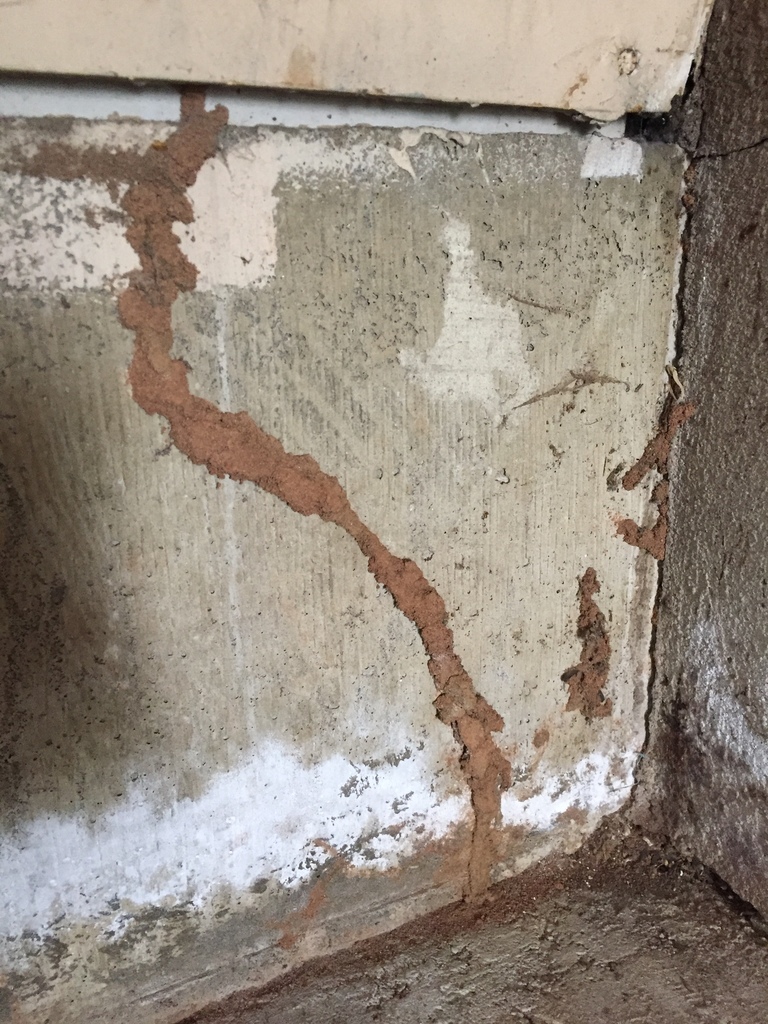
Soil-colored tubes on foundations, piers, masonry, plumbing penetrations, or framing strongly support a subterranean route. Tubes can remain after activity stops, so learn how to compare termite mud tubes vs. old damage.
Hard pellets or frass
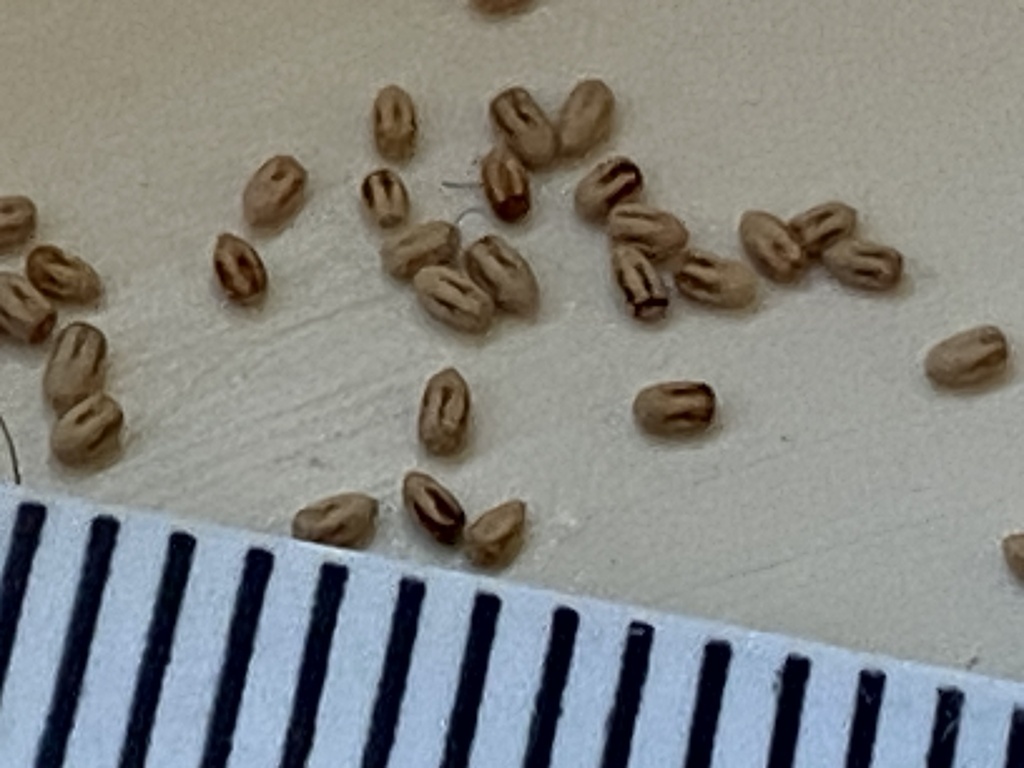
Drywood termites push small, hard pellets through openings in infested wood. Look-alikes include carpenter-ant debris, powderpost-beetle frass, and ordinary sawdust. Compare them in our termite droppings vs. frass guide.
Swarmers and discarded wings
Repeated indoor swarmers or piles of wings near the same window, door, vent, or light deserve inspection. Outdoor swarmers confirm termites nearby but do not automatically prove that a colony is inside the home.
Soft, hollow, or damaged wood
Subterranean galleries may contain soil, while drywood galleries can remain hidden inside wood that looks intact. Leaks and fungal decay can weaken wood independently. Visible evidence cannot establish the full hidden extent or structural safety.
When Do Termites Swarm in Georgia?
Georgia’s confirmed swarm contrast is unusually useful because native and Formosan subterranean termites differ in season, time of day, appearance, and attraction to light.
Timing and color support an identification; they do not prove one. Georgia-specific drywood swarm timing is omitted because the UGA sources used for this guide do not establish a dependable statewide window.
Get a Licensed Inspection Promptly If
- live termites, repeated indoor swarmers, or recurring piles of wings are present;
- mud tubes enter framing, flooring, walls, or another structural area;
- hard pellets return after careful cleanup;
- wood is soft, sagging, extensively damaged, or potentially structural;
- activity appears in several areas or may be hidden behind finishes;
- a property transaction, structural fumigation, or written WDO report is involved;
- you cannot confidently separate termites from ants or another wood pest.
Photos and observation tools can improve triage, but they cannot establish colony location, current activity, hidden extent, or structural capacity.
Treatment Paths Depend on the Termite Type
Professional liquid soil treatments and monitored bait systems are the main categories. Foundation type, soil, drainage, entry points, access, and prior treatments affect the plan.
Compare termite treatment types and bait stations vs. liquid treatment.
Control follows subterranean-termite principles, but colony size and concealed moisture-holding carton material can complicate the inspection and plan. Georgia findings are rare, so confirmation matters before the label is applied.
See our dedicated Formosan termite guide.
Infested furniture or removable wood may be isolated, removed, or professionally treated. A genuinely limited and accessible structural infestation may be considered for localized treatment or wood replacement. Widespread, inaccessible, or uncertain structural activity can lead to whole-structure fumigation.
Correct leaks, drainage, ventilation, and wood-soil contact, then assess damaged wood. Moisture correction removes a condition that supports pests and decay, but it does not restore structural strength or prove that termites are gone.
Safety boundary: Georgia treatment standards, the structure, and the product label determine professional application details. This guide does not provide termiticide mixing ratios, trench dimensions, drill patterns, fumigant concentrations, exposure times, aeration procedures, or tarping instructions. No method is universally best.
How to Choose a Termite Company in Georgia
Structural pest work is regulated by the Georgia Structural Pest Control Commission (SPCC) with the Georgia Department of Agriculture (GDA) Structural Pest Division. Georgia separates the work into operational categories. Category 30, Wood-destroying Organism Control (WDO), covers termite and other WDO work by methods other than fumigation. Category 28, Fumigation (FUM), covers structural fumigation.
- Verify the company. Confirm a current Georgia company license and the category that matches the proposed work through the GDA Structural Pest Control program or by calling 404-656-3641.
- Match the category to the service. Ordinary termite inspection and control are Category 30 WDO work. If whole-structure fumigation is proposed, Category 28 FUM authority is also relevant.
- Ask who supervises and performs the work. Georgia uses company licenses, certified operators, and registered employees. Credentials should be current and appropriate to the category.
- Require an evidence-based proposal. It should identify the organism or treatment route, affected areas, access limits, recommended work, and unresolved conditions.
- Read every guarantee and renewal term. Compare treatment area, exclusions, follow-up inspections, renewal fees, treatment-only versus repair coverage, and transfer rules.
Use our questions to ask a termite company and review the limits of DIY vs. professional termite treatment.
Buying or Selling a Home: Georgia’s Termite Letter
The Official Georgia Wood Infestation Inspection Report (WIIR) is commonly called a termite letter. It is issued by a Georgia pest-control company licensed in the WDO category; the inspection may be performed by a qualified registered or certified employee.
A WIIR inspection is not mandatory for every Georgia home sale. If a WDO inspection report is issued for a real-property transfer, the Official Georgia WIIR is the required state form. A buyer, lender, contract, or other party may request it, and transaction requirements vary.
- It is a visual inspection of accessible areas. Inaccessible areas must be identified rather than silently cleared.
- It reports active or previous wood-destroying-organism evidence, conducive conditions, and access limitations.
- It is not a structural-engineering report. A qualified building professional should evaluate structural soundness and repair needs.
- It is issued without a general warranty that no hidden WDO exists, but Georgia Rule 620-6-.03 provides a limited 90-day treatment guarantee: if an organism from which apparent freedom was certified is found within 90 days, minimum adequate treatment is provided at no charge, subject to the rule.
Read the report, attachments, inaccessible-area notes, and any treatment proposal together. A clean-looking accessible area cannot clear a concealed wall, slab joint, or closed crawlspace section that was not inspected.
What Does Termite Treatment Cost in Georgia?
There is no responsible single Georgia price. The termite group, activity location, structure size, foundation, access, previous treatment, local treatment versus fumigation, monitoring, moisture correction, repairs, and guarantee terms can all change the total.
Use our termite treatment cost guide for national orientation, then compare multiple written Georgia proposals line by line. The least expensive quote may simply cover less of the structure or exclude follow-up.
What to Do Next
- Document the evidence. Photograph tubes, pellets, wings, insects, moisture, and damaged areas without opening more of the structure. See our termite inspection tools guide.
- Record where and when it appeared. Indoor versus outdoor location, morning versus evening, attraction to lights, rain, and recurrence all help route the inspection.
- Preserve a useful specimen. A winged reproductive or soldier is generally more useful for identification than a worker.
- Use the decision guide. Follow the termite treatment decision tree to separate monitor, inspect, professional, and urgent routes.
- Verify the Georgia credential. Match Category 30 WDO to termite work and Category 28 FUM when structural fumigation is proposed.
Bottom Line
Most Georgia termite problems begin with a native subterranean route, but the state is not completely uniform. Drywood termites are more likely to be furniture-level findings in central and north Georgia and can become structural pests in south and southeast Georgia; Formosan termites are present but remain rare. Identify the evidence before choosing treatment, match the Georgia license category to the work, and treat the WIIR as a careful accessible-area report with a specific limited guarantee rather than proof that every hidden space is clear.
Georgia Sources
- University of Georgia Extension B1209: Biology of Subterranean Termites in the Eastern United States
- UGA CAES C868: Identifying the Formosan Subterranean Termite
- UGA CAES B1412: Insect and Arthropod Pests of Southeastern Neighborhoods
- Georgia Department of Agriculture: Structural Pest Control
- Georgia Department of Agriculture: Licensing, Certification and Employee Registration
- Georgia Department of Agriculture: Structural Pest Consumer Information
- Georgia Rule 620-6-.03: Official Georgia Wood Infestation Inspection Report
How We Build Regional Guides
TermitePlan separates documented species distribution and treatment categories from what a homeowner can actually prove at home. Regional claims are based on university extension and government sources, while uncertain, hidden, structural, or high-risk cases are routed toward licensed inspection. See our Methodology.