
Yard-to-house decision guide
Termites in Garden Soil: Are They a Threat to Your Home?
You turn over ordinary garden soil and find small, pale insects moving through it. Are they termites, and does the house need treatment? First, photograph the insects and the exact spot. Then check the visible edge of the nearby building without digging beside its foundation. A soil find is different from termites inside a raised-bed frame, beneath mulch, or in a stump—and none of those outdoor finds alone proves the house is infested. The decision changes when you find a route into the building, mud tubes on it, damaged building wood, or swarmers indoors.
Short Answer: Found Termites While Digging—What Now?
Soil only, with no building sign: Confirm the insects, record the location, and keep the foundation visible for routine checks. You do not need to spray the whole garden just because termites are foraging outdoors.
Close to a hidden building edge or buried wood: Look for the connection to the house and review any existing termite service record. Do not excavate a possibly treated perimeter to investigate.
Mud tubes, suspect damage on the structure, or swarmers indoors: Preserve the evidence and arrange a licensed termite inspection. The garden find does not explain away a building sign.
These are action thresholds, not a distance formula. A termite found far into the yard does not certify the house clear, and one found nearby does not automatically prove an infestation. The condition of the building and its accessible inspection line matter more than a single measurement. [Mississippi State Extension; Maryland Extension]
Why Do Termites Turn Up in Garden Soil?
Subterranean termites use soil for moisture and protected travel while searching for cellulose. They commonly feed on dead wood, roots, buried scraps, or other woody material; they do not eat mineral soil itself. Outdoors, they also help break down dead plant material. Exposing a few foragers with a trowel shows activity at that spot, but it does not locate a colony center, tell you how many colonies are on the property, or establish that the insects have entered your home. [University of Georgia Extension]
What you were digging through matters. If the insects were inside a wooden raised-bed frame, under wood mulch, or in a stump, use those guides for the material-specific decision. This page is about a find in ordinary ground soil when the wood source is unclear.
Are the Insects Really Termites?
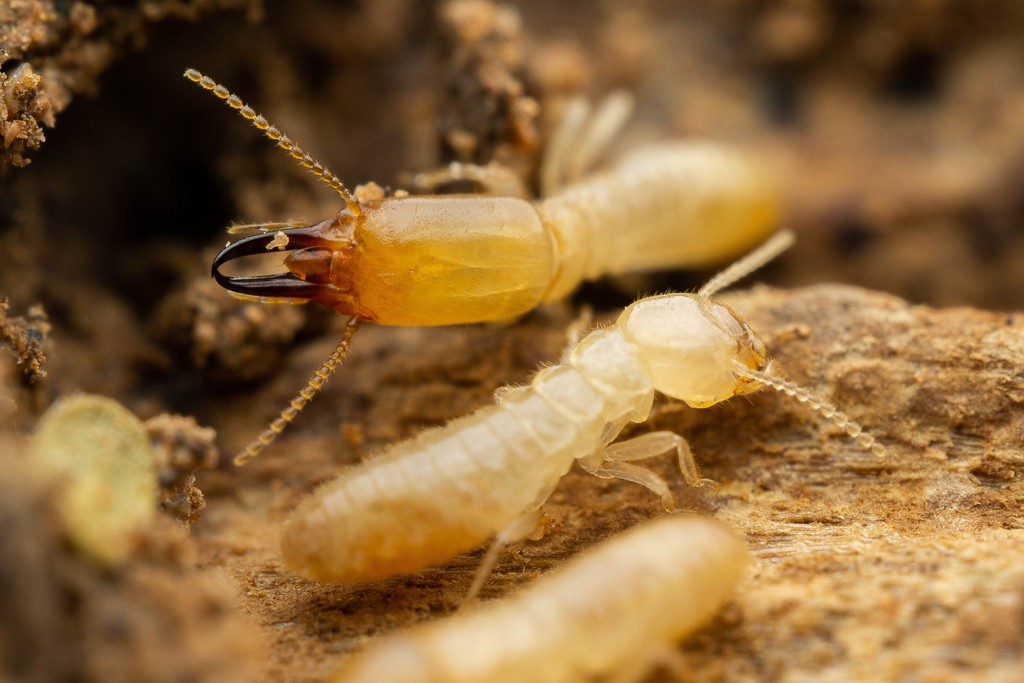
Do not identify a pale soil insect by color alone. Termite workers are soft-bodied and usually wingless; ants have a narrow waist and elbowed antennae. When winged insects are present, termite swarmers have relatively straight antennae and two pairs of wings of similar length, while winged ants have elbowed antennae and a longer front pair. A garden photograph may not show those features well enough to decide. [EPA]
Take a sharp close-up and a wider photograph that shows where you found them. If possible, save a specimen without mixing it with other insects. Use our termite identification guide, or ask a local Cooperative Extension office or licensed inspector when the image remains uncertain. Do not buy a treatment for an insect that has not been identified.
Garden Soil or Building Evidence? Use This Decision Table
Scroll the table sideways to see all columns.
| What you found | What it supports | Next useful action |
|---|---|---|
| Confirmed termites in ground soil; no sign seen on the building | Outdoor foraging at that spot. It does not prove a structural infestation—or rule out hidden activity. | Record the find, check the visible building edge, and maintain your normal inspection or service plan. |
| Termites beneath buried scrap wood or a landscape timber | A local food source. Removing it does not establish that the colony is gone. | Photograph the wood and location; address removable debris away from any treated foundation zone. |
| Soil activity beside buried siding, a hidden foundation edge, or repeated dampness | A possible concealed route and an inspection limitation, not a diagnosis. | Check the treatment history and arrange a structural inspection if the edge cannot be evaluated or other signs appear. |
| Mud tube on the foundation, termites in building wood, suspect damage, or indoor swarmers | A warning sign involving the structure itself. | Leave evidence in place, photograph it, and schedule a licensed termite inspection promptly. |
The table separates an observation from an inference. A casual exterior walk cannot certify that concealed wood or a slab edge is termite-free.
Check the House Without Digging Along the Foundation
- Make a location record. Photograph the soil opening, the insects, and a wide view that includes the nearest wall or foundation. Note the date, whether you found buried wood, and whether the area stays wet.
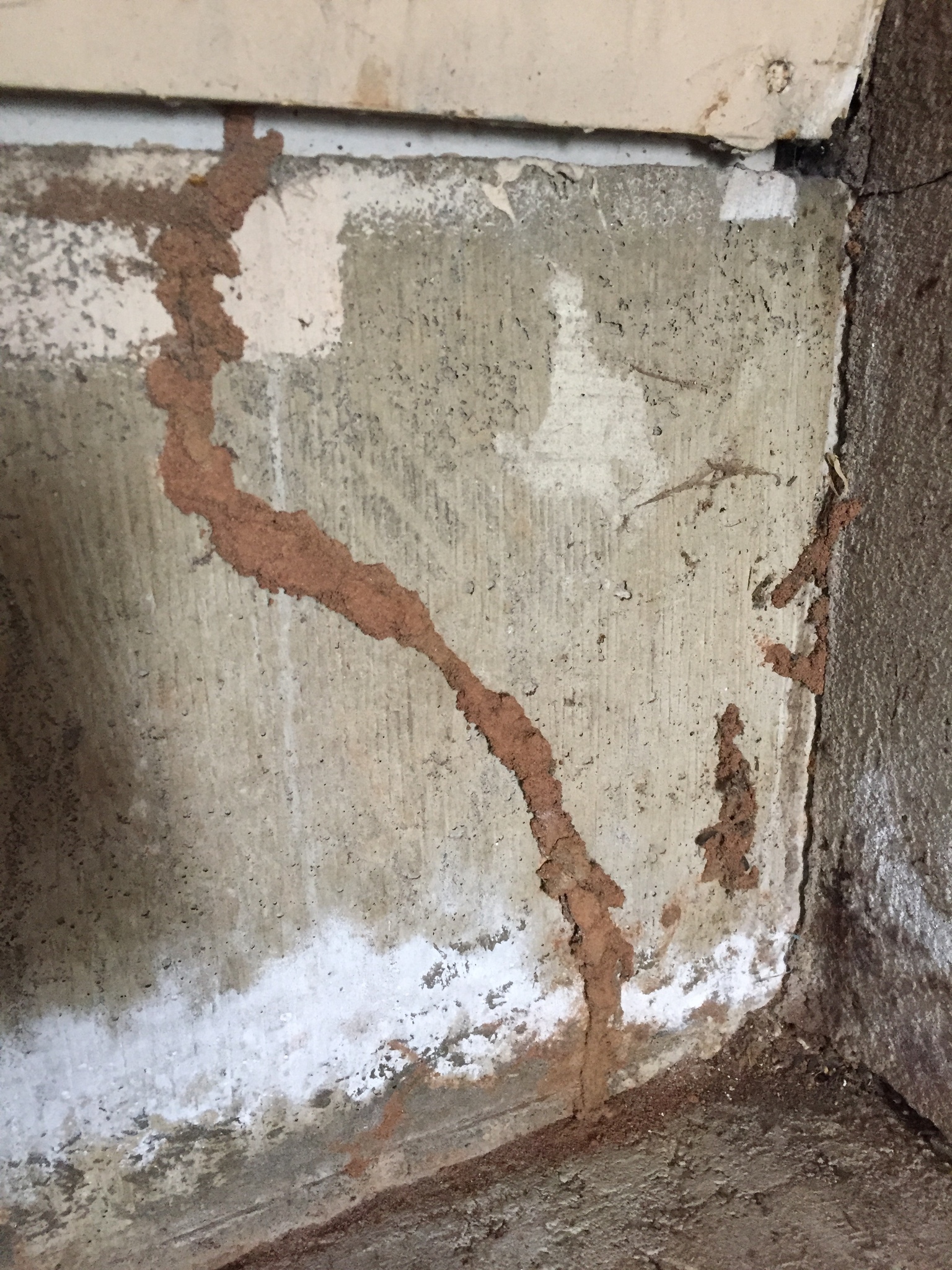
- Look at the visible building edge. Check accessible foundation, piers, porch supports, and the point where siding or wood meets the ground. Look for mud tubes or wood that disappears into soil; do not scrape away a possible tube before documenting it.
- Notice concealed routes. Soil, dense plants, raised beds, or mulch that cover the siding-to-foundation transition make inspection harder. A hidden edge is an uncertainty to report, not proof of termites.
- Check routine water sources. A leaking faucet, downspout, irrigation spray, or persistently damp soil may make the area more favorable to termites. Correct ordinary moisture problems without digging into a treatment zone.
- Read the treatment record before ground work. If the house has a termite contract, bait stations, or a previous soil treatment, ask the provider before regrading, trenching, moving stations, or replacing soil near the foundation.
NC State Extension warns that added or disturbed soil at a foundation can conceal the inspection line or disrupt protection. NPIC likewise advises against disturbing pesticide-treated soil around a home. Their practical point is to preserve an existing protection plan, not to apply one national digging-distance rule to every house. For routine upkeep after this check, use our home prevention guide.
Should You Spray or Replace Garden Soil?
A visible group of workers is not the whole colony. Spraying the exposed patch or replacing topsoil may change what you see for a while, but it does not demonstrate colony control or protect the house. Mississippi State Extension advises against trying to eliminate every landscape colony; when structural protection is warranted, the treatment plan should address the building. [Mississippi State Extension]
If an accessible scrap board or log away from the foundation is the food source, removing that debris may be sensible housekeeping. It is not a termite treatment. Do not pour bleach, salt, fuel, boiling water, or an unlabeled pesticide into a garden hole. A structural termiticide is not automatically labeled for vegetables or for broadcast application in a garden. EPA says soil treatments must match their exact label and that structural applications generally require trained professionals. [EPA]
Do not disturb a protected perimeter to “look for the nest.” Soil at the house may have been treated, and bait stations may require continuing service. Review the contract and ask the provider before digging, adding topsoil, changing grade, or moving a station. [NPIC; NC State Extension]
What If the Find Is Near Vegetables or Damaged Plants?
Termites mainly feed on dead woody material, but plant injury is possible in some settings. Alabama Extension documents damage to particular vegetable roots and stems; that does not mean every wilted plant was attacked by termites. Photograph both the insects and the injured part of the plant, and ask local Extension for crop-specific identification if you suspect damage.
Finding termites does not by itself show that a pesticide was applied or that produce contains a residue. If any pesticide was used, a harvest decision depends on the exact product, application site, date, and label. Ask local Extension or NPIC about that specific exposure. For a wooden frame, buried filler, or food-growing bed, see our full raised-bed guide.
When Is a Licensed Termite Inspection Worthwhile?
Book a structural inspection when you find a mud tube or suspect damage on the building, swarmers or discarded wings indoors, termites in building wood, or an inaccessible foundation edge beside the soil find. It is also reasonable when wood touches the ground near the home, moisture persists at that connection, or you cannot establish whether an old termite treatment or service agreement is still effective. The inspector should assess the building—not simply confirm that termites exist in the yard. [EPA; NC State Extension]
Show the inspector the soil photographs, the location, any buried wood, visible building signs, leaks, and past treatment paperwork. Ask which areas were inspected and which were inaccessible. A recommendation to inspect is not automatic approval for pesticide treatment: request the diagnosis, proposed scope, and limitations in writing. Our professional inspection guide explains what a visit should cover; the report guide helps you interpret the findings afterward.
Common Questions
Can termites live in ordinary garden soil?
Subterranean termites travel through soil and may use soil-connected sites for shelter and moisture. A few exposed insects do not tell you where the colony is centered or whether the house is involved.
Does finding termites in soil near my house mean it is infested?
No—the location raises a useful question, not a diagnosis. Check the accessible building edge and any concealed wood-to-soil connection. Structural signs or an edge you cannot evaluate justify a licensed inspection.
Will replacing the topsoil get rid of them?
Not reliably. Termites can forage from deeper or adjacent soil. Replacing a layer may temporarily change the visible spot without removing the colony or protecting the building.
Should I spray the soil where I found them?
Do not treat the garden simply to knock down visible insects. First confirm the insect and decide whether the problem concerns a plant, a piece of landscape wood, or the house. Any pesticide use must match its exact label and site restrictions.
Your Next Step
Document the soil find, then check the visible building edge without digging. If the evidence stays outdoors and the structure has no visible signs, maintain your usual inspection and prevention plan. If the edge is concealed or termites may have a route into building wood, arrange a structural inspection. Mud tubes, building damage, or indoor swarmers call for a licensed inspection promptly. The goal is to protect the house based on evidence, not to sterilize the garden.
Sources
- University of Georgia Cooperative Extension: Biology of Subterranean Termites in the Eastern United States — soil foraging and cellulose use.
- Mississippi State University Extension: Common Questions about Termites and Termite Control — landscape colonies versus building protection.
- University of Maryland Extension: Termite Area—Recommended Mulch to Use? — outdoor termites do not automatically call for yard treatment.
- NC State Extension: Termites—Preventing Problems in Existing Homes — visible foundation edge and avoiding disruption of treated soil.
- Alabama Cooperative Extension: Management Tactics for Termites Infesting Organic Vegetables — plant injury and limits of soil replacement.
- U.S. EPA: Termites—How to Identify and Control Them — identification, structural treatment, and label requirements.
- National Pesticide Information Center: Residential Soil and Pesticides — existing soil-treatment zones and site-specific residue questions.
For how we evaluate evidence and treatment guidance, see our Methodology.