
Yard termite guide
Termites in a Tree Stump: Is Your House at Risk?
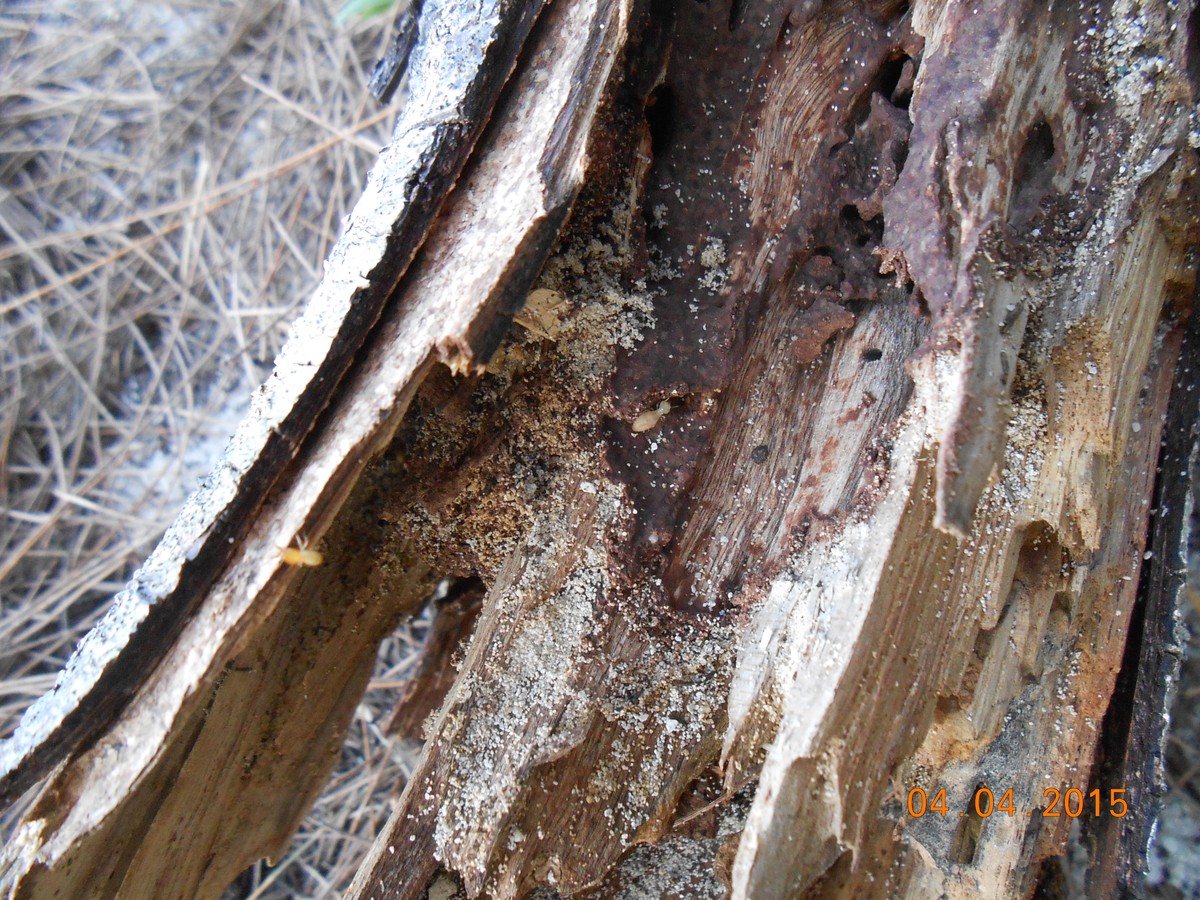
Splitting an old stump and finding pale insects inside is unsettling, especially when the house is only a few yards away. The stump itself is rarely the problem. What matters is where it sits, whether its roots or chips reach the foundation, and whether the house shows any signs of its own.
Short Answer
Termites in a stump out in the yard do not automatically mean your house is infested. Subterranean termites are common in landscapes, where they help break down dead wood. The risk rises when the stump or its roots are close to or beneath the house, when termites swarm next to the foundation, or when you find mud tubes, swarmers, or damage on the building itself.
Do not spray the stump and assume the house is protected. Check the foundation on that side of the house, keep stump grindings away from it, and arrange a licensed termite inspection if the stump is next to the structure or the house shows any signs.
Found termites in other yard wood? See termites in mulch, termites in firewood, or termites in raised garden beds.
What Termites in a Stump Usually Mean
A dead stump is natural food for subterranean termites. University of Georgia entomologists describe them as beneficial in natural settings because they help return nutrients from dead wood to the soil, and note that outdoor swarms show an active colony in the area but are not necessarily a sign of a structural infestation. University of Kentucky Entomology makes the same point about swarms coming from tree stumps and woodpiles in the yard: they are not necessarily cause for concern and do not automatically mean the house is infested.
The same Kentucky publication draws the line clearly. Swarmers emerging next to the foundation, or from a porch or patio that touches the house, suggest a good chance that the home is infested too. Winged termites found indoors almost always indicate an infestation that needs treatment.
Distance alone does not settle the question. Iowa State University Extension notes that subterranean termite colonies can forage up to 300 feet from their nest. A stump across the yard tells you termites live in the area, which is useful to know, but it is the condition of the house that decides what you do next.
Where Is the Stump?
→ Scroll the table sideways to see all columns.
| Situation | What it may mean | Sensible next step |
|---|---|---|
| Stump far out in the yard; no signs on the house | Termites are active in the landscape. That alone does not establish a building infestation. | Remove the stump or let it decay; check the foundation on that side once and keep watching. |
| Stump within a few feet of the foundation | A food source and foraging area right next to the structure. | Consider grinding it out, keep chips away from the house, and have the foundation checked. |
| Roots or stump under a porch, deck, steps, or the house | Buried wood under or against the building is a known termite risk. | Arrange a licensed termite inspection; removal may need a professional. |
| Swarm coming from a stump or woodpile in the yard | An active colony nearby; not by itself proof that the house is infested. | Photograph the insects and check for swarmers or wings indoors. |
| Swarm next to the foundation, porch, or patio | A good chance the house is involved as well. | Arrange a licensed termite inspection. |
| Termites in the stump and mud tubes, wings, or damage on the house | Evidence on the building itself. | Leave the evidence in place and arrange a licensed termite inspection promptly. |
Based on University of Kentucky Entomology (ENTFACT-604), University of Georgia, and building-site guidance from Mississippi State University Extension. Use it to describe your situation, not to rule anything out.
Should You Remove the Stump?
For a stump close to the house, yes, removing it is sensible. Builders are told to leave no stumps, logs, roots, or other wood debris under or near a foundation; Mississippi State University Extension lists it among basic termite-prevention steps for a building site. The same reasoning applies to a stump left beside an existing house.
For a stump far out in the yard, removal is optional. An extension expert answering a Maryland homeowner on Ask Extension noted that termites in a decaying yard stump should not threaten the house, that letting the stump break down returns nutrients to the soil, and that burning it is not recommended.
- Grinding: A commercial stump grinder is often the quickest option. An Ask Extension answer drawing on University of Illinois guidance notes that a grinder can take a stump 8 to 12 inches below ground in minutes and grind exposed roots as well. Ask the operator how deep they will go and whether large roots toward the house will be removed.
- The grindings: Fresh chips are wood. Do not spread them against the foundation or pile them next to siding. Use them away from the house or follow the spacing in our mulch guide.
- Letting it decay: Reasonable for a stump well away from the house. Expect termites, beetles, and fungi to use it in the meantime.
- Roots under the house: You usually cannot remove these yourself. Mention them to the termite inspector, since buried wood near or beneath the structure is part of the risk picture.
Do Not Treat the Stump as a Shortcut
Spraying or drenching the stump with an insecticide may kill some termites in that wood, but it does not protect the house. The colony lives in the soil and forages in many directions; Kentucky Entomology notes that a colony may contain many thousands of individuals foraging in numerous directions. Treating the house is a separate job with its own products, label rules, and methods.
If you are worried about the house, the useful step is an inspection. A University of Maryland Extension expert advising homeowners who found termites in landscape mulch suggested that a pest control professional can set up bait stations to monitor termite activity before anyone decides on a perimeter treatment, and recommended getting a second opinion on an expensive plan (Ask Extension). Our bait stations vs. detection stakes guide explains what monitoring can and cannot tell you.
Do not pour gasoline, used motor oil, or other improvised chemicals into a stump, and do not burn it near the house. Use any pesticide only for the site and pest its label allows. Rules on burning and on stump-removal chemicals vary by state and city.
Check the House Before You Decide
- Walk the foundation on the stump side. Look for earth-colored mud tubes running up the foundation, piers, steps, or porch supports. Our mud tubes guide explains what to note.
- Look for wood touching soil. Siding, trim, deck posts, or stair stringers in contact with the ground give termites a direct route. Kentucky Entomology recommends keeping wood at least six inches above the soil.
- Check moisture. Gutters, downspouts, and leaks that keep the soil wet next to the house make it more attractive to termites.
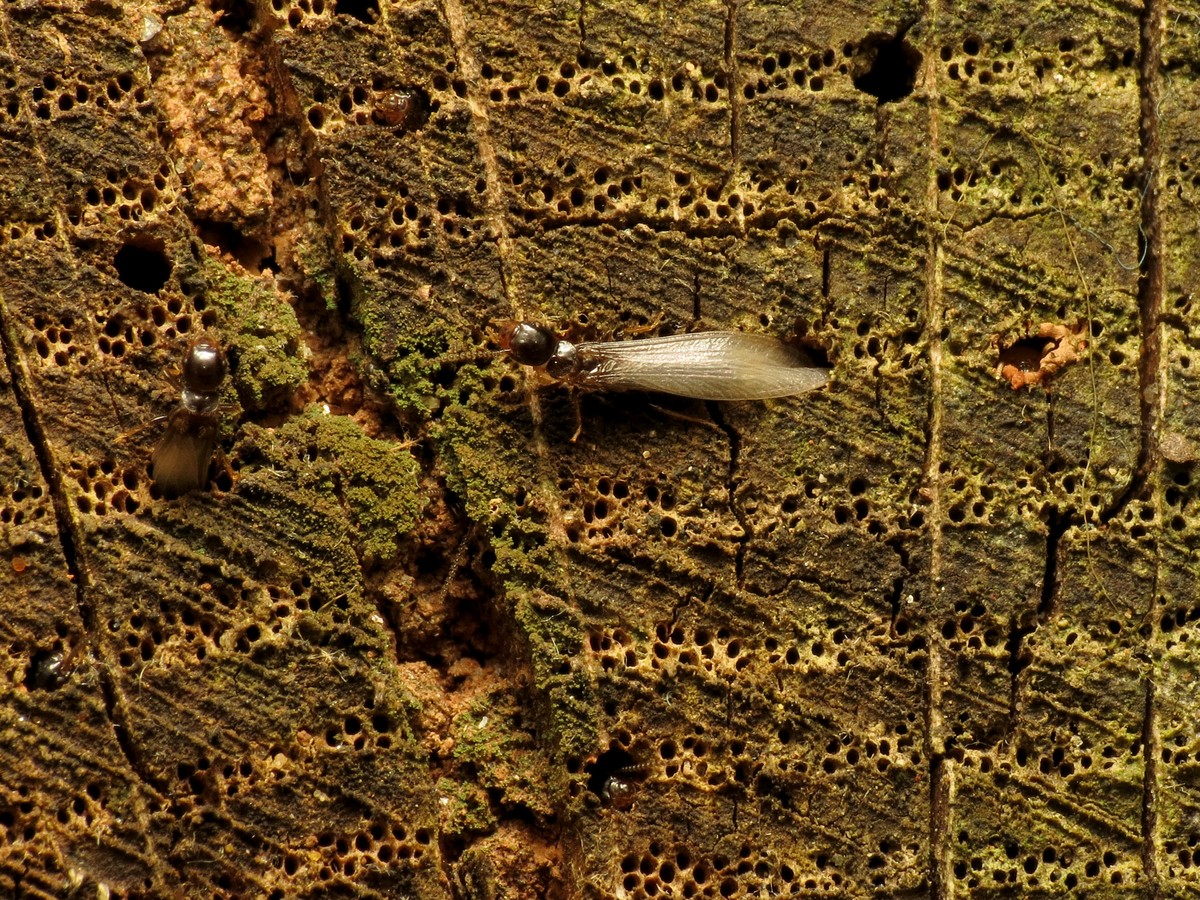
- Watch for swarmers indoors. Winged insects or shed wings on windowsills in spring deserve identification. See flying ants vs. termites.
- Photograph the stump and the termites, with something for scale, before you remove it. An inspector may want to know what you saw and where.
For a broader walk-around, use the termite inspection checklist and our guide to preventing termites around your home.
When to Call a Professional
- The stump, its roots, or buried wood sit next to or under the house, porch, deck, or steps
- Termites swarm next to the foundation or from an attached porch or patio
- You find swarmers or shed wings indoors
- You see mud tubes or damaged wood on the house
- The house is being bought or sold, or is covered by a termite bond
A licensed inspector can check the structure, tell you whether the stump changes the picture, and explain your options. Our professional termite inspection guide covers what to expect.
Your Next Step
If the stump is far from the house and the foundation looks clean, you can remove it or let it decay; just keep the chips away from the house and keep an eye out in spring. If the stump is close to the house, grind it out and have the foundation checked. If you see any sign on the building itself, leave it in place and arrange a licensed inspection.
For other places termite clues turn up, see termite guides by location.
Sources
- University of Kentucky Entomology, “Termite Control: Answers for Homeowners” (ENTFACT-604) — yard swarms from stumps and woodpiles, swarms next to the foundation, indoor swarmers, colony size; revised March 2026.
- University of Georgia, “Subterranean Termites” (Suiter and Forschler) — termites as decomposers, outdoor swarms versus structural infestation; posted February 2026.
- Iowa State University Extension, “Does landscape mulch lead to termites in your home?” — foraging distance up to 300 feet; May 2001.
- Mississippi State University Extension, Bug-Wise No. 9 — no stumps, logs, or wood debris under or near a foundation; September 2012.
- Ask Extension, “Tree stump decay” (Maryland question) — termites in a yard stump, letting it decay, grinding, and not burning; April 2024.
- Ask Extension, stump removal answer (citing University of Illinois Extension) — stump grinding depth and roots; April 2023.
- Ask Extension (University of Maryland HGIC), termites in landscape mulch — monitoring with bait stations before deciding on treatment, second opinions; June 2022.
- University of Kentucky Entomology, “Protecting Your Home Against Termites” (ENTFACT-605) — wood-to-soil clearance and moisture control; revised July 2018.