Post-treatment follow-up guide
How to Know If Termite Treatment Worked
A successful termite treatment is not confirmed by one quiet day, one empty bait station, or the absence of visible insects. The useful test depends on which treatment was performed, what area it was intended to protect, what the product label and service agreement require, and what a qualified follow-up inspection finds. This guide helps you document changes and decide when to contact the treating company. It does not diagnose hidden activity or tell you how to retreat the property.
Short Answer
Start with the treatment record and the company’s scheduled follow-up, not a universal countdown. Old damage or an existing dry mud tube can remain after treatment and does not by itself prove failure. New indoor swarmers, newly built or repaired mud tubes, recurring drywood pellets at a documented location, or new damage found during follow-up deserve prompt professional evaluation. Do not disturb treated soil, open walls, probe wood, or apply more pesticide to test the result yourself.
1. Check the scope
Identify the termite type, treatment method, treated areas, product, date, and written follow-up terms.
2. Document changes
Use dated photos and location notes without disturbing the treatment or opening the structure.
3. Use professional follow-up
Let the treating company interpret new evidence against the treatment record, label, and agreement.
What “Worked” Actually Means
The meaning of success is limited by the treatment’s purpose. A soil-applied liquid termiticide, an in-ground bait system, a localized drywood treatment, and whole-structure fumigation do not have the same target, timeline, or follow-up method. Before judging the result, locate the proposal, treatment diagram, product name, label information, inspection report, warranty or service agreement, and the date of the next scheduled visit.
No visible termites is reassuring, but it is not proof that a hidden colony has been eliminated. In the same way, a remaining mark, old gallery, or dry shelter tube is not proof that termites are still active. The strongest conclusion comes from matching documented observations to the treatment scope and having the company inspect when the evidence or agreement calls for it.
Results Depend on the Treatment Type
If you are not sure which method was used, check the paperwork or ask the company before interpreting what you see. The termite treatment types comparison explains the broader differences without replacing your treatment record.
Scroll the table sideways to see all columns.
| Treatment type | What the treatment is intended to do | How follow-up should be framed |
|---|---|---|
| Soil-applied liquid termiticide | Protect a labeled treated zone against subterranean termite entry or reinfestation. | The treatment remains consistent with its labeled protective purpose when there is no professionally confirmed evidence of reinfestation or barrier disruption. Assessment should use the product label, treatment record, and follow-up inspection. |
| Termite bait system | Use a properly installed and serviced system to reduce or eliminate a target colony over time. | Colony effects are gradual. Inspection and servicing schedules depend on the installed bait system, its current product label, and the service agreement. Activity found during service should be interpreted by the treating company. |
| Localized drywood treatment | Treat a specifically identified and accessible infestation area. | Follow-up is tied to the specifically treated area and documented evidence there; it should not be treated as a whole-house success test. |
| Whole-structure fumigation | Address drywood termite infestations present in the structure at the time of treatment. | Fumigation does not provide residual protection against a later reinfestation. New evidence afterward needs evaluation but does not automatically prove that the original treatment was performed incorrectly. |
Where foam fits: Foam is an application form used to reach particular voids or localized areas. It remains supplemental to the treatment plan and should not be treated as a separate whole-home success category or proof of colony elimination.
What You May Still See After Treatment
Some evidence remains physically in place after treatment, and some treatment systems work gradually. The observation has to be interpreted in context:
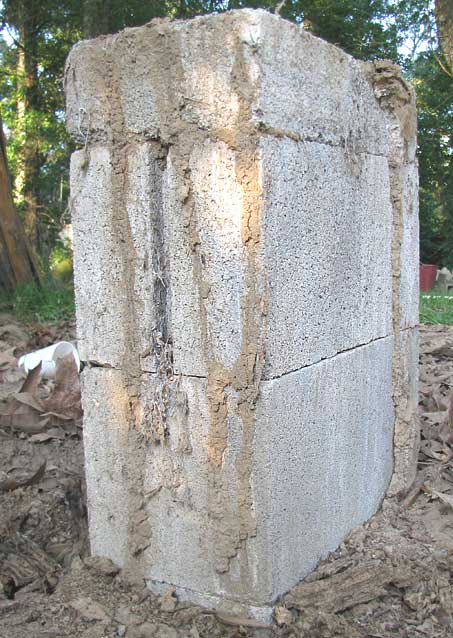
- Old mud tubes or old damage: A dry tube, stained surface, or damaged board does not disappear when treatment is completed. Compare dated records and let a professional determine whether there is renewed activity. See termite mud tubes versus old damage for the distinction.
- Termites feeding at a bait station: A station “hit” shows activity at that station. By itself, it does not prove that the structure is infested or that the program failed. The company should interpret it during scheduled service.
- Spring swarmers after late-season treatment: Spring swarming does not automatically prove that a late-season bait or liquid treatment failed, but indoor swarmers still warrant prompt follow-up with the treating company.
- Later drywood evidence after fumigation: Because fumigation has no residual protection, a later infestation can be a separate event. It still requires inspection rather than an assumption about the original treatment.
Signs That Require Follow-Up
Contact the treating company when you observe or learn about:
- indoor termite swarmers or repeated accumulations of discarded wings;
- a newly built mud tube, a repaired section of a previously documented tube, or a tube in a new location;
- new drywood pellets returning at a documented kick-out-hole area after careful cleanup;
- new damage discovered during a scheduled or warranty inspection;
- a missed bait-system service or other follow-up required by the current label or written agreement;
- possible evidence in an unsafe, sealed, or inaccessible area;
- any condition the treatment proposal or warranty specifically tells you to report.
These observations justify professional evaluation. They do not tell a homeowner where or how to apply another pesticide treatment.
How to Document Changes Without Diagnosing Activity
Good documentation helps the company compare the new observation with the original inspection and treatment map. It also reduces the chance that useful evidence is removed before the follow-up visit.
- Take one wide photo showing the location and one close photo showing the evidence.
- Record the date, room or exterior side, nearby building feature, and whether the location was included in the treatment record.
- Note changes without labeling them “active” or “inactive” unless a qualified inspector has made that determination.
- Keep the treatment proposal, product information, diagram, invoices, inspection reports, and company messages together.
- Do not break mud tubes, disturb treated soil, move bait stations, cut a vapor barrier, open walls, drill holes, or probe wood to test the treatment.
Drywood pellets: Before clearing pellets from a known, safely accessible kick-out-hole area, photograph the pellets and location, note the date, and preserve a sample if practical. If the property is under a warranty or service agreement, follow the company’s instructions for documenting evidence before disturbing it. Do not probe or enlarge the hole. Pellets that return can document renewed evidence at that specific point, but they do not establish the extent of an infestation throughout the house.
For a broader, noninvasive walkthrough of accessible areas, use the termite inspection checklist. That checklist helps organize observations; it does not replace the treating company’s post-treatment assessment.
Reinspection, Monitoring, Warranty and Termite Bonds
Follow the inspection, renewal, retreatment, reporting, and documentation terms in the written service agreement. There is no single national follow-up interval that applies to every method, product, home, or contract. Bait systems require the monitoring and servicing specified for the installed system, while liquid, localized, and fumigation follow-up should be matched to the treatment record and agreement.
Some termite service agreements are sold as termite bonds. A bond does not promise that termites can never return, and coverage for reinspection, retreatment, repairs, exclusions, and renewal can differ. The termite bond guide explains what to check before relying on an agreement.
Ask the company to explain what was treated, what evidence would trigger a callback, who determines whether retreatment is warranted, and what documentation is required. The questions to ask a termite company guide provides a practical list for that conversation.
Professional termite services are regulated at the state level, while homeowner-use restrictions depend on state rules and the individual pesticide label. Whole-structure sulfuryl fluoride fumigation is professional work involving a federally restricted-use pesticide.
When to Contact the Company Again
Use the schedule in your written agreement even when nothing looks unusual. Contact the company sooner when new evidence appears, when an unsafe or inaccessible area may be involved, or when required station service or reinspection has been missed. Indoor swarmers deserve prompt follow-up regardless of season.
When you call, provide the treatment date, method, contract or invoice number, exact location, dated photographs, and a short description of what changed. Ask whether the company wants the evidence left undisturbed and whether the visit falls under the service agreement. If the original scope is unclear or no longer fits the evidence, use the termite treatment decision guide to understand the questions that should be resolved professionally rather than choosing a retreatment method from appearance alone.
Printable Post-Treatment Follow-Up Checklist
Use this as a documentation and service record. It does not score treatment success, diagnose active termites, or authorize retreatment.
After Service
At the Scheduled Follow-Up
Ongoing Monitoring
Use the termite prevention guide for ongoing maintenance after the treatment follow-up is documented.
The Bottom Line
Termite treatment success is method-specific and professionally evaluated. Keep the treatment record, follow the required service schedule, document new observations without disturbing the site, and contact the treating company when evidence changes or the agreement calls for inspection. Do not use the persistence of old evidence or a homeowner-made countdown as proof that treatment failed, and do not apply another product simply to test the result.
Sources
- U.S. EPA: PRN 96-7, Termiticide Labeling
- U.S. EPA: Pesticide Labeling Questions and Answers
- NC State Extension: Termite Baiting Systems
- Texas A&M AgriLife Extension: Frequently Asked Questions About Subterranean Termite Control
- UC Statewide IPM Program: Drywood Termites
- Texas A&M AgriLife Extension: Drywood Termites
- University of Kentucky Entomology: Termite Control – Answers for Homeowners
For how TermitePlan evaluates evidence and recommendations, see our Methodology.